
 Türkçe
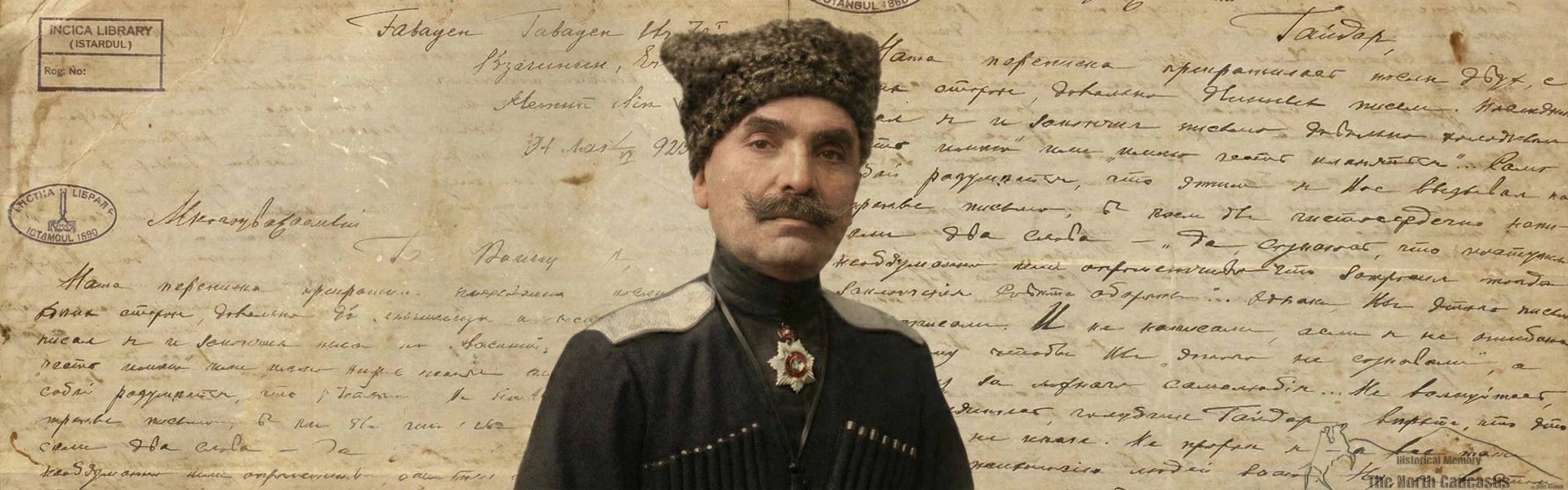
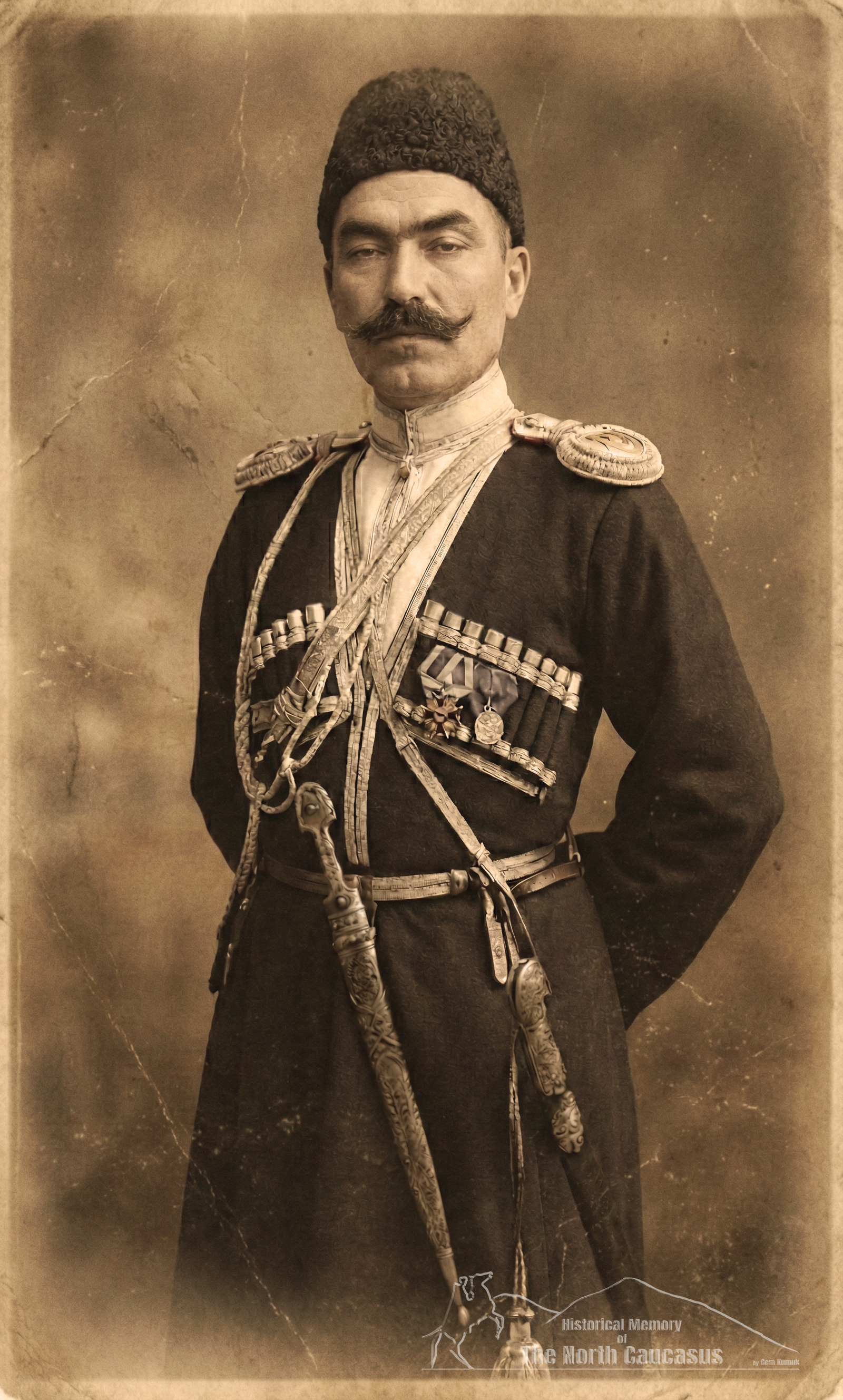
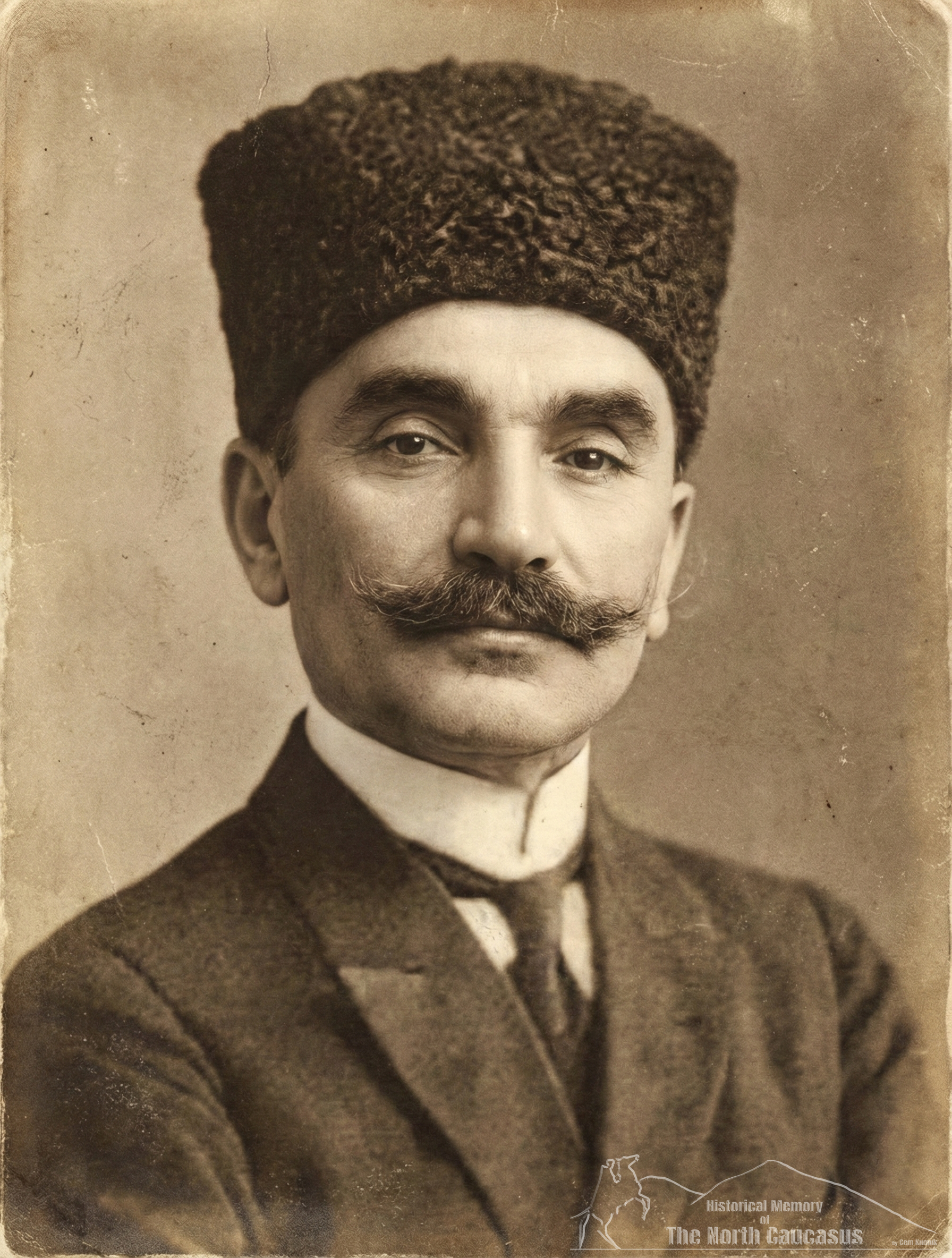
In the new account of the Historical Memory of the North Caucasus, we will focus on General Mikail Magomedovich Khalilov—another controversial military and political profile in Caucasian history.
Mikail Magomedovich Khalilov was born in 1869 in the town of Khuri in the Lak (Gazi-Kumukh) region of Dagestan. His father, Magomed, was a Tsarist Naib (Governor) of the Karatinsky District and was killed in 1877 by the Abregs (freedom fighters) resisting the Tsar. Like many children of elite North Caucasian families, Mikail Khalilov received his primary education at the Stavropol high school. Upon graduating in 1886, he joined the Russian Army that same year, on August 10, 1886. In 1889, he graduated from the Infantry Officer School in Tbilisi.
(Click on the image for a larger view)
(Click on the image for a larger view)
Khalilov was also part of the delegation authorized by the Central Committee of the Union of the Peoples of the North Caucasus, endowed with government powers, to conduct negotiations with representatives of the Ottoman Empire and the Transcaucasian Sejm in Trabzon, Istanbul, and Batum. He served as the deputy to Nuh-Bek Tarkovsky, the Minister of Defense in the Mountaineers’ Government established in 1918.
By the beginning of 1919, when the Monarchist Russian General Anton Denikin reached Chechnya during his North Caucasian Campaign—launched from Kuban with heavy weaponry and warplanes provided by the British—Mikail Khalilov’s father-in-law, General Eris-Khan Aliyev, assumed the title of Governor of Chechnya on March 20, 1919, and surrendered to General Denikin.
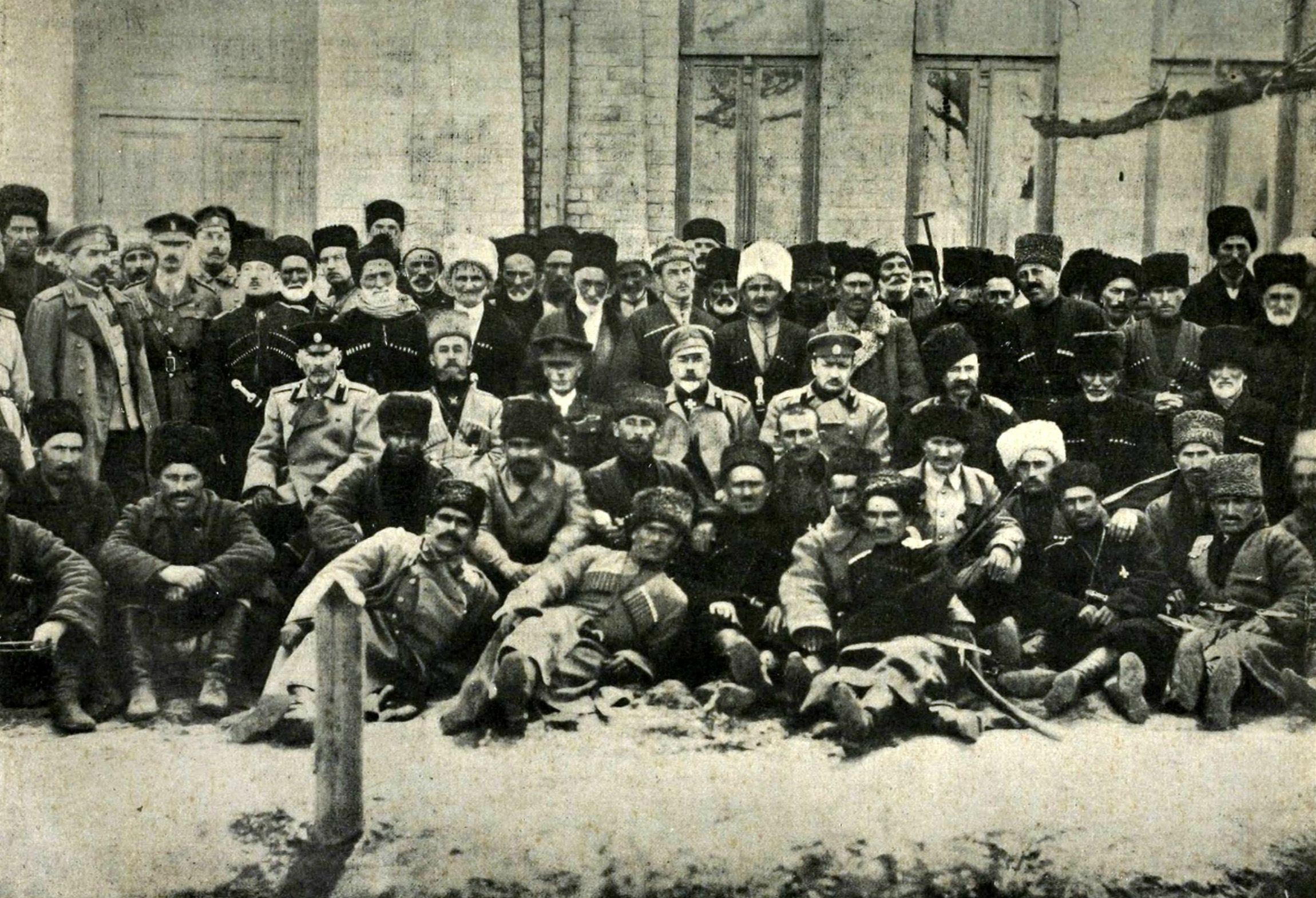
1. General Eris-Khan Aliev, 2. General Lyahov, 3. British General Briggs, 4. General Denikin, 5. General Dratsenko, 6. Ataman Vdodenko, 7. Kana-Sheikh,
Grozny, March 20, 1919
(Click on the image for a larger view)
Addressing the public with a lengthy speech on June 15, Mikail Khalilov began by stating that Bolshevism had emerged as one of the "freedoms" proclaimed by the Russian Revolution, which had overthrown the autocratic Tsar without establishing a solid system in his place. He continued by discussing Bolshevik practices regarding religion, attempting to capture the spiritual pulse of the people. He stated that although the Bolsheviks had been expelled from Dagestan with the help of the Caucasian Islamic Army, the so-called socialists among the Highlanders—who called themselves Muslims—were doing everything to hand the country over to Soviet power.
Trying to portray himself and other defenders of an indivisible Russia as men passionately devoted to their homeland—men who dedicated themselves to a ruthless struggle against Bolshevism, saved Russia from anarchy, and established law, order, and normal living conditions—Khalilov sought to convince the public by emphasizing the international power behind the Volunteer Army, noting that the British, Americans, Japanese, and other allies were assisting them.
Claiming that the Circassians, Balkars, Ossetians, Chechens, and Ingush had already understood the power of the Volunteer Army, that Abkhazia had joined Georgia, and that the Republic of the Union of Mountaineers had ceased to exist, Mikail Khalilov promised that the local administrators appointed by the Volunteer Army would not interfere in their affairs, thereby trying to find public support for the position promised to him in Dagestan. Attempting to defend himself against accusations of treason, he argued that the territory of the Mountain Republic, which he tried to surrender to the Volunteer Army without a fight, had effectively already ceased to exist by the time the Volunteer Army reached Petrovsk. Claiming to remain committed to the idea of unity, Khalilov argued that this could be realized not through war, but through the peace talks in Paris and a decision by the All-Russian Constituent Assembly.
He believed he had found another cover for his dishonorable surrender by claiming that surrendering to the Volunteer Army saved dozens of Dagestani villages from destruction and thousands of people from unnecessary bloodshed. Going so far as to claim that the Volunteer Army had no goal of reviving monarchist Russia, Mikail Khalilov promised that a new independent Dagestan would emerge once Dagestan and the whole of Russia were somehow saved from this horror. He intimidated the public by stating that as long as the Highlanders could fight Bolshevism on their own, not a single Volunteer Army soldier would enter Dagestan; otherwise, they would be forced to intervene according to the location and conditions. Finally, Mikail Khalilov openly revealed his defection to the Whites by declaring that Sharia law forbade Muslims from fighting any war that was impossible to win.
This speech by Mikail Khalilov also attracted the attention of Entente representatives. A French representative, reporting the speech to Paris, described it as the words of "Tapa (Abdulmedjid) Chermoy’s former colleague." The report highlighted the speech's mix of anti-Bolshevism and religious motifs, as well as its criticism of nationalist groups. It notably underlined that while Khalilov spoke of "maintaining order," his real objective was to suppress nationalist opposition voices against the Volunteer Army and emphasized the military tribunals that would effectively abolish Sharia law.
Knowing they would be subjected to White terror, many members of the Union Council left the North Caucasus for Azerbaijan and Georgia before the final meeting. However, some leaders, including Pshemakho Kotse, Aslanbek Butayev (Butati), and Sheikh Ali Mitaev, along with many political figures, were arrested and imprisoned. The report also highlighted that those arrested in Temir-Khan-Shura were taken by train to the Volunteer Army prison in Petrovsk and handed over to Cossack officers.
Among those captured on March 22, 1920, at the Kazbek train station at the entrance to Georgia, were military figures among the Mountaineers who supported Denikin: the Dagestani General Mikail Khalilov, the Ingush General Safarbek Malsagov, and the Ossetian Colonel Ikayev. Lazar Bicherakhov, the Ossetian monarchist leader notorious for his scandals in the history of the North Caucasian Republic, was also among those seeking refuge in Tbilisi. In their interrogations, these officers stated that their only crime was defending United Russia. In fact, General Mikail Khalilov, the last erstwhile head of the Mountaineers’ Government, sent a telegram to the Mountaineers’ Diplomatic Mission in Tbilisi asking, "Is there any problem?" Before leaving Dagestan in February, the same Mikail Khalilov had sent a message of repentance to Ali Haji of Akusha (Akushinsky), pleading for mercy and asking for permission to serve for the good of the Highlanders.
(Click on the image for a larger view)
Dear Haydar!These monarchist figures were released after a very short detention and allowed to enter Turkey. Correspondence a few months later between Anatoly Neratov, General Wrangel’s representative in Istanbul, and the French Military High Commissioner explains why they were allowed to enter Turkey so easily without any prosecution. In this correspondence, Neratov reported the establishment of a committee in Istanbul composed of Generals Mikail Khalilov, Bekovich-Cherkassky, Beta Habaev, Safarbek Malsagov, and Vasily Haji-Mukov—former Russian Army generals of North Caucasian origin—authorized to legitimately represent the North Caucasian political émigré wing of the White Russian forces. Neratov assured that this committee would act in concert with General Wrangel and all anti-Bolshevik Russian organizations sharing the aspirations of the Russian army, as well as similar organizations in other countries. He vouched for them, emphasizing that General Wrangel viewed them as the sole representatives authorized to speak on behalf of their peoples and would negotiate political issues regarding the North Caucasus only with them in the future.
I am sending you a copy of my statement regarding my political activities in Dagestan for your review. As you can see, I am not sending it to the Defense Council as you advised, nor am I flattering myself that you will help publish it in the newspapers.
You may keep the statement for yourself if you wish, or better yet, make a copy and return the original to me. But regarding my extremely difficult situation, which you view, to put it mildly, with a very light heart... incomprehensible things are happening in your relations with me. Forgive me for speaking frankly. Either you are insincere, or your attitude toward me changes every day. You say that regardless of our political views, your friendly attitude toward me will not change. How does this friendly attitude manifest itself? Thanks to you, am I not sitting in prison on equal footing with thieves and robbers, completely unaware of what sin I have committed and against whom?
When my Georgian friends petition their government for my release, do they not always receive the same refusal: "We are not holding him and do not intend to try him; he is being kept in custody solely by Haydar Bammat"?
By the way, Haydar, you are my friend, my pal, with whom we did happier things... To protect his unfortunate brother from an inevitable blood feud, upon his mother's request, I signed a death sentence for his brother's killers for the first time in my life. Whereas usually, I would commute all such sentences by one or two degrees.
I am not even mentioning that you should have been the first to get me out of prison... Could you not have done this even after Malsagov, Habaev, Bekovich, and Inaev were released?
If unheard-of Ingush, Ossetians, etc., are releasing their representatives, can an important figure like Haydar Bammat, who is taken into account by the Georgian government, not do this?
Honestly, I even thought you would personally bail me out, and that I would find protection and shelter in your personal apartment.
However, in reality, it turned out to be completely different.
As you can see from my note, I do not feel any guilt before the people. So what is my crime against the Bolsheviks? Yes, I defended the land of my birth, Dagestan, against their invasion. I fought with them for my people, for their independence, for their faith, for the way of life of their ancestors.
Together with you, I called on the Turks not to hand Dagestan over to Turkish rule, but to defend their own lands against the insolence of the Bolsheviks with their help as co-religionists. I have never denied any of this, and I will not deny it now.
So Haydar, tell me plainly: Are you my friend and will you do something for my release, or will all these beautiful words remain empty sounds and will you do nothing in my favor?
Then at least I will know what to do next and what to hope for.
Forgive me for some harshness in the letter, which should be understandable in my difficult situation.
Empowered by the Russian representative’s guarantee, General Mikail Khalilov wrote a message to the French High Commissioner positioning himself and the said committee quite differently from reality. Signing as the President of the Union of Caucasian Mountaineers, Khalilov stated that if the Bolsheviks attacked Poland in the spring of 1921 and the Allies wanted to distract them from the Western Front, the committee thought it would be very useful and possible to organize a military unit, the core of which would be a disciplined Highlander force formed from soldiers evacuated from the Caucasus. Furthermore, he claimed that with the possible assistance of the Ottoman Government, Caucasian immigrants living in Turkey since 1864 could easily be included in this force. On behalf of the committee, he emphasized that kinship ties between the immigrants and the Caucasian peoples had never been broken, but rather strictly preserved, and that they knew the immigrants were deeply saddened by the adversities shaking the Caucasus. He claimed the French High Commissioner was aware that the Mountaineers had taken up arms to fight the Bolsheviks even before the Volunteer Army was established and that a fierce struggle was still ongoing in the Caucasus, arguing that there were multiple personal reasons preventing the coordination of forces in this struggle. He stated that a disciplined, well-armed, and willing Highlander force could easily gather all the forces of the Caucasus around itself and that the said committee would be part of the bloc formed by the union of Cossack and Ukrainian organizations in Istanbul. He requested material and moral support from the Allies for the committee to act effectively.
During the same period, monarchist Mountaineers such as Mikail Khalilov, Habaev, Bekovich-Cherkassky, Malsagov, and Haji-Mukov, who had taken refuge in Turkey and were protected under the auspices of the Entente Powers in Istanbul, came together in a formation they called the "National Committee for the Independence of North Caucasus Mountaineers." This was an entity acting under the protection of the Entente Powers with the guarantee of Neratov, General Wrangel’s representative in Istanbul. General Mikail Khalilov tried to portray himself to the representatives of the Entente Powers as a person with a voice within the North Caucasian diaspora in Turkey by developing relations with the opinion leaders of the Circassian diaspora.
Letters sent by Alihan Kantemir from Istanbul to Paris in those days contained striking expressions regarding the activities of Khalilov and his cronies:
[…] I am in absolute torment: Attacks are coming at me rabidly from our Monarchists (Tsarists), accusing me inappropriately. And I, without a single penny in my pocket, am trying to conduct patriotic organizational work among the Highlanders by opposing them—this is what heroism is... not the criticisms you choose to make... and while you were living through those days of uncertainty. The Monarchists bombard us from the Russian Embassy, while we parry the blows, seeking refuge in the Circassian School since we don't even have a single room for activities.On June 15, 1922, Mikail Khalilov wrote a long letter from Berlin addressed to Haydar Bammat. I will share this 12-page letter in its entirety in the book I am preparing for publication this year. In this article, I will suffice with outlining the general framework of the letter to give the reader an idea. Relying on the support of the French and Monarchist Russians backing him, Khalilov was questioning the events of 1919 and trying to fabricate a cover for his sins. The sole argument he tried to hide behind while doing this was that the North Caucasian Republic never existed, and therefore, he could not have destroyed something that did not exist.
I intend in advance to leave our "Generals" without an army, and this has already been half achieved.
My demonstration, of which you are likely aware, dealt them a stunning blow. […]
Shortly thereafter, on October 20, in a reply to a condolence message sent by Haydar Bammat on the occasion of his sister's death, Khalilov addressed him with the same self-righteousness:
Dear Haydar,However, things did not develop as Khalilov had hoped. Following the Genoa and Hague Conferences and the Treaty of Lausanne, the Allies shelved the Caucasian cause, as they signed a peace with Turkey. Turkey, meanwhile, facing the Bolshevik threat hanging like the Sword of Damocles, became a place that gave no breathing room to anti-Soviet Caucasian groups. For Khalilov, whose dreams of titles he hoped to receive based on a revived Russian monarchy with the Wrangel Army had faded, and whose financial resources had dried up, the tone in his letters took on a completely different nature over the intervening eight months.
I offer my heartfelt gratitude to you and your precious mother for the sentiments of condolence you expressed in your letter dated September 1 regarding the passing of my sister Shagun.
This behavior of yours proves once again that, regardless of our political views, we are ultimately Muslims, ultimately Dagestanis. We should have based essentially all our political steps and social activities on this motto, to which we always return in the last instance. However, unfortunately, you sometimes forget these or ignore them to adapt to the current political conjuncture...
This was the case in that incident as well: Caught up in the political current prevailing in Tbilisi at that time, you did not approach my arrest by the Georgians like a Dagestani, like a Muslim, or even as Haydar Bammat should have behaved. Here is why:
If, as a Dagestani and a Muslim, you were required to openly and loudly protest the throwing into a Georgian prison of the only man in Dagestan who had dedicated his entire life to serving his people and who had truly provided great kindness and benefits to both thousands of individuals and the entire population of Dagestan; you, as Haydar Bammat, as your mother's son, as the brother of the late Temirbulat, were obliged to take the place of a brother, a son, or the closest relative for me in that difficult moment.
You, as Haydar Bammat, should have known that not only did I establish a special Sharia-military court to try your brother's killer on my own initiative, risking everything, but I also signed the death warrant for both killers for the only time in my life to protect you, Haydar, from the danger of encountering blood avengers. And I did this fully realizing the danger that the future relatives and blood avengers of the executed killers—who, in their savagery and primitive state, only respected justice and laws during Tsarist times and viewed my actions merely as personal revenge or arbitrariness—would pose to my person and my lineage...
You knew all this; yet, instead of not leaving the prison gate and trying to be useful to me in any way possible, you washed your hands and stepped aside, thinking that you were not the cause of my arrest and therefore your conscience was clear. Moreover, you even gave assurances to Georgian ministers and some people pleading for me that my sitting in prison would be much safer than my release.
You did not stop to think, even once, that all that "crime" of mine (which was not against the Georgians, but only against my own people) consisted of fulfilling the will of the people who elected me with a clear conscience, holding it sacred. I neither sold out nor betrayed Dagestan; I only saved it from physical annihilation or destruction.
You did not even consider that an old man accustomed to a cultured life and environment, a general, could die in prison penniless, devoid of necessary items, with bad prison food, and deprived of his kin. Leaving other things aside, you did not even offer to send me a meal to the prison as charity for poor prisoners, as good Dagestanis and Muslims do.
I am sure that your esteemed mother repeatedly conveyed to you her desire to visit me, to learn of my needs, and other wishes, but you, of course, did not permit her in order not to lose your prestige and reputation in the eyes of the Social Democrats, Social Revolutionaries, Mensheviks, Bolsheviks, and "Social-Christians" in general. But you did not think then that you would lose your prestige in the eyes of Muslims and your reputation in the face of our centuries-old traditions.
Now thunder has struck, my poor sister has passed away, and you have remembered that we are all Dagestanis and Muslims, that we will all die one day, but that we all desire to die in our own homeland, in our own cemeteries; that we all love our homeland fervently, and everyone manifests this love in their own unique way...
What is there between us that we cannot share? Nothing, and eventually, there will be three arshins (the dimension of a graveyard; 3arshins = 2mt) of earth for everyone...
Since this is so, then my answer to you is: "Better late than never." And I thank you for this. Let us draw a line over the past and remember it no more. You once replied to Najmuddin Gotsinsky, who angrily addressed you as "child," saying, "Youth is not a flaw." Now I say in response to this: "It is not a flaw, but neither is it a virtue; especially when adorned with arrogance." And overly self-confident people have frequently fallen into error.
In short, Haydar, I accept your elegant letter as a realization of your fault and a step toward reconciliation, and I gladly extend my hand to you.
I write everything in this letter with feelings free of hostility and full of love.
Heartfelt greetings and respects to your esteemed mother.
Dear Haydar,
Our correspondence was interrupted after two rather long letters written by both parties. I was the last to write, and I ended the letter with a rather cold "I offer my respects" or "greetings with respect"... Naturally, with this, I was forcing you into a third letter where you would sincerely write two words like, "Yes, I admit I acted thoughtlessly or hastily in asking the Defense Council's opinion back then." However, you did not write this letter. And if I am not mistaken, you did not write it not because you didn't "realize" it, but purely out of misplaced pride... Do not worry and do not judge me, dear Haydar; believe me, it is so, not otherwise. I am not a prophet, but I understand a little of human psychology. Anyway, that is not the point; there has been enough reproach and bickering, now it is time to get to work.
The business is as follows: I have prepared to go to Turkey, to Ankara. You will remember that even when you were in Istanbul, I turned toward Turkey with all my soul and dreamed of its greatness. I loved it and love it now, not only for its beautiful, uncorrupted people, etc., but essentially because it is the historical defender of Islam and the protector of small Muslim nations. If there were no strong, great Turkey, our Caucasian Highlander and lowlander tribes would have long ago turned into stinking Russian muzhiks, or more accurately, would have been converted...
In short, Haydar, I believe that not only on behalf of Turkey itself but also on behalf of our own people, we, the refugee representatives of Russia's Muslim lands, must dedicate our strength and talents to the cause of Turkey's rebirth and revival. For we must not forget that in this way we will be of greater benefit to our own people as well.
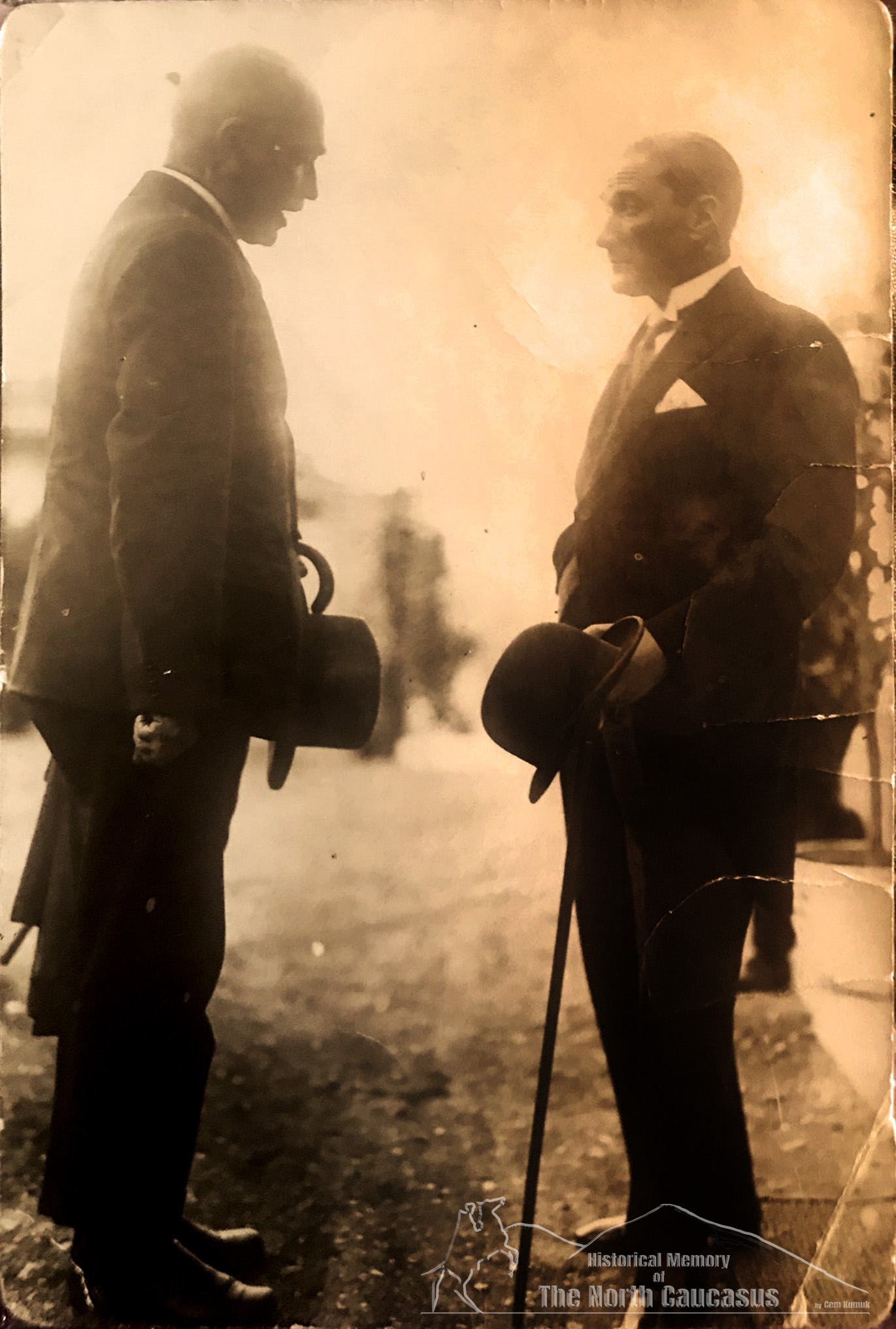
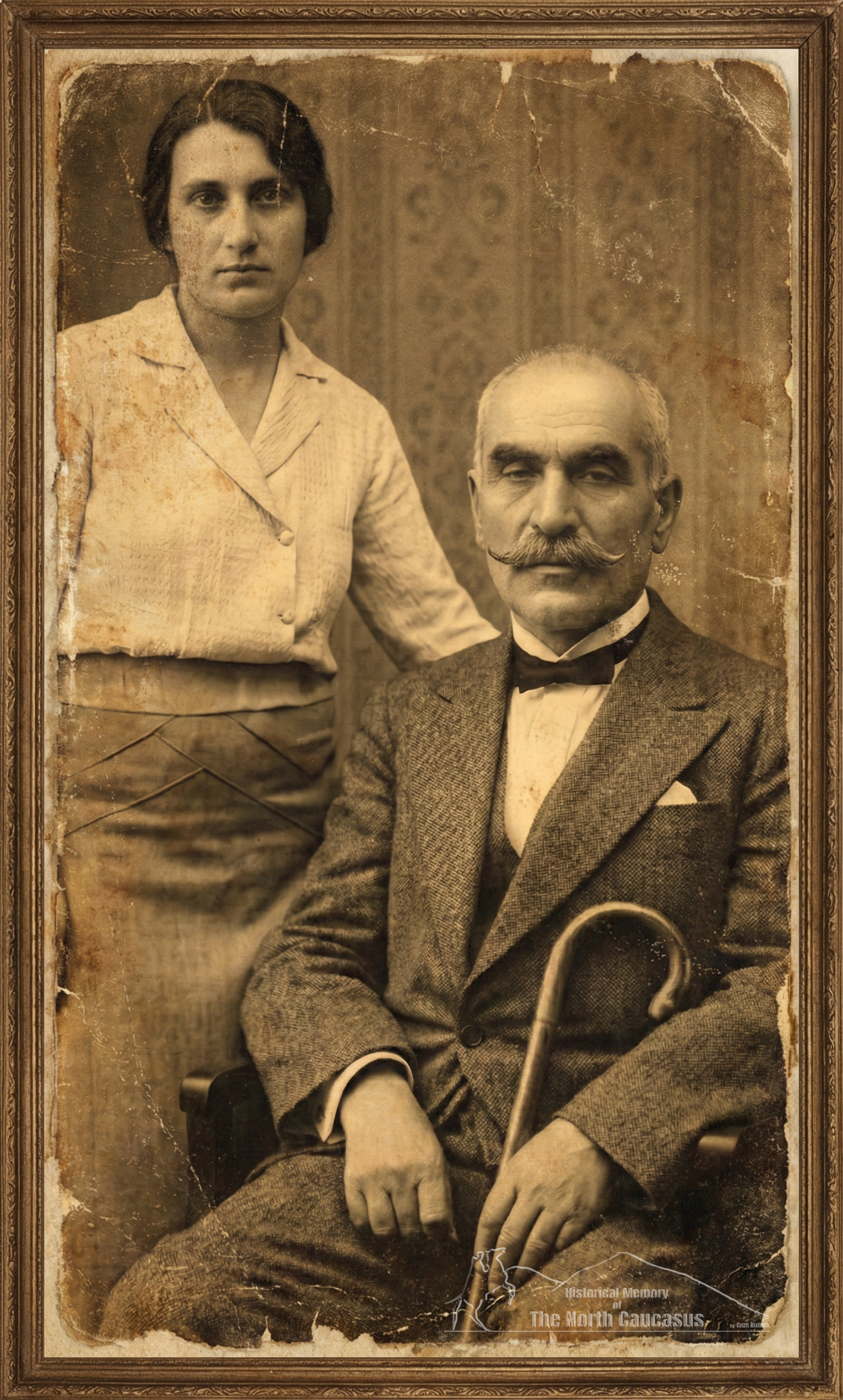
However, doing and realizing are one thing; achieving one's ambitions is another. I have strived for this in every way I can for over two years, and only today did I receive the official notification that I have been accepted into Turkish citizenship under the name Mehmet Halil Pasha Dagestani. Haydar, you will understand how happy I am to have finally thrown off that damned "Russian subject" stamp. There is such a wave of good feeling inside me from joy that I completely forget the interrogation and shake your hands fraternally. I am not writing separately to Tapa because that rascal never answers letters, but I request you to convey to him that I shared my joy first with him as his brother-in-law. I think I will set out around mid-July and pass through Paris to see you all, talk about our common cause, and reach a specific, clear decision.
Heartfelt greetings to Tapa. I kiss the hands of all our ladies, especially Rashidat Khanum (I believe that is your mother's name).
Stay healthy, dear Haydar.
Yours,
Halil (without the "-ov")
(Click on the image for a larger view)
Dear Haydar!The most striking aspect of the letter was that Khalilov—as if he were not the very person who, backed by Tsarist Russian generals, engaged in a show of force, dissolved the Union government, and caused immense suffering in Dagestan for pro-independence Caucasians who had sacrificed everything to establish and sustain the state he claimed never existed, during the one-year-period between May 1919 and May 1920—was now calling for "unity" and common action, while speaking of sublime concepts such as goodwill, tolerance, and trust.
I did not want to answer your kind, sincere letter; I hoped to convey my impressions to you personally at our meeting in Paris. However, now I am forced to make a delicate request of you. Please see Tapa as soon as possible and persuade him to send me money so I can liquidate my affairs here and set out for Paris. I just wrote him a short letter asking him to lend me five hundred francs. It is very unpleasant for me to bother him with this request, but I have no other way out. In Paris, I will obtain money for the rest of the journey from an American friend. For certain considerations, I do not find it appropriate to write to him about this right now.
Going directly from here via the Balkans would not cost more than a thousand francs, but I would very much like to meet personally with you and Tapa about many hot topics regarding the future. Most of our past mistakes, it seems to me, stemmed from all of us acting separately without finding the opportunity for unity of action with mutual consideration and respect. We three have always been and will be united in our warm, sincere love for our poor, tormented people. This is what is essential. Everything else will always be resolved with goodwill, mutual tolerance, and trust. That is why I definitely want to see both of you before going to Ankara. For this reason, I am asking Tapa not for a thousand francs, but only for five hundred francs to be able to come to Paris. Except for some payments, without which departure is impossible, I am ready for everything to leave.
At the same time, I am in a great hurry to leave Berlin, where life has become unbearable, especially nowadays. They are waiting for me in Ankara and have asked repeatedly when I will come. The delay until now had a valid reason; that was the Turkish passport not being sent from Bern (Switzerland). But now both the passport and visa are ready.
In short, dear Haydar, do not give Tapa any peace until he sends the money or writes that I should not rely on him.
I send you my heartfelt greetings and kiss the ladies' hands.
Yours,
(Click on the image for a larger view)
(Click on the image for a larger view)
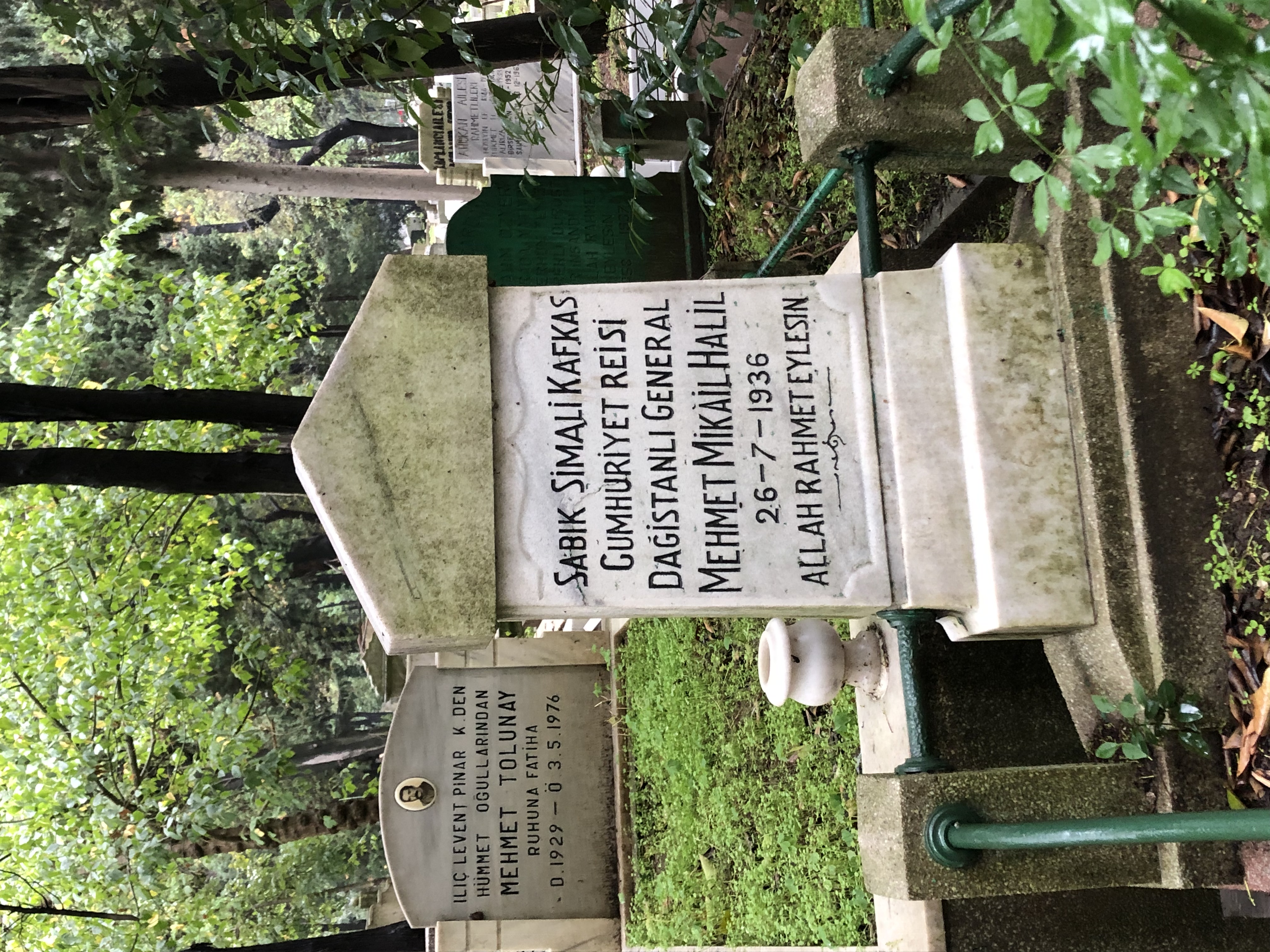
That is why, in the international event program organized in 2018 for the 100th Anniversary commemoration of the Republic of the Union of North Caucasian Mountaineers—briefly referred to as the Republic of the North Caucasus—a commemoration ceremony was held at the grave of General Mikail Khalilov with the title of "3rd President." The most ironic part of this was that the photographs of the 2nd President of the Republic of the North Caucasus, Pshemakho Kotse (Kosok)—who was buried in the same cemetery in Istanbul—and General Mikail Khalilov, who locked him into Denikin’s prison in May 1919, appeared side by side on the event promotion poster. This situation evoked a feeling in me that fifty or a hundred years from now, someone might organize similar events at the graves of figures like Ramzan Kadyrov, and I shuddered with the horror of that feeling.
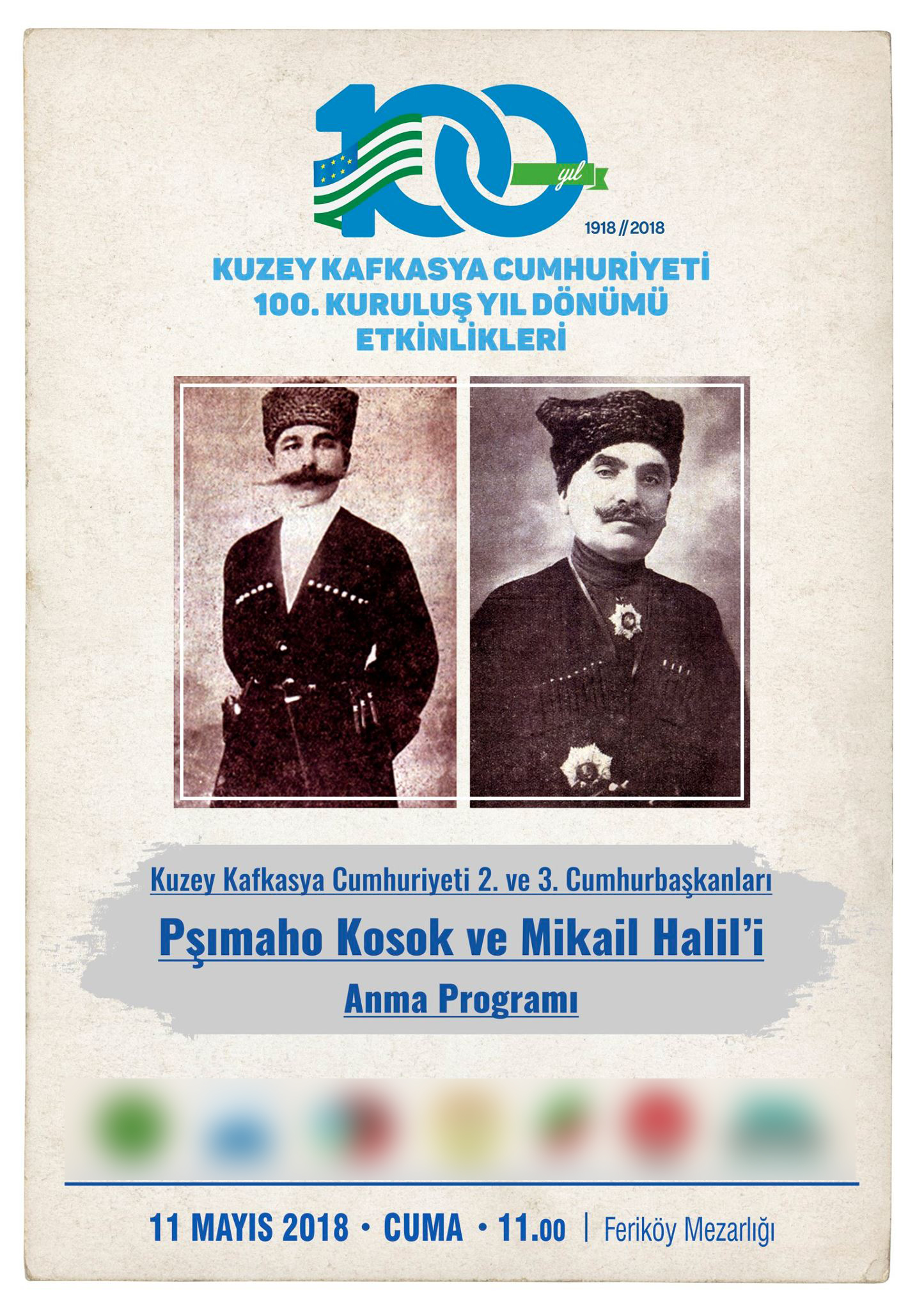
(Click on the image for a larger view)
Cem Kumuk
12 February 2026
References:
(You can access the original e-documents and works by clicking on the links of the entries)
- Kakagasanov and Kaymarazova (Der.). Soyuz Obedineniy Gortsev Severnovo Kavkaza i Dagestana (1917-1918), Mahachkala, 1994, pp.286, 289-290.
- Anton Denikin, Ocherki Russkoy Smuti. 4, Berlin, 1925, p.134.
- Altay Göyüşov, Şimali Gafgaz Dağlılarının Azadlık Uğruna Mubarizesi (1917-1920), Baku, 2000, p.265.
- Kakagasanov and Kaymarazova (Ed.), Soyuz Obedineniy Gortsev, pp.209-211.
- Archives diplomatiques du ministère des Affaires étrangères (AMAEF), Mikail Halilov Documents (1919-1921).
- “Telegramma Generala Khalilova”. Volnyy Gorets. Tbilisi 29 March 1920, № 36. p.3
- “Pokayaniye Khalilova i K”. Volnyy Gorets. Tbilisi 23 February 1920, № 31, p.3.
- IRCICA, Haydar Bammat Private Archive, General Mikail Halil’s letter to Haydar Bammat, Tbilisi, 17 April 1920.
- IRCICA, Haydar Bammat Private Archive, Alihan Kantemir’s letter to Haydar Bammat, Istanbul, 4 February 1922.
- IRCICA, Haydar Bammat Private Archive, Mikail Halilov’s letter to Haydar Bammat, Berlin, 20 October 1922.
- IRCICA, Haydar Bammat Private Archive, Mikail Halilov’s letter to Haydar Bammat, Berlin, 15 June 1923.
- IRCICA, Haydar Bammat Private Archive, Mikail Halilov’s letter to Haydar Bammat, Berlin, 13 July 1923.