
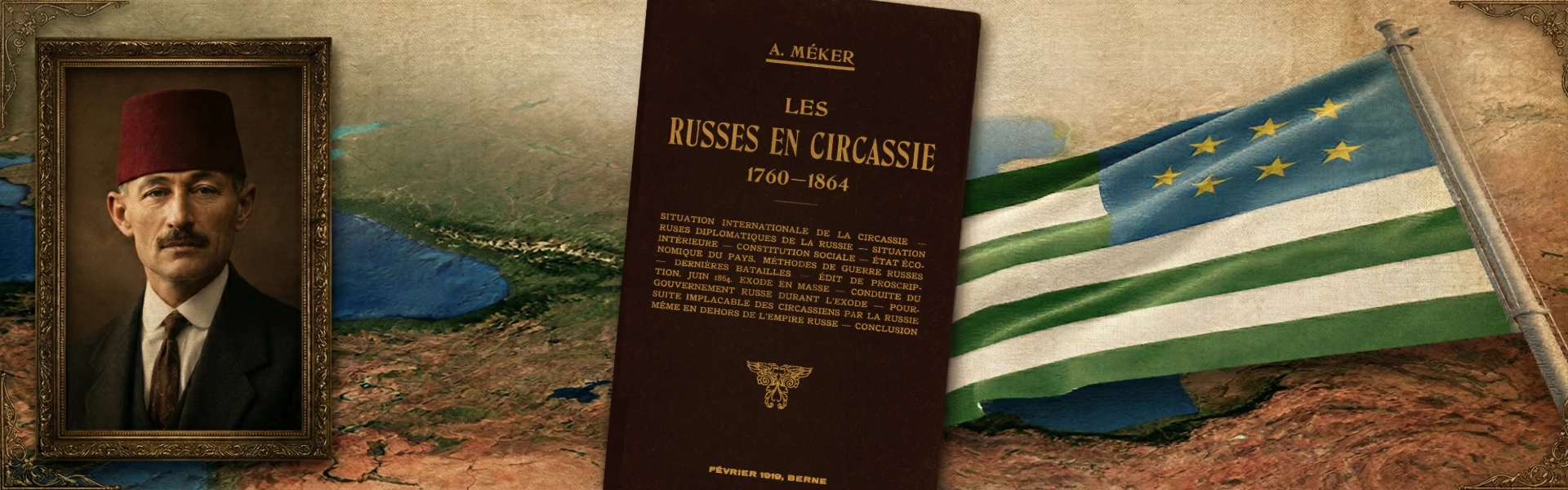
 Türkçe
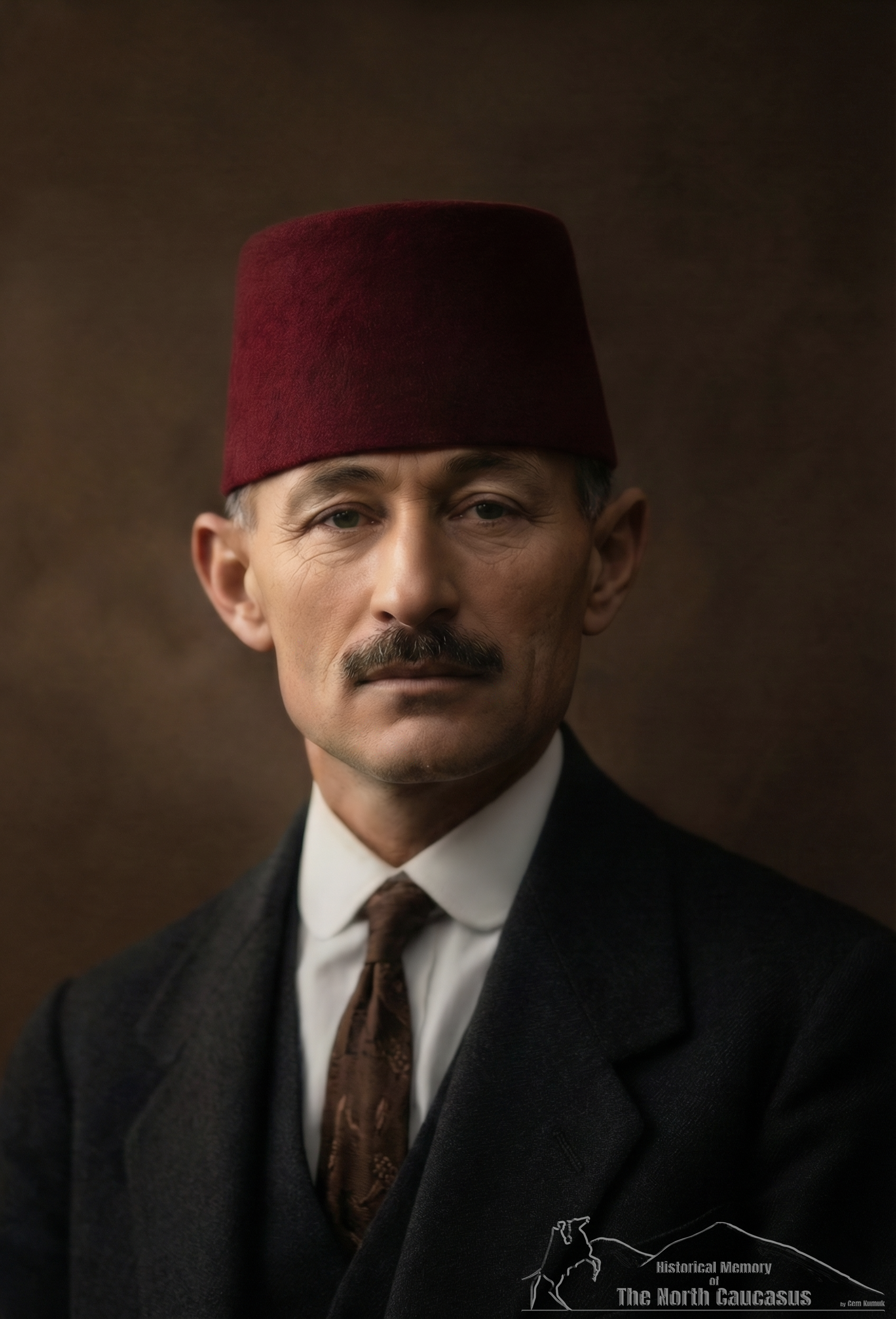
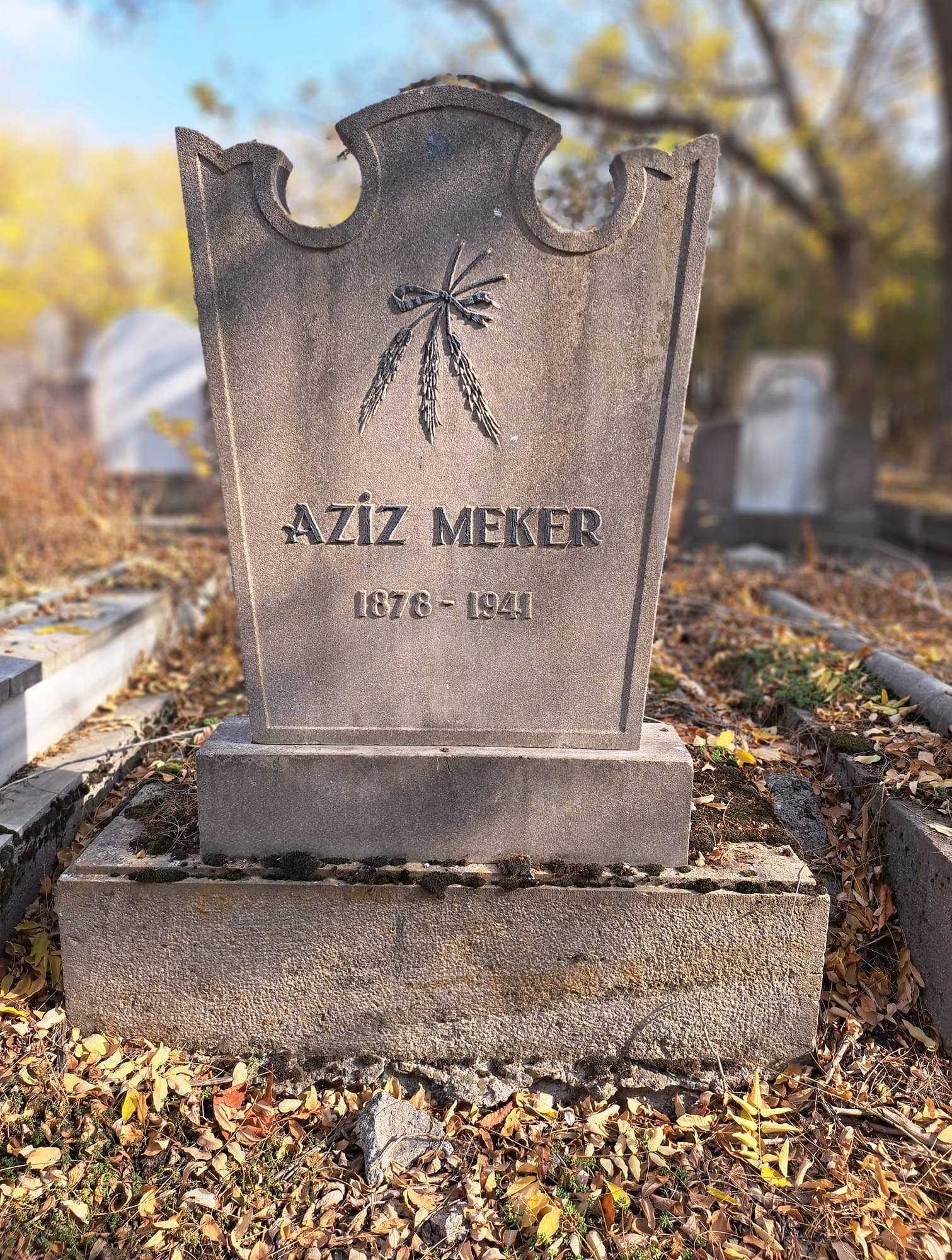
We commemorate Aziz Meker on the 85th anniversary of his passing; a patriotic figure who, despite his decisive roles in the 20th-century history of the North Caucasus, remained largely out of the spotlight due to his modest personality.
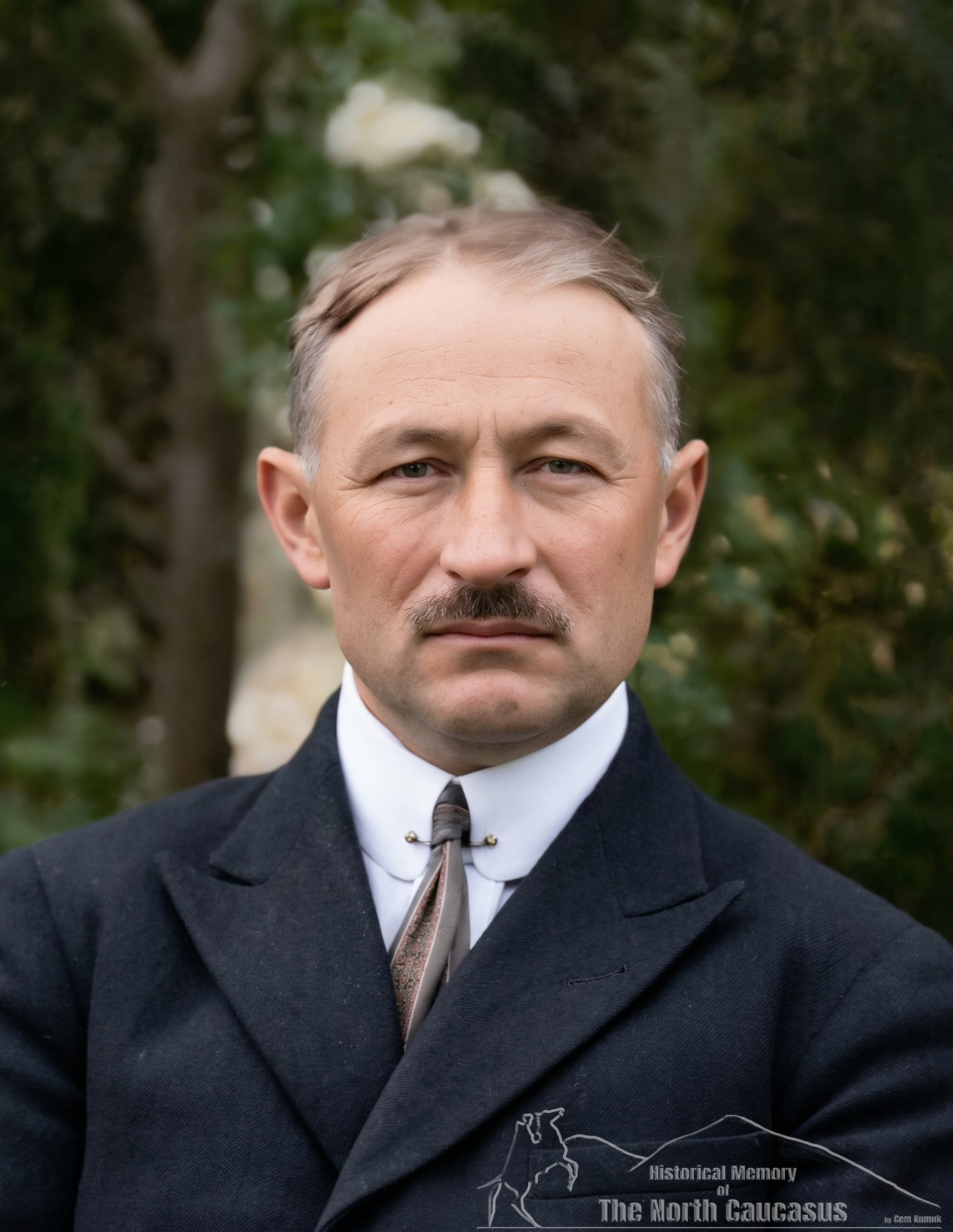
Aziz Meker belonged to the Mker-ipa branch of the prominent Mkanba family of the Ashuwa (Tapanta) Abazins. He was born in 1877 in the village of Biberdkit in the Lower Kuban region. Starting his primary education in his village, Aziz Meker later continued his studies in Batalpashinsk (modern-day Cherkessk). Subsequently, he migrated to Turkey by sea alongside his sisters. He was taken under the protection of Marshal of the Imperial Guard (Hassa Müşiri) Abaza Rauf Pasha, a friend of his uncle Umar Meker, who had previously received religious education in Istanbul and served as the Qadi of Kuban. With Rauf Pasha's assistance, he settled in Kovalca, an Abazin village in Bilecik founded by immigrants who had arrived in 1859.
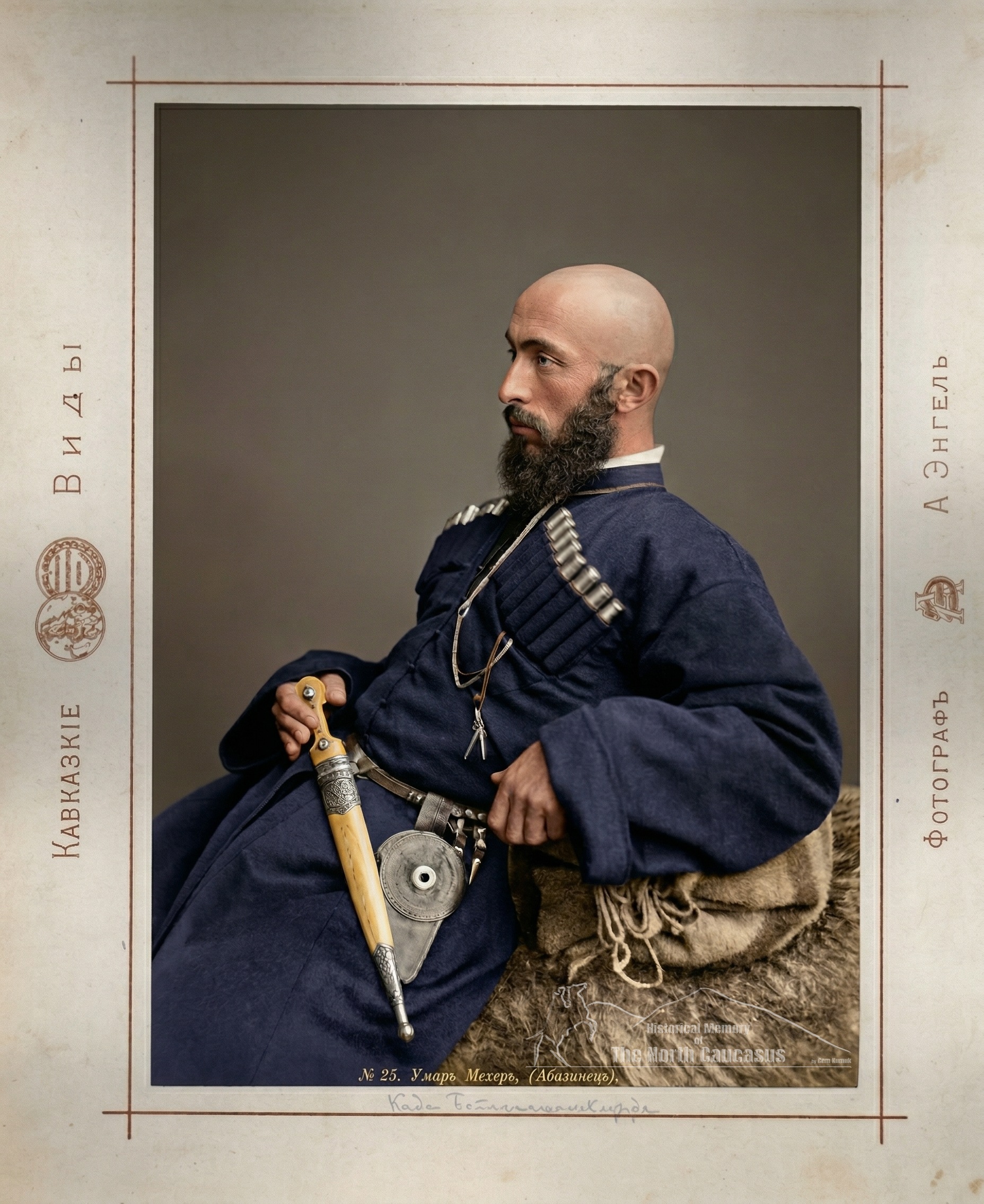
(Click on the image for a larger view)
Upon his return from France, he engaged in advanced sugar beet production on vast lands leased in Thrace together with Rauf Pasha. After Rauf Pasha's death, he continued to manage his own agricultural lands at his farm in Kovalca. Later, Rauf Pasha's son Ataullah and Aziz Meker were appointed to the council within the Ministry of Forestry and Agriculture in 1904. In 1907, Meker began teaching at the Kabataş and Halkalı Agricultural Schools. He became one of Turkey's most preeminent figures, particularly in animal breeding and "Zootechny," and was recognized as the nation's first agricultural engineer.
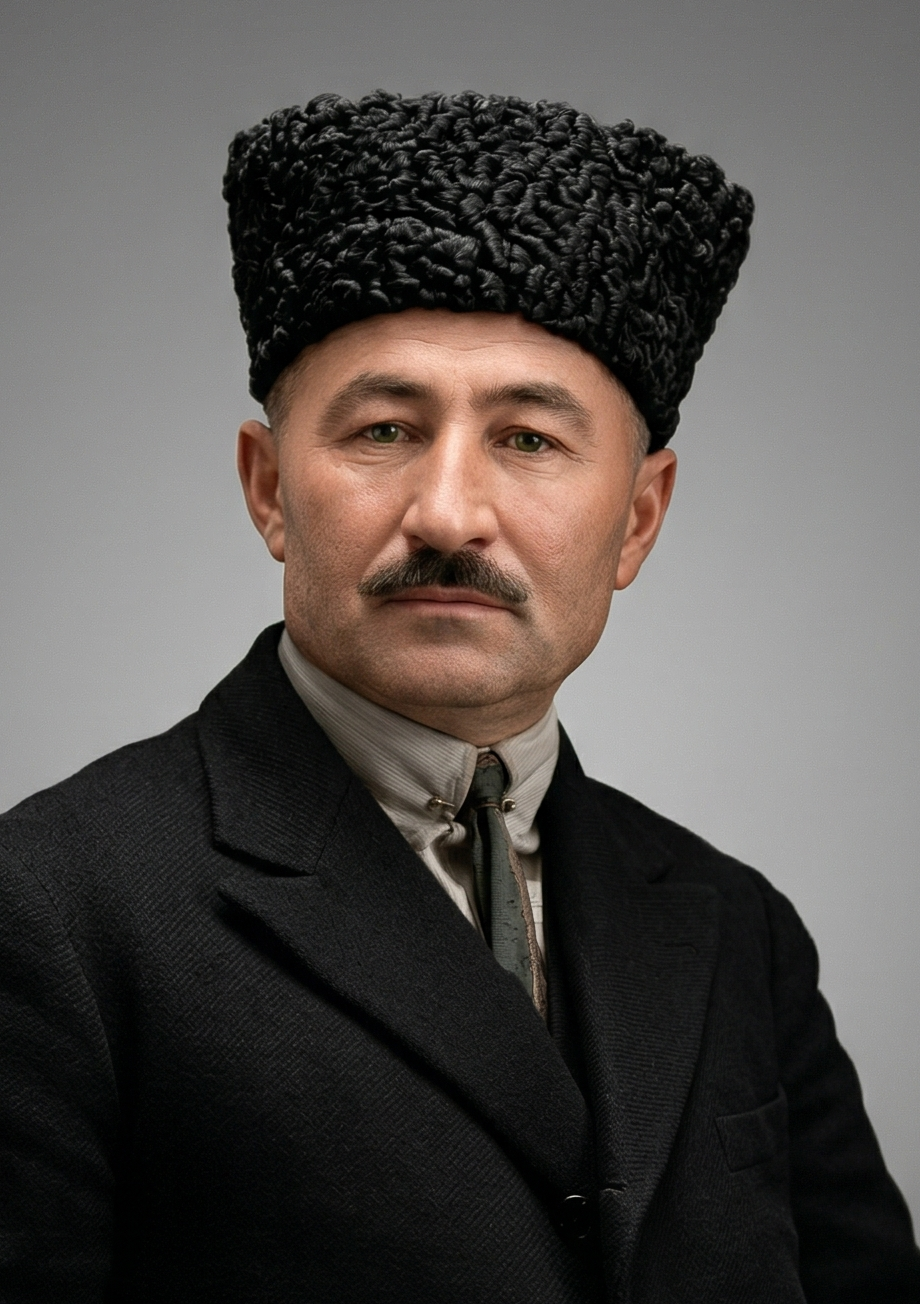
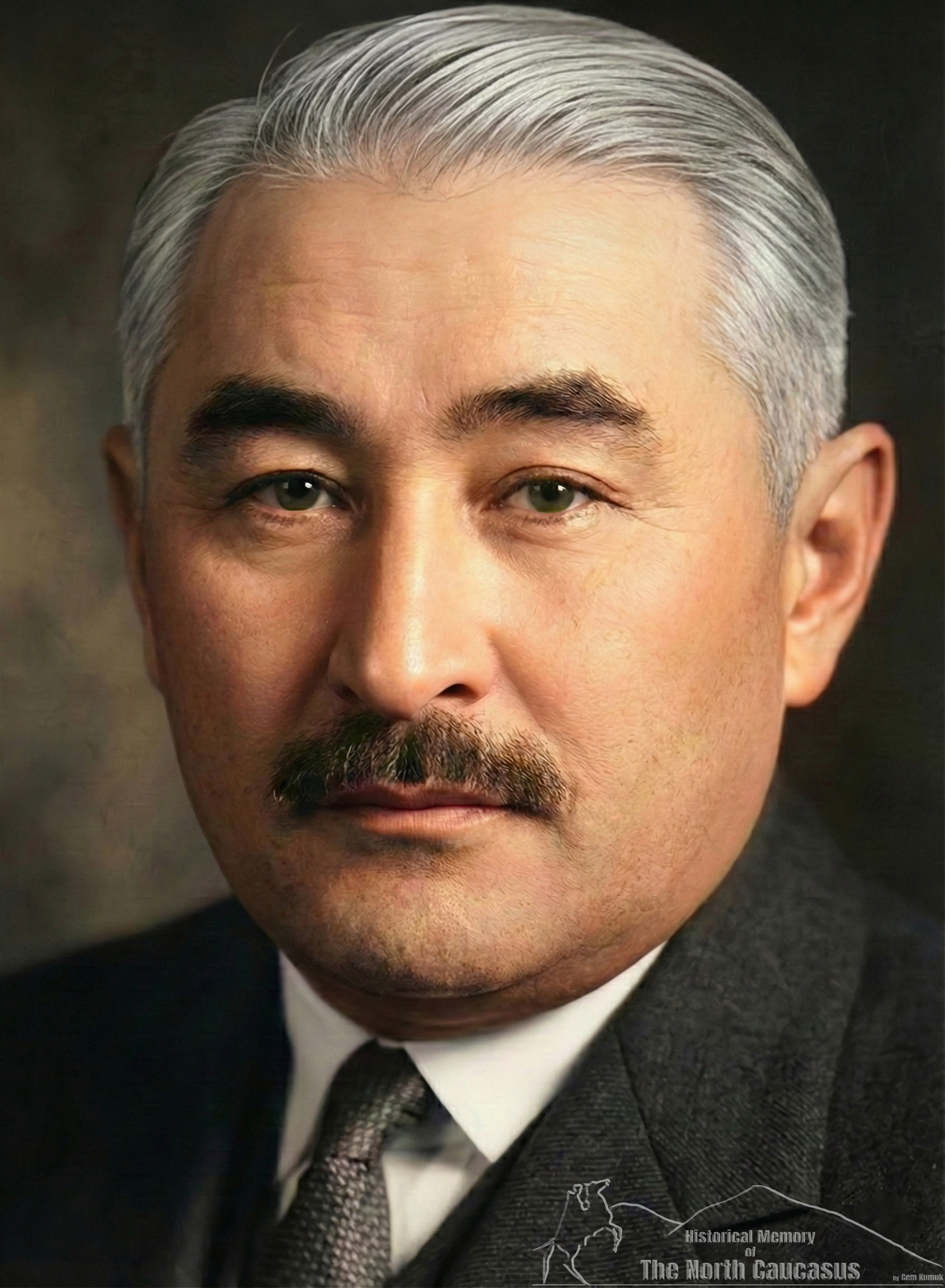
As one of the founders of the Peasant Science Society (Köylü İlim Cemiyeti) alongside Shkhaply Hüseyin Tosun Bey in 1914, Meker evolved beyond being merely an agriculturist, emerging as an organizational political actor during the Second Constitutional Era and World War I. He assumed active roles in organizations such as the Circassian Union and Solidarity Association (Çerkes İttihat ve Teavün Cemiyeti) and the Northern Caucasian Political Emigres Committee. He delivered various lectures on the Caucasus at the Northern Caucasian Society in Istanbul. With a delegation led by Marshal Thygo Deli Fuad Pasha, he conducted political and diplomatic activities for the independence of the Caucasus in centers such as Vienna, Berlin, and Lausanne.[1] In 1916, he chaired the Northern Caucasian delegation at the Third Conference of Nationalities in Lausanne and met with Vladimir Lenin in Zurich, acquiring firsthand information about the impending Russian Revolution for the very first time. [2]
(Click on the image for a larger view)
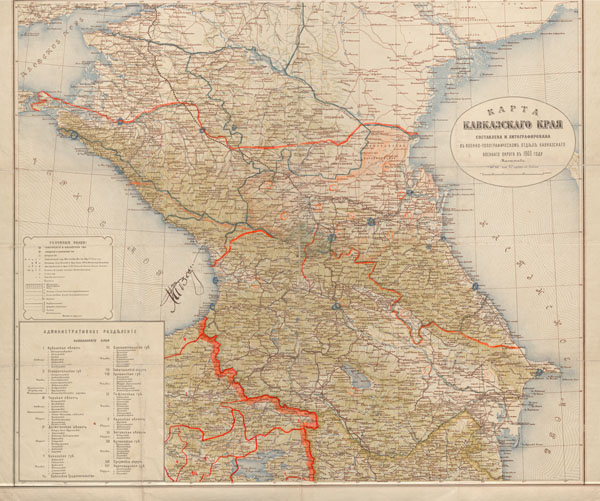
(Click on the image for a larger view)
(Click on the image for a larger view)
(Click on the image for a larger view)
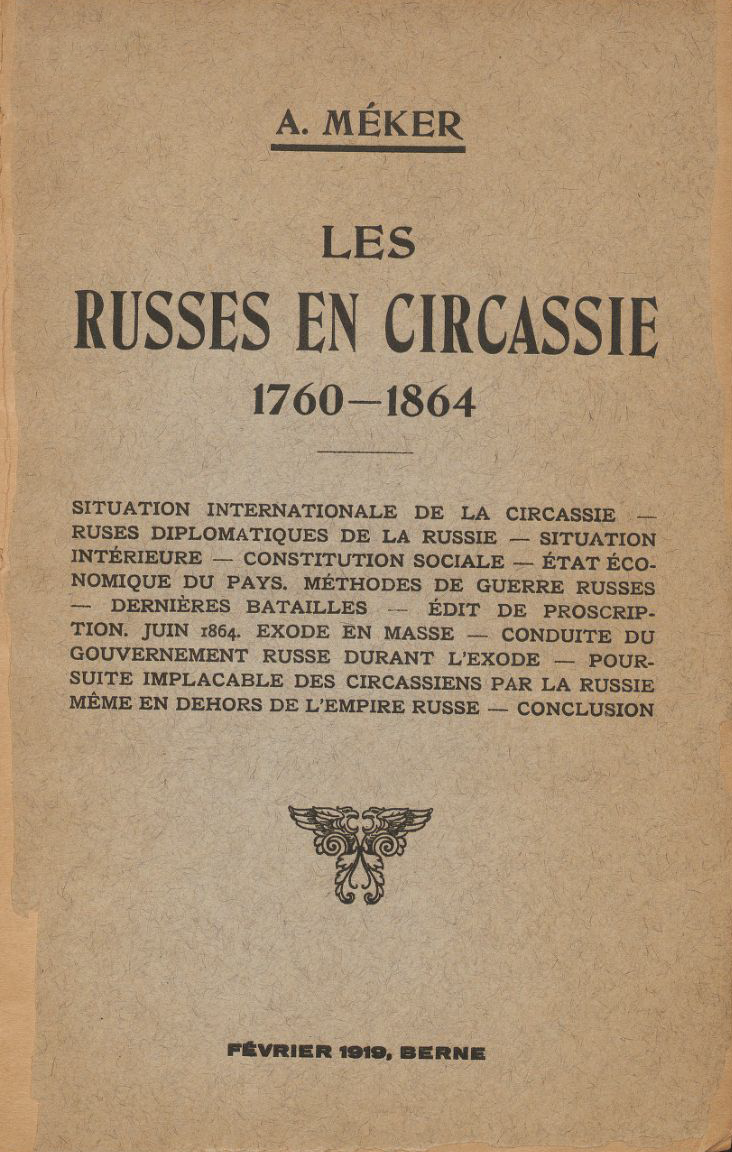
Published in the immediate aftermath of World War I, A. Meker’s book is an impassioned political and historical manifesto. It is directly addressed to the 1919 peace conferences in Paris, which the author views as a "supreme court" capable of redressing the historical wrongs committed against oppressed nations.
The book opens by framing its argument as an appeal to the "supreme and supranational court" of the 1919 Paris Peace Conference. Meker explicitly states his goal is to expose the diplomatic deceit and "crimes against humanity" committed by the Russian Empire over a century.
The book’s primary objective is to expose the century-long campaign of diplomatic deceit, military brutality, and forced exile perpetrated by the Russian Empire against the independent Circassian people between 1760 and 1864.
To ensure his arguments are not dismissed as biased, Meker strategically relies heavily on the accounts of Western observers—primarily the English traveler James Stanislas Bell and the French writer Ed. Dulaurier—as well as official Russian documents and international treaties.
Key Themes and Arguments
1. Diplomatic Deception and Circassian IndependenceMeker dedicates significant space to proving that Circassia was never a rightful part of the Russian or Ottoman Empires, refuting the Russian narrative that the Circassians were simply "rebels" or "insurgents".
This chapter is the legal core of the book. Relying heavily on James S. Bell’s analysis, Meker tracks the diplomatic history to prove that Russia recognized Circassian independence before suddenly claiming it had "acquired" the territory from Turkey.
Treaty of Kutchuk-Kainardji (1774): Signed between Russia and the Ottoman Empire, Article 3 of this treaty explicitly recognized the Tatar peoples—including those of the Kuban region—as "free nations, entirely independent of any foreign power". The treaty established that they were governed by their own laws and depended only on God, stripping the Ottoman Porte of any temporal or civil intervention, leaving only spiritual ties to the Sultan as Caliph. Both empires formally renounced any claim to these territories.
Explanatory Convention (1779): To resolve disputes over the 1774 treaty, the two powers signed a convention. It reaffirmed the absolute independence of the Tatars (which included Circassians). The Ottoman Porte solemnly promised not to interfere in their civil and political power, acting only as a spiritual influence.
Russian Manifesto of 1781 & Treaty of 1783: In April 1781, Empress Catherine II unilaterally published a manifesto annexing the Crimean peninsula, the Island of Taman, and the Kuban. However, in a subsequent 1783 treaty with Turkey, Russia officially established the Kuban River as its frontier and renounced claims to the nations situated between the river and the Black Sea (Circassia).
Treaty of Adrianople (1829): This is the treaty Russia used to justify its conquest. Following a Russo-Turkish war, Article 4 of the treaty declared that the entire coastline of the Black Sea, from the mouth of the Kuban to the port of Saint-Nicholas, would "remain in perpetuity under the domination of the Russian Empire".
Refuting Justifications: Meker and Bell argue this was a massive diplomatic fraud. Turkey could not cede Circassia because Turkey never owned it. The Circassians had never admitted temporal supremacy to the Sultan, never paid taxes to his treasury, and never provided soldiers to his army. When Russian generals arrived to take possession of the land citing this treaty, Circassian delegates fiercely protested, telling the general that the Sultan's "gift" was as worthless as gifting a wild bird sitting in a nearby tree.
Meker strongly criticizes Dulaurier (whose account he otherwise quotes extensively to prove the suffering) for attempting to excuse the Russian government's actions or blame the tragedy on Turkish propaganda, arguing the expulsion was a calculated act of imperial expansion.
2. The True Nature of Circassian SocietyTo counter the Russian imperial narrative that the Circassians were unruly, lawless brigands, the text details a society that was remarkably progressive, highly structured, and governed by a strong moral code.
Democratic Governance: The society was governed by local communal councils and general assemblies of delegates, ensuring public affairs were handled democratically. Circassian society was divided into princes, nobles, free men, and serfs (a class that had eventually disappeared). The government was highly democratic; every public issue was submitted to the people. Local affairs were managed by elected communal councils, while national issues were debated in a general assembly of delegates
The Three Estates: Circassian society was primarily divided into three main classes: princes, nobles, and the vast majority of free men who worked in agriculture or trades.
The End of Serfdom: While historical wars had created a fourth class of serfs (composed of prisoners of war and Russian deserters who preferred farming in Circassia to the Russian military), the text notes that this system of servitude had completely disappeared by the time the book was written.
Political Constitution: The "Greek City-State" Model
Democratic Governance: The author explicitly compares the Circassian political model to that of ancient Greece. While the society had an aristocratic form (having princes and nobles), its government was deeply democratic.
Communal Power: Every matter of public interest—be it political, military, or financial—had to be submitted to the people. Each commune had a council with an elected president and members who were directly accountable to their voters.
National Unity Without Despotism: For larger tribal or national issues, delegates from the communes and princes would gather in general assemblies to deliberate and make decisions. The text emphasizes that Circassia maintained its national unity for centuries not through the force of a hereditary despot, but through the shared moral conscience and solidarity of its people.
Social Harmony: Women were highly respected and masters of their households, and children were raised through persuasion and good examples rather than violence. While the household was multi-generational and patriarchal (with grandfathers living with their grandsons), the Circassian woman was considered the "absolute mistress in her home".Husbands freely managed external business, but they strictly avoided encroaching on their wives' domestic prerogatives. This division of power and mutual respect meant that domestic disputes were incredibly rare.
In stark contrast to many contemporary European societies, Circassians never used violent or physical means to discipline their children. Instead, education was built on a foundation of individual respect, utilizing persuasion, gentleness, and the modeling of good behavior.
Among the aristocratic classes, immense effort was put into teaching children the concept of self-sacrifice—instilling the idea that the individual must always be willing to sacrifice themselves for the public good.
Agricultural Prosperity: Quoting James Bell’s travels in 1837, the text describes beautifully cultivated valleys, neat enclosures, and rich pastures that rivaled the English countryside. Observers in 1837 noted that the Circassian valleys were incredibly well-cultivated, featuring neat hedges, rich pastures, and fields of grain that reminded English travelers of the well-kept farms of Yorkshire. They had enclosed gardens growing cabbage, onions, beans, hemp, flax, and tobacco.
3. Russian Atrocities and Scorched-Earth TacticsThe book documents the brutal methods used by the Russian military to subdue a population that refused to surrender its freedom. This chapter exposes the scorched-earth tactics used by the Russian military against a much smaller population. Recognizing they could not easily defeat the Circassians in the mountains, the Russian army employed systematic destruction. They burned harvests, tore down homes, and felled forests to induce famine and to starve the population and force submission. The author highlights the immoral tactics and the dishonorable methods of specific commanders, like General Sass, who orchestrated the treacherous murder of a young Circassian prince, Arslan-Gheri, while he slept, and then had the body thrown into the woods for animals to eat. Russian generals also issued official decrees offering massive silver bounties to anyone who would bring them the severed heads of Circassian leaders. Similarly, General Raewski issued official documents offering 1,000 silver rubles to anyone who would bring him the severed head of the Circassian leader Giranduk Berzeg Hadji.
The Naval Blockade: From 1829 to 1864, the Russian Black Sea fleet maintained a rigorous blockade of the Circassian coast. The goal was to cut off all commercial communication with the West and the Ottoman Empire, hoping to reduce the independent tribes through forced famine.
Targeting Civilians: The war was waged pitilessly against the entire population; troops killed or enslaved women and children to break the nation's morale.
Military Colonization: As the army advanced, it utilized a strategic colonization method. Troops were ordered to clear forests, build roads, and immediately construct fortified Cossack villages (stanitzas) on the conquered land. This created an inescapable steel net of fortifications that continuously pushed the Circassians further into the barren mountains.
4. The 1864 Exodus and AnnihilationThis section chronicles the tragic end of the nation between 1860 and 1864, heavily quoting French writer Edouard Dulaurier (while constantly fact-checking and critiquing Dulaurier's pro-Russian biases). After capturing the prominent leader Schamyl and isolating the remaining Circassian tribes, Russia launched a final, overwhelming offensive.
The Final Push: Russia concentrated an overwhelming force of 300,000 regular troops against a starving, blockaded, and disease-ridden Circassian population. The final stronghold in the Kbaada valley fell in May 1864.
The 1864 Expulsion Decree: In June 1864, Grand Duke Michael issued a decree giving the surviving Circassians one month to empty their valleys or face treatment as prisoners of war.
A Humanitarian Catastrophe, The Exodus: This forced an estimated half a million people to flee to the coast. This led to one of the most horrific forced migrations in history. Hundreds of thousands of Circassians were driven to the coast and packed onto small boats. In transit camps at Trebizond and Samsun, the conditions were apocalyptic. Refugees were forced to drink seawater, and diseases like typhus, smallpox, and dysentery ran rampant. Corpses left unburied in the streets and camps.
Mass Mortality: The death tolls were staggering, with corpses piling up on shores and in the streets; at one point in Trebizond, 400 individuals were dying daily out of a refugee population of roughly 30,000.
5. Eyewitness Accounts of the 1864 ExodusMeker relies heavily on the reports of Dr. Barozzi, a medical officer sent by the health council of Constantinople to manage the crisis, whose accounts paint a devastating picture of the forced migration.
The Agony of the Sea Crossing and Arrival
"The last convoy, which counted 6,000 people, crammed onto about twenty boats where the dead and dying lay pell-mell. As the journey, slowed by bad weather, had been very harsh, these poor people, stripped of everything, had been forced to quench their thirst by drinking seawater. They were so weak that upon arrival they had to be carried by hand, like parcels, to be placed on land..."
— Analysis: This quote highlights the total dehumanization of the refugees. Driven to the coast by the Russian military's decree, they were packed onto vessels completely unsuited for mass transport. The detail of refugees having to drink seawater and being unloaded "like parcels" underscores the severe physical depletion and total abandonment they suffered before even reaching the shores of exile.
The Absence of Infrastructure and Care
"The conditions of the emigrants during the crossing are terrifying... Once on land, in the camps, these conditions are hardly better; they are without shelter, abandoned to themselves, without care, without sanitary police, without any assistance whatsoever."
— Analysis: Dr. Barozzi’s blunt assessment shatters any illusion that this was an organized or "regulated" resettlement. The refugees were effectively dumped onto foreign shores. The lack of basic shelter or medical care meant that the diseases bred on the overcrowded ships—such as typhus, smallpox, and dysentery—were allowed to ravage the camps unchecked.
The Mathematics of Starvation and Mortality
"In April last, in Trebizond, 400 individuals were dying per day out of a population of 27 to 30,000 emigrants; but it is in Samsun that the mortality is truly terrifying, because the misery there is also greater... the authority only had to distribute, to more than 100,000 individuals, 10,000 okas of bread per day..."
— Analysis: The sheer scale of the death toll is staggering. A daily death rate of 400 out of 30,000 means that over 1% of the camp's population was perishing every single day. The underlying cause was absolute starvation; the local authorities in Samsun were mathematically incapable of feeding the influx of refugees, leaving tens of thousands to literally starve to death on the shores.
6. Reactions of the European Press and DiplomatsThe book illustrates a stark contrast between the sympathy of the European public (and press) and the paralyzed, often misinformed, reactions of European diplomats.
Parliamentary Confusion: In the British House of Commons, debates raged in 1837 and 1838 over Russia's right to seize British merchant ships, like the Vixen, on the Circassian coast. Prominent figures like Lord Palmerston, Dr. Lushington, and Lord John Russell debated the legal status of Circassia . Meker and James Bell point out that these politicians were profoundly ignorant of the actual situation and had been successfully duped by Russia's deliberate misrepresentation of the Treaty of Adrianople .
Journalistic Sympathy: By 1840, the bravery of the Circassians in recapturing Russian forts garnered widespread admiration in the West. James Bell notes that almost all newspapers praised the Circassian exploits, except for a small number of editors who were politically contracted to support specific agendas.
Diplomatic Paralysis: Despite public sympathy, European intervention never materialized. Russian diplomacy skillfully played Western powers against each other, preventing England and France from acting together by allegedly promising France support against Germany.
International Indignation: When the final 1864 decree of expulsion was issued, it caused a "thunder of indignation" in the West. However, as the text cynically notes, "the ombrageous susceptibilities of an alarmed policy silenced the voice of humanity," and no foreign power stepped in to stop the mass deportation. The Ottoman Empire eventually asked Russia to slow down the emigration due to the catastrophic death tolls, but it was already too late.
7. The Resettlement of Circassia by the Russian Empire (Repopulation)Based on A. Meker's book—specifically drawing from the accounts of Edouard Dulaurier included in the text—the Russian Empire’s repopulation of Circassia was a highly organized, state-sponsored demographic replacement. The goal was to permanently secure the newly conquered frontiers by replacing the native "half-pagan and Muslim" tribes with "European and Christian" populations accustomed to industrious labor.
Here is a detailed examination of how the Russian Empire executed this colonization:
The Blueprint for Colonization
The repopulation effort was not left to chance; it was a militarized operation that began even while the war was still being fought.
The Strategic Stanitzas: As the Russian army advanced and cleared out the native populations, troops were immediately ordered to chop down forests, build roads, and establish fortified villages known as stanitzas. These served as a creeping, inescapable net of military and agricultural outposts.
The Imperial Ukase of 1862: The colonization was formalized by an imperial decree (ukase) in May 1862, which targeted the foothills of the Kuban province. To enforce this, regiments of the line and Black Sea Cossacks were merged into the "Kuban division" and ordered to move forward into the emptied lands.
Land Allocation and Financial Incentives
To attract and support the massive influx of colonists, the Russian government provided extensive financial backing and prime real estate.
Dividing the Spoils: The land was surveyed and divided, with 136,000 dessiatines (roughly 148,530 hectares) of the absolute best land in the empire reserved specifically for the Cossacks. Individual families were granted generous lots of 20 to 30 dessiatines.
State Funding: The government allocated a massive fund of 10,139,000 rubles to cover the costs of colonization.
Family Grants: Each family received between 121 and 435 rubles, depending on whether the head of the household was a simple soldier or an officer. They also received specific funds for travel, personal equipment, and food.
Religious Infrastructure: To cement the new cultural and religious identity of the region, the state allocated 10,000 rubles for the construction of an Orthodox church in every single stanitza.
The Demographics of the Colonists
The plan initially called for the settlement of 17,000 families, amounting to over 100,000 people. The Cossack was deemed the perfect pioneer for this brutal frontier due to a blend of military discipline and a rugged, adventurous lifestyle. The quota of families was drawn from specific groups:
— 14,000 families from the troops of the Kuban line.
— 1,200 families of Don Cossacks.
— 2,000 families of Crown peasants.
— 800 families of Azov Cossacks.
— 600 families of married soldiers from the Caucasus army.
A Grim "Stroke of Luck" for the Settlers
One of the most chilling details Dulaurier notes is the surreal ease with which the colonists of 1864 transitioned into their new homes.
Because the crisis of the final war and the expulsion decree struck so suddenly, the Circassians had already plowed and sown their fields during the autumn, completely unaware of their impending doom.
Consequently, when the Russian and Cossack colonists arrived on the newly emptied lands, they simply harvested the crops that the exiled and perishing Circassians had planted for themselves.
8. ConclusionThe speed of this demographic shift was staggering. Originally planned to take six years, the massive influx of immigrants cut that time in half. By the end of the campaign, 111 stanitzas had been founded in the Kuban province alone, housing over 14,200 families. The region, which had been the ancestral home of the Circassians for millennia, was entirely transformed into a Russian province almost overnight.
Meker’s Les Russes en Circassie is a poignant, well-documented cry for historical justice. It serves as both a detailed indictment of 19th-century Russian imperialism and a tragic eulogy for the lost homeland of the Circassian people. By relying on external treaties and Western eyewitness accounts, Meker effectively highlights the gap between Russia's self-proclaimed "civilizing mission" and the brutal reality of its conquests.
Meker concludes by aggressively refuting the excuses made by Russian apologists (like Dulaurier) who tried to blame the exodus on Turkish propaganda or Circassian religious fanaticism. Meker firmly states that the annihilation of Circassia was a calculated, deliberate act of Russian imperialism designed to secure the Caucasus for future expansion into Asia, completely disregarding human life and international morality.
Based on the concluding chapters of A. Meker’s book—which synthesizes both the strategic admissions of Russian apologists like Edouard Dulaurier and Meker’s own 1919 post-World War I analysis—the geopolitical consequences of Circassia's fall were catastrophic for European security. Meker argues that Europe remained dangerously naive about Russia's ultimate ambitions.
Meker’s final geopolitical conclusions for the fall of Circassia are as follows:
- The Removal of a Vital Buffer State. For centuries, Circassia acted as a natural and human barrier protecting the Middle East and, by extension, Europe, from Russian expansion. By annihilating the Circassian nation, Russia removed the last obstacle in the Caucasus, completing a massive chain of frontiers that stretched from the Baltic Sea to the borders of the Middle East and Central Asia.
- The Reallocation of Russian Military Might. The conquest had immediate and terrifying military implications for the rest of the continent. For decades, the grueling war in the Caucasus had bogged down at least 100,000 Russian regular troops, neutralizing them from European conflicts (such as during the Crimean War). With Circassia defeated, the Russian Empire suddenly freed up these 100,000 soldiers—and the 25 million rubles a year it took to maintain them—making this massive force available to threaten Europe or other parts of Asia.
- Total Dominance of the Black Sea. The fall of the Circassian coast turned the Black Sea geographically into a "Russian lake". It provided Russia with an impregnable fortress (the Caucasus mountains) to compensate for the fortifications they lost at Sevastopol during the Crimean War, setting the stage for Russia to re-establish absolute preeminence in the region and threaten the Ottoman Empire and European trade routes.
- The Unrelenting Drive for World Domination. Meker warns the European powers that the destruction of Circassia was not an isolated frontier dispute, but a calculated step in Russia's historical "dream of world domination". He criticizes Western diplomats and intellectuals for their blindness, arguing that Russia uses periods of peace merely to digest its conquests before launching new aggressions against Western civilization.
- The Bolshevik Threat as Renewed Imperialism. Writing in 1919, Meker connects the 19th-century Tsarist atrocities to the contemporary rise of the Soviet Union. He warns the Paris Peace Conference that the new Bolshevik regime is merely a continuation of Tsarist imperialism painted red. He argues that whether ruled by Tsars or Bolsheviks, the Russian state remains an autocratic, expansionist threat to the free world.
- The Proposed Geopolitical Solution. Meker concludes that the only way Europe can secure its future and stop this perpetual eastward and southward aggression is to correct the historical mistake of abandoning the Caucasus. He pleads with the Entente powers (France and England) to support the creation and recognition of an independent confederation of free Caucasian peoples (including Circassians, Georgians, and Daghestanis). Only by restoring this geographic and political barrier, he argues, can Europe truly protect itself from the endless waves of Russian imperialism.

Istanbul, 24 March 2026
References: Click on the links to Access the original Works and documents
[1] Bundesarchiv, Letter sent by Aziz Meker to the German Imperial Government for military assistance, Berlin, December 21, 1915.
[2] Tasvir-i Efkar Newspaper, “Aziz Meker’s Interview with Lenin”, December 20, 1333, No. 2316, p.1.
[3] Cem Kumuk Personal Archive, Passport belonging to Aziz Meker.
[4] Aziz Meker Personal Archive, Draft Map of the United Mountaineers Union Republic of the North Caucasus, Bern, 1919.
[5] Aziz Meker, Les russes en Circassie, 1760-1864, Bern, 1919.
[6] Archives diplomatiques du ministère des Affaires étrangères (AMAEF), Introduction regarding the Mountaineers’ Republic of the North Caucasus and the delegation to the Peace Negotiations, 1919.
[7] IRCICA, Haydar Bammat Archive, The final Northern Caucasian National Council convened in Khetash-Kort, May 6-11, 1920.