
 Türkçe
The 19th-century Russo-Caucasian Wars arguably constitute the most striking, and perhaps the foundational, period of North Caucasian history. A vast corpus of literature has been produced regarding this era to date. However, rather than being the products of rigorous scientific research, the works published in the 19th century were predominantly memoirs, travelogues, and texts of an anthropological or political nature. The proliferation of scientific monographs in the West did not occur until the last quarter of the 20th century.
Today, however, I will closely examine a work published in the first half of the 20th century that has been persistently overlooked. Polish historian Ludwik Widerszal’s work, titled “Caucasian Issues in European Politics Between 1831 and 1864” is perhaps the first book on the 19th-century Russo-Caucasian Wars written in accordance with scientific standards and academic discipline. Yet, it has consistently been overlooked in the West, in the Caucasus and Russia, and even in Turkey, where extensive research on this subject is otherwise conducted. To a certain extent, I referenced sections of this work in my 2004 essay titled "Whereabout Prometheus?" Similarly, in 2010, our esteemed colleague Prof. Abdullah Temizkan authored an article that partially cited segments of this book. Nevertheless, I have observed with astonishment that, until quite recently, the book has been entirely ignored even in academic theses directly addressing the influence of the era's European powers on these events.
What makes this work—authored by Ludwik Widerszal in 1934 during the Second Polish Republic under the dictatorship of Marshal Józef Piłsudski—truly exceptional is undoubtedly its bibliography. Leaving aside the advent of digital technology, in an era when even photocopying had not yet been invented, one cannot help but deeply respect the immense effort the author exerted upon seeing the published research, periodicals, and primary source documents from Polish, British, and French archives listed in the bibliography. Even today, when access to sources is vastly facilitated, it is rare to encounter such a comprehensive bibliography in many academic studies.
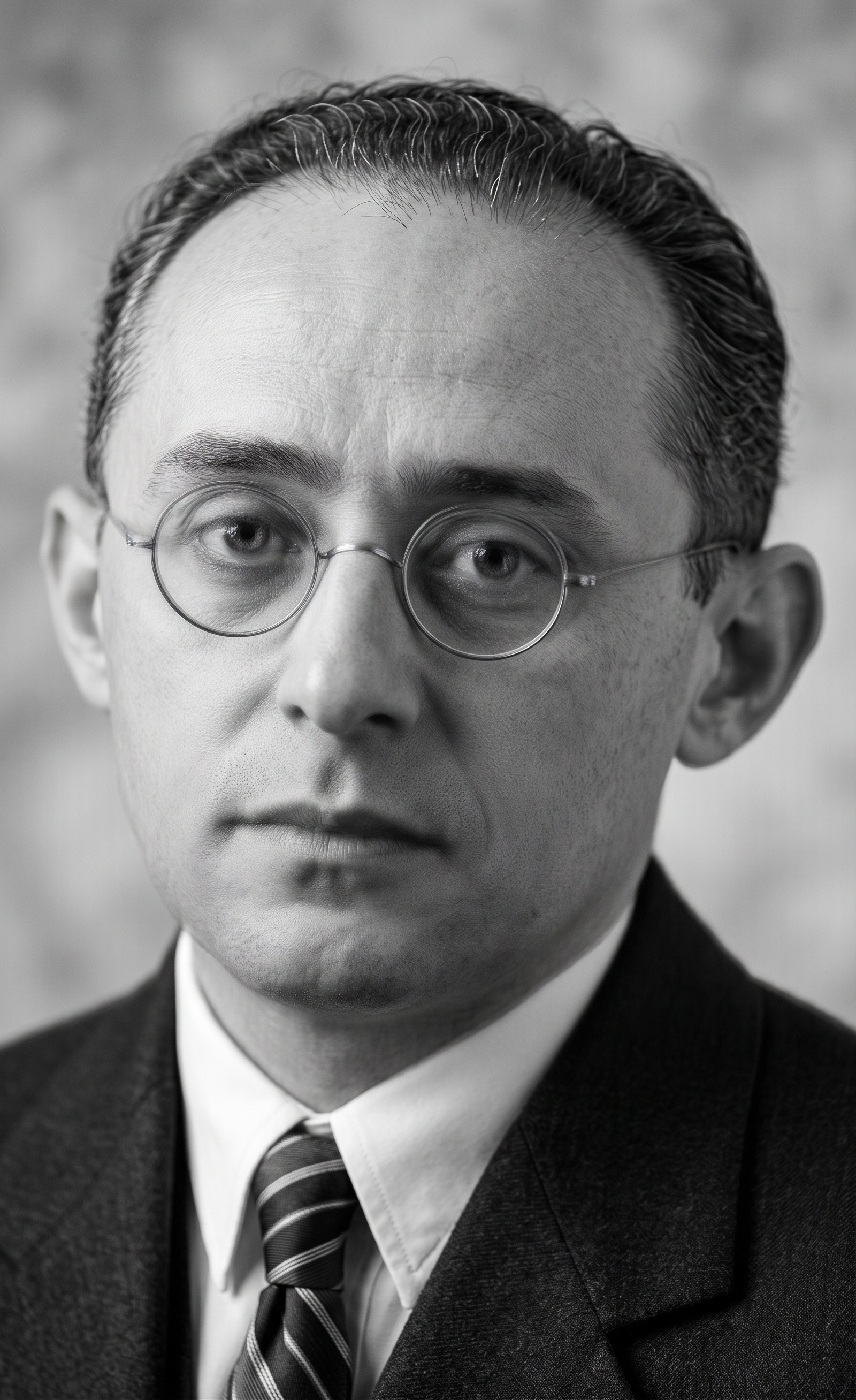
Another factor that further magnifies the significance of Widerszal’s study is the era in which it was published. Undertaking an academic study on the Caucasian struggle for freedom and independence during the Piłsudski regime—which championed the Promethean Movement and provided substantial support to anti-Soviet factions—was naturally an endeavor encouraged by the state. However, the arguably "flawed" conclusions Widerszal reached at the end of his study were by no means to the liking of the political authorities of the time. Consequently, by publishing this work in 1934, Widerszal gambled with his life; he would pay the ultimate price for this gamble ten years later when he was assassinated by a right-wing militant.
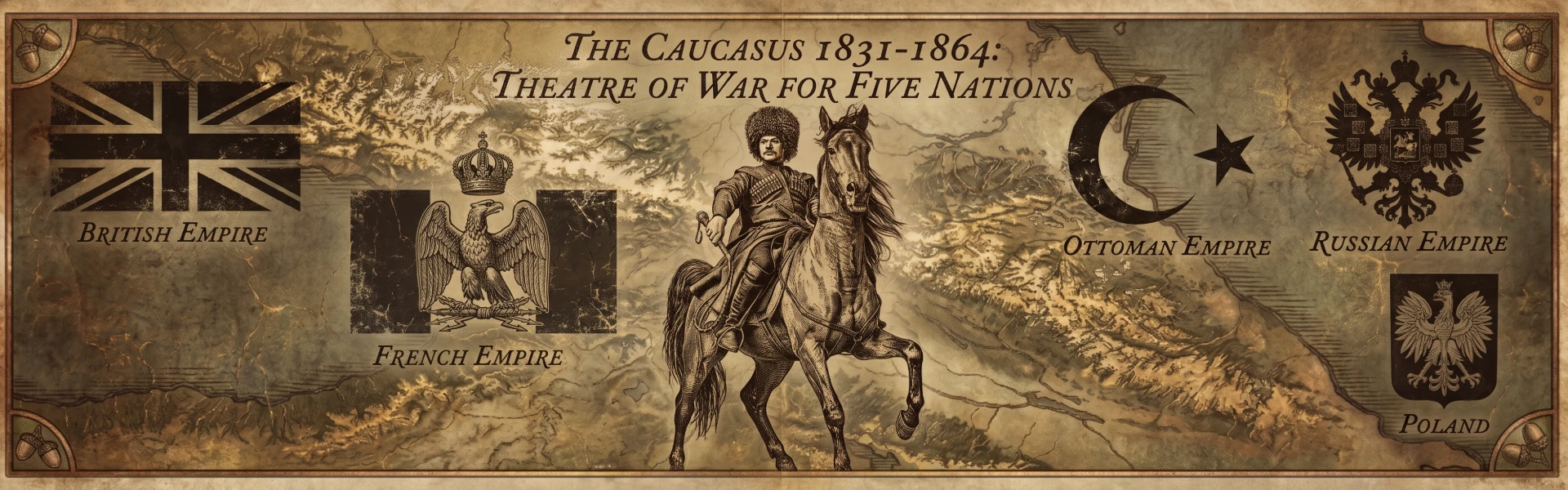
Ludwik Widerszal reflected the extraordinary sources he examined with stark transparency in his work. This transparency lays bare the contradictions, cowardice, and inconsistencies in the Caucasian policies of 19th-century European superpowers, such as Great Britain, France, and the Ottoman Empire. Simultaneously, one can clearly discern the striking emphasis on Poland's attempt—living under the same Russian threat as the Caucasus—to distance this peril from its own backyard by seeking to weaken Russia in the Caucasian theater of war. Reading, through the lens of concrete documents, how the fate of the Caucasian Mountaineers was left to the mercy of the Russian Empire by such amateurish hands adds an entirely new dimension to our historical perspective of the period. Although some statements in Widerszal’s work are predicated on concrete archival documents, it would be highly beneficial today to re-examine these referenced materials. Indeed, the documents underlying these assertions—which I believe likely form the basis of the "flawed" judgments the author reaches in his conclusion—require a comprehensive 360-degree analysis and reinterpretation. For instance, examining the documents claiming that Hadji Berzeg Giranduk was initially a titled official working for the Russian Empire, that Teophile Lapinski spied for the Russian embassy in Istanbul after leaving the Caucasus, and the primary sources upon which certain assertions regarding Zan-Oğlu Sefer Bey are based, would be highly beneficial for verification or refutation. Generally speaking, setting aside the hypocrisy of the West as depicted in the text, the chaos, power struggles, and fragmentation experienced internally by the Caucasian Mountaineers during the final thirty years of the Russo-Caucasian Wars present a tragic panorama. From this perspective, this panorama exhibits a cautionary parallel across the era the work covers, the period it was published, and our present day.
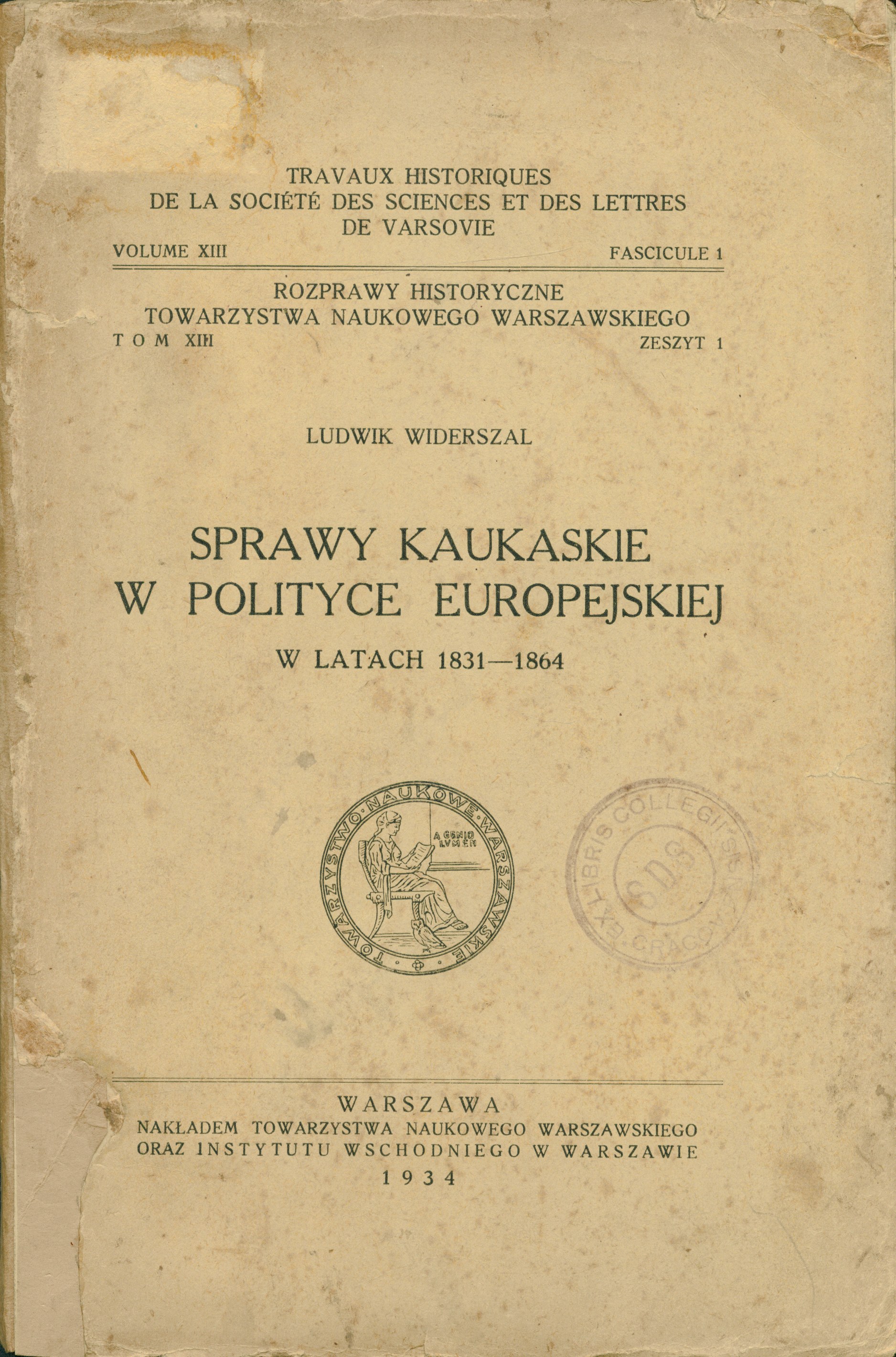
The original Polish edition of the work, published in 1934:https://www.historycaucasus.com/archives/sprawy-kaukaskie-w-polityce-europejskiej-w-latach-1831-1864/reader
English Translation:https://www.historycaucasus.com/archives/caucasian-issues-in-european-politics-between-1831-and-1864/reader
Turkish Translation:https://www.historycaucasus.com/archives/1831-1864-yillari-arasinda-avrupa-siyasetinde-kafkasya-meseleleri/reader
Furthermore, while reading this work, I have consistently wished that it had been published fifteen years earlier. While the fate of the North Caucasian peoples was abandoned to Bolshevik Soviet domination through various treaties signed in European capitals between 1919 and 1930, I have always believed that had the North Caucasian diplomats and statesmen leading the struggle articulated certain ideas in their memoranda to their Western counterparts by referencing the archival documents found in this work, it could have made a monumental difference in the outcomes achieved. Because the arguments in the era's diplomats' memoranda—who were utterly unaware of the existence of these archival sources—remained largely abstract, the persecution suffered by the North Caucasians living under the Russian yoke was likely insufficiently understood or not taken seriously by Western statesmen and politicians.
The judgment Widerszal reaches as a result of such a magnificent study, concluding that the North Caucasian Mountaineers did not deserve the favor and sympathy directed toward them, is undoubtedly a great misfortune. Most likely, the experiences of Polish volunteers in the Caucasus, the methods resorted to by North Caucasian community leaders in their internal power struggles, and the Mountaineers' inability to accurately perceive global realities within their small, Russian-besieged world at the time may have led the author to issue such a "flawed" verdict. Nevertheless, regardless of the circumstances, the rigorous scientific examination of these sources and their presentation to the field are alone sufficient to establish the enduring importance and value of this work.
Henceforth, to ensure that the work is adequately examined in academic circles and by history enthusiasts, I am making both the English and Turkish translations accessible on our page alongside the original text. I have omitted the footnotes in the English and Turkish translations of the main text. Those who wish to conduct a more advanced academic reading may refer to the source information in the corresponding footnotes of the accessible original work.
Additionally, I believe that making this work available to a wider audience will offer a fresh perspective on contemporary politics in the Caucasus, along the axis of the West, Russia, Turkey, Poland, and Ukraine. Historical parallels will prove highly instrumental in our understanding of the roles played by external actors in modern Caucasian geopolitics.
Enjoy reading,

Istanbul, 20 August 2026