
 Türkçe
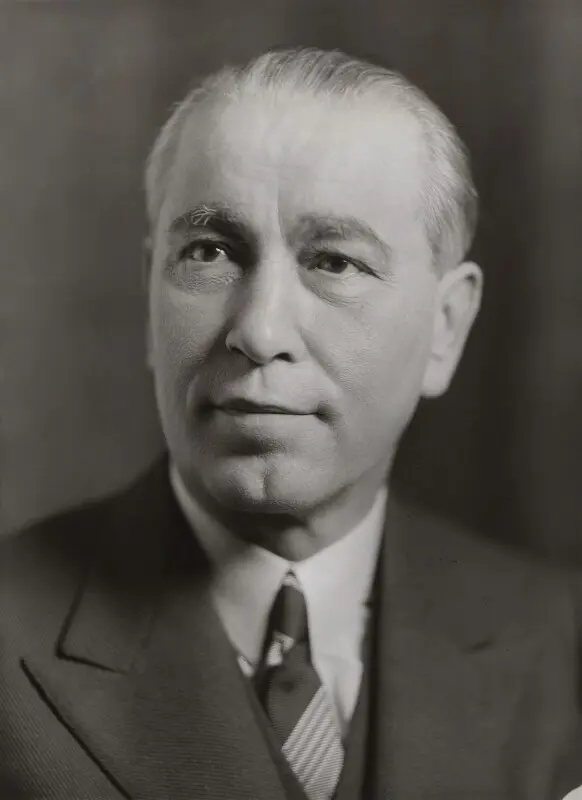
Careful to maintain amicable relations with Poland and Turkey, both of which faced a Soviet threat, the North Caucasian, Azerbaijani, and Georgian members of the Caucasian Confederation Joint Committee in Paris—Haydar Bammat, Ali Mardan Topchubashov, and Akaki Chkhenkeli—along with the Ukrainian representative, Livitzki, co-authored a memorandum. On April 9, 1926, this memorandum was presented to Ali Fethi Okyar—who had recently been compelled to resign as Prime Minister at Mustafa Kemal Pasha’s behest due to his moderate approach toward the 1925 Sheikh Said rebellion, and was subsequently appointed as the Ambassador to Paris—and to Aleksander Skrzyński, the Minister of Foreign Affairs of the Polish Grabski government. The document conveyed a sincere proposal for cooperation aimed at defending the interests of peoples united by a common destiny and genuine bonds of friendship.
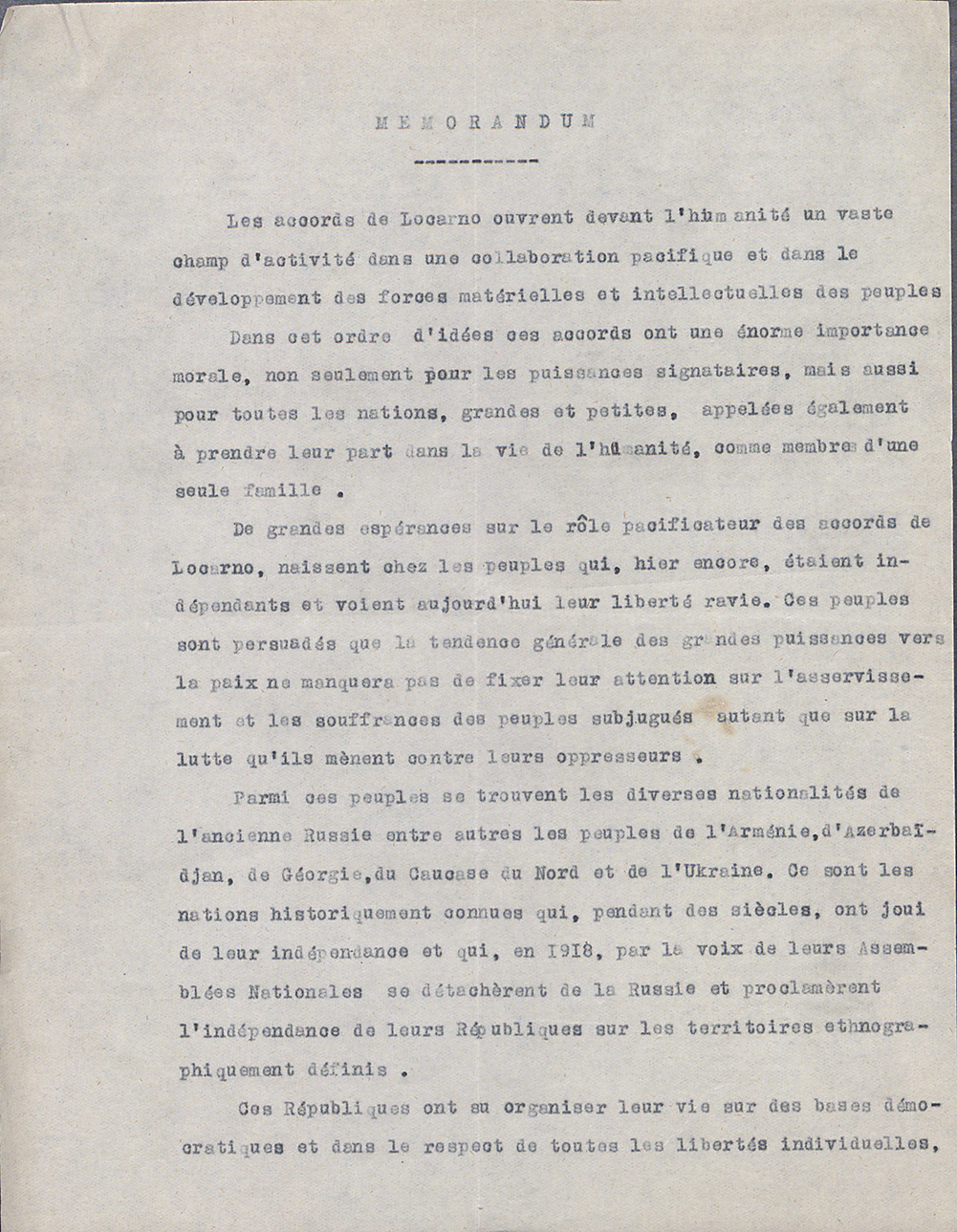
In this vein, these agreements have enormous moral importance, not only for the signatory powers, but also for all nations, large and small, equally called upon to take their part in the life of humanity, as members of a single family.
Great hopes for the pacifying role of the Locarno treaties are rising among the peoples who, only yesterday, were independent and today see their liberty stolen. These peoples are convinced that the general tendency of the great powers towards peace will not fail to fix their attention on the enslavement and sufferings of the subjugated peoples as much as on the struggle they wage against their oppressors.
Among these peoples are the various nationalities of the former Russia, including the peoples of Armenia, Azerbaijan, Georgia, the North Caucasus, and Ukraine. These are historically known nations which, for centuries, enjoyed their independence and which, in 1918, through the voice of their National Assemblies, detached themselves from Russia and proclaimed the independence of their Republics on ethnographically defined territories.
These Republics were able to organize their life on democratic bases and in respect for all individual liberties, of equality before the law, without distinction of race or religion.
Seized power, and brought them one after another under the domination of MoscowThe recognition of these Republics, some de jure, others de facto, by several Powers was the result of the establishment of internal order in these States and the inauguration of their economic and political relations with foreign countries. This recognition is proof of the vitality of these Republics. It confirmed that they possessed sufficient intellectual and material resources to ensure an independent existence and the correctness of the path they had chosen in proclaiming their definitive detachment from Russia.
But the force of the armies of the Russian Soviet power came to interrupt this laboriously undertaken work. By invading the territories of the Republics of Ukraine and the Caucasus, the Russian troops dispersed their Parliaments and their Governments, seized power, and brought them one after another under the domination of Moscow (1920-1921). This invasion was accompanied by the horrors encompassed by the term "military communism": prisons overflowed with patriots; influential personalities as well as thousands of peasants and workers were shot; the property of the population, their houses, their lands, etc., were confiscated; and the immense natural wealth of these countries was "nationalized" for the benefit of Moscow.
The oppressors encountered deep hatred towards them among the peoples of the Caucasus and Ukraine. The very presence of Red Army garrisons failed to repress the hostility of the popular masses. During the few years of Russian-Soviet domination in the Caucasus and Ukraine, an uninterrupted series of insurrections and riots broke out. The insurgents demanded, weapons in hand, the retreat of the armies of occupation and the Soviet commissars. This is a common fact to all the Sovietized Republics: in Turkestan, the great insurrection of the "Basmachis," in Georgia, a series of insurrections which, in autumn 1924, took on a general character, in Ukraine, permanent insurrections, as well as in Armenia, the North Caucasus, and Azerbaijan, where according to official Soviet statistics there have been 58 cases of insurrection. All these uprisings were repressed with ferocious cruelty by the Soviets, and the hatred of the bloodthirsty oppressor grows among these peoples who are always preparing for new resistance, neither desiring nor able to desire to come to an understanding with the Russian Bolsheviks.
Thus, for five years already, the peoples of Ukraine and the Caucasus have been waging a bloody struggle against the soviets, whose red flag has long borne, instead of the workers' hammer and the peasant's sickle, a destructive sword and a murderous machine gun.
Parallel to this struggle, of which the country is the theater, the national Governments, Delegations, and other legitimate representations of the Nations and countries of the Caucasus and Ukraine located in Europe never cease to support their national cause. In a series of notes and memorandums addressed to the Governments of the powers, to international conferences, and to the League of Nations, together or separately, the legitimate Representatives of the aforementioned Republics have vigorously protested against the occupation of their homelands by Russian troops and have demanded the withdrawal of these troops. Drawing attention to the continual pillage of the natural wealth of their countries and especially to the oil concessions in Azerbaijan and in the North Caucasus, coal and agricultural concessions in Ukraine, and manganese concessions in Georgia distributed by Moscow, the Representatives of the said Republics have often warned European and American Governments and financial circles that all conventions concluded with the Soviets or their agents calling themselves representatives of the Caucasus and Ukraine, will always be considered illegal, null, and void.
These representatives, in their capacity as Heads of State and Presidents or Members of national Governments, former Presidents or Members of Constituent Assemblies, Parliaments, or Delegations to the Peace Conference, are always in uninterrupted contact with the populations of their countries and enjoy a real influence and genuine authority among their peoples. They have never ceased to affirm that their Nations will not submit to Moscow, will not accept the Soviet regime, which is foreign to them both in spirit and in form, and will not renounce, despite the bloodiest repressions and the savage inquisition of the Bolsheviks, the struggle for the re-establishment of their independence. Based on these facts, the Representatives of the Ukrainian, Azerbaijani, Armenian, Georgian, and North Caucasian Republics have drawn the attention of the European Powers to the fact that the recognition of the Union of Soviet Socialist Republics should not extend to their Republics.
The community of their fate, the harsh blows struck against their national, political, and economic existence, the analogy of the results produced by the Soviet regime in the general devastation of the countries subjected to it, have inevitably had to bring together the oppressed nations of the former Russia, and despite the imperialist policy of Moscow, for which the maxim "divide et impera" serves as a watchword, the Ukrainian, Azerbaijani, Georgian and North Caucasian nations have united to defend their liberty and continue their struggle against the Russian-Soviet power.
Representatives of the Caucasus, based on sentiments of mutual sympathy and friendship, maintained by the common desire to safeguard political and economic interests...The peoples of Azerbaijan, the North Caucasus, and Georgia have seen the necessity of creating a united front against their oppressors. Their representatives in Europe are therefore acting jointly, always keeping in view a Confederation of the Independent States of the Caucasus. This confederation, which must be based on democratic and republican principles, will have a common foreign policy, an armed force, customs, and related common organs. These ideas regarding the Caucasian Confederation were developed by the legitimate Representatives of the Republics of the Caucasus in a duly established and signed act.
The said Representatives of the Caucasus, based on sentiments of mutual sympathy and friendship, maintained by the common desire to safeguard political and economic interests, and taking into consideration the occupation of Ukraine by Russian-Soviet troops, have concluded an agreement with the Representatives of the legitimate Government of the Ukrainian Republic promising mutual economic and political support in the defense and preservation of the Independence of their States and the struggle for the complete liberation of their territories.
Will the peoples of Ukraine and the Caucasus recover their independence, or will they, through arms and violence, be reintegrated into Russia to serve as advantageous colonies? This is one of the essential questions attached to the Russian problem, in its broadest sense.
The aforementioned peoples have answered it in an irrevocable manner by completely separating themselves from Russia through the proclamation of Independent Republics, which existed de facto and were recognized by other States. It is true that the latter subsequently recognized the Government of the U.S.S.R., but they made an obvious reservation (the acts of recognition by the British and French Governments) by specifying that they recognize the Soviet Government "of the territories of the former Russian Empire, recognizing its authority."
The aforementioned peoples are within their rights in invoking this reservation because, not recognizing the Soviet Government, they do not cease to fight against it and, consequently, consider that the recognition of the Government of the U.S.S.R. by the European States cannot and must not concern them; but Moscow does not take this circumstance into account and, relying on the bayonets of its armies, arbitrarily imposes its harmful power on the people of the Caucasus and Ukraine.
After occupying Ukraine, Moscow announced the constitution of the Ukrainian Soviet Republic and then incorporated it into the U.S.S.R., contrary to the wishes of the Ukrainian people. The same was done in the Caucasus: first, the three Transcaucasian Republics (Azerbaijan, Armenia, and Georgia) were united into a single Federative Soviet Republic, and then this Federation was incorporated into the U.S.S.R.—a completely artificial formation, taking no account whatsoever of the opinion of the peoples concerned.
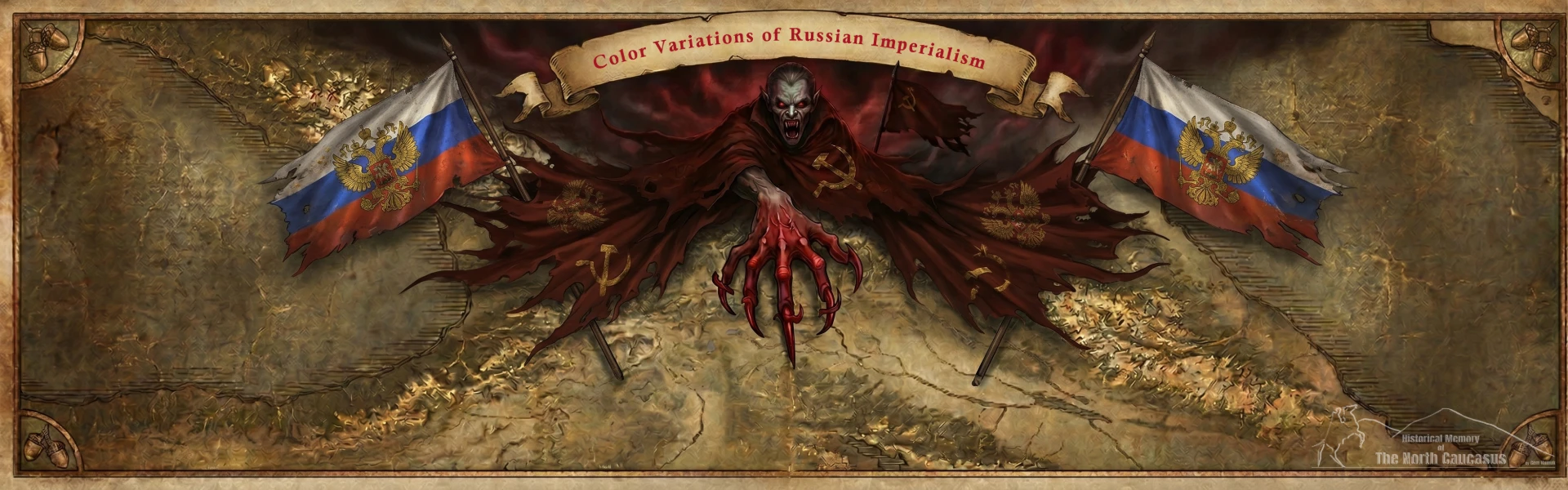
Thus, currently, the entire Caucasus is dependent on Moscow, which allows the latter not only to squander the natural wealth of this country, but also, and above all, to establish there, as in the time of the Tsars, the center of radiation for Russian imperialist policy in the Near East. The Caucasus, this intermediate isthmus between Europe and Asia, had always been one of the most important international routes between East and West. This important route is currently entirely in the hands of Moscow, which found it necessary to close it to the outside world and even to transit trade with Asia, but which nevertheless uses the Caucasus extensively for its purposes of propaganda and political and military influence throughout the Near East.
Thanks to this advantageous position occupied by the Soviets on the most important path from Europe to Asia, Moscow will always represent, as in the days of the Tsars, a constant threat both to the Black Sea, its coastline, and the Straits, and to the countries of the Near East and Western Asia: notably to Turkey and Persia.
The current Russia, in its imperialist aims and to assure its hegemony in Asia, will not fail—if necessary for it—to attempt an aggression whose consequences could shake peace in the East for a long time.Taking into consideration its system and its methods of foreign relations, in connection with the presence of numerous military forces and its skillful propaganda, it is evident that Moscow represents a perpetual threat primarily for the countries bordering the Black Sea, considered by it as a Russian sea, for the opening of the straits to the fleets of all nations is not in its interest. Its imperialist policy cannot accommodate the role that the Statute of the Straits reserves for all the States bordering the Black Sea, among which are Ukraine and Georgia.
The current Russia, in its imperialist aims and to assure its hegemony in Asia, will not fail—if necessary for it—to attempt an aggression whose consequences could shake peace in the East for a long time. But it is entirely evident that Turkey and Persia also have a great interest in seeing the peoples of the Caucasus independent, for it is only independent that these peoples can bar the way to the Russian descent and safeguard the liberty and full security of the route from Europe to Asia.
After the armed occupation of the vast territories of Ukraine, Soviet Muscovy has drawn considerably closer to Western Europe and never ceases to be a threat to its Western neighbors. And Ukraine, known for its immense natural wealth, has been deprived of the means to be joined to its closest neighbors, to constitute a solid bulwark against Bolshevist anarchy and Moscow's imperialism.
It is to the influence of imperialist tendencies among the leaders of Sovietism that we must attribute the evolution toward the so-called "national communism" which can, according to their new theory, develop freely within the framework of the U.S.S.R. without having recourse to world revolution. It seems that Moscow, hitherto covered by the mask of communism, is showing its true face, known so well to the non-Russian peoples of the former Russia, and is revealing its negative traits: denationalizing tendencies, the desire to enslave minds, and to surround all these peoples with a network of Russifying procedures. The latter have no reason to harbor illusions about the possibility of a shared life with Moscow. It would amount to complete enslavement for them and, at the same time, it would favor the imperialist aims of current Muscovy, which manifestly proposes to reconstitute the former Russia within its oversized limits. The non-Russian peoples know how disastrous it was for them to be part of an immense State formed of endless territory stretching from the Baltic Sea to the Pacific Ocean and belonging to dozens of peoples of different races, origins, religions, languages, civilizations, morals, customs, and social and political tendencies, like the former empire of the Tsars. Everything there was artificial, beginning with the central power (in St. Petersburg) abnormally lacking any coordination and whose various elements seemed like pieces sewn together, artificially united, without natural links between them and with the directing center.
The current dictators of Moscow, having adopted the old methods, hide their ultra-reactionary regime under the veil of communism as if in mockery, and govern just as the autocratic emperor once did from a single center. The difference is only noticeable in their audacity and their greater penchant for very dangerous political enterprises and adventures.
Can one hope that a State imbued with imperialist tendencies and principles, juggling with traditions of Russian nationalism just as much as with the doctrines of communism propagated by the Third International, is capable of ensuring a peaceful existence for the non-Russian nations incorporated into the Russian State by force of arms? Can it be a guarantor of the general peace for which all humanity, and, primarily, Europe, so greatly thirsts?
Obviously, there can only be negative answers to these questions, because Moscow, by subjugating the various nationalities to its yoke and reconstituting the former Russia, provokes continual revolts and wars. Not only is Western Europe threatened, but also Central Asia; indeed, all of Asia, which the Soviets consider a propitious ground for all forms of propaganda.
They promise its peoples their definitive liberation from the "grip of European capitalism."
It is in the name of the salvation of peoples and their fraternity that the Soviets have destroyed the independence of Ukraine, Turkestan, the Caucasus, deprived Bukhara and Khiva of the vague autonomies these Khanates enjoyed in the time of the Tsars, sovietized Mongolia, attempted to install themselves in Afghanistan to reach India, openly interfered in the internal affairs of China, and attempted other imperialist adventures.
All the ties that could unite a State of this kind to the various nations can bring them nothing but political, economic, and moral decomposition.
The peoples of the Caucasus and Ukraine have understood what fate awaits them and, fully conscious of their duties toward future generations and the role assigned to them by history, have decided their future. They have realized they have no choice but to fight the Russian-Soviet invaders by closing their ranks.
Public opinion and the Governments of civilized countries are sufficiently informed about this. The question of the tragic fate of these peoples has been raised many times in the press, in meetings, and in the parliaments of different countries; many statesmen have publicly stigmatized the imperialism of the soviets.
Everything that has just been set forth, therefore, justifies the hopes of these peoples who expect from the civilized world moral support in the defense of their liberty and their independence.
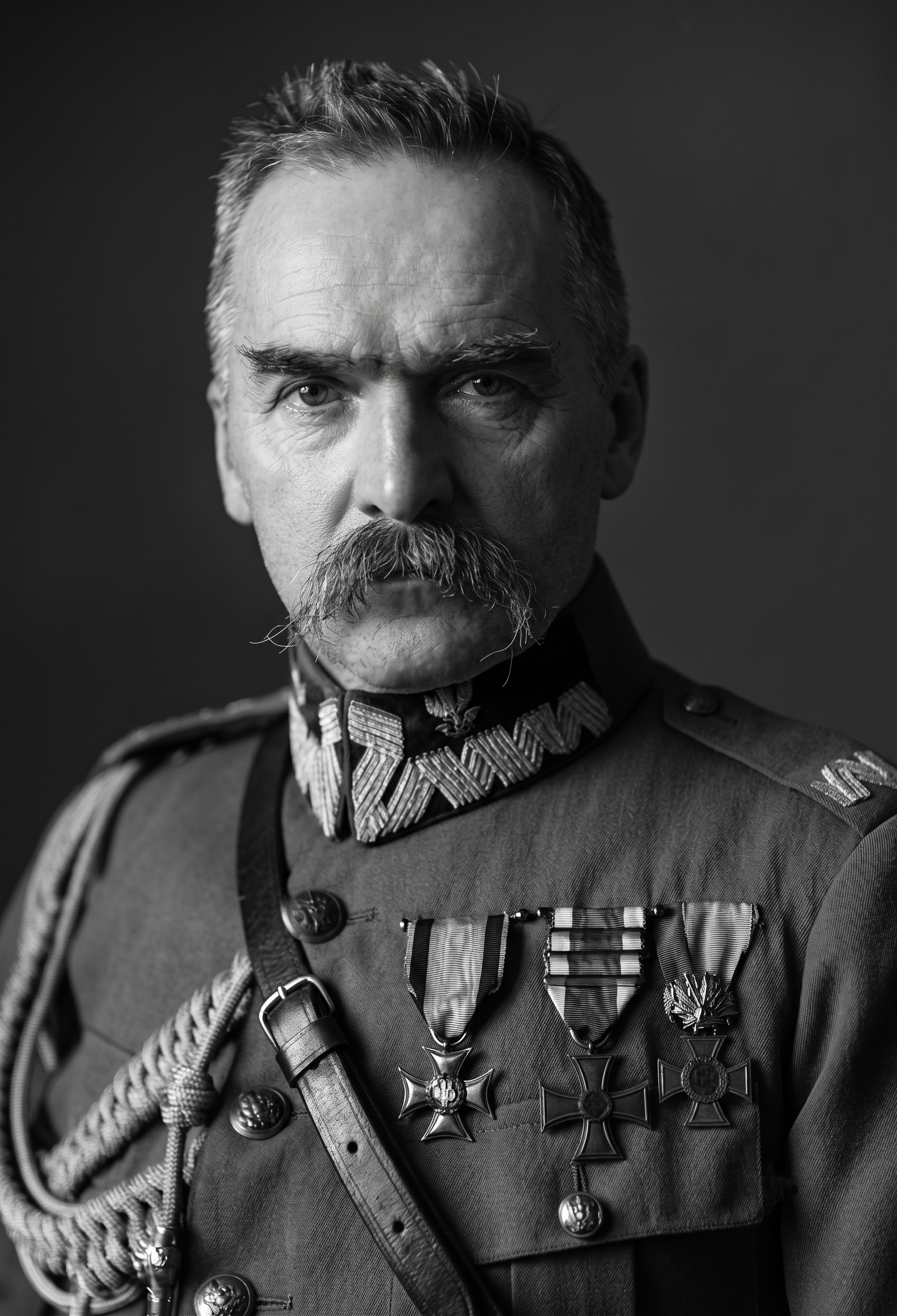
While Poland's interest in the Caucasian cause persisted, the problematic engagement of the socialist leader Marshal Piłsudski—who seized power through a military coup barely a month after the memorandum's issuance—and his inner circle of politicians and diplomats exacerbated the underlying schisms among Caucasian political refugees. Consequently, this involvement exerted a destructive rather than a constructive impact on the Caucasian movement.

Istanbul, 6 June 2026