
 Türkçe
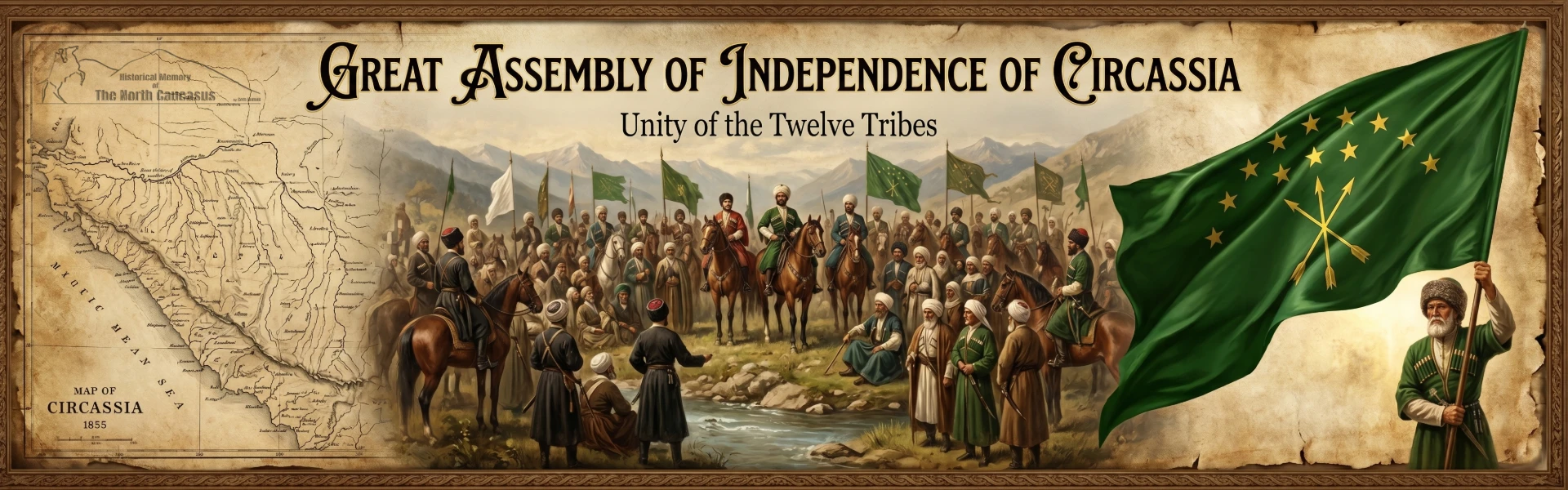
Today, we commemorate one of the most critical milestones in the history of the North Caucasus: the " Great Circassian Assembly for Independence."
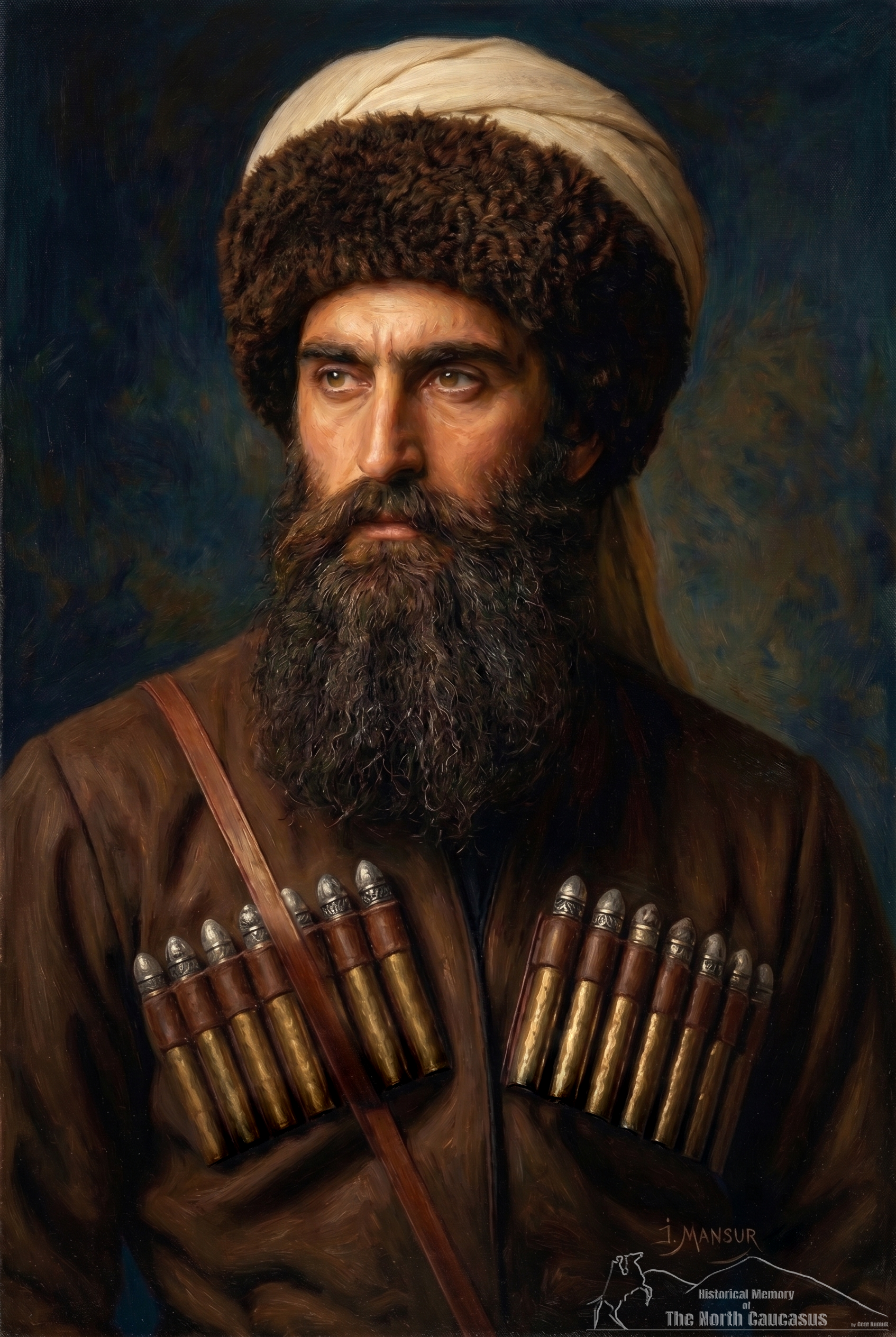
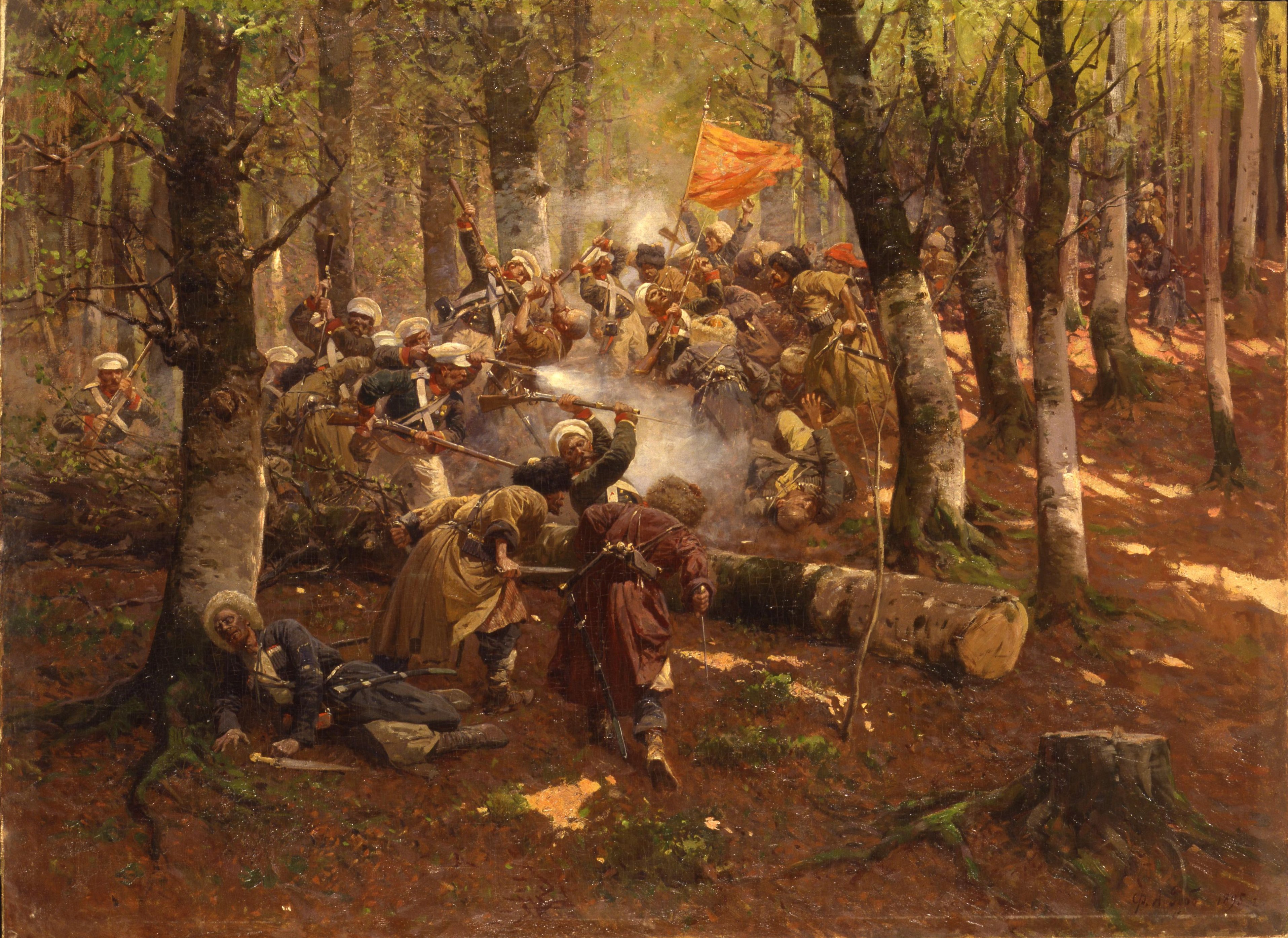
Throughout the Caucasian-Russian Wars, the peoples of the Caucasus launched various unification initiatives to counter the imperialist pressure emanating from the north. Sheikh Mansur’s endeavor to unite the Caucasian populations under a single banner of resistance manifests as the eighteenth-century expression of this phenomenon.
The minutes of the "Grand Parliament for Independence" were published as follows in the 280th issue of the Tercüman-ı Ahval newspaper, dated January 5, 1863 (14 Rajab 1279). (The names are rendered precisely as declared in the aforementioned newspaper):
The names of the members of the said Parliament were declared as follows:
Delegates Elected by the Abadzekh Tribe: Anchok Hadji Ismail Bey, Ismetzade Mehmet Bey, Kulukaszade [?] Süleyman Efendi, Hut Hadji Ahmed Agha, Hadji Savmat Agha
Delegates Elected by the Shapsug Tribe: Zanzade Ibrahim Bey, Ahu [?] Abdullah Efendi, Tabuse Islam Agha, Hadji Hasan Haydar Efendi, Koyzuk [?] Abzagh Agha
Delegates Elected by the Ubykh Tribe: Gech Reshid Bey, Degumzade al-Hadj Bey, Barakiyzade Ismail Bey, Narchozade Islam Bey, Mehmedzade Mustafa Agha
Appointed Religious and Judicial Authorities: Mufti: Zebelzade [?] Hüseyin Efendi, Qadi (Judge): Bach Hasan Efendi
Military Commanders: Commander of the Abadzekh Military Unit: Hadji Omer Girundugh Bey, Commander of the Shapsug Military Unit: Wasbanzade [?] Hadji Mehmed Bey
(Note: The question marks within square brackets [?] reflect transcriptions from the original Ottoman Turkish text where the reading of specific surnames or titles in the source material remains ambiguous or contested).
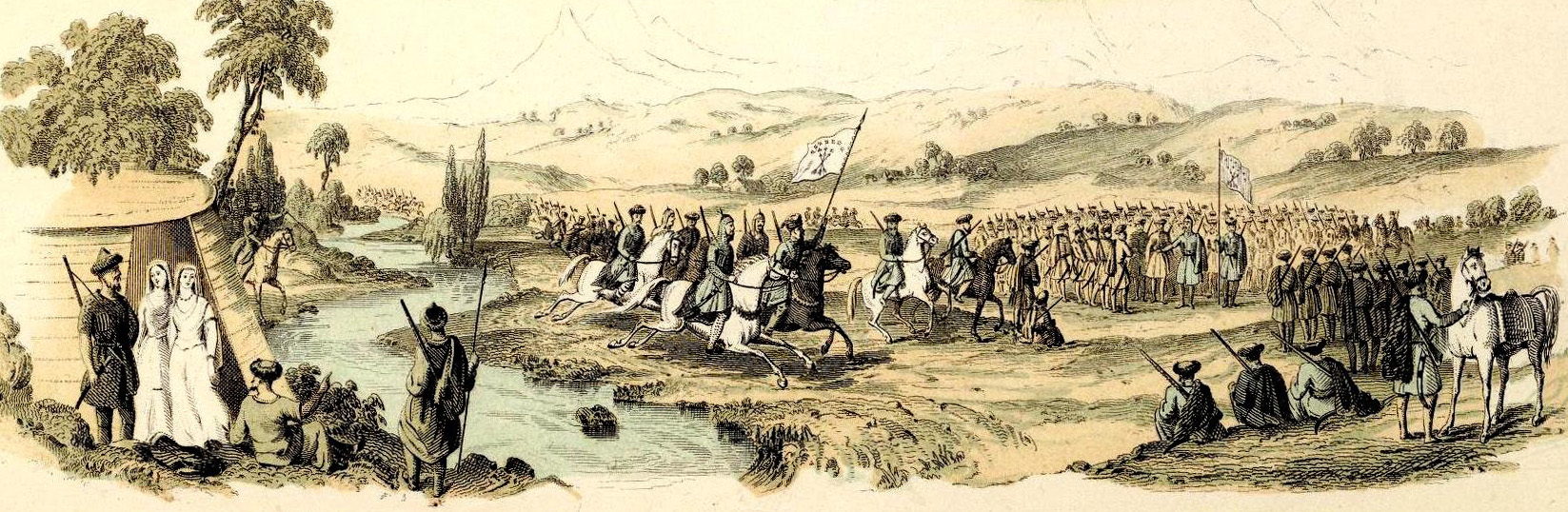
On June 13, 1861, in light of developments in the war of independence against the Russians, a congress of "elected elders" convened urgently in the valley of the Psakhe (Sochapsta) River. Confronted by an imminent threat, the delegates recognized the imperative to "supplant debilitating internal conflicts with a robust centralism" and agreed to form an "extraordinary alliance."
A fifteen-member assembly, officially designated the "Grand and Free Parliament," was established. The council resolved to implement a series of critical and urgent measures aimed at "ensuring domestic order and penalizing its violators." Twelve administrative districts were demarcated; muftis, qadis, and local elders were assigned to each, with the enforcement of parliamentary directives entrusted to these officials. Furthermore, specific fiscal and economic measures were enacted. To establish a defense fund, a system of taxation was introduced to strictly regulate revenue collection and the allocation of levies.
The entire Ubykh population, the coastal Sadz, and the Akhchipsou, Aibga, and other mountain Abkhaz communities participated in constructing the physical infrastructure required for the Parliament and auxiliary institutions. "Every household was obligated to provide the materials necessary for the construction of the courthouse, the mosque, and the guest houses." The parliamentary edifice itself was erected in the Pshakhe River valley, within the district where Geranduk Berzeg resided. Although the densest Ubykh population was concentrated in Vardane and along the Pshakhe River, this institutional centralization explains why Russian sources began referring to the Sochi region as the "heart of the Ubykhs."
Concurrently, attempts were made to establish a standing regular army through conscription, raising five cavalrymen from every one of a hundred households. This system provided the capacity to mobilize an elite cavalry force of 15,000, or potentially more, in times of need. According to A. V. Fadeev, the so-called "Constitution"—which served as the draft framework for the 1861 Ubykh reform—constitutes a "document of extraordinary historical value," notwithstanding its inevitable shortcomings.
Had these audacious designs been fully realized, they would have culminated in the establishment of a novel, multi-ethnic state structure spanning from the Bzyb River in the southeast to the mouth of the Kuban in the northwest, governed by a supreme military commander. One of the most plausible candidates for this role was the leader Geranduk Berzeg, widely recognized by the Mountaineers of the era as the "commander of military units" and the foremost of the "two principal figures in the Ubykh lands." Ranking second to Geranduk in political influence was Izmail Barakai-ipa Dzapsh.
The establishment of the "Circassian Parliament" signaled the final stage of the ethnic consolidation process in the Western Caucasus. Concurrently, the social reform project implemented by the parliament undeniably possesses paramount significance in the ethnohistory of the Black Sea Circassian sub-ethnic groups (Adyghe, Ubykh, Abaza) as a distinct stage in the evolution of institutional state power. The genesis of this social institution stood as a vivid manifestation of ethno-political consolidation processes and emerged as a factor that defined the character of the subsequent nationalities policies pursued by the Russian state along its southern borderlands.
Post-1917 Revolutionary Models of State-Formation in the North CaucasusFollowing the eighteenth- and nineteenth-century initiatives, the period succeeding the 1917 Revolution ignited intense political activity in the North Caucasus, giving rise to various competing state models. These enterprises ranged from democratic federalism and independent republics to theocratic Islamic governance and Soviet autonomy.
The Democratic Federal Model: The Union of the United MountaineersInitially, the North Caucasian intelligentsia sought statehood through autonomy within a reformed, democratic Russia. The Union of the United Mountaineers of the North Caucasus and Dagestan was proclaimed in May 1917 at the First Congress of the Mountain Peoples in Vladikavkaz.
— Model: The Union was conceptualized as a self-governing political entity that would ultimately become an autonomous federal "province" (or canton) within a future Russian Democratic Federal Republic.
— System: It established a political union based on cantonal administration for each national cohort. The executive organ was the Central Committee, which managed all political affairs.
The Independent State Model: The Mountaineers’ RepublicFollowing the Bolshevik seizure of power in Russia, the North Caucasian leadership abandoned the concept of remaining within a Russian federation and opted for full sovereignty.
— The independent democratic republic of the Mountaineers of the North Caucasus and Dagestan (The Mountainous Republic) was officially proclaimed on May 11, 1918, during the Batum Conference.
— Model: It was designed as an independent federation modeled on the Swiss cantonal system. The constitution enshrined the following principles:
— The political unity of the peoples of the North Caucasus and Dagestan.
— The domestic autonomy of each constituent nationality within the union.
— The establishment of a bicameral legislature: an assembly elected based on one deputy per 30,000 individuals, and a senate composed of representatives from the peoples of the Union, operating on the principle of two delegates per constituent nationality.
— The election of an executive branch by the legislative assemblies, and the subsequent election of a President by this executive body to serve as the Head of the Union.
— The robust integration of religious components by explicitly establishing Sharia courts, a Religious Council, and the office of the Muftiate of the Caucasus to govern the spiritual and judicial affairs of the Muslim population.
— The Union government held responsibility across all common jurisdictions, including finance, defense, and foreign relations.
— System: The state utilized a bicameral parliamentary system (The Union Council). The executive branch was headed by a president (prime minister), and provisions were made for a supreme state court to oversee constitutional compliance.
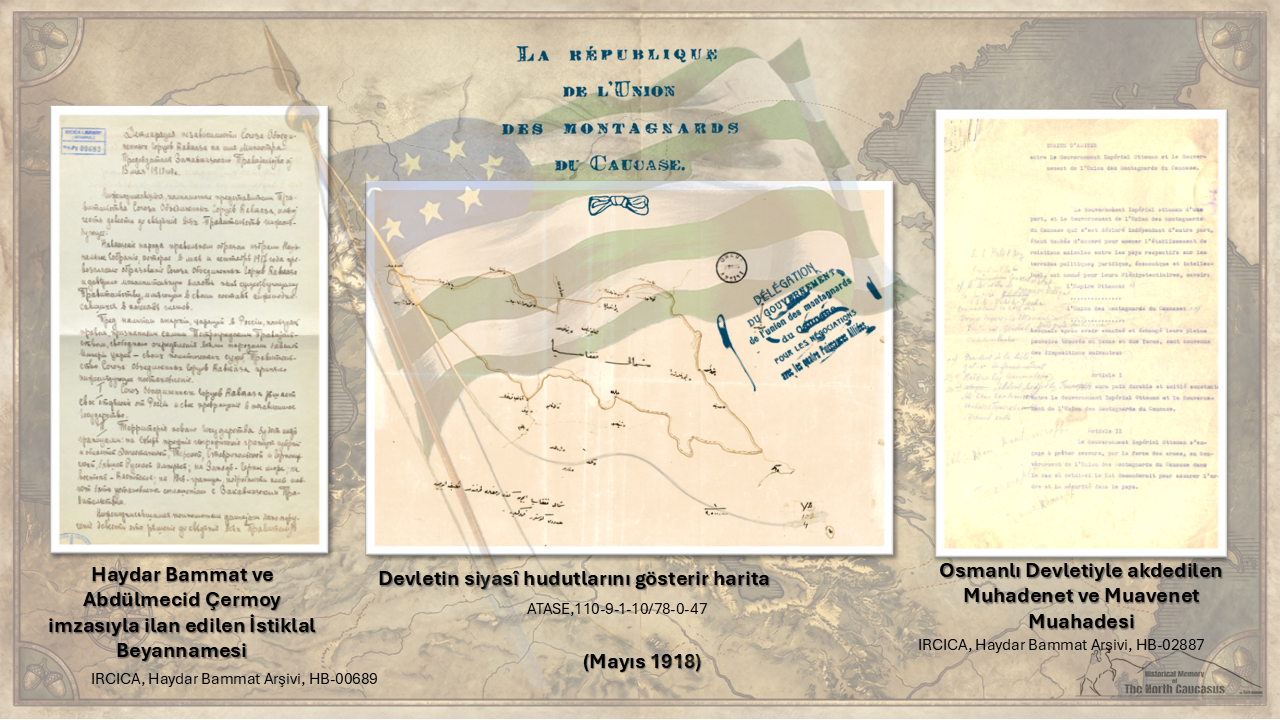
The Concept of a North Caucasian ConfederationThe centuries of bloodshed and sacrifice endured to preserve liberty testify to the legitimacy of the national cause of the North Caucasian peoples. Throughout the Middle Ages, these populations fought against invading forces that swept across Europe, largely absorbing and breaking the Asian waves that posed existential threats to the West. When these medieval incursions finally ceased, the Caucasian peoples began to reconstruct themselves politically and socially; however, they were immediately forced to contend with the threat of Russian encroachment. The nineteenth century is replete with the epic struggles of these small, liberty-loving populations against a massive contemporary empire equipped with every mechanism of destruction.
When examining the geopolitical rivalry between Great Britain and Russia, it is striking that Russia's southward expansion toward Persia and India—which periodically threatened the British Empire—was effectively checked by the Caucasian-Russian Wars. Forced to maintain a 300,000-strong army for this conflict around 1860, the Russian Empire was precluded from deploying additional forces further south, thereby constraining its ability to compete with Great Britain in Afghanistan and the Pamirs. Only after the final subjugation of the Caucasus were Russia's hands untied; its increasingly emboldened armies rapidly conquered Turkistan, Samarkand, Kokand, and portions of Khorasan and Merv, bringing them into direct geopolitical friction with British power. Sir John MacNeill, Great Britain’s former ambassador to Persia, expressed profound concern upon learning of Russia's menacing advance in the Caucasus from an eyewitness, exclaiming with prophetic intuition: "This alters the balance of power across the entire globe!" The conquest of the Caucasus effectively rendered Russia the master of a region whose unparalleled geographical positioning endowed it with immense geopolitical leverage.
When the Russian Revolution erupted, it was entirely natural that the peoples of the North Caucasus—who were the last to be incorporated into the Russian Empire and thus preserved a vivid memory of their relatively recent independence—immediately set about reconstructing their national life.
At the first Assembly convened in Vladikavkaz in 1917, the Union of the Peoples of the North Caucasus and Dagestan was formally established, and an executive body designated the "Central Committee of the Union" was formed. The Committee commenced its operations immediately, exerting every effort to maintain domestic order under the arduous conditions wrought by the collapse of former imperial Russian institutions. When the Bolsheviks seized power in Petrograd in November 1917, the Union refused to recognize the nascent Soviet regime, effectively severed all relations with Russian centers, and entered into open conflict with the Bolsheviks.
Concurrently, the second Assembly convened, ratified the decisions of the Executive, and resolved to establish the Republic of the North Caucasus. It formed a Parliament and a responsible government, tasking a Standing Commission with drafting a Constitution to be submitted to a projected Constituent Assembly. From that juncture, the establishment of an independent North Caucasian State became a de facto reality. Following a lack of affirmative responses to appeals made to the Transcaucasian peoples for a Greater Caucasian Confederation, the independence of the new State was officially proclaimed to the world on May 11, 1918.
From the inception of the Russian Revolution, North Caucasian statesmen recognized the peril of over-fragmenting this region into disparate states, asserting that the geographical and economic integrity of the Caucasian isthmus—coupled with the strictest adherence to ethnic principles—must serve as the sole foundation for statehood. They understood that close cooperation among the North Caucasian peoples would enable them to effectively defend this strategic geography against external aggression and systematically develop the diverse, inexhaustible resources scattered across its sub-regions. Finally, convinced that only the establishment of a political union could safeguard the multi-ethnic Caucasian populations from territorial disputes and complications—which served as chronic sources of dangerous conflict—they directed all their endeavors toward the creation of a North Caucasian Confederation.
In the memoranda presented to the Paris Peace Conference in early 1919, the North Caucasian delegation consistently maintained this thesis. However, the peoples of the North Caucasus were compelled to combat myriad external adversities and ultimately collapsed under successive blows dealt by both White and Red factions.
Tragically, the sole element that empowered these White and Red adversaries was the presence of domestic collaborators. Had it not been for those unfortunate elements who subserved Russian Monarchists and Bolsheviks, and had the spirit of the Confederation proclaimed in Vladikavkaz been preserved, neither the White nor the Red Russian armies would have ventured to assault the Republic of the North Caucasus. A unified and potent North Caucasus could have served as a far more resilient shield and resistance force, safeguarding not only its own territories but also the peoples of Transcaucasia.
Confederation of Mountain Peoples of the Caucasus (CMPC)The most recent manifestation of this intellectual tradition emerged in the form of the Confederation of Mountain Peoples of the Caucasus (CMPC), the foundations of which were established in Sukhum in 1989. The initiative led by Professor Musa Shanibov (Shanibe Musa)—often referred to as the "Garibaldi of the Caucasus"—to consolidate all ethnic groups of the North Caucasus under a unified political and military umbrella culminated in 1991. This materialized through its transformation into a formalized, militarized confederation that would profoundly alter the geopolitical landscape of the region during the 1992–1993 War in Abkhazia.
Initially convening in August 1989 in the Abkhazian city of Sukhum as the "Assembly of Mountain Peoples of the Caucasus," the initiative was spearheaded by Aydgylara, an Abkhaz ethno-nationalist movement. It was originally conceived as a platform to foster peaceful cooperation among North Caucasian ethnic elements and to counterbalance both the perceived Georgian threat and centralized Soviet hegemony. Serving as the President of the Assembly amidst the escalation of ethnic tensions concurrent with the collapse of the Soviet Union, Shanibov recognized the imperative for a more robust and autonomous political architecture.
During the Third Congress held in Sukhum on November 1–2, 1991, the organization reached a decisive turning point:
— Nomenclature Alteration and Declaration: The Assembly was formally reconstituted as the Confederation of Mountain Peoples of the Caucasus (CMPC).
— Treaty Ratification: Representatives of 12 North Caucasian ethnic groups (including Abkhazians, Circassians, Chechens, Ossetians, and Avars) signed the Treaty of the Confederal Union.
— Assertion of Sovereignty: The CMPC declared itself a "sovereign nation-state entity." Although it refrained from demanding immediate secession from Russia, it positioned itself as an autonomous, self-governing union.
— Institutional Architecture: The initiative established a Caucasian Parliament, a Court of Arbitration, and a Defense Committee, designating Sukhum as the confederation's headquarters.
The CMPC drew substantial ideological inspiration from the Mountaineers' Republic of the Northern Caucasus of 1918. The confederation's primary objectives encompassed the following:
— Mutual Defense: To consolidate military and political resources to protect the peoples of the North Caucasus from external aggression, particularly in anticipation of potential conflicts with Georgia over Abkhazia and South Ossetia.
— Pan-Caucasian Unity: To transcend the historical divisions among the region's diverse ethnic and linguistic groups, thereby forging a united front to negotiate with—or resist—Moscow and Tbilisi.
— Self-Determination: To guarantee equal rights and autonomy for all Caucasian peoples, unequivocally rejecting both the Russian imperial legacy and Georgian nationalism.
The ultimate crucible for the CMPC emerged in August 1992, when Georgian troops advanced into Abkhazia, instigating a brutal armed conflict. In response, the CMPC issued a decree mobilizing volunteers from across the North Caucasus to defend Abkhazia. By establishing an operational headquarters in Gudauta, it facilitated the deployment of thousands of combatants, alongside armaments and logistical resources, to the Abkhazian fronts. The military forces of the confederation played a decisive role in the eventual Abkhazian victory. This 1991 initiative successfully, albeit briefly, forged an unprecedented pan-Caucasian alliance that fundamentally altered the regional map by enabling the de facto secession of Abkhazia from Georgia.
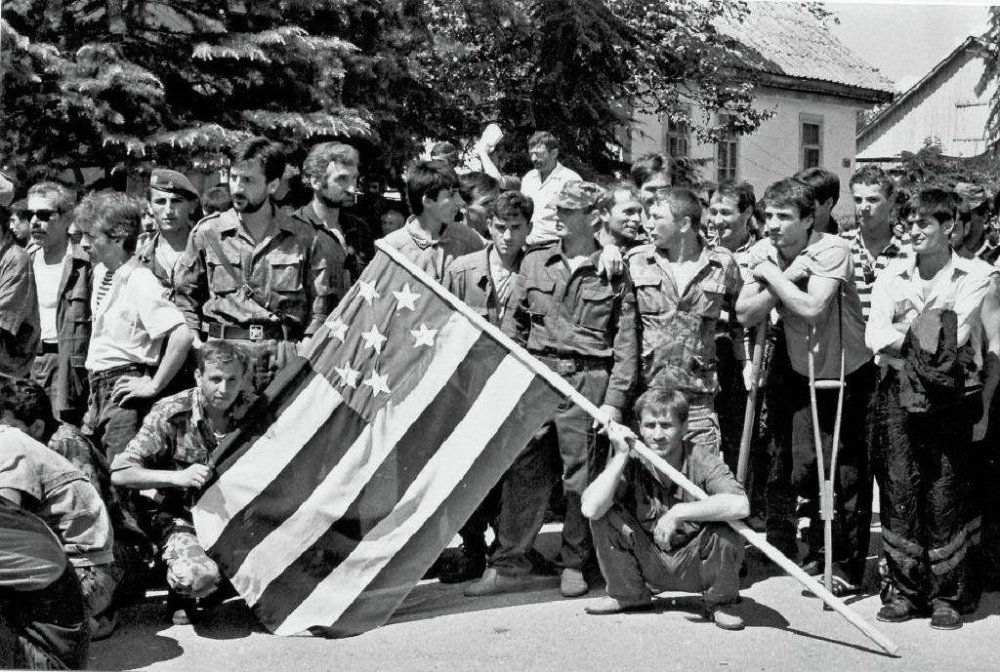
This historical trajectory demonstrates that the idea of a Confederation has shifted from the realm of abstract hypothesis into the sphere of historical realization. It was propelled by the pressure of bitter events that provided indisputable proof of the fatal dangers of fragmentation and the acute necessity of political unity for the North Caucasus—a necessity aligned with the absolute interests of all its inhabitant populations without exception. This reality had previously failed to sufficiently permeate the minds of certain Caucasian politicians, who acted primarily out of a concern to preserve their feudal authority by deepening ethnic cleavages.
Thus, it is manifestly evident that the concept of a North Caucasian Confederation was not an abstract notion propagated by a few romantic émigré factions; rather, it was a living philosophy that germinated within the Caucasus itself, deriving its most compelling arguments from the tumultuous historical experience of the Caucasian peoples.

Istanbul, 13 June 2026