
 Türkçe
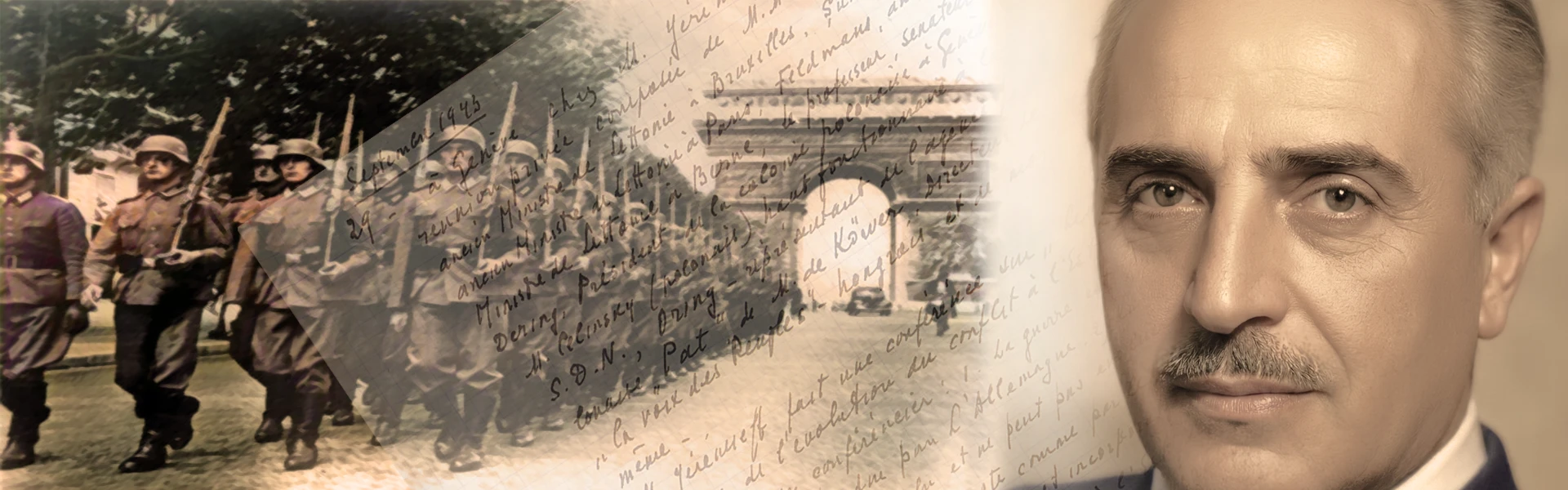
During the precarious autumn of 1943, when the global balance of power hung in the balance, Haydar Bammate left behind a striking record of the war and the strategic prospects of the North Caucasus. After facing diplomatic setbacks in Berlin in 1942, Bammate retreated to Switzerland— an enclave of neutrality amidst a continent engulfed in carnage and a solitary island floating above the bloodbath of Europe—where he took the pulse of the changing world. He met with various diplomatic representatives, intent on understanding the underlying currents of their military and political ambitions.
It is with profound respect and gratitude that I honor the memory of the 'Talleyrand of the Caucasus' by sharing these diary entries, transcribed from his challenging handwriting and translated from the original French.
Cem Kumuk
Istanbul, 6 December 2025
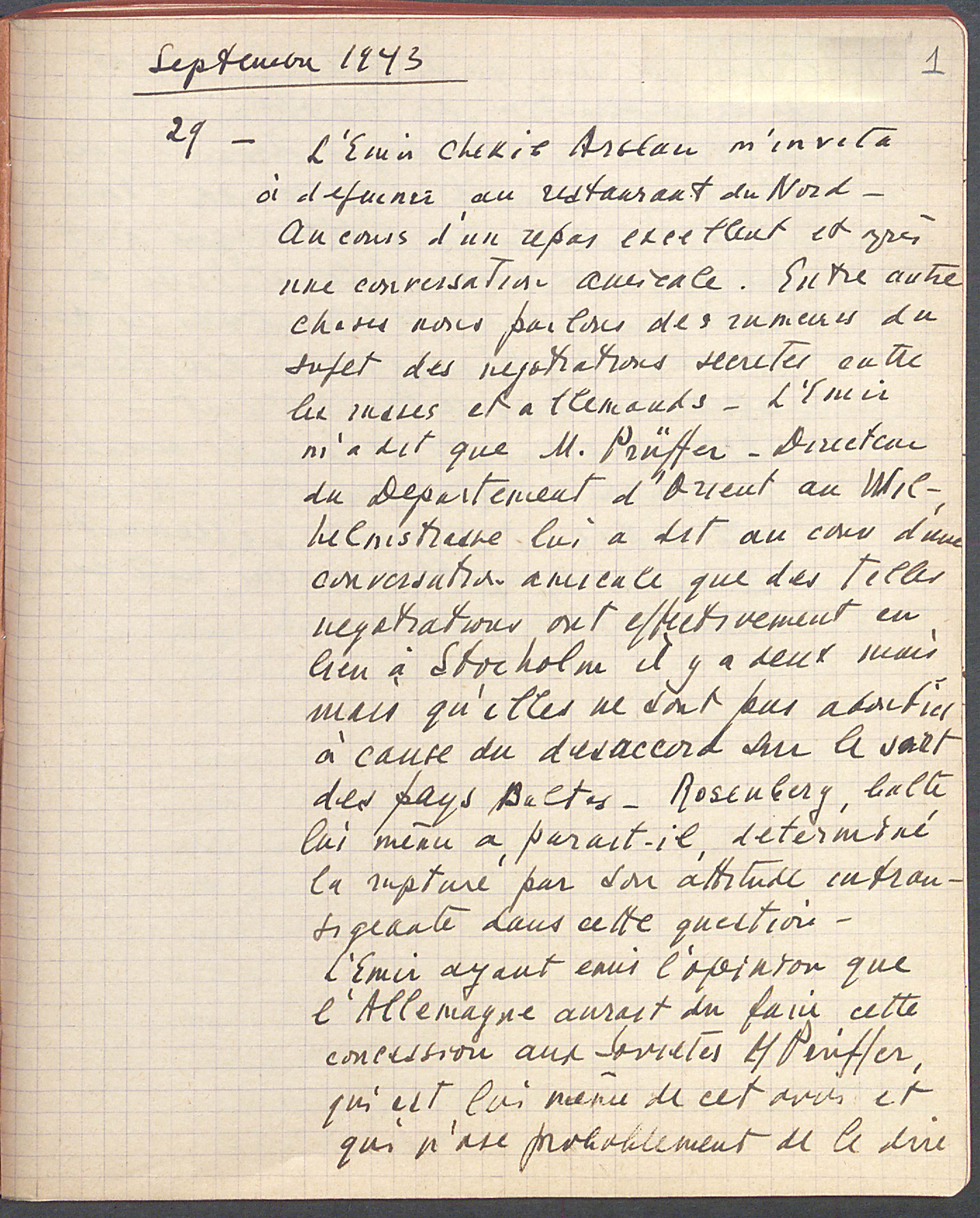
*** Bammate's Memoirs ***
September 29, 1943,
Amir Chekib Arslan invited me to lunch at the North Restaurant. During an excellent meal and after a friendly conversation, we discussed, among other things, the rumors concerning secret negotiations between the Russians and the Germans. The Amir told me that Mr. Prüffer, Director of the "Orient" Department at the Wilhelmstrasse, had confided in him during a friendly conversation that such negotiations had indeed taken place in Stockholm two months prior. However, they were unsuccessful due to a disagreement over the fate of the Baltic States. Rosenberg, himself a Balt, apparently caused the breakdown by maintaining an uncompromising stance on this issue.The Amir expressed the opinion that Germany should have made this concession to the Soviets. Mr. Prüffer, who shares this opinion but likely does not dare to voice it openly, declared to the Amir that he would report this conversation to the Minister.
The Amir is concerned about Germany's stance on the Arab Union issue. He has the impression that Germany is not in favor of this union, as she is inclined to believe that a Union taking place under the auspices of England will diminish German influence in the Near East. Germany, capable of any blunder, could very well commit this same folly and truly lose what little sympathy she still retains in the Arab countries.
— Mr. Walters, former Latvian envoy to Brussels;
— Mr. Sumenis, former Latvian Minister to Paris;
— Mr. Feldmans, former Latvian Minister to Bern;
— Professor Senator Dering, President of the Polish community in Geneva;
— Mr. Celinsky (Polish), a senior official at the League of Nations;
— Mr. Oring, representative of the Polish news agency "Pat";
— Mr. de Köver, Hungarian Director of The Voice of the Peoples, and myself.
Mr. Yérémieff gave a lecture on "The Prospects for the Evolution of the Conflict in the East with the following conclusions:
— Germany has militarily lost the war.
— Bolshevik Russia is not evolving and cannot evolve politically. Its goal remains, as in the past, the Bolshevization of Europe and the incorporation of vast territories in the East far exceeding generally believed expansionist goals.
— A separate peace between Germany and Russia is not only possible but probable.
The presentation had weaknesses. Germany has not yet been militarily defeated. Unfolding political events—partly predictable and partly completely unknown—could radically alter the current military landscape. Furthermore, Mr. Yérémieff completely disregards the Japanese factor, the importance of which is immense and could prove crucial for the outcome of the war in both the Far East and Europe.
The subsequent discussions demonstrated complete disarray among those concerned with the Russian question rather than a clear vision. The Poles—especially Mr. Oring, who is perhaps not representative of Polish patriots, being Jewish and harboring racial resentment against the Germans—are rather optimistic. To them, German military defeat is an indisputable fact, and the Russian threat is exaggerated. They believe the Anglo-Saxon allies are so powerful that the Russians will be forced to respect their will regarding the future organization of Europe. They argue that the Allies, fighting for freedom and guided by Christian principles, will ensure the triumph of the Atlantic Charter.
Mr. Walters, speaking after me, also sought to emphasize Anglo-Saxon (especially American) idealism, affirming faith in the ultimate triumph of spirit over matter—with the Germans obviously representing the crude forces of matter. However, he loyally admitted he could not reasonably refute my pessimistic predictions.
Speaking immediately after the rapporteur at Walters' invitation, I expressed my fears that the Allies would not be able to prevent the Russians from seizing control of the Baltic states, Poland, Finland, and the Balkans—even if they wished to, of which I am by no means certain.
Mr. de Köver noted that he is very pessimistic about the future of Europe. Having recently traveled to Italy and France, he is convinced that these countries are ripe for communism.
October 7, 1943,
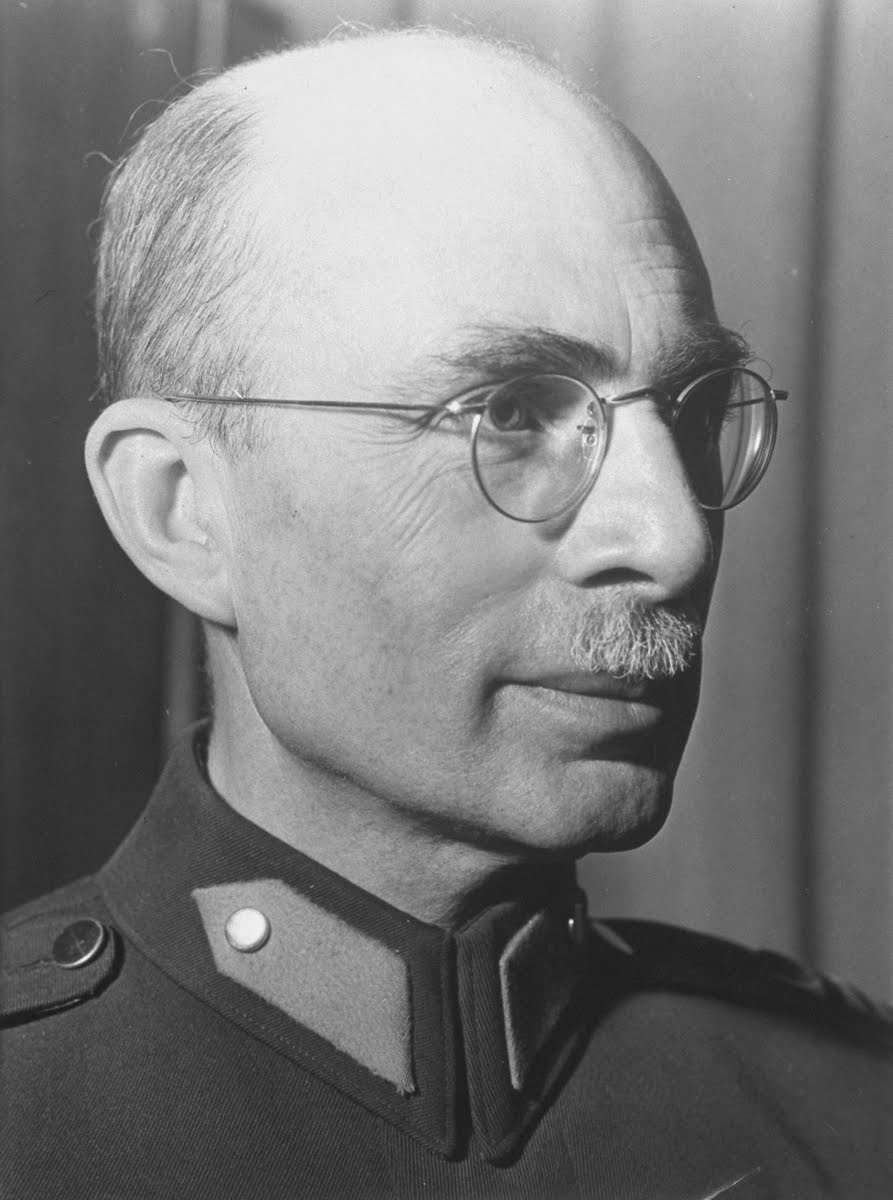
I had lunch at the hotel with Kiamil Bey (Enver Pasha's brother). He informed me that Marshal Fevzi Pasha is leaving his post as Chief of General Staff of the Turkish army. He is not retiring of his own will, but under pressure from generals who believe the old marshal is no longer up to date. His probable successor is General Kiazim Pasha, the brother-in-law of Enver Pasha and Kiamil Bey.I met Kiazim Pasha in Enver Pasha's entourage in 1918; he was then Enver's aide-de-camp with the rank of Colonel. He is a very cultured officer who completed his higher military studies in Germany and is generally recognized as possessing great qualities.
Kiamil told me that he had sent my article on Turkey's position (published in Le Mois Suisse, July 1943, signed "Georges Divoire") to Kiazim Pasha and Nouri Pasha.
October 15, 1943,
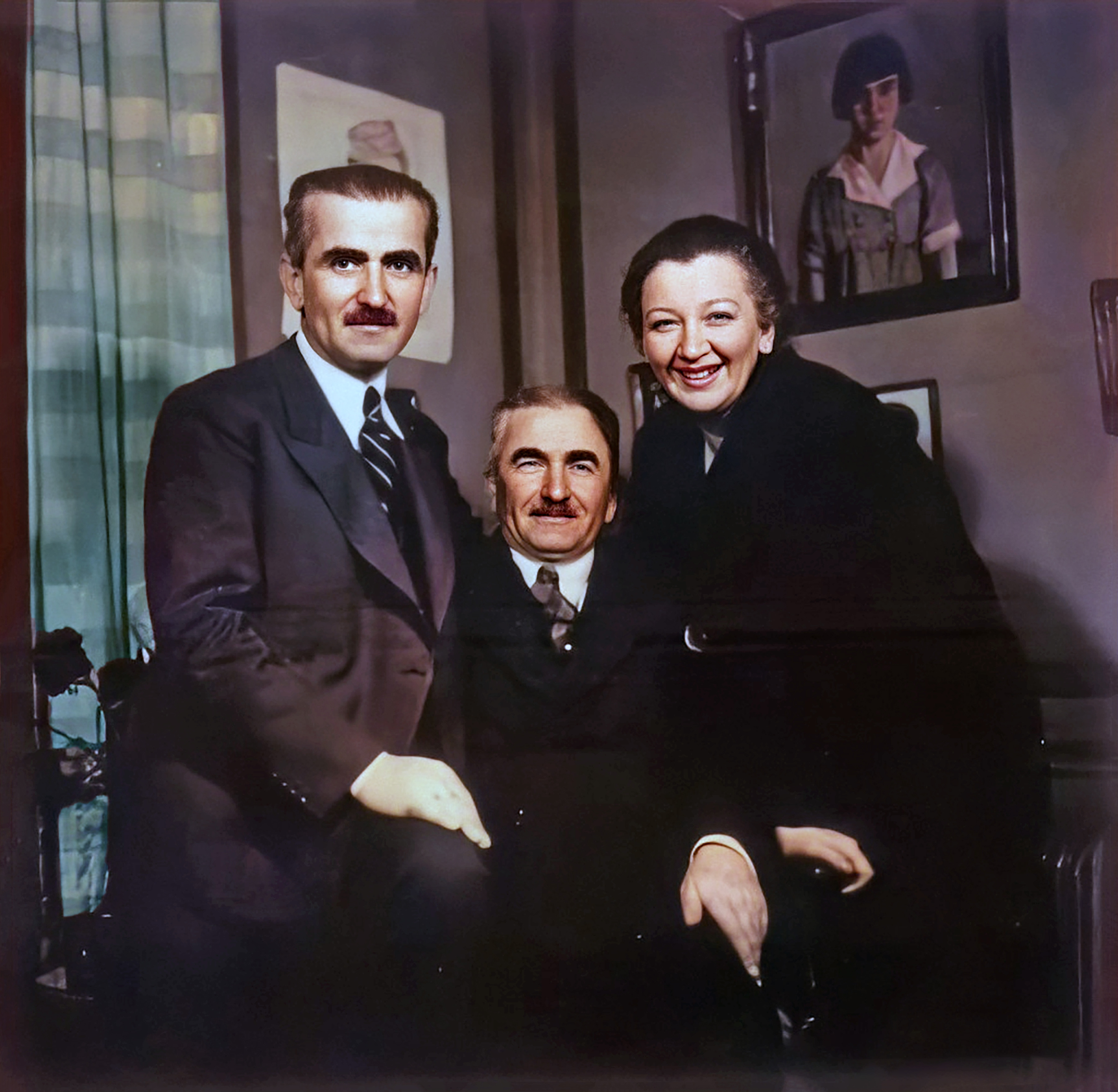
On October 15, 1943, Islam Bey Khodsiar Khan and his wife have arrived from Vichy. He recounts that France is living under a veritable terror of the Gestapo. It has reached such an extent that distinguished French people, who used to frequent the Hôtel des Ambassadeurs where the Diplomatic Corps stays, no longer dare to come because contact with foreign diplomats can lead to trouble. Currently, aside from a few neutrals (Swiss, Portuguese, Turks, and Afghans), only Axis diplomats remain in Vichy.Referring to his conversations with Turkish diplomats, Islam Bey believes that Turkey views the prolonged German retreat in Russia with concern. Logically, they do not want Germany to be weakened too greatly vis-à-vis Russia, whose power is increasing prodigiously.
October 16, 1943,
I attended a reception hosted by Mr. de Köver, the Hungarian deputy and Director of The Voice of the Peoples. Many journalists and the Turkish Consul were present. I expected to meet Mr. Gafenco, the former Minister of Foreign Affairs of Romania, but he was not there. Mr. de Köver explained that unfortunately, the tense relations between Romania and Hungary do not yet allow for this contact, although he personally wishes for it. He believes that the two peoples must arrive at a freely consented modus vivendi, even though he is of Transylvanian origin and considers himself under the "Romanian yoke."October 23, 1943,
While reading The Spectrum of Europe (L’Analyse Spectrale de l’Europe) by Keyserling with Johnny, the following remarks by the author caught my attention:".... There is something unique in Turanian blood, when it has the spiritual formative power of Islam as an auxiliary...."
".. Islam merely favors the specifically Turkish lordly spirit, founded on the perfect equality of all men; it did not create it. The Turks are probably the purest lordly people known to the history of Europe and the Near East...."
".. The lordly character is so much the essence of the Turk that—despite the rapprochement with Bolshevism determined by the contingencies of the era...—it subsists and will undoubtedly continue to subsist. It is probable that the loss of faith will act in the opposite direction... But from a psychological point of view, the Turks will remain Muslims, even if they lose all their faith: it is because Islam formed them. That is why I firmly believe in a new Islamic unity built upon psychological resemblance and uniformity of traditions and not on religious faith. But above all, the lordly character of the Turkish people will subsist, thanks to its traditional consciousness that it represents something superior to the formerly dominated peoples..."
"He who is a Turk in the best sense of the word... must feel absolutely superior to the familiar and mercenary Greek, the boorish Bulgarian, the soft Romanian, the weak Egyptian, and the Arab devoid of a sense of reality..."
October 27, 1943,
"It is not money that is the sinews of war. It is good soldiers. Money does not procure good troops, but good troops always procure money." — Machiavelli.This judgment must be revised in light of the "industrial war" raging at the present hour. How can one build the immense quantity of planes, ships, and tanks, or arm armies of millions, without money?
The example of Germany speaks volumes. Its military value, in comparison with that of the Anglo-Saxon states, is superior, yet it finds itself today in a state of manifest inferiority because America is capable of building more than 7,000 planes per month. Thus, small countries with limited economic potential can no longer claim to play a truly independent political role.
November 5, 1943,
I met with Mr. Turauskas, the Minister of Lithuania, and Mr. Yérémieff. We spent the evening together at the Café du Théâtre. We had a lengthy conversation about the possibility of an agreement between Russia and Germany and the dangers of the Bolshevization of Europe. All three of us were very pessimistic.November 6, 1943,
Mr. Turauskas invited me to lunch to continue the conversation from the previous day. Turauskas is a wise, level-headed man with connections. He told me he had learned from a reliable source that Mr. von Papen had declared that Turkey would go to war against Russia as soon as Germany ceased the war. Se non è vero è ben trovato (If it is not true, it is well invented). It might have been better to wage this war when Germany was at Stalingrad and the Caucasus on one hand, and at the gates of Alexandria on the other. This concept obviously presupposes that Turkey will be militarily supported by England and America, which is not at all proven despite commitments from London.In the evening, I was a guest of Mr. Tapio Voionmaa, the Finnish Minister, and dined with him and Turauskas. The conversation revolved around the same issues. It was clear that Finland was searching for, but unable to find, an honorable and secure way out of the war. They would gladly surrender to the Anglo-Saxons, but the Allies were demanding that Finland simultaneously surrender to the Russians—which was, of course, unacceptable.
Germany was gradually withdrawing its troops; seven divisions had been withdrawn recently. News from a Stockholm source (often erroneous) claimed that the German government had instructed its citizens in the Baltic states to return to Germany, lending credence to assumptions about Germany's intention to continue its withdrawal.
How far would this go? The conversation naturally turned to the possibility of an agreement between the Anglo-Saxon powers and Germany, both of whom are threatened by the expansion of Russian power. Mr. Voionmaa, agreeing with Turauskas, believes that public opinion in America is not ready for such a reversal for moral reasons. This public opinion has been shaped by the ruling circles to support an all-out war against Germany and is not easy to sway now. Unless brutally confronted with Russian treachery via a separate agreement with Germany, a profound shift authorizing anti-Russian action is considered by Voionmaa to be entirely improbable.
November 18, 1943,
I attended a reception at the home of Mr. Feldmans, the Minister of Latvia accredited to the League of Nations, in Geneva. I met Prof. E. Pittard and his wife (the woman of letters Mrs. Rogers). We spoke of the past—specifically when Mr. Pittard helped me go to Paris in April 1919 despite Russian intrigues and the Quai d’Orsay’s refusal to grant me a visa. His intervention with the American Delegation, and the interest President Wilson took in the matter, convinced the Quai d’Orsay to revise its refusal. Pittard looks very alert and full of intellectual vigor, not at all like the old man he actually is.I also met the Bagnells, Mr. Jean Martin (former Director of the Journal de Genève), Mr. Valters (Minister of Latvia in Rome), and Zielinski. The meeting with Mr. Pittard was pleasant.
November 19, 1943,
At the invitation of Mr. Amiquet, Director of Mois Suisse, I traveled to Montreux. I was kindly welcomed by Mr. Amiquet and Mr. Sac, the editorial secretary. I spent three pleasant hours in lively conversation with these two Swiss men, who resemble the majority of their fellow citizens so little.Mr. Amiquet proposed that I take over the review's diplomatic column and provide a monthly article on political events. He also asked for the promised article on Islam as soon as possible. I declined the first offer but accepted the second. I do not feel competent enough to commit to a task that would require too much time, especially as the remuneration would not compensate for the trouble.
However, the proposal testifies to a flattering confidence. It is certain that the article on Turkey by my alter ego, Georges Rivoire, earned me this honor. The article was widely reproduced by Gringoire and broadcast by Vichy Radio. According to Amiquet, several deputies and Ministers in Turkey subscribed to the review. If these Turks knew who "Mr. Georges Rivoire" really was, I am sure Mois Suisse would not have recorded a single Turkish subscription. I say this with as much conviction as bitterness.
Amiquet and Sac continue to hope for a German victory. They assure me that reprisals for the terror bombings of German cities are imminent, involving "super bombs" currently being tested.
November 20, 1943,
In Geneva, at 3 o'clock, I visited Mr. Gafenco, the former Minister of Foreign Affairs of Romania, with Mr. Turauskas. Gafenco has been in Switzerland for two years. He is very close with the Americans at the Legation in Bern and discreetly works for his country in the Anglo-Saxon camp. Officially, he is an émigré in opposition to his government, but he is said to be in regular relations with Romanian leaders who appreciate his work. I found a man still young (46-48 years old), very cultivated, intelligent, and admirably informed. During a two-hour conversation, he was categorical about the possibility of an imminent rupture between the Anglo-Saxons and the Russians. He estimates that despite the evident antinomy of their interests, it would be erroneous to believe in such a rupture during the war."One must look the monster (Russia) in the face and not let oneself be lulled by illusions," he said. Too many interests commit the Russians and Americans to reciprocal concessions to win the war. The Russians are maneuvering well; in Moscow, they showed themselves to be surprisingly conciliatory, evading awkward questions to satisfy the Anglo-Saxons. Cordell Hull can now speak of the "Atlantic Charter," and Stalin promises "liberation" to the Baltic countries and Moldavia.
"We must gain time," says Gafenco. This is easy to say but difficult to do. If Russia occupies the Baltic countries, Finland, and half of Romania, time will have worked for the Russians rather than for these countries.
November 24, 1943,
I had lunch at the Café du Théâtre in Bern with Mr. Voionmaa (Minister of Finland) and Mr. Turauskas (Minister of Latvia) [C.K. Note: Turauskas was the envoy for Lithuania]. The conversation turned to the Moscow Conference and its repercussions.It is confirmed that Russia, supported by America and England, demands the "unconditional" surrender of Finland. Russia claims the territories attributed to her after the war of 1939, plus the port of Petsamo and the "internationalization" of Hangö (joint military control by the U.S., England, and Russia). Voionmaa declares these conditions absolutely inadmissible; the disappointment in Finland is such that even the Social Democrats now support resistance to the bitter end.
The Finnish General Staff considers the military situation satisfactory enough to allow for prolonged resistance, which would require a Russian army of 800,000 men to break. Aviation is lacking, but munitions are stockpiled, and morale is good.
Voionmaa recounted that the question of the Straits found a curious solution in principle: The Mediterranean straits (including Gibraltar, Suez, and Bab-el-Mandeb) will be internationalized under the guard of England, Russia, and the U.S. If the Russians accepted this, it is likely only to gain time.
Regarding Poland and the Baltic States, Russia announced its will to realize its 1940 borders and consents to no concession. America, remaining faithful to the Atlantic Charter, declared it intended to respect the independence of these countries. The question, proving insoluble, was simply cast aside.
Stalin's speech commemorating the 25th anniversary of the Bolshevik seizure of power leaves no doubt regarding Soviet intentions. Mr. Turauskas confirms that in all Baltic countries, the will to fight the communists is growing; National Committees are now encouraging enlistment in volunteer detachments.
November 25, 1943,
I visited Mr. Tamao Sakamoto, the Minister of Japan, in Bern. He is young, sympathetic, and speaks French well. He judges the German attitude toward European peoples severely, citing a lack of psychological understanding. He believes this evil is irreparable and that it takes several generations to change the German character. He informed me that the Germans even manifested a will to subjugate India.I concluded from the conversation that Japan estimates a German defeat would bring about a dislocation of the Russian-Anglo-Saxon coalition. Their preparations against India seem to be a serious threat rather than a firm will to conquer the country; Subhas Chandra Bose might one day serve as a bargaining chip in Anglo-Japanese negotiations. As long as the war against America and England lasts, one should not expect a conflict between Japan and Russia.
The Minister's interest in Afghanistan, the Arab countries, and Turkey is evident. "We are realists and know how to limit ourselves," he said. "We will not commit the German mistakes."
November 29, 1943
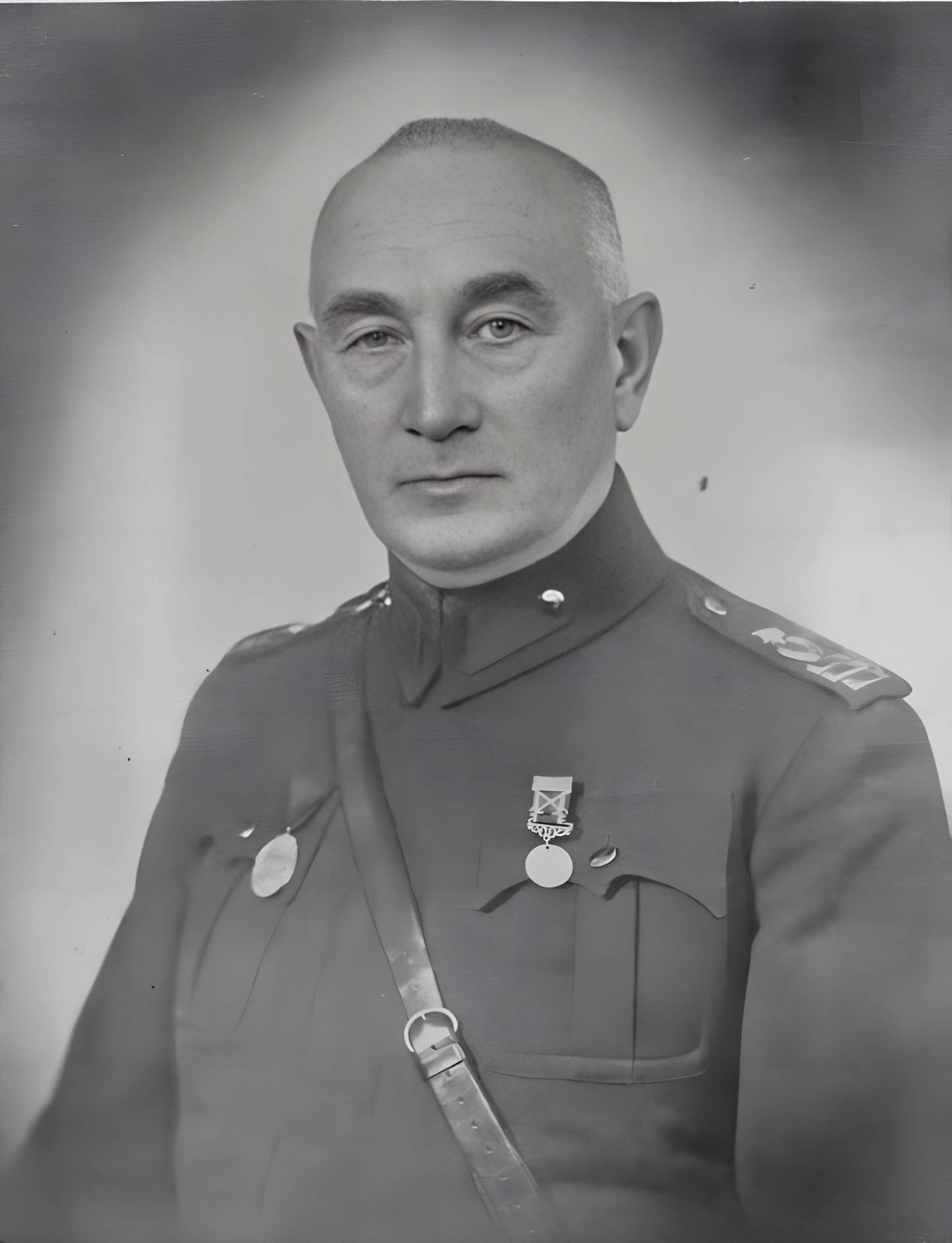
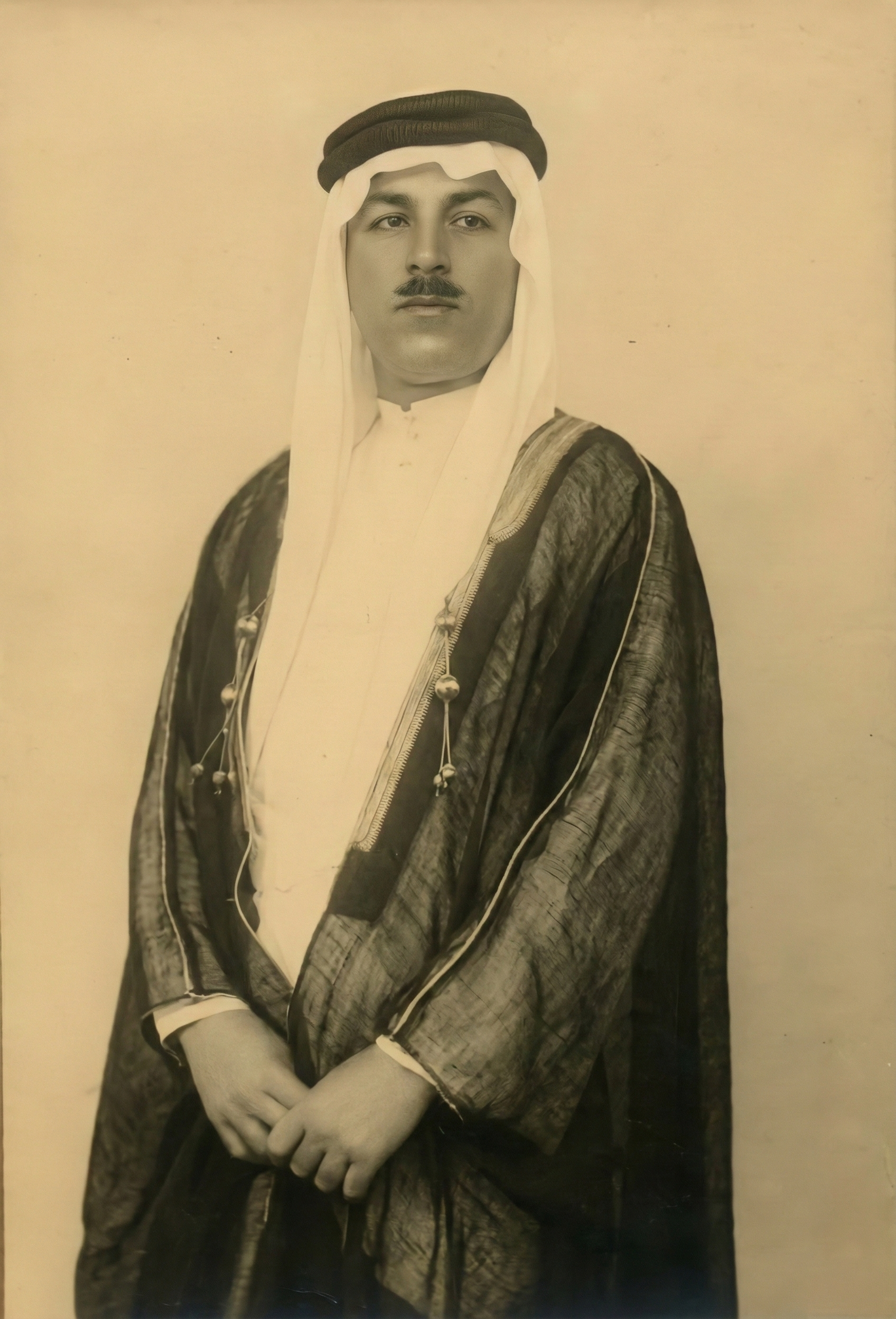
This morning, I received two letters dated April 24th of this year from Istanbul, sent by General Ali Saïd-Pacha [Akbaytugan] and Amir Adil Arslan. Attached was a copy of a letter Ali Saïd Pacha sent to General Oshima, the Japanese Ambassador in Berlin. These letters took seven months to arrive.Why were they handed to me now? Is there a change in Russo-Japanese relations? For two years, Japan has tried to broker an agreement between Germany and Russia. Perhaps the Tehran Conference is seen as proof of definitive collaboration between Russia and the Anglo-Saxons, making a new Japanese orientation hostile to Russia imminent? Or perhaps my letters were simply forgotten in a file box at the Japanese Embassy in Berlin and found by chance.
Mr. S. Yosano, who had the letters sent to me, offers his services to correspond with my friends via the Japanese legation in Bern.
November 30, 1943
The Minister of Japan organized a cocktail party for the diplomatic corps of Bern. All the heads of Axis missions, rare neutrals, and high officials of the Political Department were there.I exchanged words with Minister Sakamoto. "This time," he said, "it is no longer about propaganda; the meeting between the Heads of State of the Allied powers actually took place." When I asked what would come of it, he implied he knew nothing but added, "If speeches were enough to win the war, they would have achieved victory a long time ago."
I asked if the Germans would be demoralized by the beginning of active warfare. He did not believe so. I thanked him for the letters; visibly, he did not understand, which implies that Yosano handled the correspondence through the Military Attaché without informing the Minister. The Japanese military does not like to update diplomats on their activity.
I met General Okamato, the Japanese Military Attaché, and Mr. Köcher, the German Minister. The Minister of Turkey, Yakub Kadri Karaosmanoglu, avoided me. I clearly do not inspire any sympathy in him, nor he in me.
May 16, 1945,
On April 29, around 10 p.m., Thabet Bey Noor informed me that London radio had broadcast news that the Grand Mufti of Jerusalem had presented himself at the Swiss border asking for asylum, but the Swiss authorities had turned him away.On the morning of the 30th, I contacted Assal Bey, the Egyptian Minister in Bern. Unable to reach him immediately, I finally met him in Geneva on May 1st. We decided he would see Mr. Burkhardt, President of the Red Cross, to explain why Switzerland should not have refused asylum to a religious leader venerated by Muslims. We planned that if the official refusal stood, we would facilitate the Mufti's entry under an assumed name (disguised as one of the Crimean Muslims from a nearby colony).
Assal Bey met with Mr. Burkhardt, who showed great understanding. He admitted the Swiss government was anticipating Allied desires too eagerly, citing the regrettable turning back of Donna Rachele Mussolini as a similar mistake. Burkhardt advised Assal Bey to see Mr. Max Petitpierre, the Federal Councilor for Foreign Affairs, personally.
Assal Bey requested an audience with Mr. Petitpierre for Friday, May 4th. However, a few days later, Swiss radio announced that a German plane carrying the Mufti and his suite had landed in Switzerland. The officers were interned, but the Mufti was turned away.
Assal Bey later informed me that he had indeed met with Mr. Petitpierre, who had been understanding and was preparing for the Mufti's incognito entry. However, the unexpected and highly visible arrival by plane compromised the plan. An extraordinary Council of Ministers was convened, and the plan failed.
I learned that Arab students in Switzerland were indignant at Assal Bey's attitude, feeling he had not done enough. I consider this zeal laudable but unjust; Assal Bey did what was possible under difficult circumstances, acting without even waiting for authorization from his government.