
 Türkçe
This week, in commemoration of the 162nd anniversary of the Great Circassian Exile and Genocide, the Historical Memory of the North Caucasus will refute one of the lies of Russian historiography using some sample documents from the Russian Imperial archives.
By the early 1860s, the Russian Empire had defeated Imam Shamil in the Eastern Caucasus (Chechnya and Dagestan) and turned its full military might toward the Western Caucasus, the homeland of the Circassians. The Russian military strategy, spearheaded by General Nikolai Yevdokimov, shifted from conquering the territory to entirely clearing it of its native population.
According to Russian sources, in the second half of August 1861, the Abadzekh, Ubykh, and Shapsug communities, and all their affiliated villages, submitted the following appeal to the Commander of the Caucasian Army, to be forwarded to the Emperor:
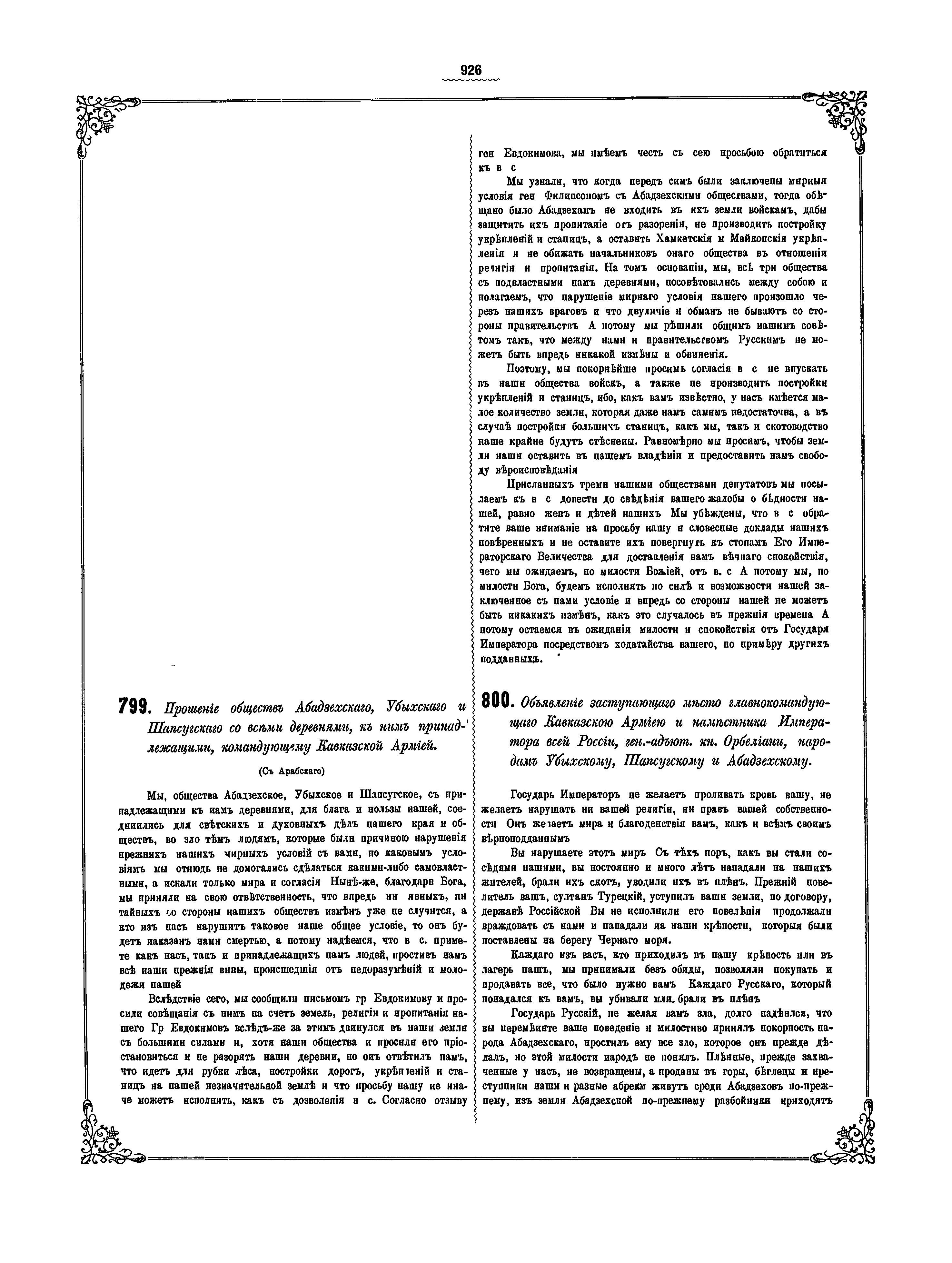
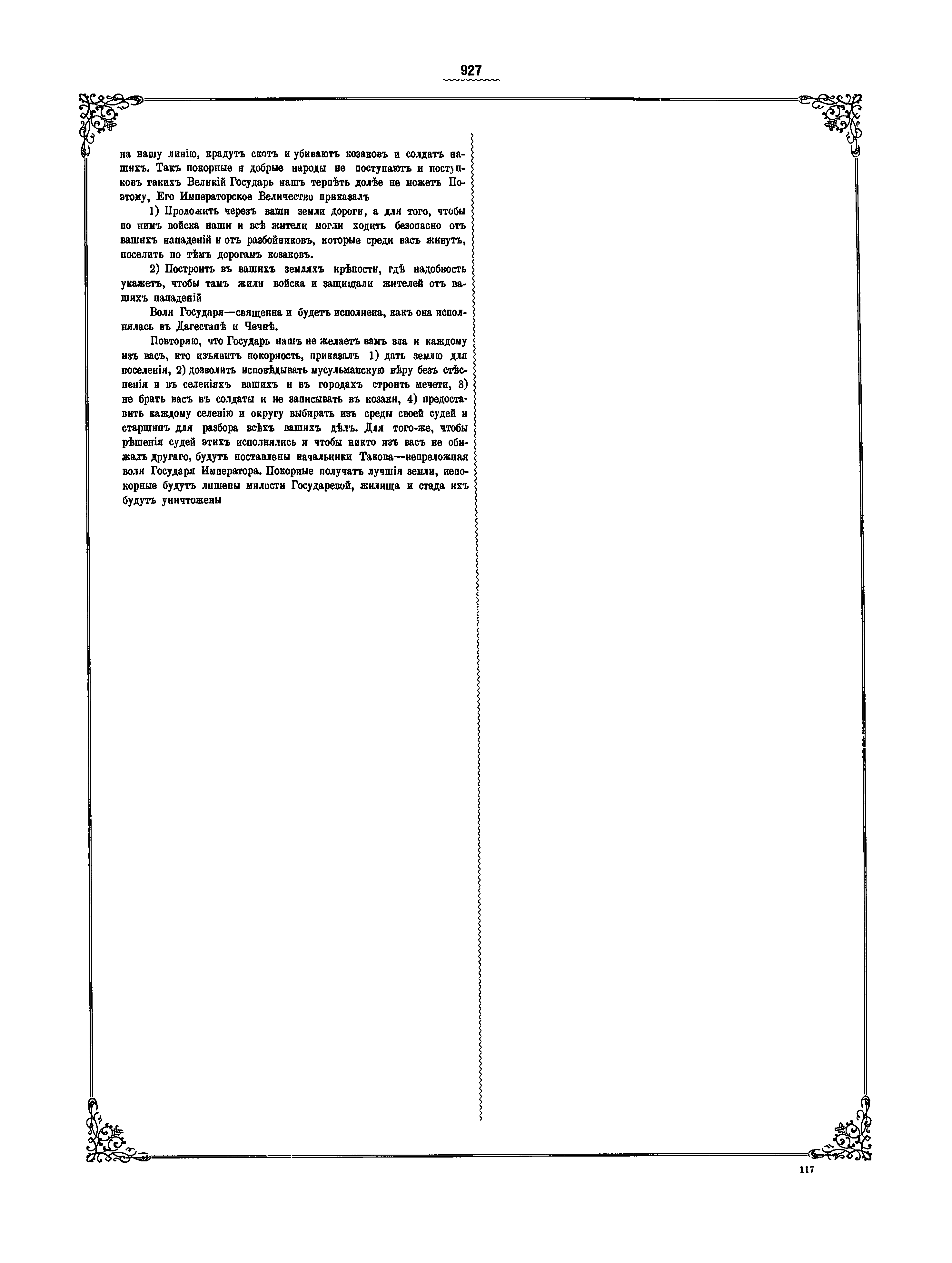
(Click on the images for the original text)
Following this, we communicated by letter to Count Evdokimov and asked for a meeting with him regarding our lands, religion, and sustenance. Count Evdokimov immediately moved into our lands with large forces, and although our societies asked him to halt and not ruin our villages, he answered us that he was coming to cut timber, build roads, fortifications, and stanitsas on our insignificant land, and that he could only fulfill our request with the permission of your excellency. According to Gen. Evdokimov's response, we have the honor to appeal to your excellency with this request.
We learned that when peace conditions were previously concluded by Gen. Philipson with the Abadzekh societies, the Abadzekhs were promised that troops would not enter their lands, to protect their sustenance from ruin, not to build fortifications and stanitsas, but to leave the Khamketskie and Maykopskie fortifications and not offend the leaders of that society regarding religion and sustenance. On that basis, we, all three societies with the villages subject to us, consulted among ourselves and believe that the violation of our peace condition occurred through our enemies and that duplicity and deception do not come from governments. And therefore, we decided by our common council that between the Russian government and us there can be no betrayal or accusation in the future.
Therefore, we most humbly ask your excellency's consent not to let troops into our societies, as well as not to build fortifications and stanitsas, because, as you know, we have a small amount of land, which is insufficient even for ourselves, and in the event of building large stanitsas, both we and our cattle breeding will be extremely constrained. Equally, we ask that our lands be left in our possession and that we be granted freedom of religion.
We send the deputies sent by our three societies to your excellency to bring to your attention our complaint about our poverty, as well as that of our wives and children. We are convinced that your excellency will pay attention to our request and the verbal reports of our proxies and will not fail to lay them at the feet of His Imperial Majesty to bring us eternal peace, which we expect, by the grace of God, from your excellency. And therefore we, by the grace of God, will fulfill to the best of our strength and ability the condition concluded with us, and in the future there can be no betrayals on our part, as happened in former times. And therefore we remain expecting grace and peace from the Lord Emperor through your intercession, following the example of other subjects.
In response to this request, the reply conveyed by Prince Orbeliani, Acting Commander of the Caucasian Army and Governor-General of the Russian Empire, to the Ubykh, Shapsug, and Abadzekh communities was as follows:
The Lord Emperor does not wish to shed your blood, does not wish to violate either your religion or your property rights. He desires peace and prosperity for you, as for all his loyal subjects.
You are violating this peace. Since you became our neighbors, you have constantly and for many years attacked our inhabitants, taken their cattle, and carried them off into captivity. Your former ruler, the Turkish Sultan, ceded your lands, by treaty, to the Russian State. You did not obey his command, continued to be hostile to us, and attacked our fortresses, which were placed on the coast of the Black Sea.
Everyone from your community who came to our fortress or into our camp, we received without offense, and allowed you to buy and sell everything you needed. Every Russian who fell into your hands, you killed or took captive.
The Russian Sovereign, not wishing you harm, hoped for a long time that you would change your behavior and graciously accepted the submission of the Abadzekh people, forgave them all the evil they had done before, but the people did not understand this grace. Captives previously taken from us are not returned, but sold into the mountains; our fugitives, criminals, and various Abregs live among the Abadzekhs as before; from the Abadzekh land, as before, robbers come to your line, steal cattle, and kill our Cossacks and soldiers. Submissive and good people do not act this way, and our Great Sovereign can no longer tolerate such actions. Therefore, His Imperial Majesty ordered:
— To build roads through your lands, so that our troops and all residents could travel safely along them from your attacks and from the robbers who live among you, and to settle Cossacks along those roads.
— To build fortresses in your lands where necessity dictates, so that troops can live there and protect the inhabitants from your attacks.
The will of the Sovereign is sacred and will be fulfilled, just as it was fulfilled in Dagestan and Chechnya.
I repeat that our Sovereign does not wish you harm, and to every one of you who shows submission, he ordered:
1) to give land for settlement,
2) to allow the practice of the Muslim faith without constraint and to build mosques in your villages and towns,
3) not to take you as soldiers and not to conscript you as Cossacks,
4) to allow each village and district to choose judges and elders from among themselves to settle all your affairs. For the decisions of these judges to be carried out and so that none of you offends another, commanders will be appointed. Such is the immutable will of the Lord Emperor. Those who submit will receive the best lands; the insubordinate will be deprived of the Sovereign's grace, their dwellings and herds will be destroyed.
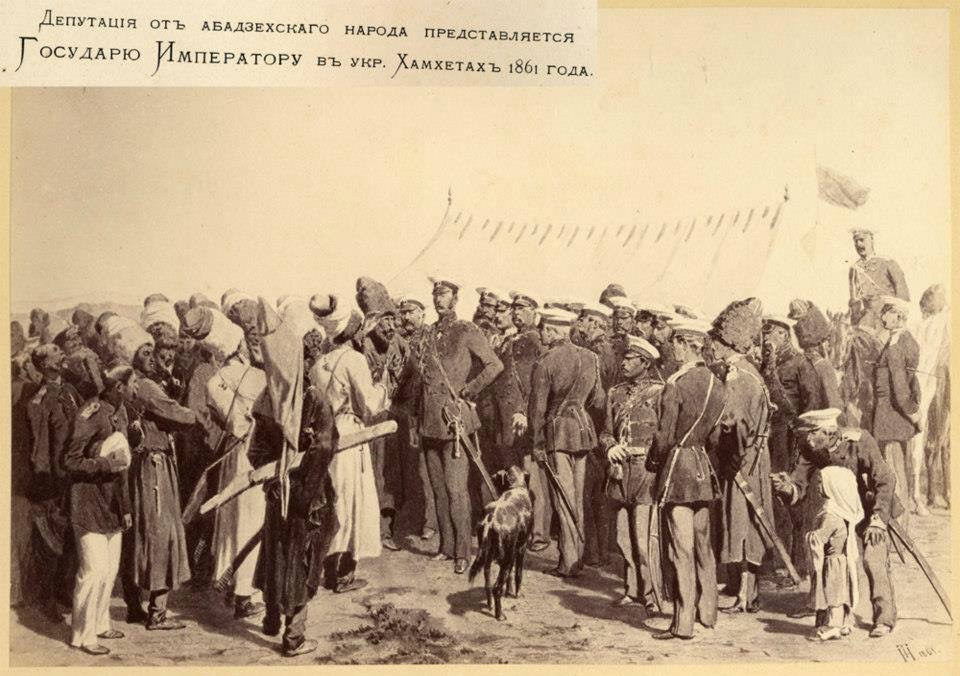
"I give you a month to decide. Either you move to the Kuban, where land will be given to you, and you will keep your customs and faith, or you move out to the Ottoman Empire. If you do neither, you will be driven out by force."
The first option was to surrender unconditionally to the Russian Empire and relocate to designated areas in the Kuban plains, north of their mountain homelands. The lands offered by the Russians were largely malarial swamps and open steppes. By moving the Circassians to the flatlands, the Russian military could easily monitor, control, and tax them, stripping them of the natural defensive advantage their mountainous homeland provided. A small fraction of the population chose (or were forced into) this option. Many who moved to the Kuban perished from malaria, starvation, and harsh winter conditions for which they were unprepared.
This ultimatum forced the indigenous Circassian population to make an impossible choice: leave their ancestral mountain homelands and resettle in the Russian-controlled Kuban lowlands, or face expulsion to the Ottoman Empire. Indeed, the first option never materialized in practice. The aim was not to remove them from the Kuban plain, but from the Caucasus entirely, and to eliminate them by scattering them in small groups among the Cossacks and Russians.
When the Circassians refused to leave their ancestral mountains, the Russian military apparatus—led by Count Yevdokimov and later overseen by Grand Duke Mikhail Nikolaevich—put the Tsar's words into brutal, systematic military a series of rigid military decrees and orders.
The subsequent directives issued to the Russian army and conveyed to the remaining tribes left no room for negotiation. The standing order dictated that any Circassian found remaining in the Caucasus mountains after the deadline was to be considered a hostile combatant.
In 1862, Tsar Alexander II appointed his brother, Grand Duke Mikhail Nikolaevich, as the Viceroy of the Caucasus, granting him supreme military and civil authority to execute the final pacification of the region. Under Grand Duke Mikhail’s command, the Russian army systematically advanced through Circassia, burning villages, destroying crops, and driving the population toward the Black Sea coast. The order given to the surviving tribes was absolute.
This order was the culmination of the century-long Russo-Circassian War. The only option was to leave the Russian Empire entirely and emigrate across the Black Sea to the Ottoman Empire.
As recorded by contemporary geographers and historians, the standing military decree ordered the Circassians to:
"...leave your valleys within a month under pain of being treated as prisoners of war."
Count Yevdokimov's internal memos to the Tsar and Grand Duke Mikhail explicitly framed this as a campaign of total clearance. He famously wrote of the strategy:
"The resettlement of the hostile mountaineers to Turkey must be completed without fail... leaving them in the mountains would mean leaving the war there forever."
While the wording of the Tsar's ultimatum technically offered a choice between the Kuban plains and the Ottoman Empire, the wording was largely a formality. The Russian administration actively engineered the outcome so that the vast majority would choose (or be forced into) exile across the Black Sea.
The Russian Empire actively encouraged this option. They wanted the Black Sea coast entirely cleared for Russian, Cossack, and Christian colonization to secure the coastline against British and Ottoman influence. Grand Duke Mikhail’s order was less of a choice and more of a death march. As Russian troops closed in, hundreds of thousands of Circassians were funneled to the Black Sea ports (such as Sochi, Tuapse, and Sukhum) to await ships.
Grand Duke Mikhail's role was to execute this ultimatum with ruthless efficiency. By 1864, his dispatches to St. Petersburg proudly reported not peace treaties, but the complete "cleansing" of the Black Sea coast of its indigenous population.
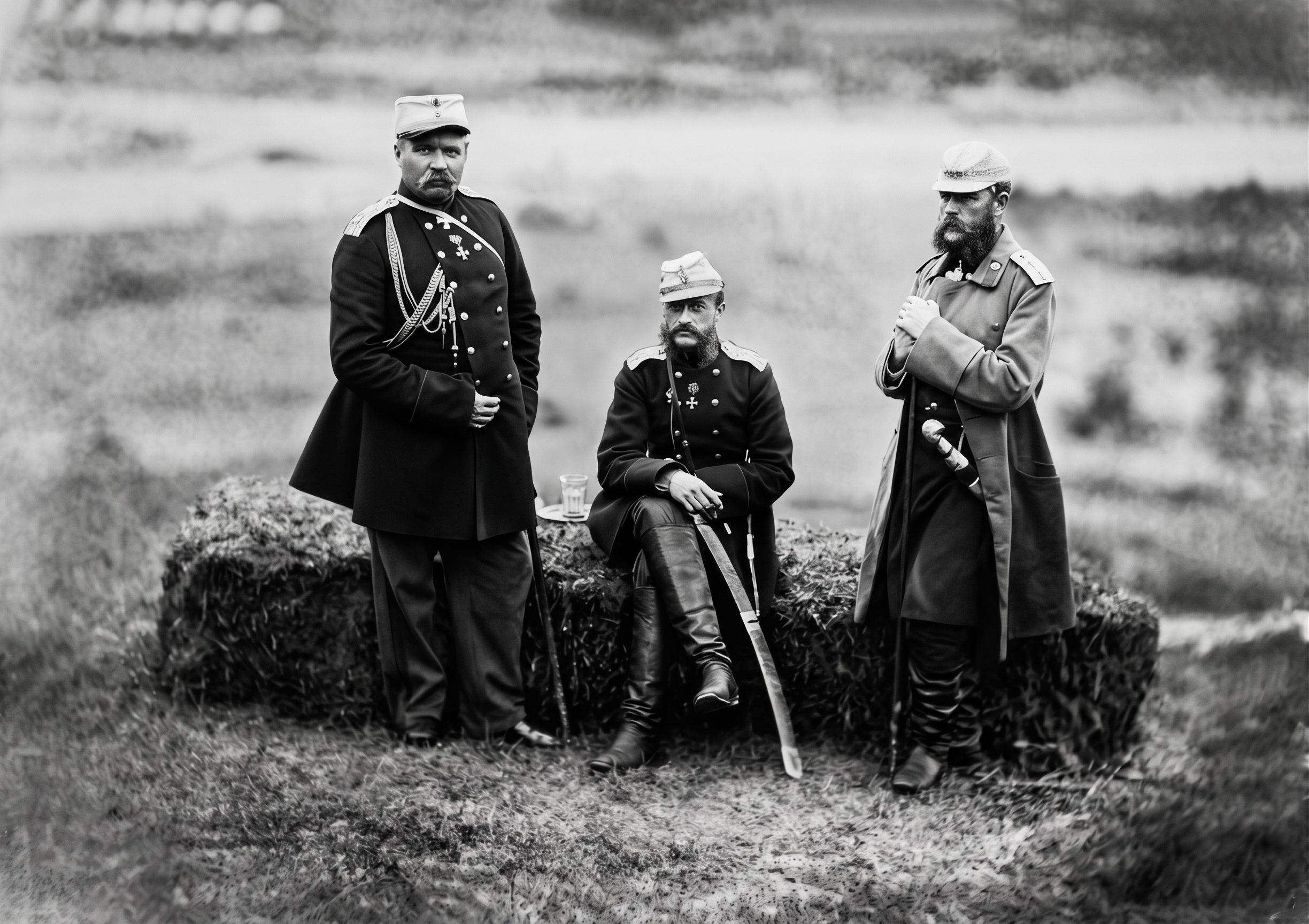
For example, Bzhedukhs have never been mountain dwellers, and they have always lived in the plains of the Kuban River. So, they have not imposed any threat to the Russians as the Abadzekh or Oubykh did. The letter of State Secretary Alexander Ivanovich Kruzenshtern to General Alexander Petrovich Kartsov avowedly proves that the Bzhedukhs were also a part of the extermination plan by fragmenting into smaller groups and resettling them among the Cossacks of Stavropol. However, even this plan did not satisfy some of the Russian bureaucrats and army officers who preferred them to be scattered two thousand kilometers far from their homeland, in Orenburg.
Relation of State Secretary Kruzenshtern to the Chief of the Main Staff of the Caucasian Army, dated February 2, 1863, No. 290. (Click here for the original Russian manuscript.)
According to Your Excellency's response of December 20, 1862, No. 2, regarding the lands needed for the resettlement of the inhabitants of certain auls [villages] of the Bzhedukh tribe, the immediate local considerations were requested from the Stavropol Civil Governor. He informed me on January 15, under No. 267, that within the jurisdiction of the Stavropol Chamber of State Properties, there is no such Mohammedan [Muslim] population to which the Bzhedukhs, designated for transfer from military to civil administration, could be attached. Settling them in separate villages on available state lands is inconvenient, not only because of the exceptional character and habits of the Asians, but also because this settlement would require special financial expenses to form a separate local administration for them, due to their ignorance of the Russian language and laws. In addition, Actual State Councilor Pashchenko adds that by settling such a warlike tribe as the Bzhedukhs in the Stavropol province, where one cannot hope to establish any order for a long time, it can be reliably assumed that, being situated at a short distance from the mountains, the place of their homeland, they will strive to return there at every convenient opportunity to reunite with their kinsmen. Therefore, it would seem much more convenient to settle the Bzhedukhs and other similar migrants from the mountains in more remote places, such as on the lands of the Orenburg region. If the resettlement of the Bzhedukhs to the Stavropol province cannot be avoided, Mr. Pashchenko suggests settling them there not as a whole tribe together, or in special auls, but to divide them by a few families into the settlements of state peasants, so that the Russian population would constantly have a numerical advantage and represent a sufficient counteraction to the half-wild habits and inclinations of the Asians.
Finding it, for my part, more convenient to settle the Bzhedukhs evicted from the mountains in the Orenburg province rather than in Stavropol, I consider it my duty to request that Your Excellency be informed of this.
Quartermaster General
Relation of the Main Staff of the Caucasian Army to State Secretary Kruzenshtern dated February 14, 1863, No. 375.
In response to relation No. 290, the Chief of the Main Staff instructed me to inform Your Excellency that transferring the Bzhedukhs to the Orenburg province is not possible, for the settlement of Caucasian highlanders in that region has generally been recognized by the Ministry of Internal Affairs and the Orenburg and Samara Governor-General as inconvenient. This compelled a refusal last year even to relocate mountain resettlers returning from Turkey there, although their removal from the borders of the Caucasus was apparently extremely necessary.
Therefore, Your Excellency Alexander Petrovich will await your final notification, for a report to His Highness, regarding whether any state lands in the Stavropol province, and specifically which ones, can be designated for the proposed resettlement of the Bzhedukhs, bearing in mind that by no means the entire Bzhedukh tribe is designated for this resettlement, but only one or two auls, the inhabitants of which will be preliminarily disarmed in such a case.
Relation of the Head of the Main Directorate of the Viceroy of the Caucasus, State Secretary Kruzenshtern, to the Stavropol Civil Governor, Actual State Councilor Pashchenko. Dated March 1, 1863, No. 588
The proposals of Your Excellency, outlined in the response of January 15 of this year, under No. 267, regarding the inhabitants of certain auls of the Bzhedukh tribe, were communicated to the Chief of the Main Staff of the Caucasian Army.
Presently, the Quartermaster General of the Caucasian Army informs me that transferring the Bzhedukhs to the Orenburg province, as you suppose, is not possible, for the settlement of Caucasian highlanders in that region has generally been recognized by the Ministry of Internal Affairs and the Orenburg and Samara Governor-General as inconvenient. This compelled a refusal last year even to relocate mountain resettlers returning from Turkey there, although their removal from the borders of the Caucasus was apparently extremely necessary.
Therefore, the Chief of the Main Staff of the Caucasian Army requested notification, for a report to His Highness the Viceroy of the Caucasus, regarding whether any state lands in the Stavropol province, and specifically which ones, can be designated for the proposed resettlement of the Bzhedukhs, bearing in mind that by no means the entire Bzhedukh tribe is designated for this resettlement, but only one or two auls, the inhabitants of which will be preliminarily disarmed in such a case.
Informing Your Excellency of this, I have the honor to most humbly ask you to provide me with the aforementioned information.
Kartsov's letter, sent to the embassy in Istanbul in August 1863, was essentially an exposé of the Russian Empire's secret genocidal agenda in its Caucasus policy: (Click here for the original Russian manuscript.)
Copy of the dispatch from the Chief of the General Staff to the Manager of the Russian Imperial Mission in Constantinople, dated August 23, 1863, No. 17.
His Imperial Highness read with special interest the dispatches delivered by you with the letter addressed to His Highness dated August 2/14 No. 789, as well as your letters to me dated July 20 No. 738 and August 2/14 No. 790, along with the enclosed copies of Your Excellency's dispatches to the Vice-Chancellor.
The Grand Duke is highly grateful to you for the communicated information, which is useful to us in many respects.
Everything that Your Excellency communicates about Magomet-Amin conclusively convinces the Grand Duke of the dishonesty and incomprehensible audacity of this man, who, having in mind only the satisfaction of his own greed, forgets that the Caucasian Command knows the situation of the highlanders at least as well as he does.
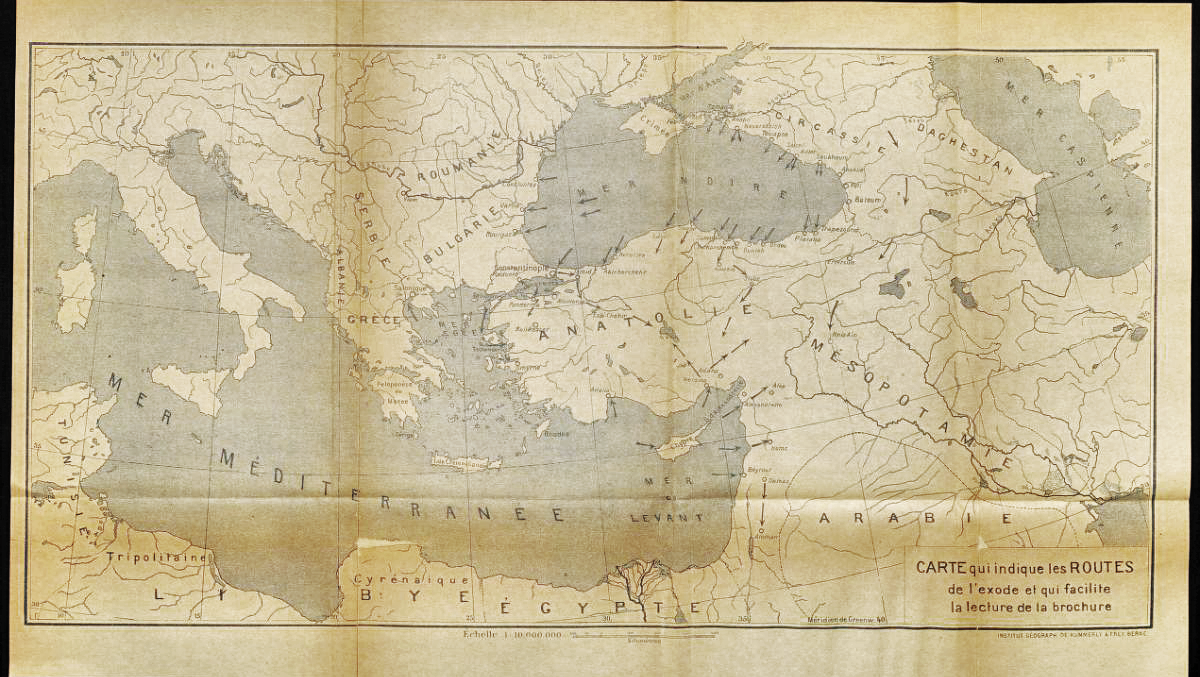
For Your Excellency to be able to assess the value of the services offered by the former Naib, I take the liberty of going into some details regarding the assessment of our actions in the Western Caucasus and the current state of affairs in this part of the region, and so that my words may possess greater clarity, I enclose herewith a map of the Northwestern Caucasus.
Up until 1860, the objective of our actions was to inflict upon them as frequent defeats as possible by means of expeditions undertaken into the places occupied by the highlanders, and, having convinced them of the superiority of our forces, to compel them to express submission. The result of these expeditions was that the societies closest to us, living on the plains, would either submit or rebel against us and constantly rob us, shifting the blame onto their neighbors living higher up in the mountains. During the recent Eastern War, all the societies that had formerly been submissive simultaneously rebelled, and we had to subjugate them all over again.
It became obvious that with further actions according to the previous system, no matter under what conditions the highlanders submitted to us, this submission would last only as long as the highlanders themselves wished to observe it; and the first gunshot on the Black Sea, or even some fictitious letter from the Sultan, or the arrival of an impostor Pasha could once again incite a war. Even if we had occupied the mountains with fortifications and built roads to them, we still would have had to constantly keep a massive number of troops in the mountains and not have a single minute of peace.
As a consequence of this, in the autumn of 1860, it was decided to cease the useless expeditions and proceed with the systematic settlement of the mountains with Cossack stanitsas [villages], while forcibly resettling the highlanders to the plains, subjugating them there to our Administration. Thus, both the mountains and the eastern shore of the Black Sea must be occupied by the Cossack population. On the enclosed map, marked in pink paint are the areas already occupied by our settlements since 1861. At the very beginning of the execution of this plan, the highlanders understood what awaited them, and as a result, in 1861, three of their main tribes: the Shapsugs, Abadzekhs, and Ubykhs, formed an alliance, elected deputies, and asked the Sovereign Emperor to accept their submission on exactly the same conditions that Magomet-Amin now offers to secure for us. They were demanded to submit unconditionally and were bluntly informed that they must move out of the mountains. The highlanders, as was to be expected, took up arms. The past year was the most difficult for us; the highlanders exerted all their efforts but did not halt the advance of our columns, which moved from two sides: from Anapa toward the East and from the Laba River toward the West, reaching the Khabl River on one side and the Pshish on the other. The population squeezed out of the mountains partly submitted unconditionally and has already settled—numbering up to 50 thousand souls—in the Kuban region and at the mouths of the rivers flowing into it, completely subordinating to our administration; and partly crowded into the space between the Pshesh and Shebsh [rivers], where they live in temporary huts. Driven to extremes here, the Abadzekhs currently no longer attack us; they ask for mercy and a truce until October, solely to harvest their grain. In October, a portion of them, whoever wishes, will have to depart for Turkey; the other portion will resettle on the plain. Thus, the enemy with whom Magomet-Amin offers to reconcile us almost no longer exists. If there is no external war, then starting next year, we will begin clearing the coastal area as well, starting from Gelendzhik toward the South-East.
The measures taken against the highlanders may seem cruel, but they are dictated by bitter necessity. Fifty years of experience have convinced us that no peace is possible with a people that has no Government and in whom there are not even concepts of the reprehensibility of robbery and theft.
Under such circumstances, the arrival of Magomet-Amin here, even if he sincerely wished to act in our favor, would be completely useless. And since the sincerity and unselfishness of this man's goals are more than doubtful, His Imperial Highness has instructed me to ask Your Excellency to announce to Magomet-Amin that until the absolute end of the war, his arrival in the Caucasus is positively forbidden, and that his appearance here from whatever side it may be will be considered an act clearly hostile to the views of the Russian Government.
I ask Your Excellency to accept the assurance of my excellent respect and devotion.
These few selected examples from the contradictory correspondence among the Russian command after the relentless deportations during the summer and autumn of 1864 were clear evidence of how the deportations turned into a genocide.
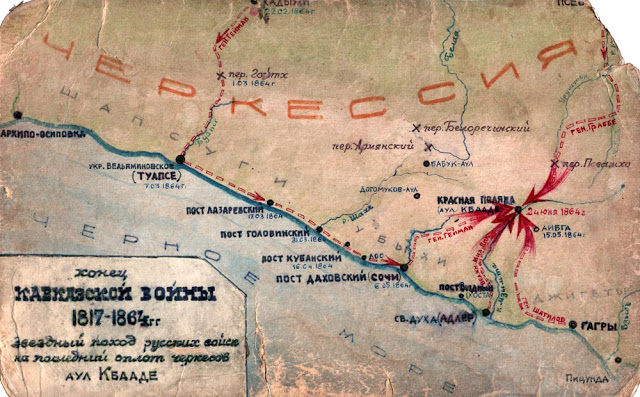
The resettlement of the natives to Turkey in large numbers, which began at the start of the spring of 1864, continued throughout the summer and autumn of the current year. Initially, the natives who were displaced from the lands they occupied by the successes of our arms at the end of 1863 and the beginning of 1864 departed for Turkey; however, some of them, not abandoning their intention to resettle in Turkey, temporarily moved to the Abadzekh District for the most profitable sale of their property. From there, starting at the end of September, the natives who had managed to sell their belongings and completely prepare for resettlement began to head in separate groups to the Novorossiysk port.
Bearing in mind the order of Your Imperial Highness, transmitted to me from Orianda in the dispatch of Colonel Staroselsky to Lieutenant General Babich, dated October 9, 1864, No. 105—to permit the departure from their places of residence of natives who had sold off their property and who, according to time estimates, could arrive in Novorossiysk no later than November 1—I instructed the Heads of the native Districts. While not encouraging the resettlement of the natives entrusted to them, they were to permit such only for those who had finalized their preparations for departure abroad, ensuring that the resettlers left their occupied places no later than October 20. Those departing after this time could not possibly arrive in Novorossiysk by the deadline set for concluding the operation of sending the highlanders to Turkey this year, i.e., by November 1.
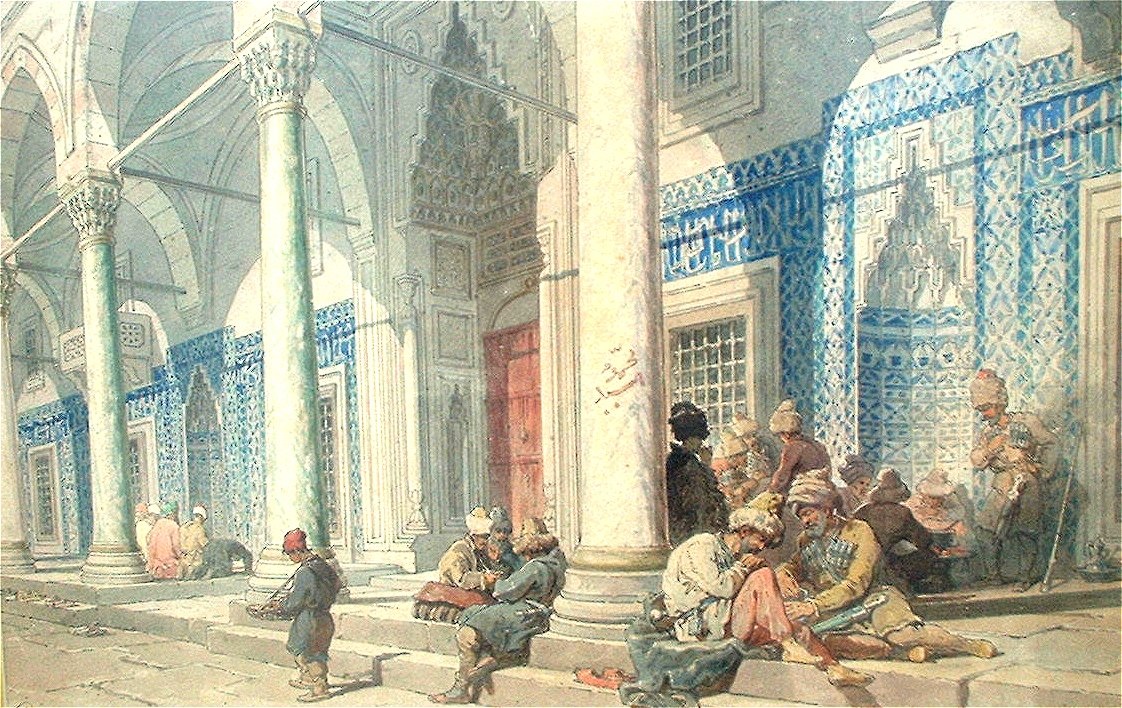
Delayed en route by the poor condition of the roads and the difficulty of crossings due to the recent flooding of the Kuban River basin, the resettlers managed to arrive in Novorossiysk only in the first days of November.
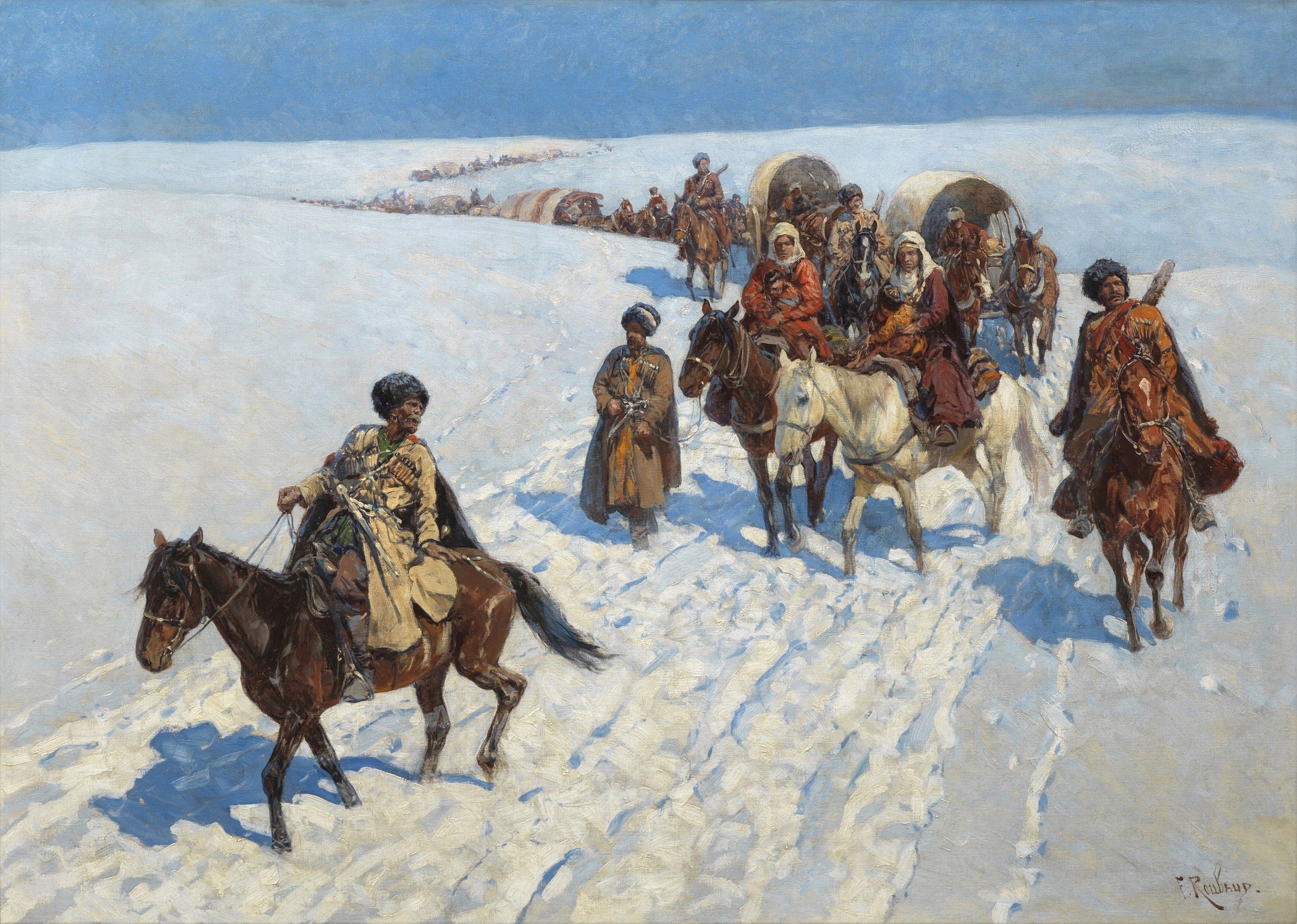
On November 8, 2,500 souls were dispatched on a Turkish steamer, and on the 12th, 4,000 souls were boarded onto two steamers. From November 12, passenger boarding onto the ships was suspended due to the onset of a North-East (NO) wind, which subsequently intensified to such a degree that the ships in the bay were in peril. The NO blew with such force that frigates could not heat their stoves for several days; walking along the piers was entirely impossible. Steamers held their position in the bay under full steam, while sailing vessels stood at anchor, unable to go out to sea.
The Turkish sailing vessel Nusred-Bakhri, loaded by November 12 with 470 resettlers and held in the bay by the NO wind, tore from its anchors on November 17 at 3:30 in the afternoon and was thrown ashore by a gust of wind opposite the former Novorossiysk hospital building; the vessel itself was smashed to splinters. Energetic measures were taken to save those perishing; teams sent from the fortification and private individuals saved 170 souls, while the remaining 300 perished. A formal investigation into this incident is underway.
Out of the 170 surviving passengers of the Nusred-Bakhri, 120 souls were admitted to the Konstantinovsky hospital for treatment.
Considering the disastrous situation of the aforementioned 170 souls, who had lost all their belongings, I authorized Lieutenant General Babich to issue them a relief allowance from the funds at his disposal to acquire necessary clothing, at 2 rubles per person.
1.) To prevent shipwrecks, General Babich is instructed to avoid sending the highlanders to Turkey on sailing vessels, and instead to conduct their departure predominantly on steamships, and furthermore, during favorable weather for the sea crossing.
2.) In the event it is impossible to send all the natives currently in Novorossiysk to Turkey, General Babich is instructed to ensure they are provided with the best possible means to spend the winter within our borders. According to General Babich's report, almost all the natives in Novorossiysk have set up barracks or huts in which they can overwinter without major difficulties. For those who did not manage to build temporary shelters, I authorized their placement among the stanitsas (Cossack villages) of the Adagum regiment.
3.) A permanent physician and a paramedic have been appointed to provide medical assistance to natives who fall ill; and
4.) For the entire duration of the natives' stay in Novorossiysk, for police supervision so that the resettlers cannot roam the mountains and commit robbery, I have reinforced the garrison of the said fortification with 2 companies of infantry and a detachment of cavalry from those stationed on the cordon line of the Adagum cavalry regiment.
Submitting the above for the consideration of Your Imperial Highness, I request approval both for the orders I have made regarding the natives currently in Novorossiysk, and for the Treasury to cover the relief allowance of 2 rubles per person issued to the 170 souls saved from the wreck of the Nusred-Bakhri.
I will have the honor of presenting information on the progress of sending the above-mentioned 15,000 natives to Turkey to Your Imperial Highness upon receiving the reports I expect from Lieutenant General Babich.
Dispatch from the Chief of the Main Staff of the Caucasian Army, Lieutenant General Kartsev, to the Commander of the Troops of the Kuban Region, Lieutenant General Count Sumarokov-Elston, January 29/30, 1865, No. 163.
Following the report to His Imperial Highness the Commander-in-Chief of the Army concerning the orders of Lieutenant General Olshevsky regarding the 4,600 highlanders slated for eviction to Turkey and left to overwinter within our borders, His Highness deigned to approve the orders that were made.
Of which I hereby inform Your Excellency in response to the communication dated January 9 of this year, No. 19.
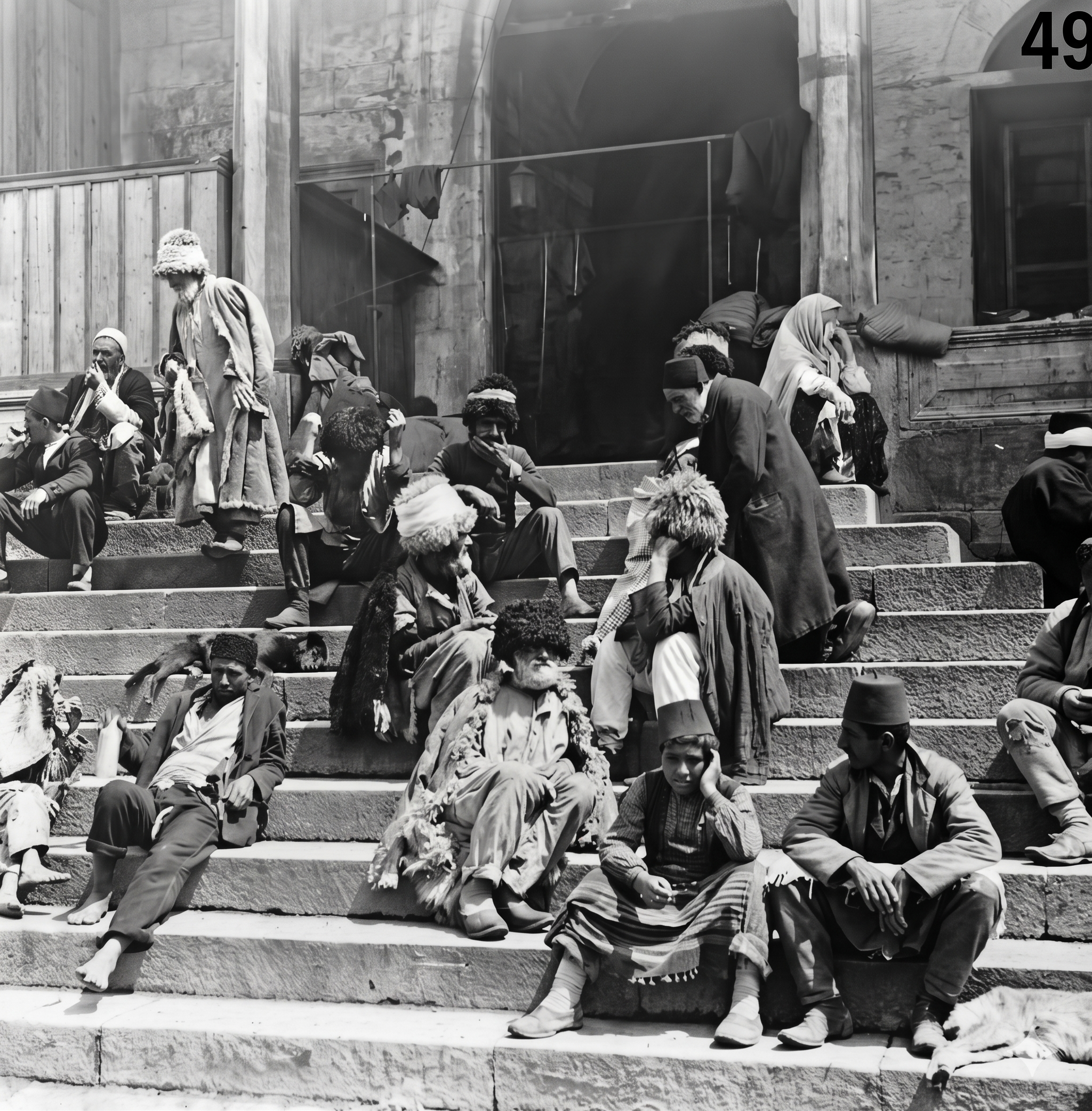
The natives who arrived at the Konstantinovskoye fortification to depart for Turkey, as a result of various unfavorable circumstances, suffered from diseases and significant mortality. According to available information, up to 110,000 natives were sent to Turkey from the Konstantinovskoye fortification; these resettlers, upon arriving at the named point, sometimes remained for a long time in camps on the north-eastern side of the Konstantinskaya bay, where, according to their custom, they buried their dead.
Wishing to know how great the mortality was among the resettlers and whether the corpses of the dead were buried deep in the ground, I collected information on this subject to prevent an infection that could arise in the spring from the shallow burial of corpses. Upon verification by Captain Shulgin of the General Staff, who was dispatched to Novorossiysk to collect data on the resettlement of natives to Turkey, it turned out that on the north-eastern side of the Konstantinskaya bay, where the mountain camps were located, cemeteries are scattered over almost a five-verst area [approx. 5.3 km], in which up to 1,400 corpses are buried.
Information regarding the depth at which the corpses were buried is contradictory.
According to the report of General Babich's Assistant for sending natives to Turkey, Lieutenant Colonel Zakrzhevsky, and the Military Commander of the Konstantinovskoye fortification, Lieutenant Colonel Rutetsky, the highlanders buried their dead according to their rite, digging pits to a depth: for men up to the chest, for women above the breasts, and for children above the knee. However, according to the report of the Chief of Staff of the Kuban Cossack Host, Colonel Pilenko, based on the presentation of the Commander of the Adagum cavalry regiment, the highlanders buried their dead at a significantly shallower depth than stated.
Consequently, taking into account the grave consequences of the spread of miasmas from corpses buried shallowly in the earth, I proposed to the Nakazny Ataman of the Kuban Cossack Host to appoint a Commission of physicians, customs officials, and other persons specially familiar with this matter. This Commission is charged with the duty to verify the validity of the testimonies of Lieutenant Colonels Rutetsky and Zakrzhevsky and to draw up detailed considerations on what measures would be useful to avert an infection that might develop in the spring.
Pending the Commission's decision, and following Colonel Pilenko's presentation, I have assigned two companies of the 73rd Crimean Infantry Regiment and the 10th Line Battalion from the Konstantinovskoye fortification garrison to work on increasing the mounds over the graves of the natives. In my opinion, in any case, the best means to prevent an infection that might develop from the shallow burial of corpses is to increase the mounds over the graves without touching the corpses themselves.
Bringing the above to the knowledge of Your Excellency for a report to the Sovereign Grand Duke, I add that I will not delay in informing You separately about the Commission's conclusion on this subject.
As can be understood from all these statements and documents, Russia's policy towards Circassia was, from the very beginning, to create a Circassia in which not a single Circassian remained. Concepts such as being peaceful, descending to the plains, and laying down arms were merely pretexts, like the fable of the wolf and the lamb meeting by the river. The Russian Empire considered every method permissible to eliminate the Circassians. Divide, expel, disperse, assimilate... If that doesn't work, kill...
In our age of information, Russia no longer has the chance to gloss over or cover up these realities. The modern Russian state has no choice but to confront its history and sins and apologize, instead of continuing its old state policy towards the Caucasian Mountaineers. Circassians want justice, not revenge. They want to be able to travel freely to their homeland, obtain citizenship, settle in their ancestral lands, and build a future for themselves there. The only thing Russia can do to erase the pain of the past is to remove the obstacles on the way of the Circassians living in emigration and to help them achieve their aspirations. Otherwise, each new generation of Russians will live bearing the burden of their ancestors' sins and the crimes against humanity they committed…

Istanbul, 21 May 2026
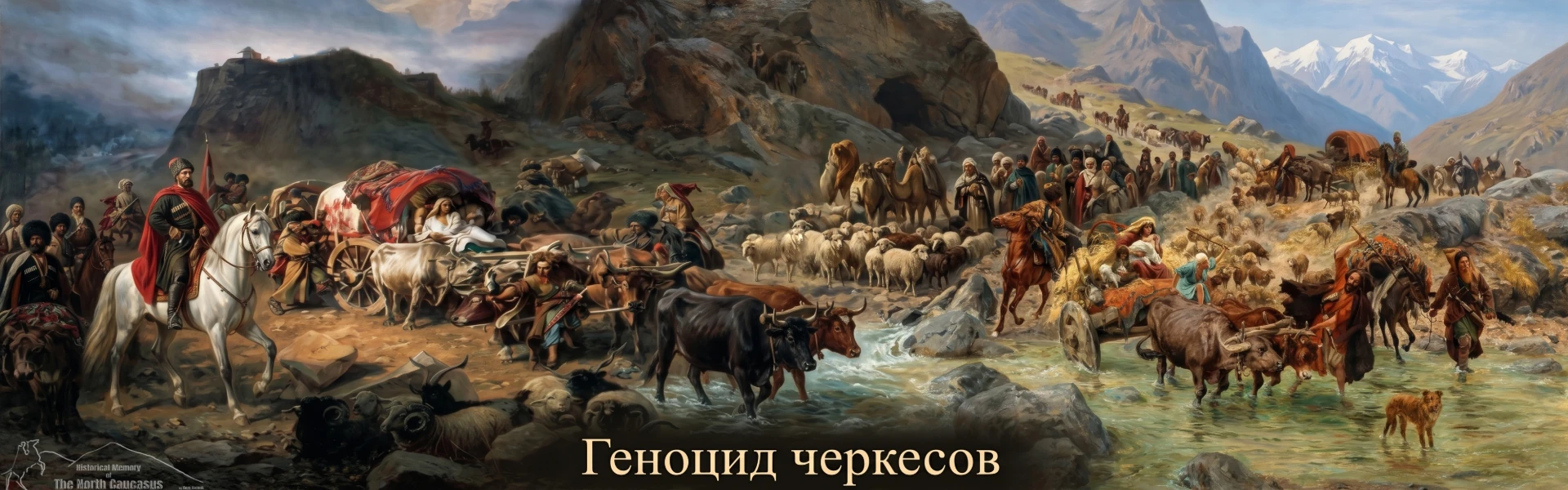
*Theme Image: An AI-generated collage of paintings by Pyotr Nikolayevich Gruzinsky and Rudolf Otto Ritter von Ottenfeld depicting the Circassian exile.