

 Türkçe Tercüme
Born on November 1, 1907, Madjir Kochkarov was a Caucasian Mountaineer who experienced the collapse of the Russian Empire, the Russian Civil War, the years of oppression and terror under the Bolshevik regime, and the painful days of World War II. Appointed Mayor of Kislovodsk by the occupation government in German-occupied Karachay during World War II, this memoir, “People Who Saw Hell”, was written during his residence in Eskisehir after his asylum in Turkey. I am very glad to share this rare piece, which is now very hard to find, with the readers.
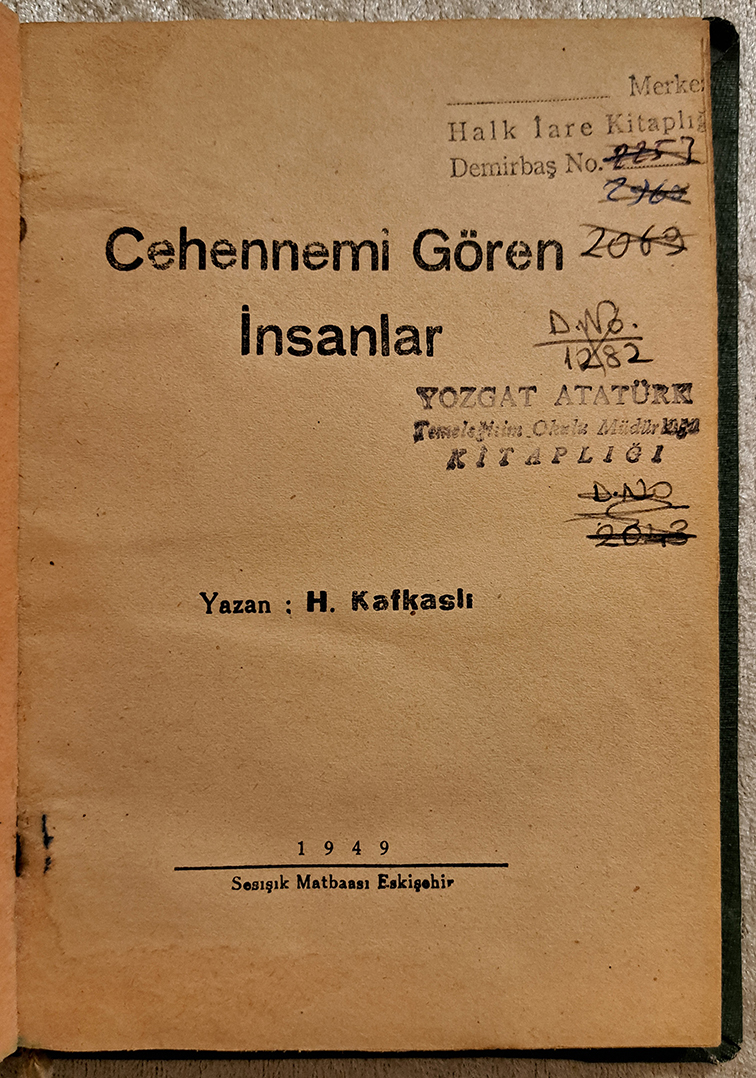
Madjir, who recounts what he learned from Soviet Foreign Minister Molotov's radio address on June 21, 1941, that Nazi Germany had invaded the USSR, vividly conveys the mood in Karachay upon receiving the news of the war and the panic experienced during the mobilization:
Listening to the radio broadcast in a large hall, the people cursed fascist Germany under the questioning eyes of NKVD agents. Everyone sensed that this war would immediately lead to internal purges, and they first tried to ingratiate themselves with the party committee and the NKVD to save themselves from this catastrophe. While the furtive glances of the people read, "I beg you, protect me," the words on their lips were the opposite: "We are ready to fight for Stalin and the Soviet homeland."
Called for mobilization, all able-bodied people between the ages of 16 and 60 were sent to the front by trains, cars, trucks, tractors, carts, or any other available means of transportation. Some of those dispatched from Karachay were sent to the Western Front, while a significant number were sent to Chechnya to dig trenches and serve in the advanced defense lines to protect the Grozny oil fields. Everyone, even among the hospital patients, except those unable to walk, was included in the mobilization.
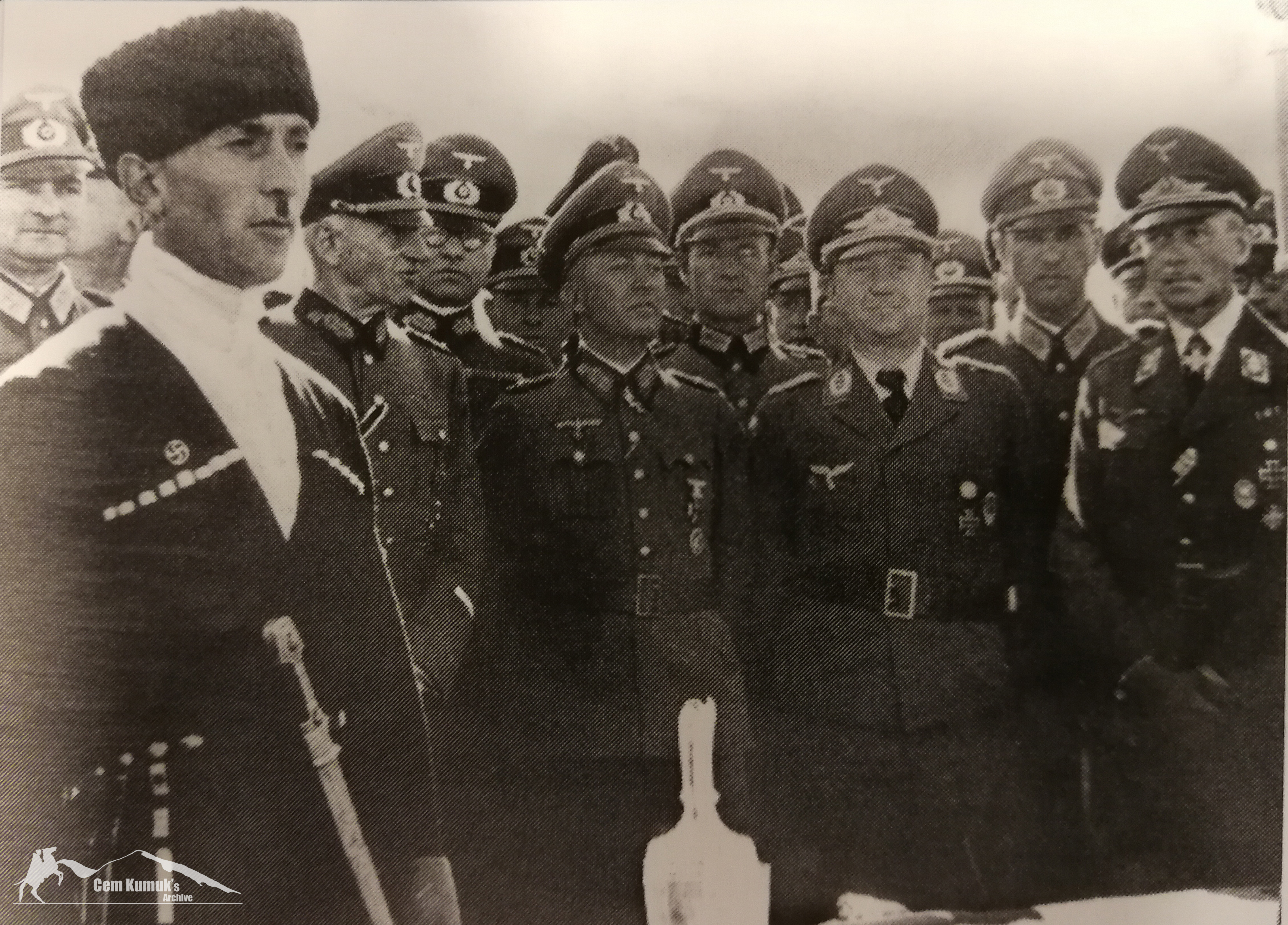
On August 1, when it was announced that the Germans had crossed the Don River, Madjir deserted the front, returned to Karachay, and contacted deserters hiding in the mountains. Their current situation made them a target for both the Soviets and Germans. Therefore, Madjir's priority was to seize control of his hometown. As the Germans approached, the commanders of the fleeing Soviet troops eastward were ordered to destroy everything so as not to leave anything behind for the Germans. Yet, despite not having been assigned any duties and not even being known by the German authorities, Madjir ascended the broad steps of the city bank, where thousands had gathered. Raising his hand, he addressed the people with all his might, astonished as they looked on:
“Attention! I am a Caucasian. I have been appointed mayor of this city by the German Army’s Supreme Command. I congratulate you on being freed from Bolshevik terror and achieving a life of freedom and liberty. From this moment on, you are free. From now on, earning a living and having wealth are no longer forbidden. No one will question the wealth you have earned. I sincerely wish that all of you succeed in this life by working honestly. Our religion, which has been banned for a quarter of a century, is now free! Pray, and teach the tenets of religion to the young and old. From now on, there will be no privileged group in our country, nor will there be any inferior group.” There will be no class. Everyone is free and has equal rights. From this day forward, everyone will be judged according to their position within society. I will prevent all corruption in our city and serve my homeland and nation with all my strength. While fulfilling this sacred duty, our invading enemies will not let us go. To protect our new and free life from our enemies, I will promulgate a series of laws suitable for wartime. However, these temporary laws, which will remain in effect until the end of the war, are temporary. However, while bloody wars continue in our country, those who disobey these laws will be those who seek to undermine our sacred and liberating movements. These people, themselves Bolsheviks, will be among the unjust people who have crushed our souls and drunk our blood to this day. They will be among those who want to drag us back into the clutches of the Bolsheviks, crush us under their filthy feet, and force us to work ourselves to death in a condition worse than animals.
Today, we are trying to save our future, and we will mercilessly destroy all those who oppose this ideal. Don't fear anyone. Worship Allah and prosper! This speech excited the crowds, giving rise to hope for deliverance from Bolshevik terror. Madjir immediately established a volunteer police force as a precaution against possible Bolshevik sabotage. While visiting recreational facilities and sanatoriums that had been converted into hospitals, doctors asked him whether sick and wounded people serving the Soviets would be admitted, and he unhesitatingly stated that all patients had the right to treatment.
The first major challenge he faced was the lack of money. He ordered the bank clerks to return to their duties. He then examined the books of the bank in the city. Records indicated that the safes should have contained over a million rubles in cash, but they were empty. It was later discovered that the clerks had hidden the money. He ordered the money to be returned to the safe, and within 24 hours, it was returned. Once the financial resources became available, private enterprises immediately flourished in the city, and shops were filled with a wide variety of goods. First-class restaurants and hotels resumed operations, and within a few days, the city's people enjoyed a freedom they had not experienced for 30 years. They celebrated the new government.
It took the Germans 14 days after Madjir took office to reach the city. After receiving information about the city administration, the German officer assured Madjir that they would not interfere in the city's internal affairs and asked them not to interfere in military affairs. For a while, everything went smoothly, and the people were happy and hopeful for the future. However, no one was aware of the developments on the Stalingrad front. Things had turned upside down there, and the Red Army's counteroffensive had begun.
As soon as Madjir returned to the city, he sent a message to all the towns and villages and started for preparations. The majority of the population had agreed to leave their homeland and go to Turkey. To prepare the people for their departure, he called people to come together in the village of Abuk. Over two thousand people gathered in the village within five days.
After Madjir's resignation, the person appointed mayor by the Germans was a young man named Kaytbiyoglu Kady, a childish man of character and age, ignorant, and devoid of any sense of humanity or nationalism. This young man, suddenly overcome with the intoxication of his position, announced on behalf of the German authorities that those preparing were prohibited from doing so, and that if those gathered in the village of Abuk did not disperse immediately, they would be punished for causing unnecessary panic. Kaytbiyoglu Kady, who later sent Hut Tambi, a Bolshevik agent, to the village, forced the people to return to their villages.
When Madjir left the city on January 5, 1943, he had no one left except two hundred horsemen and his own family. The Germans informed him that they could not provide trains for them and that they would allow him to take as many animals and carts as necessary if they traveled by carts. When the defeat of Stalingrad was revealed to the public, the entire population began to flee westward. Sometimes they would wait 15-20 days in line to cross a bridge under German control. Unable to endure the weather and hunger, the death toll rose. German soldiers shot those too sick or weak to walk, so they wouldn't slow down the convoy.
They continued their journey under bombardment of Russian planes and, after a four-month struggle, finally reached Ukraine, which was still under German control. The distance between them and the Red Army was decreasing day by day. In the meantime, rumors were circulating that the German army's withdrawal plan had been terminated and that it would establish a defensive line at the end of the Kuban River and prepare for a new offensive. This information was confirmed by German military authorities. Indeed, the German armies retreating westward had been halted, and hope for a new life flourished.
The German commissioner in Melitopol, Ukraine, asked all Caucasian refugees to come together in Melitopol. He hosted a banquet in their honor, declaring that all kinds of assistance would be provided to Caucasians fleeing the communist regime. Madjir was not happy with this news at all. If they had accepted this, they would all perish on the front lines and in factories, leaving them without a way to reach their true goal: Turkey. Madjir was summoned to Berlin and set off with four of his friends. Two of them were Kabardian and two Karachay. On May 1, 1943, while they were staying at the Central Hotel in Berlin, Dr. Shultz from the Ministry of the East visited them and showed them around various places in Berlin and Germany in general. Then, they had a meeting with Professor Gerhard von Mende in Berlin. At the meeting, von Mende told the Caucasian delegation:
“You see, the German nation, carrying on victorious wars far from its borders, is living a comfortable life at home. Nothing has shaken us except the implementation of a strategic withdrawal plan on the Eastern Front. We will undoubtedly defeat the Russians. The roots of communism will be cut off. There is no doubt about this. We will grant independence to the Caucasus. You see, we already consider you as allies. Believing that the Caucasians desire to cooperate with us, we are allowing the establishment of Caucasian divisions. We will even allow you to visit the POW camps and free all Caucasian prisoners from the camps and transfer them to the Caucasian division. The Führer also grants the Caucasians the honor of fighting in arms with the German nation and expelling Bolshevism from the world. Officers and soldiers serving in the Caucasian divisions will be provided with German uniforms. However, these individuals will have a Caucasian symbol on their sleeves. This is an honor for the Caucasian people. Tomorrow, Minister Rosenberg will meet you. He will accept and provide more detailed explanations on these matters.”
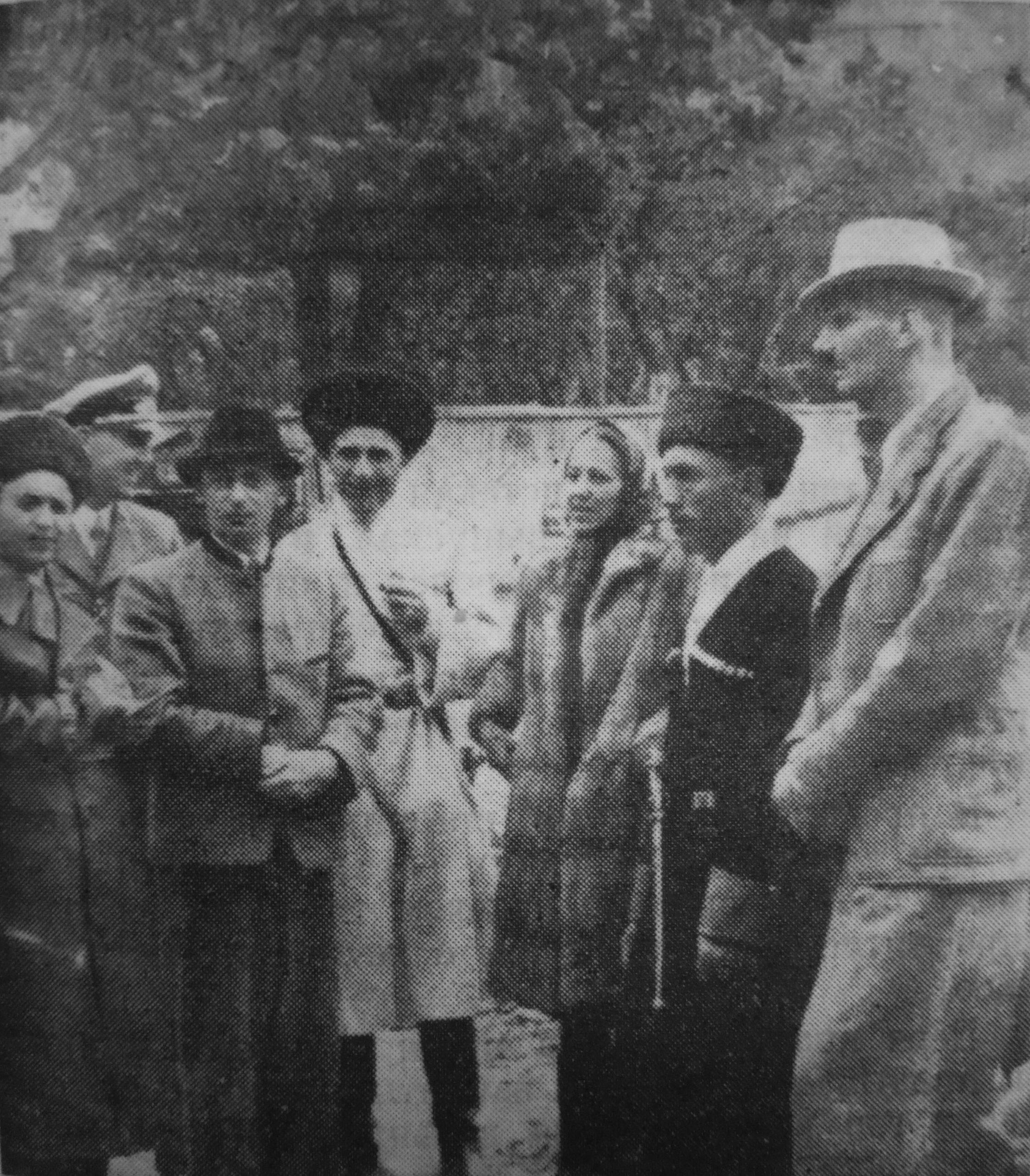
“The German nation has rescued you from the clutches of the oppressive communists. The Führer has allowed you to wear your beautiful Caucasian national costume, to open your mosques, and to pray. Yes, your homeland, the beautiful Caucasus, has been abandoned to the enemy for a short time. But this is a strategic necessity. As a result of an offensive we will soon launch, you will see the entire Caucasus completely liberated. It is a great honor for the Caucasian people to participate in this struggle against Bolshevism, to fight in arms with German soldiers, wearing German uniforms, using German weapons. The Führer grants you this honor.”
While listening to Rosenberg, Madjir admitted that he did not believe anything he said, but he concluded that there was no need for further discussion and did not insist on his request to be allowed to travel to Turkey. Madjir proposed an action plan to Rosenberg, requesting that the refugees be provided with more favorable conditions during their withdrawal and that the management of the Caucasian refugees be entrusted to a committee chosen from among Caucasians. Rosenberg promised to review the documents.
Madjir was later introduced to members of the Caucasian émigré circles and the leaders from France and Czechoslovakia. Madjir claims that Ahmet Nabi Magoma and Alikhan Kantemir, leaders of the national committee established in Berlin, told him that the path he was following was wrong, that the German army would not be defeated, and that they would not allow Caucasian refugees to break away from the Germans. Magoma and Kantemir discussed the action plan Madjir proposed to Rosenberg and briefed him on the political activities of the immigration. Madjir, who was reluctant to any idea other than bringing his compatriots to Turkey, and the National Committee leaders were unable to find a compromise.
The delegation returning from Germany to Ukraine shared their impressions with the refugees. Unaware of Turkey's policies at the time, Madjir told the people that if they couldn’t find a way to find asylum in Turkey as quickly as possible, they would be trampled underfoot by the great powers at war. Madjir was exploited by his political rivals within the Karachay community, and his remarks were distorted and reported to the German officer Captain Theurer. Realizing his life was in danger, Madjir boarded a random train and escaped from Melitopol. Using documents issued to him by German authorities, he visited the German camps in Ukraine, posing as a Caucasian leader, and rescued many of his fellow citizens from the camps.
Reaching Odessa, a governorate under the control of the Romanian government at the time, Madjir obtained permission from the Romanian authorities to allow the 160 people remaining in Ukraine to travel to Turkey. However, their plans were thwarted when someone in the group reported the situation to Captain Theurer. Madjir, who reached Bucharest with a group of friends, intended to apply to the Turkish Embassy there. While they were awaiting the return of Ambassador Hamdullah Suphi Bey, who was in Ankara, he was detained by police in Bucharest based on a warrant issued by German authorities. Sent back to Odessa with his wife and child, Madjir avoided being handed over to the Germans by bribing an official. He found ways to return to Bucharest with his family. He met with Ambassador Hamdullah Suphi Bey, who had returned to Bucharest by then. The Kochkarov family, warmly welcomed by the ambassador, requested assistance not only for themselves but also for their friends remaining in Odessa and brought them to Constanta. But the German administration continued to pursue Madjir. They captured him and his friend Djanbulat in Constanta and sent them on a train to Germany. Although Madjir did not detail how they survived this ordeal in his memoirs, the Germans likely released them thanks to the intervention of the North Caucasian National Committee. The day he returned to Romania and reunited with his family, the Red Army captured Romania. He tried to bribe them with a fake Greek passport to travel to Turkey, but was caught after informants tipped off the Russians.
Interrogated and tortured for days in an NKVD prison, Madjir and his friend Djanbulat managed to escape. They lived in hiding under very difficult conditions in Bucharest for a long time. Through bribing a train operator, he managed to travel on a locomotive and reach Pitesti with his family. He also lived in hiding in the rural areas for a while. With permission to travel to Yugoslavia, they first reached Skopje and then Bitola. They also managed to survive for a while in Macedonia, avoiding capture by the Greek Partisans. Later, with the help of the Turkish Consulate in Komotini, they obtained a residence permit as a family registered in Komotini. However, Madjir Kochkarov's ultimate goal was to reach Turkey, and to do so, he and his family traveled to Alexandropoli, the easiest place to cross the border. Life in Greece was extremely difficult. Greek merchants offered them no competitive advantage at all.
Finally, risking his life, he and his family decided to board a rowboat and flee to Turkey. Rowing, battling hunger and thirst, they tried to reach the Turkish shores. When they landed in the evening, he told the soldiers they encountered on the shore that they had come from Lesbos Island. The soldiers found bread and water for these mysterious guests and brewed tea. The next day, they were sent to Dikili, Izmir, with two other soldiers. After staying there for a day, they departed for Izmir by ferry. By finding refuge in Turkey, Madjir escaped the troubles his compatriots endured in the final stages of the war. During those days, Stalin had deported all Karachays from the Caucasus to the Central Asian steppes. Except for a few isolated resistance fighters hiding in the mountains, not a single Karachay remained in the Lower Kuban. The fate of Caucasians pursued by the Germans and dragged from front to front in Europe was either death fighting for German interests in the war or extradition to Stalin by the Allies at the end of the war. It was a stroke of great luck that Madjir's asylum request was accepted at a time when Turkey, too, was initially reluctant to welcome Caucasian refugees.
On their journey to Turkey, Madjir, his son Ahmet, and his wife, Habiba, endured immense pain and hardship, finding shelter in unfamiliar lands and crossing international borders, risking their freedom and their lives. In Turkey, as elsewhere, Madjir and his wife continued to help people by sharing their natural wisdom, skills, and talents. For example, in a small village inhabited by Kurdish peasants, Madjir taught the villagers how to cultivate the land, sow and harvest wheat, prepare green fodder for their animals for the winter, and build comfortable shelters and even toilets. Upon moving to the village of Gökpınar, the Kochkarov family encountered a dysentery epidemic. Dozens died. His wife began visiting house by house, administering penicillin injections. She successfully stopped the epidemic! By charging only those who could afford the medicine, she treated everyone. She attended the births of many women and gave them the joy of motherhood.
During his stay in Turkey, Madjir Kochkarov wrote two books about the Soviet Union. In these books, he explored why and how the revolution began, the people's hopes and expectations, what the Bolsheviks promised, and what they actually fulfilled. He wrote that the government had disappointed him by breaking its promises and depriving the masses of their best hopes. He analyzed communism and predicted the future of the Soviet Union. This prediction came true, but unfortunately, he did not live to see it. Both books were published in Turkish and quickly sold out.
Possessed of great virtues, extraordinary insight, the ability to forgive, a strong character, and an unwavering will, he displayed extraordinary composure and originality in challenging life circumstances. He always used these qualities for the benefit of his people, uniting and supporting them. In Turkey and many European countries, wherever fate took him, Madjir was respected and loved by both ordinary people and state officials.
He moved to the United States with his family in 1962 and died eight years later, on March 3, 1970. Despite being officially declared an "enemy of the people," Madjir has been commemorated as a hero and patriot. History, written by Stalin and his puppets, has long been consigned to the dustbin of the past. Madjir's only "crime" was his passionate desire for freedom for his family and a prosperous future for his people.
Cem Kumuk
Istanbul, 30 October 2025