
 Türkçe
Readers closely engaged with this topic may already be familiar with my article published in the periodical Toplumsal Tarih in February 2021, in which I examined the conference through the lens of Caucasian affairs based on the available documentation. As that article was written for a peer-reviewed journal, constraints such as word limits and the possibility of reviewer objections prevented me from including certain observations.

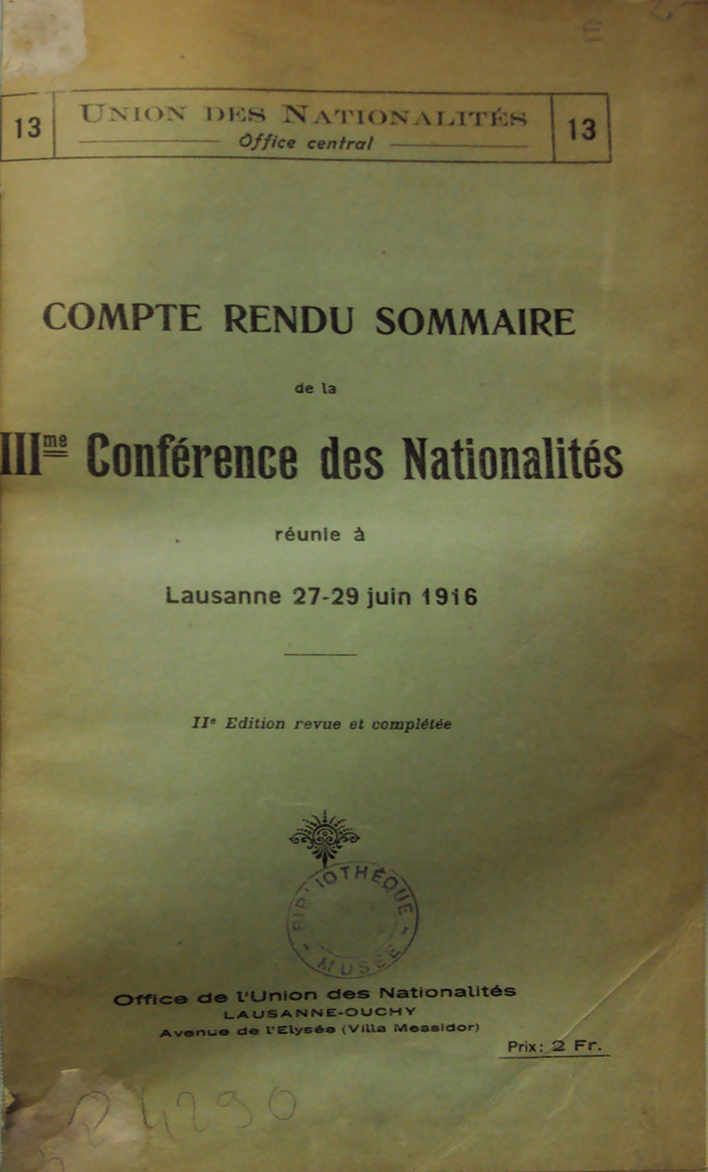
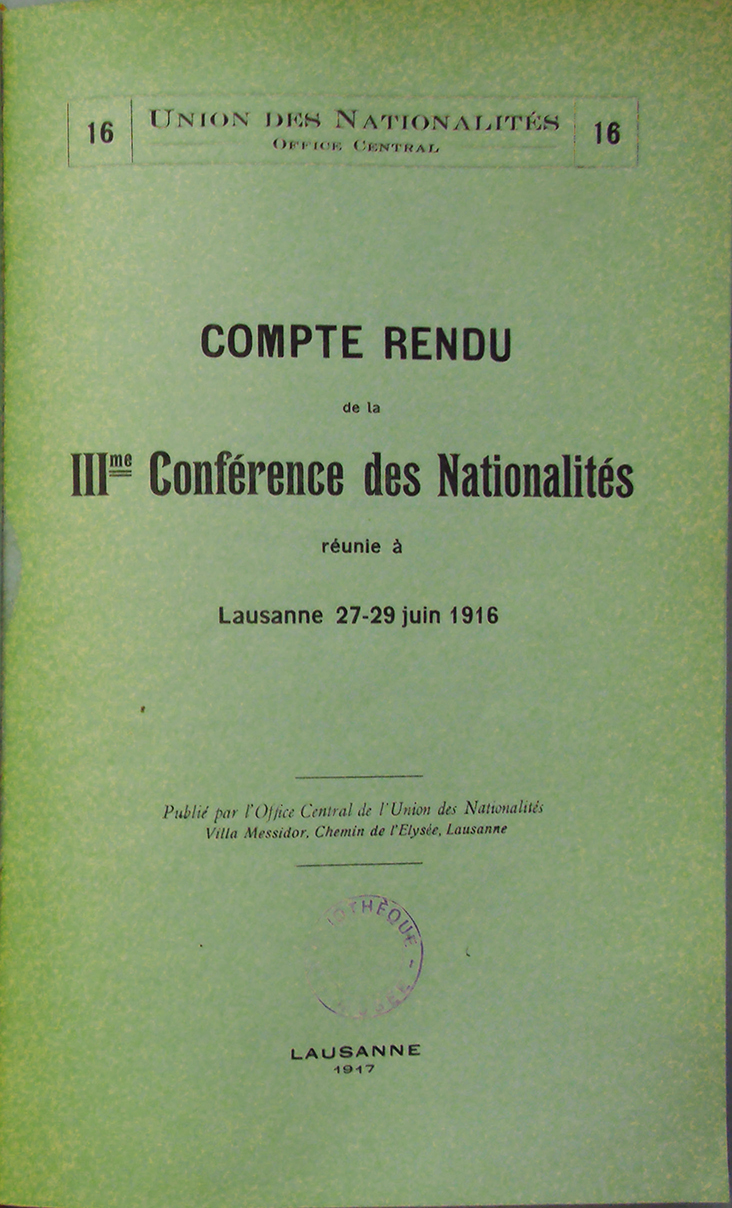
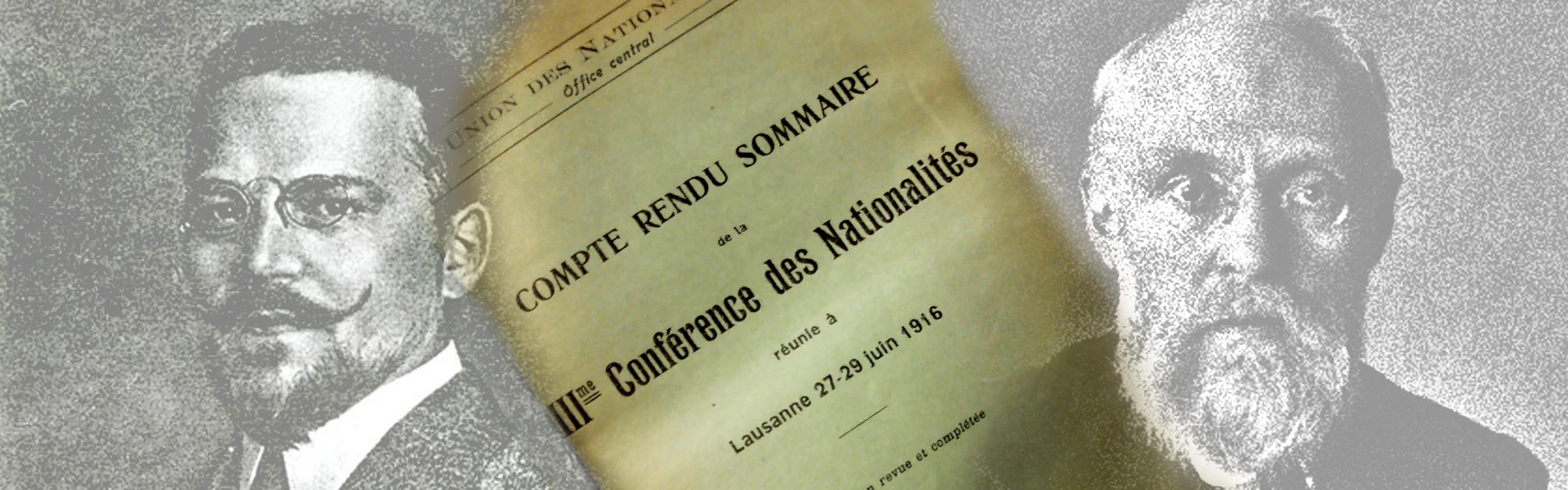
Several other critical points deserve careful attention regarding this conference, which the renowned German Turkologist Gotthard Jaeschke, reflecting the circumstances of the period, referred to in Turkish publications as the “Conference of Nations Imprisoned by Russia.” To begin with, the event was not, as Jaeschke suggested, exclusively a gathering of peoples subjugated by the Russian Empire. Rather, the participants were nations that, at that time, lacked sovereign statehood and were under the authority of major powers. As noted in my 2021 article, the conference was organized by a body founded by Juozas Gabris and Paul Otlet, with financial support from the Bank of Max Warburg—the prominent Zionist banker who headed the German secret police and also provided funding to Trotsky and Lenin. One of the primary aims of the League of Nationalities was the dismantling of the German and Austro-Hungarian monarchies; its principal targets also included the Ottoman and Russian monarchies, seen as the final remaining obstacles to capital interests. Another striking aspect was that the very head of the German secret police served as the financier of an organization seeking to dismantle the German monarchy, while Ali Başhamba—the head of the Ottoman Empire’s Special Organization Teskilat-i Mahsusa, itself one of the organization’s principal targets—was simultaneously a participant and speaker at the conference.
In many respects, the Lausanne conference represented a continuation of the 1815 Congress of Vienna, which had sought to reshape Europe and establish a new world order following the Napoleonic Wars. The organization behind the 1916 conference—in effect, the final strategic initiative of Zionist capital, which had not yet delivered its decisive blow to the Russian and Ottoman Empires in Vienna—sought to advance multiple objectives simultaneously. To this end, it invited representatives of all stateless peoples in the regions it aspired to influence.
Switzerland was not chosen solely because of its neutral status, but its status was defined as the safe box of the Zionist capital during the Vienna Congress of 1815. There was no slightest intention to consider the demands of the nations like Catalans, Basques, and the Irish, as they were oppressed by the governments that were under the strong control of the Zionists. However, the nations like Belgians, Finns, Letts, Lithuanians, Luxembourgers, Poles, Czechs, Southern Slavs, and Ukrainians were enjoying certain privileges granted by the organizers of the congress. Unfortunately, the peoples of the North Caucasus—alongside Albanians, Algerians, Tunisians, Basques, Catalans, Egyptians, Irish, Kyrgyz, Bukharans, Tatars, and Georgians, Ukrainians—were among those drawn into the secret agenda of the conference.
The ignorance of the conference organizers on the national identity of the North Caucasian peoples was clearly evident in the booklet of the event. The North Caucasian delegation participated as a single delegation. The delegation, chaired by Abaza Aziz Meker, included figures such as Ubykh Mehmet Shamil Shapli, Adyghe Ismail Bidanuk, and Dagestani representatives Seyyid Tahir al-Huseyni and Kumyk Ahmet Saib. Although the delegation submitted a single declaration to the conference under the title "Memorandum of the Circassians," the speakers' speeches were recorded as representing three distinct groups, while Adyghe Ismail Bidanuk was mentioned as the Circassian representative, while the Dagestani representatives Seyyid Tahir al-Husayni and Kumyk Ahmet Saib were presented as if they represented two other distinct groups.
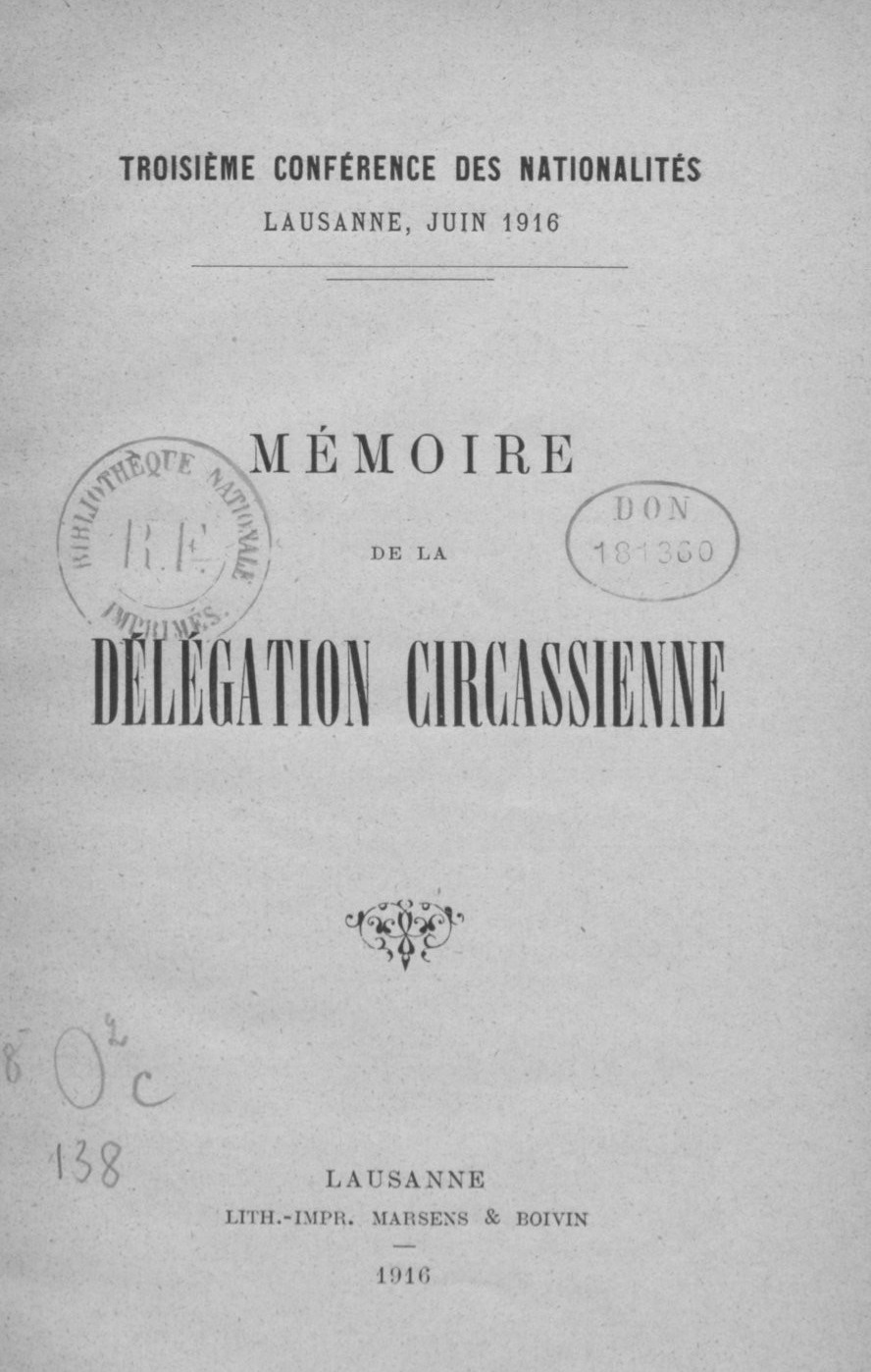
(Click on the image to read)
Cem Kumuk
Istanbul, 2 December 2025
* Cover image: Juozas Gabris (left) and Paul Otlet (right)