
 Türkçe
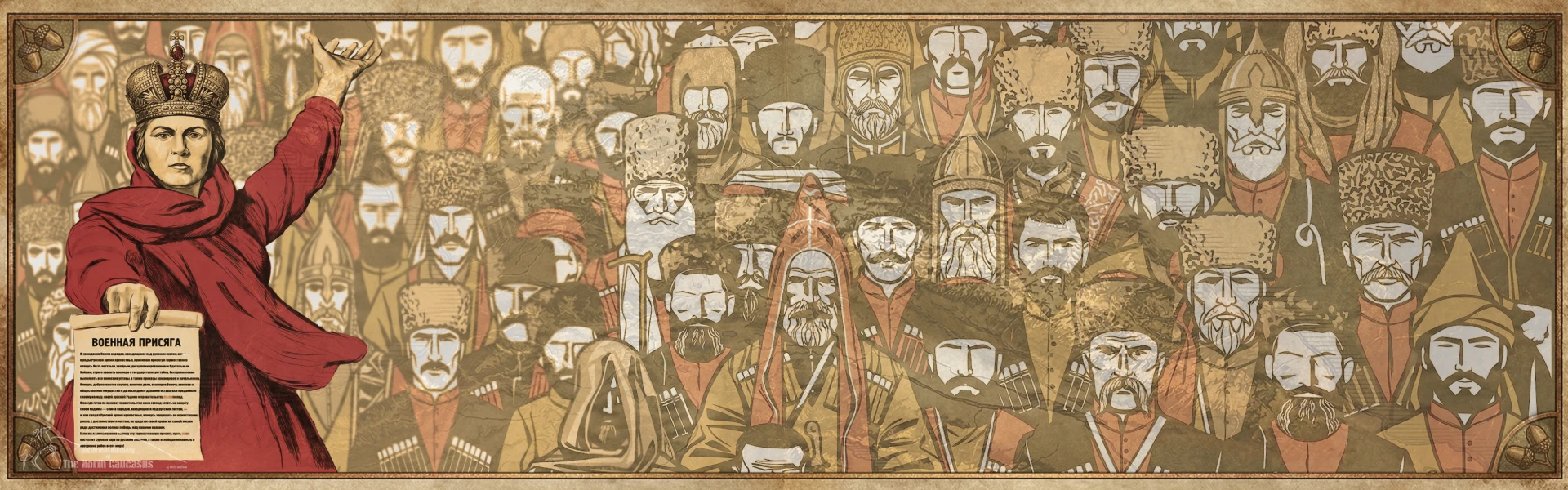
From the very first days of its conquest of the Caucasus, Russia aimed to harness the military prowess and valor of the Caucasian Mountaineers for its own war machine. This process, which began in the 1550s with Prince Dmitry Ivanovich Vishnevetsky (Baida), has continued uninterrupted into the late first quarter of our current 21st century.
HISTORICAL BACKGROUNDThe greatest catalyst for this process was undoubtedly Prince Idariko Temruk sending his son, Saltankul, into the Tsar's service in 1558. Saltankul was baptized and renamed Prince Mikhail Temrukovich Cherkassky. Three years after Saltankul entered the Tsar's service, on August 21, 1561, Idariko Temruk consolidated this alliance by marrying his daughter, Goshenay, to Tsar Ivan IV (the Terrible). [1] While Temruk and his family gained significant benefits and privileges through this alliance, the price exacted from the North Caucasus would be exceedingly heavy.
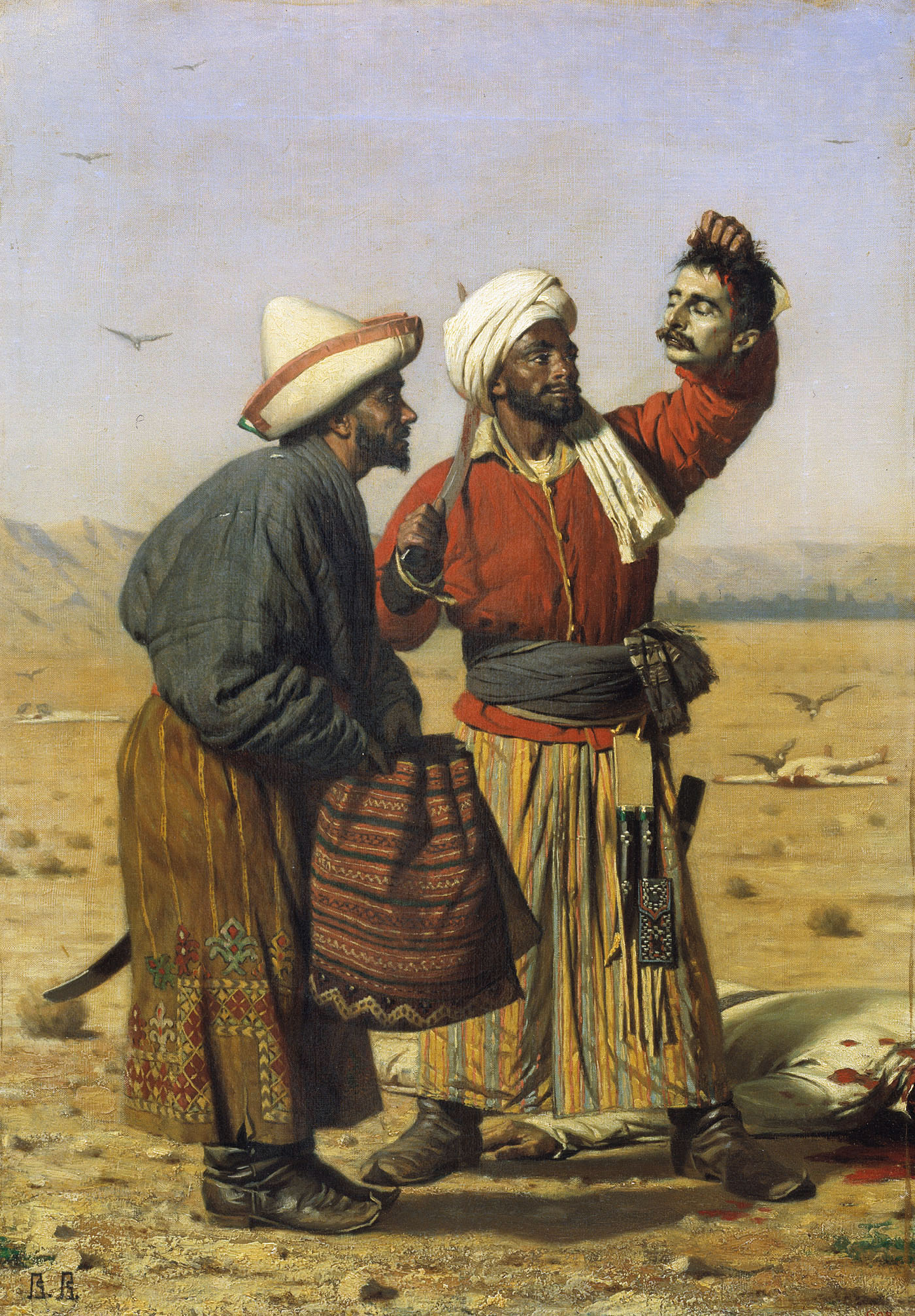
The 1717 Khivan campaign served as the first striking example of this. Prince Bekovich-Cherkassky (Dolet-Girey Mirza), the grandson of Pshi Kazi Psheapshokov, who had entered Russian service, marched on Khiva with an army of approximately 6,000 men. The Prince's retinue also included Kabardian and Kumyk feudatories along with a Mountaineer force of 800 men drawn from their own subjects. Prince Bekovich-Cherkassky suffered a catastrophic defeat in Khiva. The people of Khiva left only two men alive and allowed them to escape so they could recount the disaster. Bekovich’s corpse was stuffed with straw and displayed for days at the entrance of Khiva's city walls, while his severed head was sent as a gift to the Khan of Bukhara.[2]
Click on the image to have a larger view
Although the period associated with the Romanov Dynasty in the 20th century—a century that witnessed the collapse of two great Russian empires—was relatively brief, it holds highly significant historical weight regarding the scale of the wars and the role of the Caucasian Mountaineers in them. Indeed, the Caucasian Mountaineers assumed pivotal roles themselves during the transition from monarchy to proletarian dictatorship.
During the era of the Soviet Union (USSR), the Caucasian Mountaineers continued to play roles that altered the course of their history, either within the Soviet war machine or among anti-regime forces. In the early 1990s, as the USSR entered its process of dissolution, they became, alongside the Baltic peoples, the national element that most profoundly impacted Russian military history.
Examined chronologically, the first striking event in this process is the Russo-Japanese War of 1904–1905. In this struggle, sparked by rival imperial ambitions over Manchuria and Korea and culminating in a Japanese victory, the Caucasian Mountaineers were among the forces upon which the Russian monarchy pinned its greatest hopes.
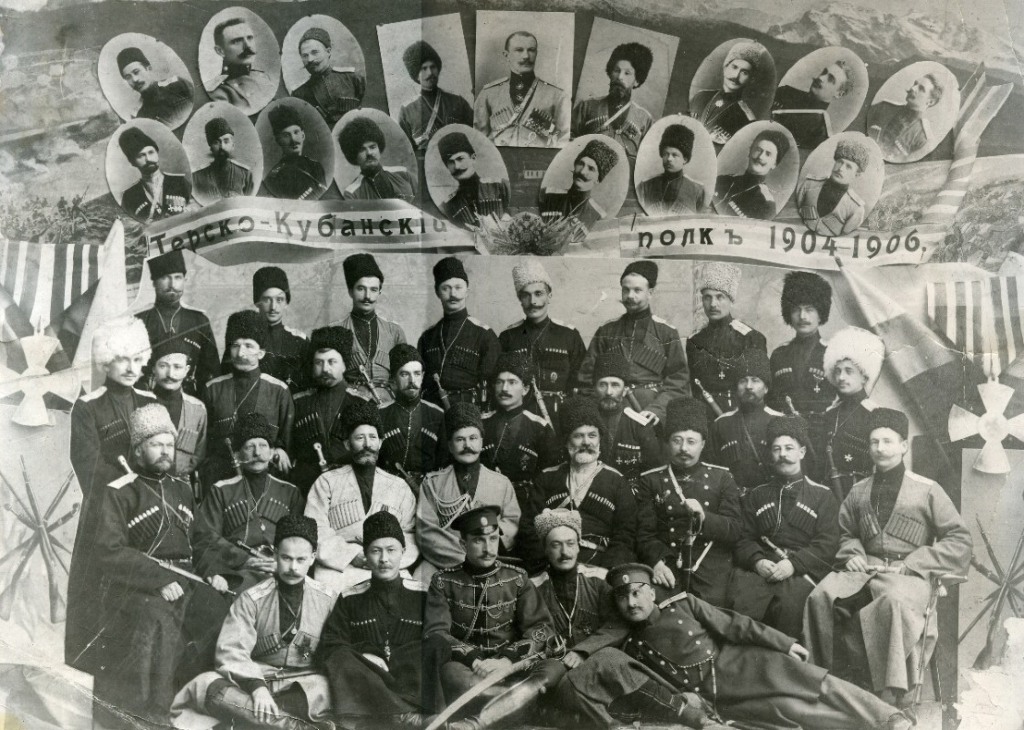
RUSSO-JAPANESE WAR (1904-1906)Immediately following the surprise attack launched by the Japanese against Russian ships at Port Arthur and Chemulpo on January 26, 1904, Tsar Nicholas II issued an ironically historic appeal in March, virtually granting the Caucasian Mountaineers the "honor" of defending the empire. Since there was no mandatory military service for the Muslims of the North Caucasus, the Mountaineers were expected to join these units voluntarily. Regrettably, many skilled Mountaineer soldiers and officers enlisted in these units simply for personal honor, military prestige, or the lucrative financial incentives offered by the Tsarist regime, as well as to avoid exclusion from the oligarchic system.
Click on the image to have a larger view
Mountaineers of the Dagestan, Terek, and Kuban regions! You all know that, in response to the insolent and sudden attack by the Japanese on our warships, our Supreme Emperor has declared war on Japan and ordered a small contingent of Russian troops to advance to the Far East to punish the treacherous enemy. By the grace of the Supreme Emperor, the Caucasian troops have also been granted the honor of fighting for the fatherland: nine sotnyas (squadrons) of the old Caucasian regiments were recently dispatched against the Japanese. However, the favors of our Supreme Master and Sovereign to the Caucasus have not been limited to this: Knowing your continuous military valor, the Supreme Emperor has commanded me to summon, through my deputies, the heads of the Kuban and Terek regions and the military governor of the Dagestan region.
In the name of His Imperial Majesty, we are seeking volunteers among you brave and fearless Mountaineers who are willing to travel to the Far East to participate in the war waged against the pagan Japanese. Trusting in your selfless courage, deeply rooted valor, and audacity, our Great Sovereign has commanded me to form two cavalry regiments composed of volunteers, each consisting of six sotnyas, and to send them to the front to fight against the Japanese. The objective is to sow fear, chaos, and rout in the enemy ranks, thereby spreading the resounding fame of the proven valor and fearlessness of the Caucasian Mountaineers across the Far East. So come forth, you bold braves, you warriors; heed the call of our Great Sovereign! Do not disappoint His gracious trust in you; know that the courage and heroism you demonstrate will not go unrewarded by His Imperial Majesty’s favor and prizes. The terms and regulations of service during wartime will be communicated to you by the administrative authorities in accordance with my orders.
The objective of the Mountaineer forces was to destroy the entire railway line in the Liaoyang - Tashihchiao - Dalny sector, including the railway bridges. By mid-July, the Mountaineer units had reached Liaoyang. In his message dated January 17, 1905, Prince Orbeliani noted that all units had accomplished a grueling march with outstanding effort, and that the commanders and officers had issued appropriate orders during combat, demonstrating a level of courage befitting the Mountaineers' reputation. These units were led by renowned Mountaineer commanders such as Sultan Krim-Girey, Kaitmaz Alikhanov, Tembot (Fedor) Bekovich-Cherkassky, and Muhammad Jafarov. The Mountaineers successfully executed numerous reconnaissance missions. From April to August, they repeatedly engaged in combat with numerically and technologically superior enemy forces. Although the Mountaineers inflicted heavy casualties on the Japanese, they failed to achieve the ultimate objective. Following the signing of the Treaty of Portsmouth, the Mountaineer units returned home from Manchuria on February 12 (25), 1906. [4]
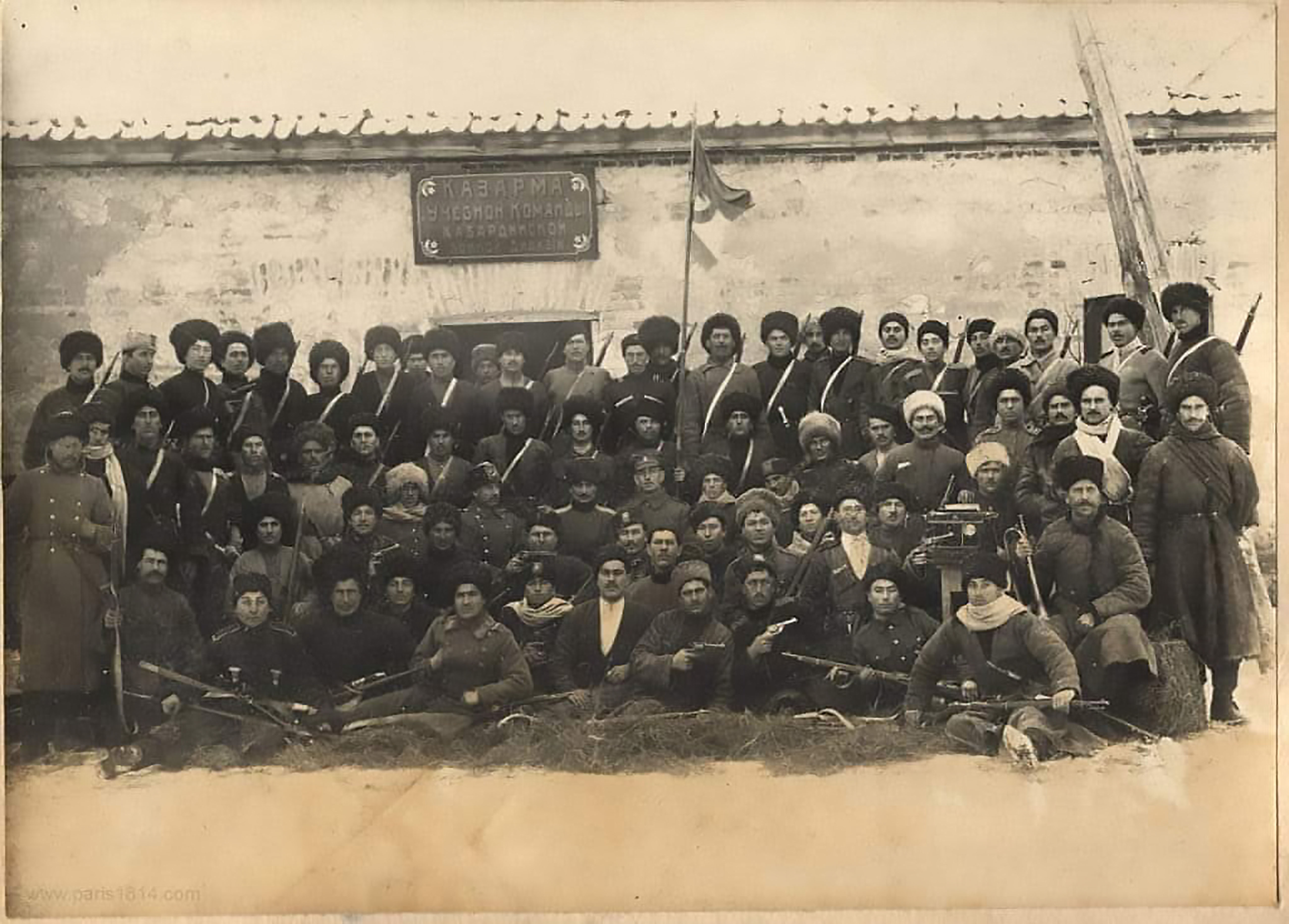
WORLD WAR IIt took eight years for the Caucasian Mountaineers to rush back to the front lines for the survival of the Romanov Dynasty. It all began on August 1, 1914, with a message from General Sergey Nikolayevich Fleischer informing Lieutenant Colonel Sultanbek Kasayevich Klichbiyev that Russia had entered the war against Germany in World War I. Subsequently, Count Illarion Ivanovich Vorontsov-Dashkov, Governor of the Caucasian Military District in Tiflis, ordered the formation of a 400-man cavalry regiment, the entire cost of which was to be borne by the people of the Kabardia and Beshtau regions. This was followed by the formation of volunteer cavalry units from other Caucasian peoples. On August 23, Tsar Nicholas II announced the formation of the Caucasian Native Cavalry Division, a force the size of two brigades consisting of six regiments: Kabardian, Circassian, Chechen, Ingush, Dagestani, and Tatar. On September 7, Alikhan Shogenov, the Imam of the Kabardian Regiment, had literate soldiers sign, and illiterate soldiers leave a thumbprint on, an oath promising that they would not return from the front, even at the cost of their lives. The text of the oath read as follows:[4]
Vallahi – Billahi – Tillahi, in the name of the Holy Quran and Almighty Allah, I swear and promise that I will remain loyal to His Supreme Majesty, the Emperor of all Russia; I will fulfill all duties assigned to me sincerely and in good faith; I will not exceed my authority, and I will not intentionally or accidentally harm anyone. On the contrary, I will protect the values entrusted to me as my own life, and I will bear in mind that I shall be held accountable before the law and Allah's divine judgment to be honored in the presence of the Quran. Amen.
Click on the image to have a larger view
On the southern Anatolian front of the war, however, there was a different, tragic scene for the Caucasian Mountaineers. This front, where North Caucasian soldiers and officers serving in the Russian Army clashed with the Ottoman-subject children of Mountaineers who had been forced to flee their homeland following the 19th-century Russo-Caucasian Wars, ended in a profound catastrophe for the Ottoman-subject North Caucasians. In this dirty war, where they fought from opposing trenches, hurling insults at their compatriots in their native tongues, hundreds of soldiers of North Caucasian descent were among the thousands of Ottoman troops who perished in the Sarikamish Disaster.
RUSSIAN REVOLUTION AND THE WILD DIVISIONThe Provisional Government, which came to power following the abdication of Nicholas II as a result of the February Revolution in the capital, failed to establish control over the country. Faced with the rapidly growing threat of a Bolshevik revolution, Tsarist Army Generals like Kornilov, seeking to preserve the status quo, sought to seize power and restore the monarchy. However, the only military force at their disposal to accomplish this was the Caucasian Native Cavalry Division. Indeed, in an instruction sent to the Division commanders, General Kornilov demanded that the troops be directed to the capital to overthrow the Provisional Government. When the Ingush and Circassian regiments of the Division reached the gates of the capital, panic gripped the Provisional Government and the Bolsheviks, who began devising ways to prevent the Savage Division from entering the city. They soon found the solution they sought. A group of Mountaineer elites living in the capital, who supported the revolution, went to the location of the Division preparing to occupy the capital and persuaded its commanders, thereby unknowingly eliminating the only obstacle to the Bolshevik Revolution in Russia. The speech delivered at the Muslim Congress in those days by the Ossetian revolutionary Ahmed Tsalikov, Chairman of the Provisional Central Bureau of Russian Muslims who led that group, reflected the global lapse of reason and the perspective of the vast majority of Muslims subject to the Russian Empire, as well as the Caucasian Mountaineers:[5]
On behalf of the Central Bureau of all Russian Muslims, I congratulate the first free congress of all Russian Muslims in free Russia. For centuries, this dark dungeon, which was a place of torture for the peoples of Russia, has been destroyed by the will of the rebelling people. Above us, the dawn of freedom has risen. Our presence in this hall is the first joyful ray of that dawn's light. But this joy must be coupled with our realization of the historic, heavy responsibility placed upon our chests and upon us. The country where Muslims lived until today with their deepest, most sensitive feelings trampled upon every day, the country where Muslims lived considered not second- but even third-class citizens, the country that was a stepmother to us until today, has now become our true mother! Muslims have become the free children of today's free Russia. Our country now faces a tremendously dire situation. Therefore, we must show the utmost understanding of this situation. We Muslims gathered here must participate as necessary, with our highest love for the people from whom we originate, and with our long-standing devotion and strength to our homeland, free Russia.
I will not dwell on the history of that bloody massacre the humanity has witnessed for nearly three years. All this is sufficiently known, and it seems to me there is no need to leaf through the blood-soaked pages of our era's history. Only two points interest me: The meaning attributed to this war by the forces of the two opposing coalitions, and the attitude of the Muslims of Russia toward this war. As soon as the war started, on the banner of the coalition friendly to Russia, the name of this war was characterized as "liberation." You surely remember the Commander-in-Chief's historic appeal, first to the Poles, paving the way to unite the divided parts of Poland into a single whole, and then to the peoples of Austria-Hungary. To clearly envision the meaning sought to be given to this bloody tragedy, it is useful to dwell on this latter manifesto... In the Commander-in-Chief's manifesto dated September 4, 1914, we read: "Peoples of Austria-Hungary! Entering the borders of Austria-Hungary at the head of the Russian army, I declare to you in the name of the great Russian Tsar that Russia, which has shed its blood repeatedly for the liberation of peoples from foreign yokes, seeks nothing but the establishment of right and justice... She now brings to you, the peoples of Austria-Hungary, freedom and the realization of your national aspirations... The Austro-Hungarian government has for centuries sown seeds of discord and enmity among you, for its power over you rested solely on your division. Russia, on the contrary, strives for only one thing: that each of you may develop, prosper, keeping your language and faith—the precious legacy of your fathers—and unite with your own brothers, respecting the identity of your neighbors and living in peace and harmony with them. Believing that you will help achieve this goal with all your might, I call upon you to welcome the Russian troops as true friends and fighters for your best ideals." In this manifesto, Russia promises freedom to the oppressed nationalities of Austria-Hungary. The password of the liberation struggle becomes the freedom of "small nationalities." This meaning of the war is emphasized particularly by representatives of the British government. For example, let us look at the following words spoken by Asquith in October 1915: "Above all, the Allies are fighting for the freedom of 'small nationalities' so that they can be freed from the tyranny of their more powerful neighbors in the future and develop their national lives and institutions."
If Russia and her allies wrote the freedom of "small nationalities" on their banners, Germany and her allies wrote this: Our struggle is a "struggle for existence." Germany, in particular, claimed to be fighting "for European culture" against Russia's approaching threat of "Asian barbarism." Of course, a degree of truth in the statements of the representatives of both coalitions could not be denied, but this truth was drowning in a sea of lies and mutual slander. England masquerading as an unselfish defender, or the Russia of tsarist autocracy bringing freedom to the peoples of Europe, or Germany acting as the defender of European culture; if these comical moments were not accompanied by a sea composed of human blood, all this would undoubtedly be the comical moments of world history. A war for ideals, a war born of magnanimity, a war born of compassion and philanthropy; all these are the least characteristic features of our materialist age. But our era knows very well how to cover crude and selfish calculations, real interests, with the ringing of beautiful phrases: Here is the good of humanity, the interests of civilization, and the rights of peoples, etc. Grand words are used to cover up the selfishness of the ruling classes in all countries of Europe. It is now clear to everyone that the content of this current greatest conflict in the world is a duel between England and Germany, the two most developed countries from a capitalist standpoint. Fourteen years ago, while lecturing to us students at Moscow University, Professor Ozerov said: "We will witness the greatest world conflict, the struggle between Germany and England." When Germany entered the world market with its mighty industry, all the best places had already been taken, and wherever it went, it bumped into the British flag. The struggle for markets; this is precisely what rivers of human blood are actually flowing for. But the masses demand an ideological meaning for the struggle; the enthusiasm in people's hearts must be awakened; for this, human consciousness is intoxicated with ringing words. That noisy rhetoric, under the influence of which Europe remained until the second great Russian revolution, was created for this very purpose.
The contradiction between the true meaning of the war and the meaning sought to be imposed was perhaps expressed nowhere as vividly as in Russia. Did this situation not lead to the eyes of the working masses of the Russian population opening earlier than the others? From within the sea of lies, the truth was born. Today's truth, which unfolds before our eyes as the glorious process of the Russian revolution. This truth has given us a document rarely matched in the period of our era; this is the appeal made by the Petrograd Soviet of Workers' and Soldiers' Deputies to the laborers of the whole world. In this document we read: "The Russian people possess full political freedom. They can now speak their authoritative word regarding the internal determination of their fate and foreign policy. And addressing all the peoples destroyed and ruined in the monstrous war, we declare that the time has come to begin a resolute struggle against the predatory ambitions of the governments of all countries, that the time has come for the peoples to take the resolution of the issues of war and peace into their own hands. The Russian democracy, conscious of its own revolutionary power, declares that it will resist the predatory policy of its ruling class by all means and calls upon the peoples of Europe to join in decisive actions in favor of peace. And we appeal to our proletarian brothers in the Austro-German coalition, and above all to the German proletariat. On the first day of the war, taking up arms against autocratic Russia, you were made to believe that you were defending European culture from Asian despotism. Many of you saw the justification for this support given to the war in this. Now this justification has disappeared: A democratic Russia cannot be a threat to freedom and civilization. We will resolutely defend our own freedom against any reactionary intervention, both from within and from without. The Russian revolution will not step back before the bayonets of the conquerors and will not allow itself to be crushed by external military force, and just as the Russian people have shaken off the tsarist autocracy, we call upon you to throw off the yoke of your own autocratic order. Refuse to serve as an instrument of conquest and violence in the hands of kings, landowners, and bankers; with friendly and united efforts, we will stop this terrible massacre that shames humanity and darkens the days of the birth of Russian freedom. Laborers of all countries! Over the mountains of brothers' corpses, rivers of innocent blood and tears, the smoking ruins of cities and villages, ruined cultural treasures, we extend our fraternal hands to you; we call upon you to restore and strengthen international unity. Here lies the guarantee of our future victory and the full liberation of humanity."
This historic document was published on March 16, 1917; here is a clear definition of the meaning of the war and the attitude toward the war of the revolutionary Russian democracy, thanks to whose efforts we today enjoy the blessings of political freedom. However, the revolutionary wave placed at the head of the country a Provisional Government with its initial composition made up of people not at all inclined to be guided by the slogans of revolutionary democracy in matters of foreign policy. Under public pressure, the Provisional Government stated the aims of the war (statement dated March 27, 1917). In this statement we read: "In close union with our allies to finally resolve all issues related to the world war and its conclusion, the Provisional Government, representing the will of the people, now considers it its right and duty to declare that the goal of free Russia is not to establish domination over other peoples, deprive them of their national property, or forcefully seize foreign territories, but to establish a lasting peace based on the right of peoples to self-determination. The Russian people do not seek to consolidate their external power at the expense of other peoples; they aim to enslave and humiliate no one. In the name of the highest principles of justice, they have removed the shackles from the Polish people, but the Russian people will also not allow their homeland to emerge from this great struggle humiliated and its vital forces weakened. These principles will be the foundation of the Provisional Government's foreign policy, unswervingly fulfilling the will of the people and defending the rights of our homeland while fully complying with the obligations assumed towards our allies." It seemed that, were it not for the last sentence stating that obligations accepted towards our allies would be adhered to, this statement should have left no doubt that Russia had abandoned any annexationist designs. Already, this sentence contained a highly mysterious section capable of provoking the most diverse thoughts. Shortly thereafter, a series of facts emerged that increased the alarm and suspicions of the public. These alarms and suspicions were greatly fueled by the former Minister of Foreign Affairs P. N. Milyukov and some other members of the Provisional Government. It even necessitated the establishment of a special department for international relations under the executive committee of the Petrograd Soviet of Workers' and Soldiers' Deputies. On April 19, in the "Petrograd Soviet Izvestia," we read this interesting refutation: "The Minister of Foreign Affairs declared to the Manchester Guardian correspondent (on April 20) that Russia must obtain sovereignty over Istanbul and the Dardanelles Straits and possess the means to fortify them, and that Russia will demand the dissolution of Austria by granting independence to the Austrian Slavs. The Soviet of Workers' and Soldiers' Deputies is compelled to declare that Russian democracy has nothing in common with the goals voiced by Milyukov. The revolutionary democracy of Russia, according to the unanimous decision of its representatives, will not allow a single drop of blood to be shed for the conquest of anything or anyone. Neither the conquest of the straits nor the partition of Austria has been put forward by the congress of representatives of the Soviet of Workers' and Soldiers' Deputies or the congress of representatives of the active army and the front."
Furthermore, it turned out that the Provisional Government's statement on the aims of the war dated March 27 was only for domestic consumption, and this statement was not brought to the attention of our allies for nearly a month. Only on April 18 did the Ministry of Foreign Affairs, headed by P. Milyukov, instruct the Russian representatives to the allied powers to transmit the said statement to the governments to which they were accredited and to make some evaluations before this statement. These evaluations clarify to some extent that dark point in the Provisional Government's statement. As is understood, the Provisional Government feared that the statement regarding war aims transmitted abroad might create the impression that the coup that took place led to an active weakening of Russia's role in the common allied struggle. The Provisional Government wanted to sweeten the pill. The Provisional Government added—"On the contrary: The nationwide desire to conclude the world war with a decisive victory has intensified even further thanks to the consciousness of common responsibility of everyone and every single individual. This desire has become effective on the urgent task standing before us all, which is to repel the enemy who has even occupied the borders of our homeland." As stated in the transmitted document, the Provisional Government continues: "Needless to say, the Provisional Government, while defending the rights of our homeland, will fully comply with the obligations accepted towards our allies. While continuing to harbor full confidence that the war will conclude victoriously in full agreement with the allies, it is also certain that the issues raised by this war will be resolved in the spirit of creating solid foundations for a lasting peace, and that the leading democracies, instilled with the same aspirations, will find a way to obtain such guarantees and sanctions necessary to prevent new bloody conflicts in the future." You know what a storm of indignation these parts of the Government's note addressed to our allies caused in the country. It came down to street clashes, to the events of April 19-21 in Petrograd. The note, which was to bring interpretation to the Provisional Government's statement of March 27, itself demanded an interpretation by the force of democracy's protest. Namely, what the Provisional Government understood by the concept of "decisive victory" and "guarantees of a lasting peace" had to be explained. Here is the most interesting part of the interpretation brought to the interpretation (the Provisional Government's appeal of April 17, 1917): "Needless to say, this note, speaking of a decisive victory over the enemies, contemplates the achievement of the tasks determined by the March 27 declaration and expressed in these words: "The Provisional Government now considers it a moral duty to declare that the goal of free Russia is not to establish domination over other peoples, deprive them of their national property, or forcefully seize foreign territories, but to establish a lasting peace based on the right of peoples to self-determination. The Russian people do not seek to consolidate their external power at the expense of other peoples; they aim to enslave and humiliate no one. In the name of supreme justice, they have removed the shackles from the Polish people, but the Russian people will also not allow their homeland to emerge from this great struggle humiliated and its vital forces weakened." Under the mentioned sanctions and guarantees of a lasting peace, the Provisional Government implied the limitation of armaments, the establishment of an international tribunal, and similar things.
It seems to us that this final statement of the former Provisional Government is far from dispelling all doubts. The issue of those treaties signed by Russia and those obligations she undertook remains as ambiguous as before. However, what Russia's treaty with the Allies contains can be guessed with a greater or lesser probability. These treaties hide the true aims of the war from us. Milyukov himself, in his article "The Aims of the War" (the 1916 annual of the newspaper "Rech"), lifted the veil for us over the character of the treaties signed among the Allies; here is what we read there: "In the 'Fortnightly Review' for February 1916, Dr. Dillon first informed the whole world about the agreement reached among the Allies regarding Istanbul and the Dardanelles Strait. According to him, 'On one side of the English Channel Mr. Delcassé, on the other side Sir Edward Grey, approached Russia's statement cautiously.......... Some believe this agreement of enormous importance was signed while Mr. Poincaré was the tsar's guest. Others think the signing of the agreement corresponds to an older date, the period when the naval convention between France and Russia was signed. Both dates are wrong. The agreement was signed at the beginning of April 1915 (according to the new calendar). The negotiations leading to the agreement were conducted simultaneously in London and Paris.'" After Western Europe was informed in this way about the existence of the treaty, there was no reason to remain silent on this matter in Russia either. P. N. Milyukov reported Dillon's data at the State Duma session on February 10, 1916. Later, in the speech made by Asquith at the reception of the Russian parliamentary delegation at Lancaster House, a definitive confirmation of the existence of such an agreement was made. Asquith said: "In the Eastern question, spanning both the European and Asian continents, I remember the days when it was assumed that the interests of the two empires were irreconcilably antagonistic... These days of mutual misunderstanding have happily passed. Now in Iran, in Turkey, or elsewhere, wherever our interests touch, we reach agreements that we resolve to abide by with our loyalty and mutual respect. And in this context, the harmony established so happily and solidly between your famous Foreign Minister (S. D. Sazonov) and my friend and colleague Sir Edward Grey is invaluable." "Finally, upon the delegation's return to Russia, at the State Duma Naval Commission session on July 19, S. D. Sazonov answered E. P. Kovalevsky's question very firmly, and the response that the agreement with the allies secured both sides of the straits for Russia leaked to the press. A more official communication regarding our agreement was delayed for a long time because it had not been officially communicated to Italy, as it took place before Italy entered the war. However, eventually this obstacle was also removed. Prime Minister Boselli reported to the Italian Chamber of Deputies on November 22 thus: "In the spring of 1915, before we declared war, France and England declared in Petrograd their full approval for the inclusion of a decision regarding the transfer of Istanbul to Russia, along with the necessary guarantees for the freedom of the straits, in the text of the future peace treaty. Later, we too joined this declaration aiming to reward our heroic ally corresponding to its centuries-old aspirations"... A few days before this, on November 19, at the new session of the State Duma, the Chairman of the Council of Ministers A. F. Trepov expressed the same thing with these words: "Russia's vital interests are as comprehensible for our loyal allies as they are for us, and consequently, the agreement we signed with Great Britain and France in 1915, which Italy also joined, definitively establishes Russia's right over the straits and Istanbul. The Russian people must know what they are shedding their blood for, and according to the mutual understanding reached at present, our agreement with the allies is announced today from this rostrum. I repeat, full unity on this issue among the allies is firmly established, and there is no doubt that Russia, bringing the right to free exit to the Mediterranean under its sovereignty, will grant freedom of navigation to the flag of Romania, which for the first time is not fighting alongside Russian banners." Thus, Pavel Milyukov says that all that remains is to preserve the "invaluable agreement" established during S. D. Sazonov's period, which created the confidence that the friendship of peoples and the alliance of states have strengthened so solidly and for such a long time, truly leaving no room for former distrust and suspicion anymore. This is the "as things stand" [rebus sic stantibus] situation that must be constantly remembered and carefully maintained. Here is the content of the treaty between Russia and the Allies: "The Russian people must know what they are shedding blood for." It turns out they were shedding it for Istanbul and the straits. We have no data to assume that the Provisional Government has canceled this annexationist treaty. Here is the agreement—Russia's agreement with the Allies, which remains in effect to this day. Here is that share that Russia is to take. Here is the price of blood. In the same article by Milyukov, we also find a reference to the agreement signed by France with the Allies. P. Milyukov (p. 45) says: "The occupation of the territories of the Van, Bitlis, Erzurum, and Trabzon provinces by Russian troops was apparently accompanied by the expansion of the dimensions of direct Russian demands. On the other hand, the geographical boundaries of France's interests in neighboring Syria were also determined more precisely. As a result, the boundaries of the interests of both allied powers were outlined. According to the report presented by S. D. Sazonov at the session of the State Duma military commission on July 19, 1916, this demarcation even became the subject of a special agreement. The content of the agreement is unknown, but according to P. Milyukov, it is enough to look at the map to understand the geographical boundaries of a possible demarcation." It is understood that France's claims cover all of Cilicia along with the ports of Mersin and Alexandretta [Iskenderun], and the Gulf of Alexandretta is supposed to be the Mediterranean exit of the Franco-Syrian railway network. Such are France's demands within Asia Minor [Anatolia]. At the end of February 1915, the British government appealed to Italy with a proposal to participate in the opening of the Dardanelles Strait. The same proposal was simultaneously made to Greece. Both parties were to receive compensation in exchange for their participation in Asia Minor. Greece refused, and here is the information leaked to the press regarding Italy's agreement with the Triple Entente (p. 49). Italy supports the Entente powers in their initiatives regarding the Dardanelles Strait and will receive necessary compensations in Asia Minor in addition to the Mediterranean agreement. Considering the fact that France has calculations on Cilicia as a necessary geographical component of Syria, Italy found itself offered lands in the west extending from Antalya northwestward toward Izmir. Here is Italy's "ideal of liberation." We are not speaking of Italy's seizure of the Dodecanese Islands, the Greek islands it refuses to return to the Greek kingdom in the name of liberation goals, nor of the so-called border correction in Libya, nor of the claims in Dalmatia and Albania. Furthermore, besides Cilicia, there is the fate of Syria and Palestine. France has designs on Syria; the fate of Palestine remains ambiguous, but recently there has been intense agitation to establish a Jewish state in Palestine, and this situation occurs although of the one million population in Palestine, only about one hundred thousand are Jews, about one hundred thousand are Christians, and the rest are Muslims. In addition to France, England also had designs on Palestine, but it is very clear that an agreement was reached among these powers. England plans to limit its appetite to a fat morsel like Egypt. There is probably no better illustration of the falsity of the British statement about the struggle for the freedom of small nationalities than England's behavior toward Egypt. Taking advantage of the civil war in Egypt, the British became masters in the country of the Khedive of Egypt in 1882. Initially, the British officially remained only advisors to the Egyptian ministers, although as early as 1884 Lord Granville had announced to Sir Evelyn Baring that obedience to British advice was obligatory for the Egyptians. Later, the British disbanded the old Egyptian army and limited the size of the new one to 18,000 men, with three-quarters of the command cadre consisting of British officers. The British took the schools into their own hands. The "Culture Bearer" (Kulturträger) behavior of the British in Egypt caused strong dissatisfaction among Egyptian patriots. We know that young Egyptians were the heroes and victims of this struggle for freedom. And thus, when the great European war began and slogans of "struggle for the freedom of small peoples" began to echo from all sides, England, standing at the head of this "liberation" struggle, declared a British protectorate over Egypt with a decree dated December 4, 1914. One day after this decree, the following government declaration was published: "In view of the actions of His Excellency Abbas Hilmi Pasha, former Khedive of Egypt, who has joined the king's enemies, His Majesty's Government has deemed it necessary to deprive him of the khediviate and to offer this high rank, with the title of Sultan of Egypt, to His Excellency Prince Hussein Kamil Pasha, the eldest surviving prince of the family of Muhammad Ali. The offer has been accepted by him." You surely know that Hussein Kamil Pasha almost lost his life for his treason to the homeland. These are the liberation tasks that England is pursuing. But you might say that after the great Russian revolution, everything has now changed. I bring to your attention a very recent example, a small document: A telegram originating from Paris dated April 26, published in "Russkoye Slovo" on April 27: "Although no official report has been published about the conference of British, French, and Italian statesmen that took place recently in Saint-Jean-de-Maurienne, there is full conviction that an agreement was reached there on the delimitation of spheres of influence in the Near East. It was decided that France, England, and Italy would participate in the occupation of Palestine. French and Italian troops must have already landed and should unite with the British army marching on Jerusalem. As soon as the holy places are occupied, they will be taken under the protection of the allied powers, and thus any Austro-German influence will be eliminated. As for the other parts of the agreement, it may be noted that Italy will take a region from Izmir to Antalya and will retain the Dodecanese Islands it occupied during the Italo-Turkish War. France will take Syria up to Alexandretta, and England will occupy Mesopotamia. The Entente states also promised to establish a new Arab kingdom, entirely liberated from the Turkish yoke, with its capital in Mecca. Thus, after the war, the Near East will indeed acquire a completely new order. The coasts and interior regions of Asia Minor to Italy, Syria to France, Palestine under a joint European protectorate, Mesopotamia given to the British, and Arabia ruled by Arabs." It seems to me this document needs no interpretation. As for the Arabs, it can be assumed that this affection put forth by the Entente powers towards them will also extend to the Arabs in Tripoli, Morocco, Algeria, Tunisia, and elsewhere. Of course, one must at least believe in the disinterestedness of the powers of the central empires. The historical situation has developed in such a way that the Germans have found it profitable for themselves to support the liberation aspirations of Islamic countries. It is in the interests of England and her allies to support the small nationalities of Europe against an inflated and expanding Germany; it is in Germany's interest to support liberation movements in the colonies of European states. When speaking of the interests of European states, I mean, of course, in this case, the leading circles, the ruling classes of these states, essentially those who dictate their wills by possessing capital, the mighty power of our era. European governments are the clerks of the big bourgeoisie and are incapable of being guided by any ideal aspiration for the sake of any beautiful eyes, of risking anything—not to mention life. Their insatiable wombs seek real goods, real benefits.
So what does Russia have to do with this whole struggle? Russia, which harbors a vast sea of peasants within. Russia, whose industry is just beginning to develop. Russia with its massive domestic market, which is far from satisfying the interests of our industry. Russia with enormous tracts of land, such as the Hunger Steppe (Golodnaya Step), waiting for life-giving moisture, capable of becoming a source of sustenance for a population of millions. The Russia of enormous steppe areas awaiting the plowman's plow. The Russia of immense riches waiting for the enterprising hand of man. This is the direction in which the energy of the country must be channeled, and this is exactly why Istanbul and the Dardanelles Strait look like a pathetic bait for Russian democracy. The imperialist policy pursued by the tsarist government is something imposed upon Russia and certainly does not match the economic role played by the bourgeois-industrial class in the country, let alone the development of its productive forces. The Muslims of Russia are predominantly a democracy. And their policy can and must be the policy of democracy. However, Muslims also remain Muslims as a special group of the population of free Russia, and in this capacity, they can possess common Islamic ideals and interests. And from this point of view, just as from a general democratic point of view, they can and must protest most resolutely against the annexationist policies under the guise of a liberation struggle conducted by the European powers in the person of their ruling classes. For the object of the predatory ambitions of the European bourgeoisie is primarily Muslims and Islamic countries. Everywhere in the world beneath the moon, Muslims are victims of European imperialism. Fate has assigned us a great mission to protest this imperialism, to open a new page in the political life of Muslim peoples. By writing this page, we are working not only for the good of the entire Islamic world but also for the whole of humanity. We extend our hand to the working democracy of Europe, which is currently beginning to emerge as the sole bearer of the great principles of peoples' peace, freedom, equality, and fraternity in Europe. It is necessary to understand the great importance of the alliance being created right now based on the commonality of the slogans of Europe's working democracy and the Muslim population of millions. We must emphasize this commonality in our Russian reality. Only the labor democracy of Europe will support our general Islamic liberation slogan, because the real outcome of the struggle against imperialism currently waged by the working class must first and foremost be the deliverance of Muslim countries from the danger of partition and from the exploitation of European capital. Together with the democracy of Russia, we must demand from the Provisional Government that it publish those treaties and agreements signed by the tsarist government with our allies, provided that there is no military secret in these treaties and agreements. We must demand the cancellation of all treaties and agreements envisaging the partition of this or that people not only in Europe but also in Asia and Africa. In its attitude toward the war, labor democracy has proclaimed the slogan of peace without annexations and indemnities based on the right of nationalities to self-determination. We accept this slogan, but to leave no doubt, we also consider it necessary to add the following phrase: Whether these nationalities are located in Europe, in Asia, or in Africa. Thus, our attitude and position towards the war can be formulated with the following articles:
— We consider the imperialist ambitions of the ruling classes of Europe as the source of the world massacre and, as Muslims, since Muslims all over the world are victims of European imperialism, we protest against imperialist policy wherever and however it is expressed.
— We welcome the historic appeal made by the Petrograd Soviet of Workers' and Soldiers' Deputies to the laborers of the entire world.
— Our slogan is a peace without annexations and indemnities based on the right of the nationalities of Europe, Asia, and Africa to self-determination.
— We see the Provisional Government's statement dated March 27 regarding the aims of the war as the first step towards abandoning the imperialist ambitions of the former pre-revolutionary government.
— The second step should be the publication of the treaties and agreements signed by Russia with the allies—to the extent that these treaties do not contain a military secret—and the immediate cancellation of those among them that envisage annexations and partitions in Europe, Asia, and Africa.
— We consider it necessary to defend Russia against any enemy attack and to sacrifice all our strength and all our wealth for the sake of the war of freedom.
This paradoxical support given by the Caucasian Mountaineers to the Russian Empire in World War I and to the revolutionaries during the Great Russian Revolution seemed to herald the tragedy the Caucasian Mountaineers would experience for the remainder of the 20th century. The next war was the Russians' Civil War among themselves. Although this war between the status quo, pro-Monarchy White Russian Army and the Bolshevik Red Army initially appeared not to concern the Caucasian Mountaineers, it again resulted in a catastrophe for the Caucasus. While the opportunity to own a free and independent state had arisen over the ruins of the shattered Russian Empire, and the independence of the Republic of the Union of the Mountaineers of the North Caucasus was proclaimed to the entire world on May 11, 1918, some of the "more elite" among the Mountaineer elites—unable to even imagine what it might be like to live without the patronage of another power—transformed the Russian Civil War into a Caucasian Civil War. On one hand, there were those acting as pawns for the Volunteer Army of the Whites, who attempted to occupy the North Caucasus with the desire to regain the privileges granted to them by their former masters, the Romanov Dynasty; on the other hand, there were the Bolshevik Mountaineers, burning with the ambition to exact revenge upon the imperial civil servant Mountaineers who had oppressed them during the imperial era, with the help of the Russian Bolsheviks. Both sides spurned the opportunity for freedom and independence that had been delivered to their feet. As a result of the Russian Civil War turning into a Caucasian Civil War, they caused the Caucasus to be crushed under the boots of the Russian Bolsheviks in March 1921. Since I have previously penned countless articles about the events and players of this period, I will keep this dimension of the topic somewhat brief and, skipping the events of the 18-year process of painting the Caucasus in Red colors, jump to 1939.
THE SOVIET-FINNISH WAR (THE WINTER WAR)In a theoretical sense, when World War II began in September '39, Stalin's false "Soviet Motherland" had already been long convulsed by political and ethnic cleansings, and rebellions had escalated to another level with the establishment of the Chechen-Ingush Provisional Popular Revolutionary Government in the North Caucasus. At that time, under the Molotov-Ribbentrop pact, Nazi Germany began occupying Poland from the west, while the Soviets had long set in motion from the east to partition the country with the Germans. Similarly, the Soviets began occupying Finland on November 30 and attacked the weak Finnish forces with the hope of an easy victory.
Despite the turmoil in the North Caucasus during the Winter War, they were mobilized into the ranks of the Red Army through regular conscription channels. The Mountaineers were deployed to the dense forests and cold of the Karelian Isthmus. Although adapting to the harsh climate of Finland was a major challenge, many of the soldiers from the Caucasus distinguished themselves with their successes in combat. Instead of independent national divisions, North Caucasians served scattered across various infantry, cavalry, and artillery regiments. Many were sent into formidable assaults on the fortified Finnish Mannerheim Line. The Red Army's medal and decoration lists were replete with awards given to North Caucasian soldiers in this war. Although the establishment of national units was explicitly banned by the Soviet regime, the Ingush Ski Battalions formed in Finland were integrated into specialized ski troops and reconnaissance units designed to match the high mobility of Finnish ski troops, along with other North Caucasian elements within them, due to their familiarity with rugged mountainous terrain. Despite the harsh conditions and the tactical failures of the Soviet command, hundreds of soldiers from Dagestan, North Ossetia, Kabardino-Balkaria, and the Chechen-Ingush Autonomous Soviet Socialist Republic fought for the false "Soviet Motherland" at the cost of their lives under the severe threat of frostbite during the four months of conflict.[6]
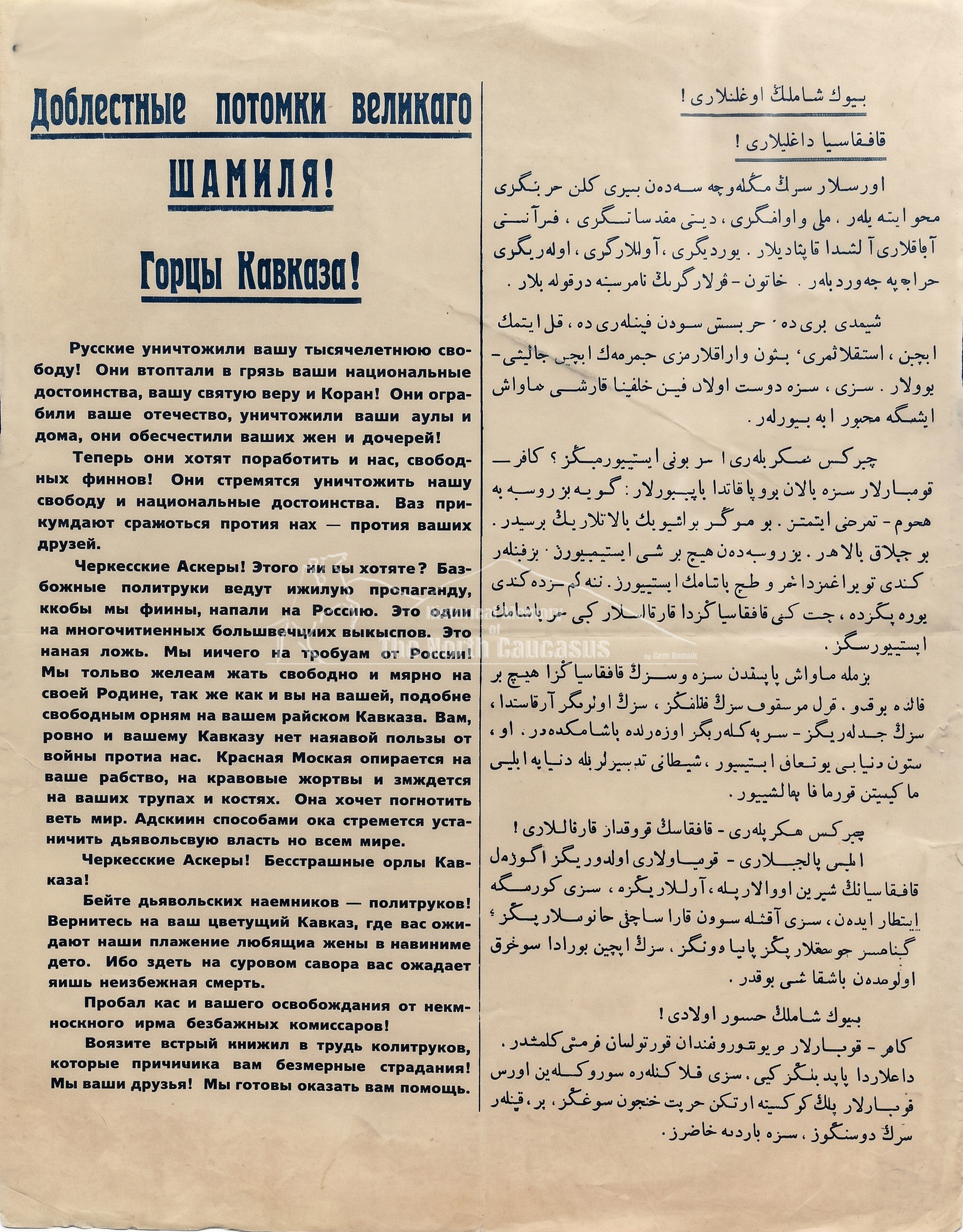
The Finnish Army, heroically defending its country against the Red Army invasion, was conducting an intense counter-propaganda campaign to awaken this valiant enemy fighting in enemy ranks from the impasse and delusion they had fallen into. In one of the propaganda leaflets dropped by Finnish planes on Soviet positions, written in Russian and in Turkish using the Arabic alphabet, the text addressed to the North Caucasian soldiers was quite remarkable:[7]
Brave grandchildren of the Great Shamil! Mountaineers of the Caucasus!
The Russians destroyed your thousand-year-old freedom! They trampled upon your national honor, your sacred faith, and the Quran! They plundered your homeland, turned your villages and homes to ruins, and defiled the honor of your wives and daughters! And now they want to enslave us free Finns! They are trying to destroy our freedom and national honor too. They are forcing you to fight against us, your friends.
Circassian Soldiers! Is this what you want? The infidel commissars are spreading lying propaganda as if we Finns had attacked Russia. This is one of countless Bolshevik fabrications. This is an insolent lie. We have no demands from Russia! We simply want to live free and in peace in our own homeland, just as you wish to live in your own homeland like free eagles in your heavenly Caucasus. Fighting against us brings no benefit either to you or to the Caucasus. The Red Muscovite feeds on your slavery, leans on bloody sacrifices, and rises upon your corpses and bones. It wants to swallow the whole world. With its demonic plans, it tries to establish the rule of the devil in the world.
Circassian soldiers! Fearless eagles of the Caucasus! Kill the messengers of the devil—the commissars! Return to your blooming Caucasus, to your wives and innocent children who await you with longing and love. Because there is nothing here for you but a cold death.
Brave sons of the Great Shamil! The time for liberation from the unbearable yoke of the infidel commissars has come! Thrust your sharp daggers into the chests of the Russian commissars who have caused you indescribable suffering! We are your friends! We are ready to help you.
Click on the image to have a larger view
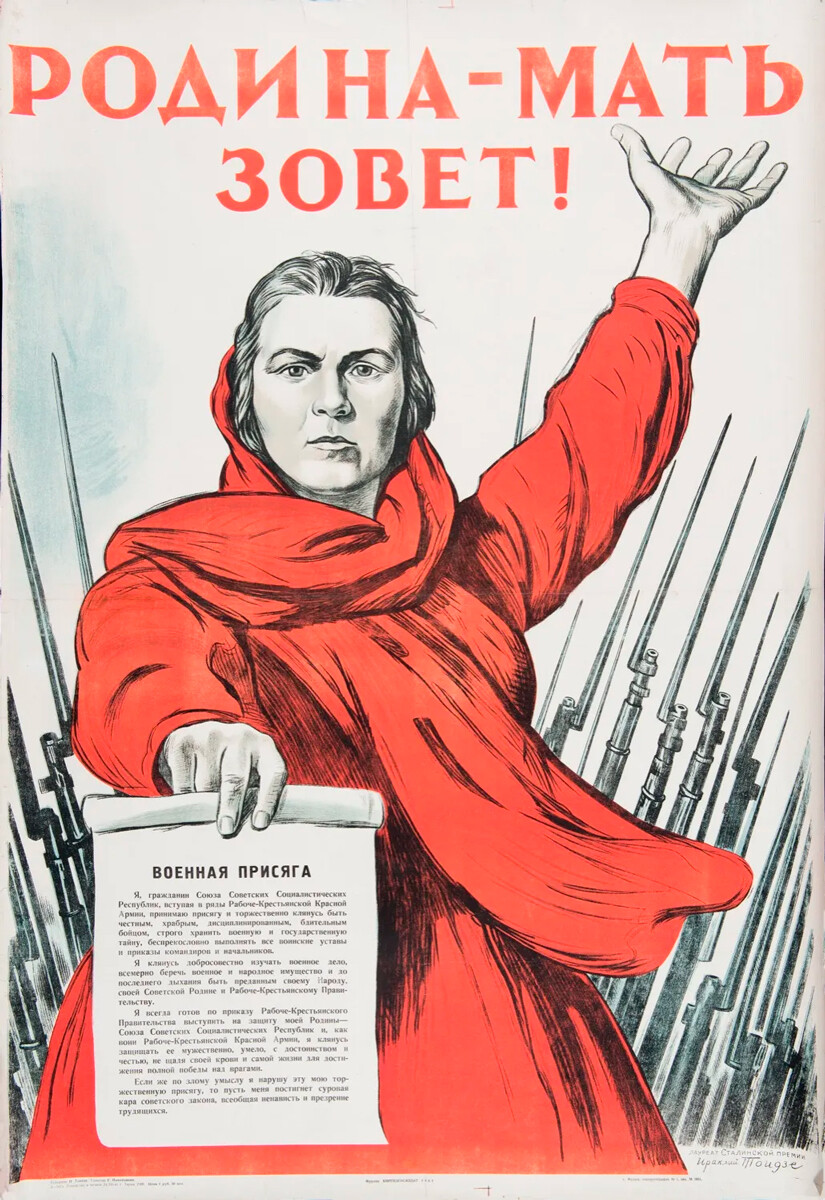
WORLD WAR IIWhile the Soviet government gradually lifted the obstacles to military service for politically foreign elements, it began to implement opposite measures against non-Slavic citizens of the USSR. In the years 1941-1942, a series of top-secret GKO (State Defense Committee) decrees and NKO (People's Commissariat of Defense) directives were issued restricting the conscription and military service of peoples, including several Transcaucasian peoples and all the peoples of the North Caucasus.
On September 19, 1941, the Transcaucasian Front was ordered to halt the conscription of and demobilize from the army certain peoples related to the populations of neighboring states (Iran and Turkey). This category covered the Adjarians, Khevsurs, Kurds, and Svans in the Keda, Khulo, Zemo Svaneti, and Kvemo Svaneti regions, as well as the "Mountaineers" of the Kazbegi region of the Georgian SSR and the Khevsur village council of the Dusheti region. Shortly thereafter, this category was expanded to include the peasants in the Kobuleti and Batumi regions of Adjara. In 1942, a decision was made to postpone conscription and mobilization for one year for all Adjarians. In February 1942, reserves of the Kazbek Region of the North Ossetian Republic were exempted from mobilization. At the end of March 1942, Army Commissar of the First Rank Shchadenko, Head of the Main Directorate of Formation and Manning of the Troops of the Popular Defense Forces (GUF), ordered that all enlisted men and non-commissioned officers of Chechen and Ingush ethnicity be demobilized to the reserves, sent to their hometowns, and have "demobilized to the reserves until further notice" written on their military IDs. On July 26, 1942, while Resolution No. 2100ss of the State Defense Committee instructed the nationwide conscription of "all citizens" born in 1924, a few days later, on July 30, Order No. 0585 of the People's Commissariat of Defense declared that the conscription of the Mountaineers was prohibited. On July 28, when the formation of eight infantry divisions in the North Caucasus Military District was announced by resolution No. 2114 of the State Defense Committee, persons belonging to the Mountaineer peoples from Chechen-Ingushetia and Kabardino-Balkaria were removed from the personnel list. On August 24, in line with the directive of the Chief of the Main Directorate of the Navy, an order prohibiting the conscription of Dagestanis was issued by the commander of the Transcaucasian Front. The conscription processes for the peoples of the Karachay-Cherkess and Adygea regions were also halted starting in August 1942.
To avoid misunderstanding, it must be emphasized that no restrictive measures were taken against the North Caucasians who had already been mobilized at that time. [8] Ethnically based demobilization and Central Asian exile decisions from among these individuals were subsequently made together with the mass deportation decisions of the 1943-1944 period.
Click on the image to have a larger view
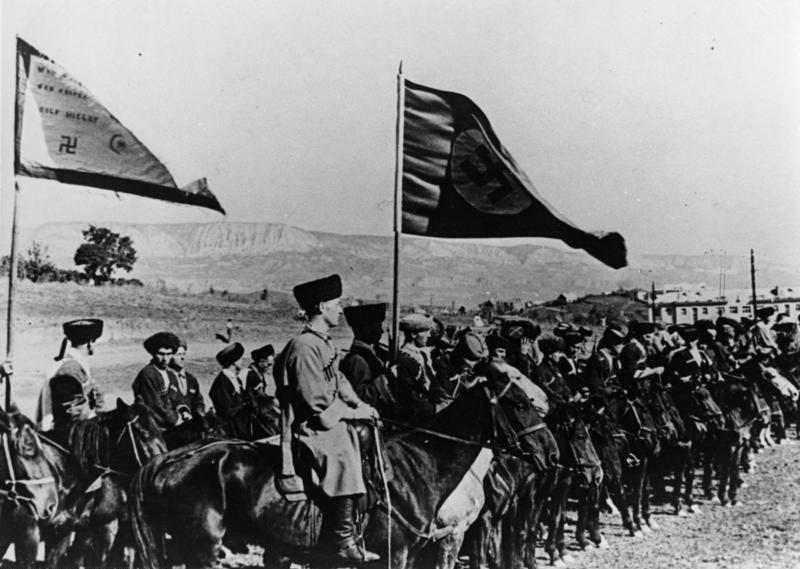
Unlike the Winter War between the Soviets and Finland, the troubled alliance the North Caucasians entered into with Nazi Germany on the Eastern Front of World War II involved not only the individual will of the regional population at the time but also the profound influence of Caucasian politicians who had gone into exile in Europe following the occupation of the Caucasus by the Bolsheviks in 1921. Of course, Soviet historiography features many heroic tales about the Caucasian Mountaineers fighting in the Red Army and attempts to emphasize that the "traitors" who collaborated with Nazi Germany were an exceptional minority. The truth, however, is far from this. Compared to the policy pursued in the territories occupied by the German Army, the Nazis followed a very different policy in the Caucasus and exclusively pledged absolute independence to the peoples of the Caucasus. This propaganda had a tremendously massive impact, and the Caucasian Mountaineers took their places in the German ranks not to become pawns of the enemy, but to escape Stalin's regime of terror and for full independence.[9]
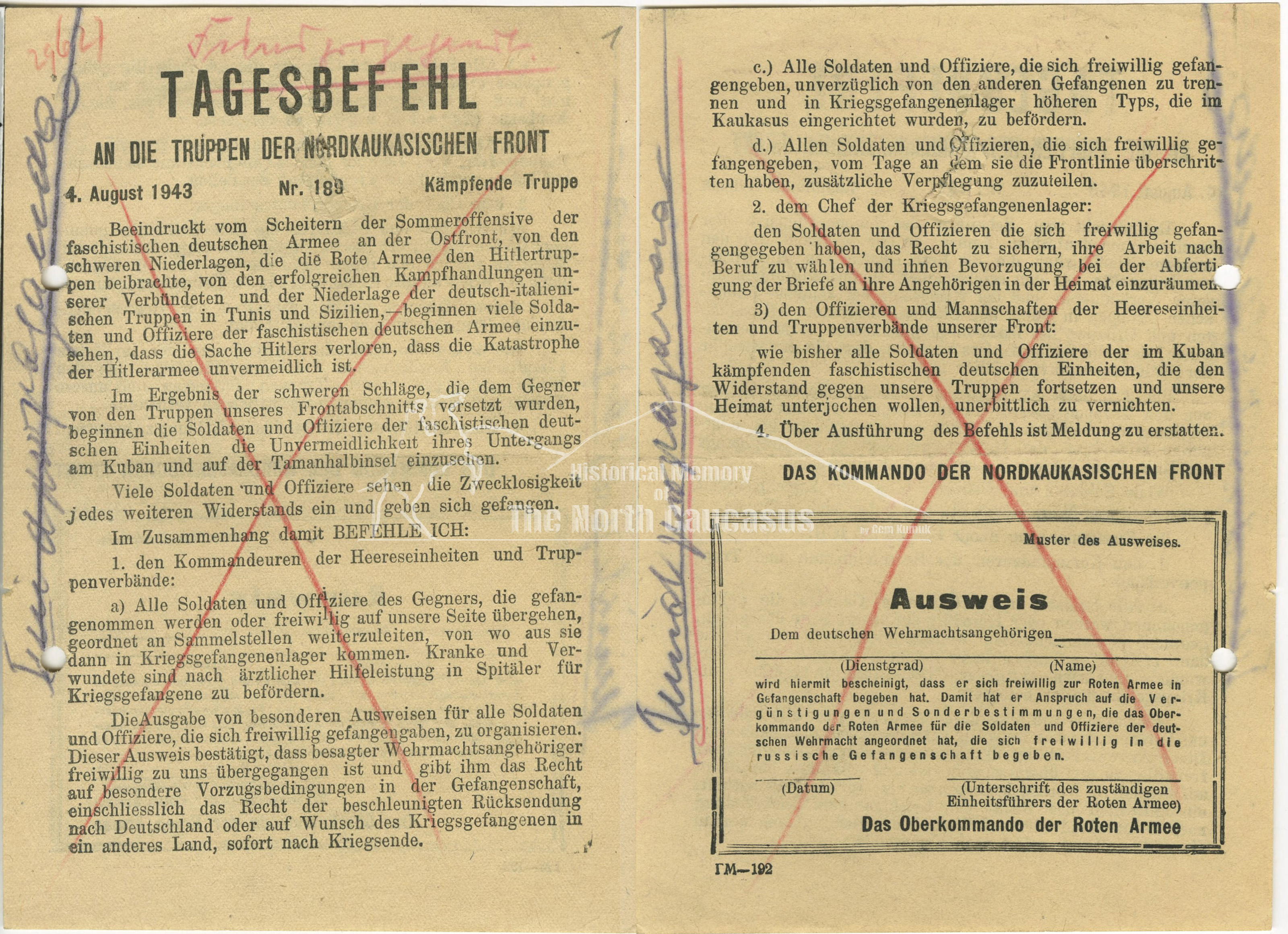
Under normal circumstances in Red Army disciplinary practices, the penalty for collaborating with the enemy required immediate execution. The leaflet dropped by aircraft over German barracks for the Mountaineers in German ranks to read, which was also sent to Red Army units, contained the following statements:[9]
Combat Units!
Affected by the failure of the fascist German army's summer offensive on the Eastern Front, the severe defeats inflicted upon Hitler's troops by the Red Army, the successful combat operations of our allies, and the defeat of the German-Italian troops in Tunisia and Sicily, many soldiers and officers of the fascist German army are beginning to understand that Hitler's cause is lost and that the Hitlerite army faces impending doom. As a result of the heavy blows dealt to the enemy by our troops at the front, the soldiers and officers of the fascist German troops have begun to realize their inevitable collapse in the Kuban and the Taman Peninsula. Many soldiers and officers recognize the futility of further resistance and agree to surrender.
In this context, I order:
1.) Commanders of army units and military formations:
a) All enemy soldiers and officers taken prisoner or who voluntarily defect to our side will be systematically sent to collection points and taken from there to prisoner-of-war camps. The sick and wounded will be transferred to prisoner-of-war hospitals after receiving medical assistance.
b.) Special identification cards will be issued for all soldiers and officers who voluntarily surrender to us. This identification card confirms that the said Wehrmacht member has voluntarily defected to us and provides special privileged conditions in captivity, including the right to rapid return to Germany or, upon the prisoner's request, to another country, immediately after the end of the war.
c.) All soldiers and officers who voluntarily surrender will immediately be separated from other prisoners and transferred to high-level prisoner-of-war camps established in the Caucasus.
d.) All soldiers and officers who voluntarily surrender will be allocated extra rations from the day they cross the front line.
2.) To the commanders of prisoner-of-war camps:
To grant the right to choose work according to their profession and priority in sending letters to their families back home for the soldiers and officers who voluntarily surrender.
3) To the officers and enlisted men of the army units and formations at our front: Mercilessly destroy, as before, all soldiers and officers of the fascist German troops fighting in the Kuban who continue to resist our troops and attempt to subjugate our homeland!
4.) The submission of a report regarding the implementation of this order is requested.
Click on the image to have a larger view
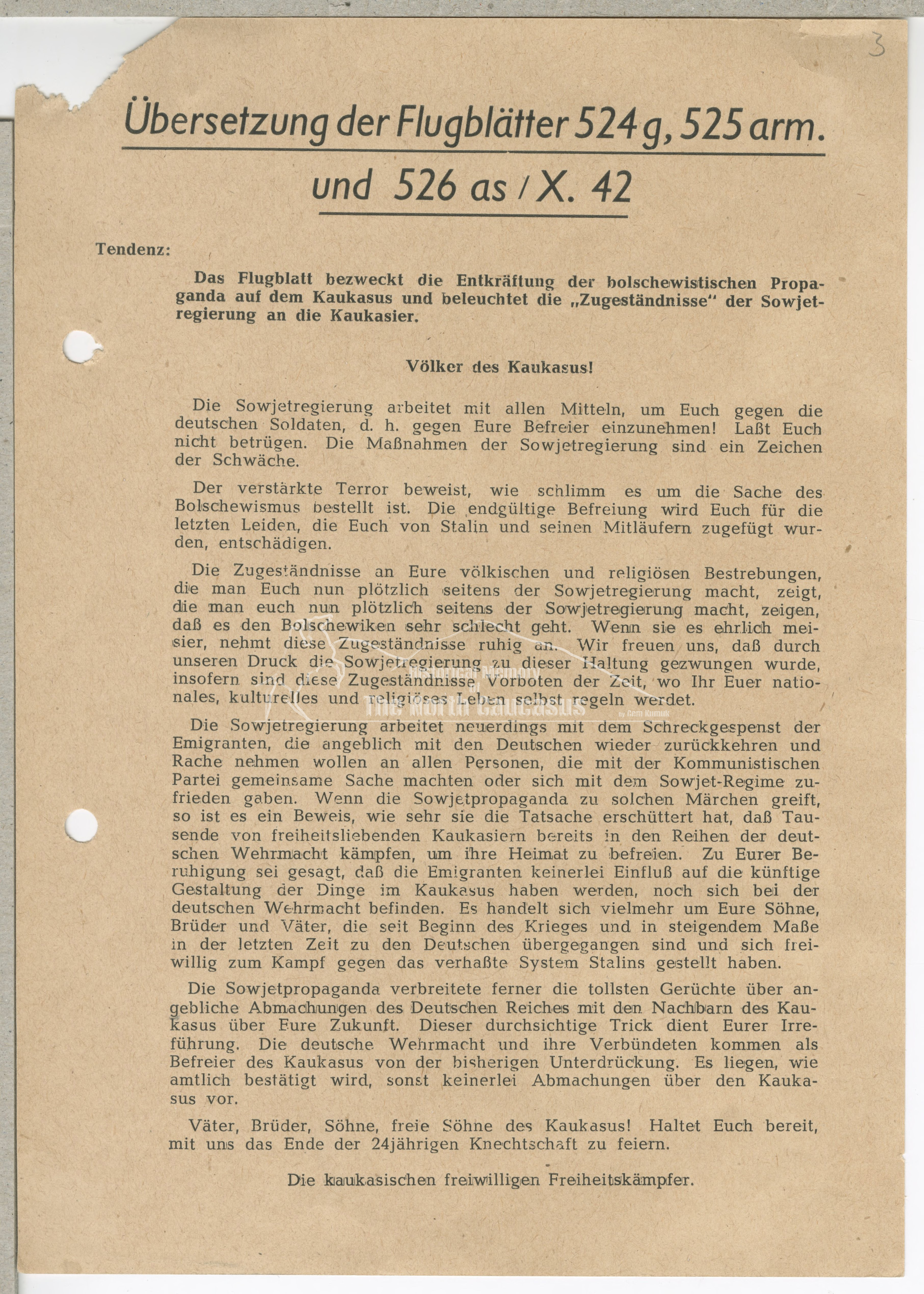
Peoples of the Caucasus!
The Soviet government is trying every way to incite you against the German soldiers, that is, your liberators! Do not be deceived. The measures taken by the Soviet Government are a sign of weakness. The increasing terror proves how bad the situation of the Bolshevik cause is. The ultimate liberation will compensate for the final sufferings inflicted upon you by Stalin and his followers.
These sudden concessions made by the Soviet government towards your national and religious demands show that the Bolsheviks are in a very bad state. If they are honest, please accept these concessions quietly. We are pleased that our pressures have forced the Soviet government to adopt this attitude. In this regard, these concessions are the harbingers of the days when you will live your national, cultural, and religious life as you wish.
The Soviet government has recently been utilizing the image of imaginary refugees who supposedly returned with the Germans and act in unison with the Communist Party or wish to take revenge on anyone happy with the Soviet regime. The fact that Soviet propaganda resorts to such fairy tales is proof of how deeply shaken it is by the reality that thousands of freedom-loving Caucasians are fighting in the ranks of the German Wehrmacht to liberate their homeland. I assure you, the émigrés will have no influence on the future course of events in the Caucasus, nor will they be part of the German Wehrmacht. On the contrary, they are your sons, brothers, and fathers who have voluntarily joined the Germans since the beginning of the war and increasingly so recently, participating in the struggle against Stalin's detestable system.
Soviet propaganda continues to spread very ugly rumors that fabricated agreements regarding their future have been made between the German Empire and its neighbors in the Caucasus. This obvious trick is meant to deceive you. The German Wehrmacht and its allies have come to liberate the Caucasus from past oppression. As officially confirmed, no other agreements regarding the Caucasus exist.
Fathers, brothers, sons, free children of the Caucasus!
Get ready to celebrate the end of 24 years of slavery with us!
Click on the image to have a larger view
The minimum number of North Caucasians identified as of June 1, 1944, who were captured by or surrendered to the Germans while fighting in the ranks of the Soviet Red Army is around 8,000.[9] In the report presented most recently in March 1945 by the North Caucasian National Committee in Berlin to Alfred Rosenberg, it is understood that the number of North Caucasians actively participating in German units at the front was around 20,000 people. A corps-sized Caucasian Liberation Army was planned to be formed from these individuals and the Mountaineer prisoners of war who had not yet been released from the POW camps. When all these data are brought together and considering the 3-year course of the war, it can be said that the number of North Caucasians fighting against Stalin's terror in the German ranks was no less than 50,000.
Click on the image to have a larger view
Dagestan: As of July 1, 1945, 122,268 people;
North Ossetia: As of July 1, 1945, 70,633 people;
Kabardian Autonomous Republic: As of July 1, 1945, 54,422 people
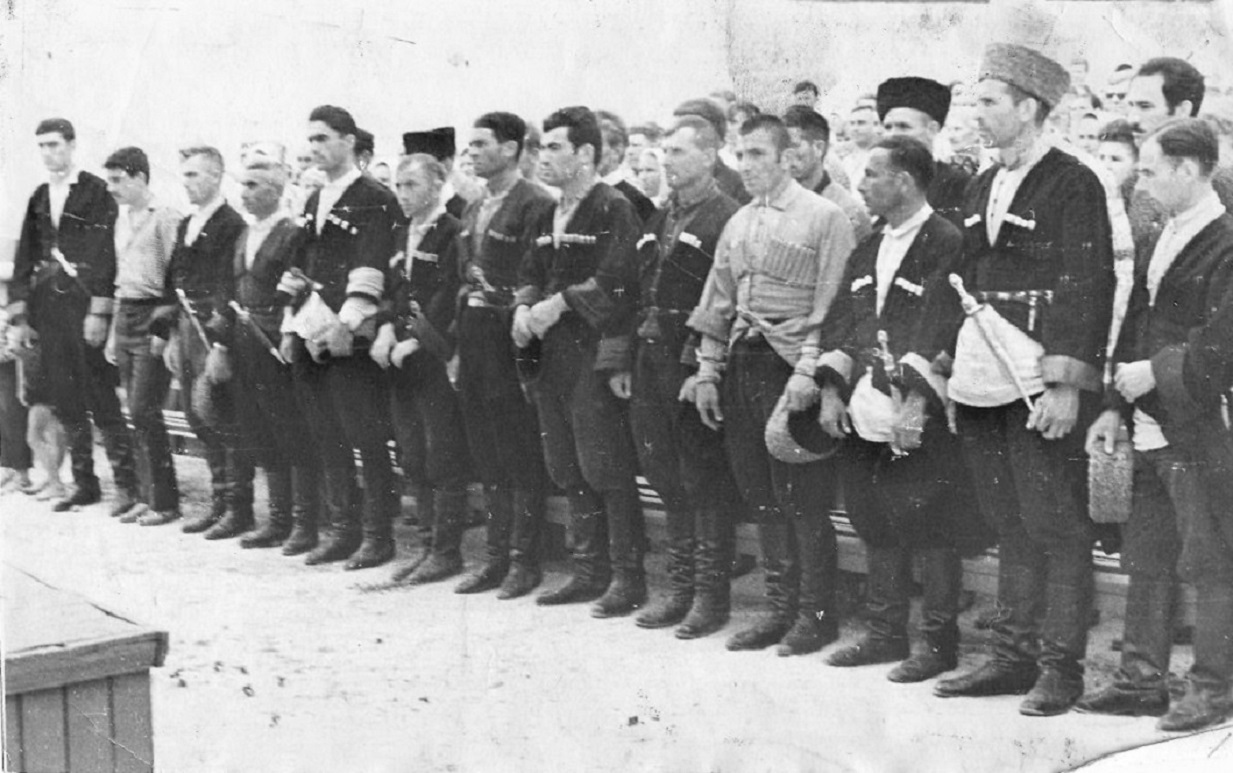
These numbers also include different ethnicities conscripted from these republics. Therefore, the Mountaineer ethnic group within the total number of people mobilized from these three republics is, on average, no more than 70%.
The figures for the Circassian and Adygea Autonomous Regions were considered within the Stavropol and Krasnodar Krai figures, and no separate data were provided. It can be assumed that this number could also be around 10,000. Therefore, excluding the Karachays, Chechens, and Ingush who were sent into mass exile from the very beginning of the war, the total number of Caucasian Mountaineers conscripted into the Red Army can be considered to be a maximum of 200,000 people.
Click on the image to have a larger view
FROM THE DAYS OF THE COLD WAR TO THE PRESENT...The Caucasian Mountaineers putting their lives on the line in Russia's wars continued into the period between 1950 and 1991, characterized as the Cold War years.
It was also possible to see individuals belonging to the North Caucasian peoples in the covert support the Soviet Union provided to North Korea via pilots, anti-aircraft units, and military advisors during the Korean War that took place between 1950 and 1953. In the direct military intervention carried out by the Soviet army to suppress the uprising against the Soviet occupation during the 1956 Hungarian Revolution, and in the operations carried out by the Warsaw Pact under the leadership of the USSR during the Invasion of Czechoslovakia to halt the political liberalization process known as the "Prague Spring" in 1968, there was an individual presence of North Caucasian Soviet officers, though they were not in large groups.
During the occupation of Afghanistan by Soviet troops between 1979 and 1989, however, it is possible to speak of a large North Caucasian presence, albeit individually, in both the non-commissioned and officer categories. In this military intervention against the Mujahideen rebels that lasted a decade, the Soviet Army, bogged down in this occupation quagmire, prioritized people belonging not only to the Caucasian Mountaineers but to all Muslim peoples of the USSR among the soldiers it mobilized; thereby consciously throwing USSR citizens of the Islamic faith as bait before the Afghan Mujahideen. Today, in the cemeteries of regions densely populated by Mountaineer peoples in the North Caucasus, you can see on numerous tombstones that the victim lost his life in Afghanistan.
Contrary to initial deployment strategies in which Moscow heavily utilized Central Asian Soviet soldiers, thinking they could integrate better with the local Afghan population, North Caucasians were conscripted into the army through the general national military service system (prizyv). As situations like excessive fraternization with locals, desertion, or reluctance to fight their Muslim brethren were frequently observed in Central Asian units, the Soviet command returned to ethnically mixed regular units, resulting in tens of thousands of North Caucasian youths being enlisted in standard motorized infantry, airborne, and special forces (Spetsnaz) brigades. The North Caucasian autonomous republics paid a far more disproportionate cost in human loss compared to the rest of the USSR in relation to their population by sending their youth into the 40th Army's "meat grinder". Soldiers of North Caucasian origin were represented in higher numbers in Soviet elite combat units due to cultural molds and physical preparedness levels. The Soviet military command preferred North Caucasians for intense reconnaissance activities, airborne operations, and Spetsnaz units operating in the rugged Hindu Kush mountains. Their familiarity with mountainous terrain was seen as an advantage. Many North Caucasian soldiers were rewarded with high military decorations due to their bravery in the combat environment. However, like other Afghanistan veterans (Afgantsy), they returned to their hometowns with deep scars left by the brutal nature of guerrilla warfare. Serving in Afghanistan led to a sharp internal conflict for many North Caucasian soldiers, the majority of whom were Sunni Muslims. The soldiers were told they were fulfilling their "internationalist duties" in the name of protecting a socialist revolution. Yet in reality, they found themselves fighting against devout Muslim Mujahideen defending their homes. Seeing Soviet forces destroying mosques and villages caused many North Caucasian soldiers to question their presence on Afghan soil. Although open mutinies occurred very rarely due to the strict discipline of the Soviet military mechanism, these experiences deeply shook the soldiers' faith in Moscow's propaganda.
The legacy of the Afghan War directly fueled the events in the North Caucasus in the 1990s following the looming collapse of the Soviet Union. For instance, the famous Chechen field commander Ruslan Gelayev, an "Afghanistan veteran" (Afgandets), was one of the most notable figures among those who used the skills he acquired against Moscow. The guerrilla tactics the Afghan Mujahideen used to neutralize the heavy armored units of the Soviet 40th Army (such as laying ambushes in mountainous terrain, using RPGs, and improvised explosive devices) were applied by Chechen resistance fighters against the Russian army in the 1990s. The Chechen–Russian War was the dirtiest war among Russia's 20th-century wars in which North Caucasians were made to fight against opposing forces. In this war, where Chechens on one side and soldiers belonging to fraternal North Caucasian peoples on the other were forced to fight against each other, a massive blow was dealt to the hope of Caucasian Unity that had sprouted anew during the dissolution process of the USSR.
In the early 1990s, Chechen leader Dzhokhar Dudayev attempted to position Chechnya as the vanguard of a broader Pan-Caucasian liberation movement against Russia. Early in the process, volunteers from all over the North Caucasus, including Adygeans, Abkhazians, and Dagestanis, supported the idea of an independent Caucasian confederation. Many of these fighters had recently gained combat experience by fighting against Georgia alongside Abkhaz freedom fighters in 1992–1993. During the First Chechen War, hundreds of volunteers from neighboring Dagestan and Ingushetia crossed into Chechnya to fight against federal troops, driven by a sense of ethnic solidarity and their anger at Russian terror. However, thanks to the perception created among the people by the oligarch politicians heading the neighboring republics, the seeds of hostility against the Chechen resistance fighters were sown among the Mountaineer population. The most tragic manifestation of this was during the operation organized by Chechen resistance fighters in Dagestan in 1999, when Dagestani civilians, instead of joining them, crossed over to the ranks of the Russian army to expel the resistance fighters from the region. Indeed, this anger nurtured among the North Caucasians by Moscow became a turning point that emboldened the Russian Army, which had lost the first war, into the Second Chechen War. As a result of the division occurring within Chechen society itself, certain clans—most notably Chief Mufti Akhmad Kadyrov and his son Ramzan Kadyrov—who obtained various privileges and benefits from Moscow, abandoned the ranks of the resistance fighters during the Second Chechen War and defected to the Russian side.
North Ossetia, whose population was largely Christianized in the 19th century, remained Moscow's most loyal ally in the region. Ossetian units and local security forces took active roles against Chechen resistance fighters on the border lines. The Ingush faced an extremely severe humanitarian crisis in both wars. Hundreds of thousands of Chechen civilians took refuge in Ingushetia. During the wars, the refugee population at times surpassed the native Ingush population, bringing the small republic to the brink of economic collapse. Although the Ingush government under Ruslan Aushev officially tried to remain neutral, Russian forces frequently conducted cross-border operations. Eventually, the resistance in Chechnya spilled over into Ingushetia. Even though the region turned into a war arena where assassinations, bomb attacks, and guerrilla warfare took place between resistance fighters and federal security forces, the supporters of Ramzan Kadyrov and Yunus-Bek Yevkurov, backed by Moscow's unlimited support, put an end to the resistance using the most inhumane methods without necessitating the Russians to enter into direct clashes. While these things were happening in Chechnya and Ingushetia, the administrators of the neighboring North Caucasian republics watched the events unfold from their seats as if watching a Hollywood script.
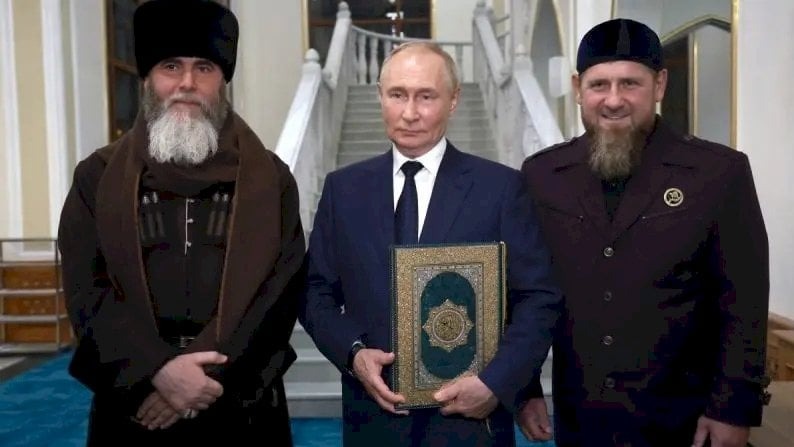
The 21st century promises nothing different from the last four centuries. In the Ukraine War that began in 2014, suspicious and objectionable persons, groups, and national elements living in Russia are being sent to the front to fight almost with bare hands. The punishment for criticizing Mother Russia is being sent to die at the front. While corpses were sent back to their hometowns in the beginning, Moscow no longer even bothers with this and either leaves the corpses on the battlefield or destroys them there. Today, the penalty for speaking out against the regime in the Caucasus is being sent to Ukraine with bare hands. And the local Nomenklatura, having learned no lessons from what has happened over four centuries, continue to play the three monkeys so that their individual comfort zones and interests suffer no harm. Within the context of Russia’s sordid war in Ukraine, the Russian leader orchestrates a proxy ethnic cleansing targeting the state's non-Russian populations, most notably the peoples of the North Caucasus. Concurrently, he launders his reputation by cultivating a curated persona as the "Protector of Muslims," a narrative strategically disseminated through social media. He successfully fortifies this facade in the major urban centers of the North Caucasus by kissing and elevating to his forehead copies of the Holy Quran presented to him by regional muftis.
Click on the image to have a larger view
— A wise man was once asked whether camels could sing songs. After a brief moment of contemplation, the wise man replied: "If they find mules willing to listen, they will even sing arias"References: (Click on the links to access files from our e-reading room)
1) Sergey Nechayev, Ivan Groznyy. Zheny i nalozhnitsy, «Siney Borody» (Ivan the Terrible: Wives and Concubines of "Bluebeard"), Moscow, 2011, pp. 71-99.
2) Z. K. Adilov, “Ekspeditsiya Aleksandra Bekovicha-Cherkasskogo v Srednyuyu Aziyu: istoriograficheskaya dinamika” (The Expedition of Alexander Bekovich-Cherkassky to Central Asia: Historiographical Dynamics), Journal of History of Uzbekistan, No. 4, Tashkent, 2014, pp. 47-61.
3) Russian State Military Historical Archive (RGVIA), The appeal of Tsar Nicholas II transmitted to the Mountaineers of the Caucasus via Major General Prince Georgy Ilyich Orbeliani, January 31, 1904, Fond 15239, Opis 1, Delo 1-2; Yevgeny Ivanovich Kozubsky, History of the Dagestan Cavalry Regiment, Petrovsk, 1909, pp. 295-296.
4) Cem Kumuk, Düvel-i Muazzamanın Kıskacında Kafkasya Dağlıları (The Mountaineers of the Caucasus in the Grip of the Great Powers), Istanbul, 2022, p. 116,176-177.
5) Ahmed Tsalikov (Tsalikkati), The Muslims of Russia and the War, Petrograd, 1917, pp. 3-15.
6) Russian State Military Archive (RGVA), Reports on the military administration and dispatch of the Northwestern Front Command established during the Winter War, operational records of the Soviet 7th, 8th, 13th, 14th, and 15th Army Commands, brigade and division-level operational reports, Fond 37977; 34980.
7) RGVA, Examples of Finnish counter-propaganda, Fond 33988, Opis 3; Fond 4, Opis 14.
8) Alexey Yuryevich Bezugolny, The Peoples of the Caucasus and the Red Army 1918–1945, Moscow, 2007, pp. 158-159.
9) Cem Kumuk, The Mountaineers of the Caucasus in World War II, Ankara, 2026, pp. 199-312,283,486.
10) Central Archive of the Ministry of Defense of the Russian Federation (TsAMO RF), Fond 209, Opis 999, Delo 731, List 357-359; Fond 144, Opis 13189, Delo 291, List 305.