
 Türkçe
Relations with the CaucasiansThe antecedents of relations between the Caucasian peoples and the Russians can be traced back to the tenth century. Vikings, having settled on the eastern shores of the Baltic Sea, navigated the river systems to advance into the continental interior. They established colonies along maritime and fluvial routes, initiating trade with the primitive Slavic populations inhabiting these regions. The Slavs rapidly succumbed to the hegemony of these Vikings—known as Varangians or Varyag—who possessed a superior material culture. The Varangians' maritime expertise facilitated commerce along the regional waterways, allowing them to seize control in a short span of time. The appellation "Rus," originally bestowed upon the settling Varangians, eventually became synonymous with the Slavs themselves.
By 914, a branch of the Varangians had descended via the Volga River as far as the Caspian Sea. During this epoch, Prince Sviatoslav expanded the frontiers of the Kievan Principality from the Volga Valley to include the banks of the Kuban River, extending eventually to the Balkans. The initial contact between the Adyge and the Russians commenced with various incursions organized by the Kievan princes into the western Caucasus. Russo-Caucasian relations, interrupted for a time by the Mongol invasion, were reignited when Cossacks, driven southward by Russian pressure, entered the Terek basin.
The Rise of Russia and Strategic AlliancesAlthough Russia lagged behind the Ottoman Empire in the contest for the Caucasus, starting from the 1550s, it expanded by 35,000 km² annually, rapidly metamorphosing from a minor knyazate (principality) into a colossal empire. Cognizant of the disparity in power between itself and the Ottoman Empire, Russia pursued a policy of circumspection, avoiding direct confrontation. Nevertheless, it never neglected an opportunity to intimidate the Ottoman Empire whenever the geopolitical climate was favorable. With Ivan IV’s conquest of Astrakhan in 1556, the indirect contacts between Caucasians and Russians gave way to direct relations.
During this period, the Ukrainian Prince Dmytro Vyshnevetsky, having established the Zaporozhian Cossack units, arrived in the Kabarda region upon the orders of Ivan IV to wage war against the army of the Crimean Khanate. While the Tsar feigned ignorance of the raids conducted on Ottoman fortresses by Prince Vyshnevetsky in concert with his Cossacks and Adyge allies, he simultaneously provided Vyshnevetsky with financial aid, weaponry, and troops to wrest the fortresses of Taman, Temryuk, and Azov from Ottoman control. With Adyge assistance, Vyshnevetsky succeeded in capturing the Taman and Temryuk fortresses in 1557. During his sojourn in the Kabarda region, the Prince garnered the affection of the Kabardians. Alongside Kabardian princes such as Atsimgok and Kanuko, Sibok, the son of the Jane prince Kansavuk, was among the Adyges who forged an alliance with Vyshnevetsky.
The Adyge Diaspora in PolandFrom 1561 until the era of Peter the Great and beyond, the Adyges maintained their potency and influence within the Russian mechanisms of power. They were the sole group, despite not being ethnic Russians, who consistently intermarried with the ruling dynasty. When Ivan IV attacked Poland in 1561, Prince Dmytro Vyshnevetsky returned to his country. Following him in 1562, five Kabardian princes from Psyfabe (Pyatigorsk), accompanied by their families and a military force of approximately 300 men, abandoned their homeland to aid Poland. Thus began another "gendarmerie" mission for the Caucasians. Kassym Kanbulat, Gavril Kanbulat, Onishko Kudenek (son of Sibok Kanshav), Pshimko Shovtsen, and Pshimko Temryuk formed the Pyatigorsky Regiment and joined the Polish Army.
Although the Tsar’s envoy, Aleksiej Klobukov, was dispatched to the Polish King to demand the extradition of the Kabardian princes, he was unsuccessful. The units under the command of Pshimko Temryuk—who adopted the name Prince Temryuk Szymkowicz Czerkaski—achieved victories even in military operations where the Polish army had scattered before the Turks and Russians, thereby etching their names into Polish history. These triumphs paved the way for the princes’ entry into the Polish aristocracy. They were granted vast estates in Lithuania, Ukraine, and Podolia by the King. Their success eventually induced other Kabardians to join them. Until 1795, the Pyatigorsky Regiments remained an integral component of the Polish armies. Over time, the Kabardian princes and the Adyges who accompanied them to Poland assimilated, blending into the Polish and Podolian populations.
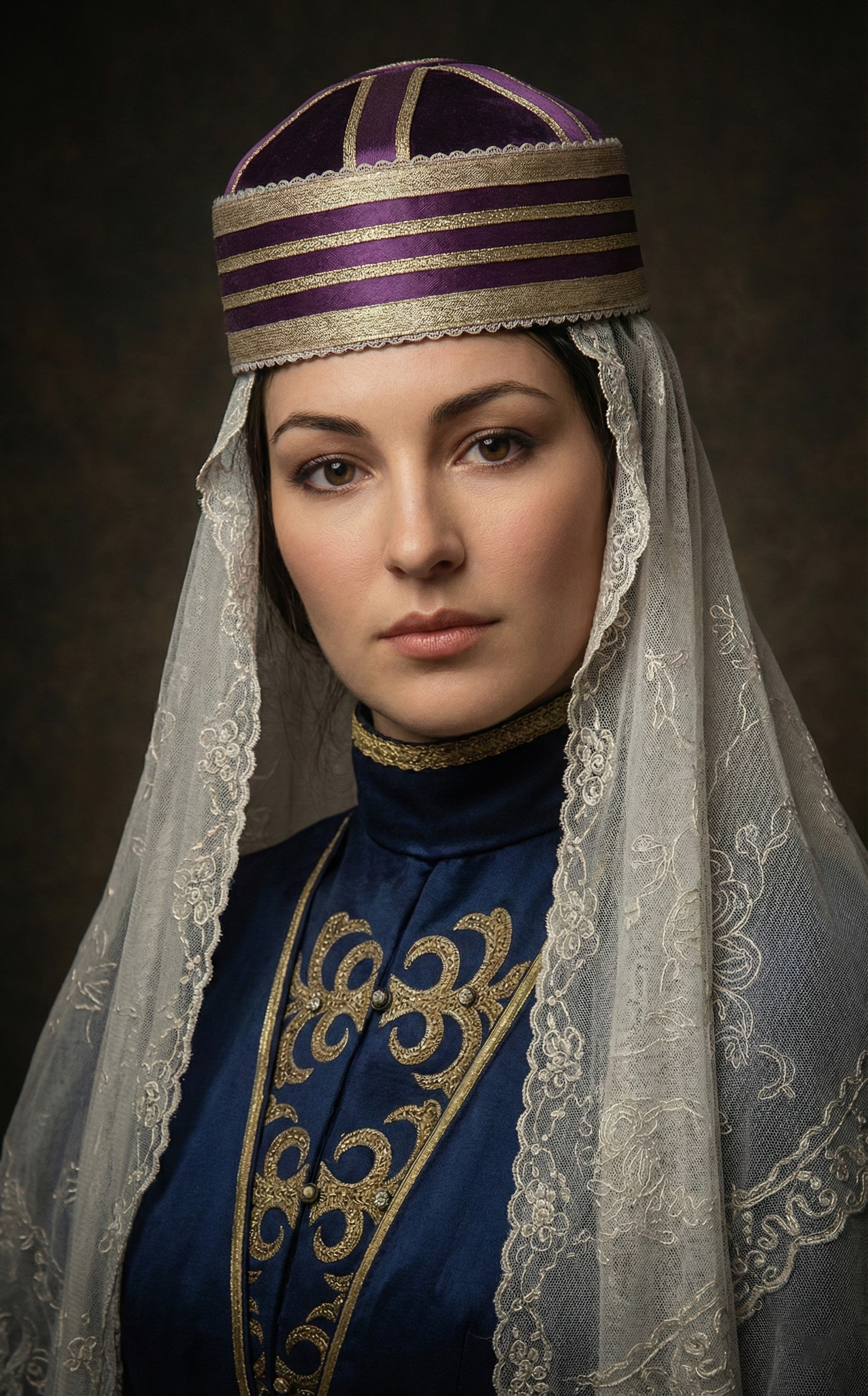
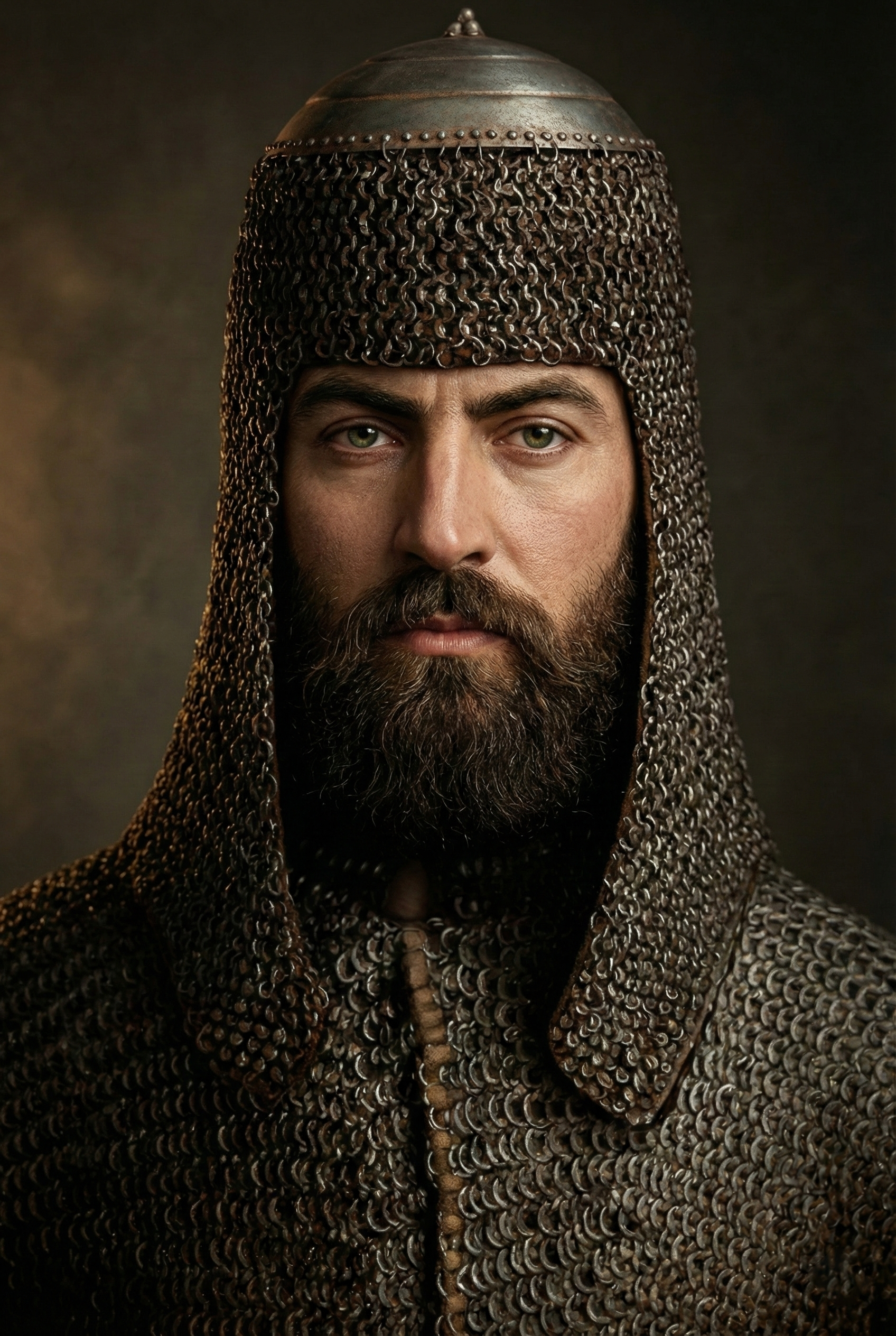
The Marriage Alliance and Internal StrifeThe relationship initiated by Prince Dmytro Vyshnevetsky progressed to the point where the Kabardian Prince Idariko Temryuk collaborated with the Russians to escape the oppression of the Crimean Khans. Unlike his father, who married his daughter Malkhurub (Mahidevran) to the Ottoman dynasty and sent his elder son Bitu-Murza (Mustafa Pasha) to Istanbul, Temryuk sought an alliance with the Russian throne. The first Adyge group to travel to Moscow in the second half of the 16th century consisted of the children or nephews of Temryuk, son of the prominent Kabardian prince Idar. In 1558, Prince Idariko Temryuk dispatched his son, Saltankul, to Moscow to serve the Tsar. Saltankul was baptized and assumed the name Prince Mikhail Temryukovich Cherkassky. Three years after Saltankul entered the Tsar’s service, on August 21, 1561. Idariko Temryuk married his daughter, Goshenay to Tsar Ivan IV. Goshenay was also baptized, taking the name Maria.
Motivations and the Construction of FortificationsThe cardinal motivations for the Adyges’ alliance with the Russians were the irreparable devastation wrought by the Crimean Khans in the Caucasus, demands for tribute and slaves, the allure of the share of booty obtained in raids conducted alongside Russians, financial subsidies from the Tsar, and the fact that the Russian threat was, as yet, more distant than that of the Crimea. The Terski Gorodok fortress, constructed in 1567 on the Sunzha branch of the Terek River, constituted the first imposing Russian presence in the Caucasus.
In 1578, Ivan IV wished to install his brother-in-law Mamstriuk as the Grand Prince of Kabarda, but the attempt failed. Temryuk’s two sons, Mamstriuk and Dumanuk, were ensnared and killed by Kaytuko Kazi Psheapshoko. Kazi invited Temryuk’s sons to his home under the pretext of a celebration, held them hostage in chains for two days, and executed them on the third. Russia remained silent regarding the murder of the Kabardian princes under its protection. This silence was an indication that Russia had accepted the prevailing status quo in the Caucasus.
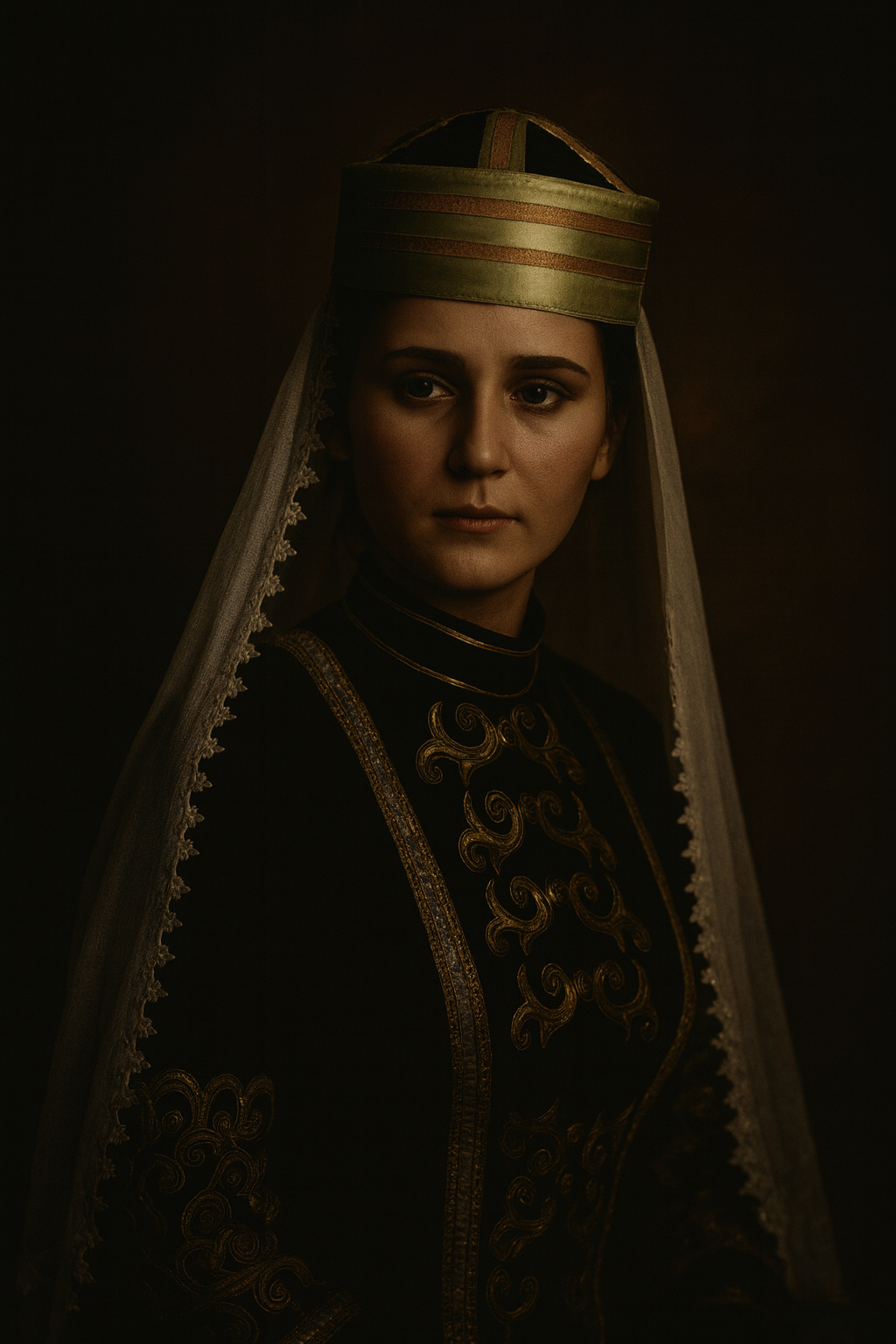
The Western Caucasus and Ottoman HegemonyIn the Western Caucasus, the situation was far less propitious for the Russians. Despite the opposition of certain Adyge tribes and individual feudal lords, the influence of the Ottoman Empire and the Crimean Khanate over the Western Adyges was undeniable. It cannot be said that the Russians were particularly perturbed by this division of allies at that time. An examination of 16th-century documents generally reveals that while Russians claimed rights over Kabarda in their correspondence with the Ottoman State, they made no such claims regarding the Western Adyges.
For instance, after the construction of the Terski Gorodok fortress, the Tsar’s Crimean envoy wrote a letter to the Tsar stating that Temryuk’s son Mamstriuk was fighting against the Besleney (who were in the Sultan’s service) and "the Turks' Circassians." Furthermore, when Ivan Novosiltsev, Ivan IV’s envoy in Istanbul in 1570, was asked why Russian fortresses were being built on the Terek within the Ottoman sphere of influence, his reply was: "The lands situated beyond the lands of the Besleneys, who are in the service of the Ottoman Sultan, belong to no one but the Tsar's father-in-law, Prince Temryuk."
In the letter given to Novosiltsev to convey to the Tsar upon his return to Moscow, it was stated that if the continuation of peace was desired, the fortresses on the Terek River must be demolished, the Astrakhan Road opened, and it was asserted that the Circassians were Ottoman subjects. As evidenced by this candid response, both parties claimed sovereignty over territories where they derived benefits through bilateral alliances; they were either oblivious to the fragility of their allies' power and the limited scope of their influence, or they deliberately ignored this reality.
Naturally, the significance of a fortress constructed in the very heart of the Caucasus lay more in its strategic dimension than in its physical size. The Russians knew full well that the fortress lacked the capability to dominate a region. On the contrary, they were well aware that without the protection provided by Prince Temryuk, the fortress’s existence would be untenable. This fortress was nothing more than a connecting link intended to serve as a bridge to Georgian lands and the Safavid alliance following the conquest of Kazan and Astrakhan. A similar situation applied to the Ottoman fortresses on the Black Sea coast. The soldiers in these garrisons lived in isolation from the outside world unless they left the fortress for a campaign with an arriving army or for a commercial matter under the protection of an Adyge noble. For the allied local feudal lord, the meaning of these fortresses was a message of power directed at rival feudal lords.
Strategic Shifts and the New FortressFollowing Temryuk, his son Mamstriuk, who became the head of the family, and his brother, who assumed the title of Prince, maintained a mutually beneficial relationship with the Russian Tsar. While Ivan IV requested 300 soldiers from Mamstriuk for his army to be utilized in the wars against the Swedes on the Tsardom’s western borders, Kanbulat applied to the Tsar in 1578, requesting the reconstruction of the fortress along the Terek. The Tsar did not refuse the request for such a fortress, which signified a guarantee for the future Russian presence in the Caucasus, and in the same year, he dispatched Luka Novosiltsev to the Caucasus with a well-equipped and populous team to construct the fortification.
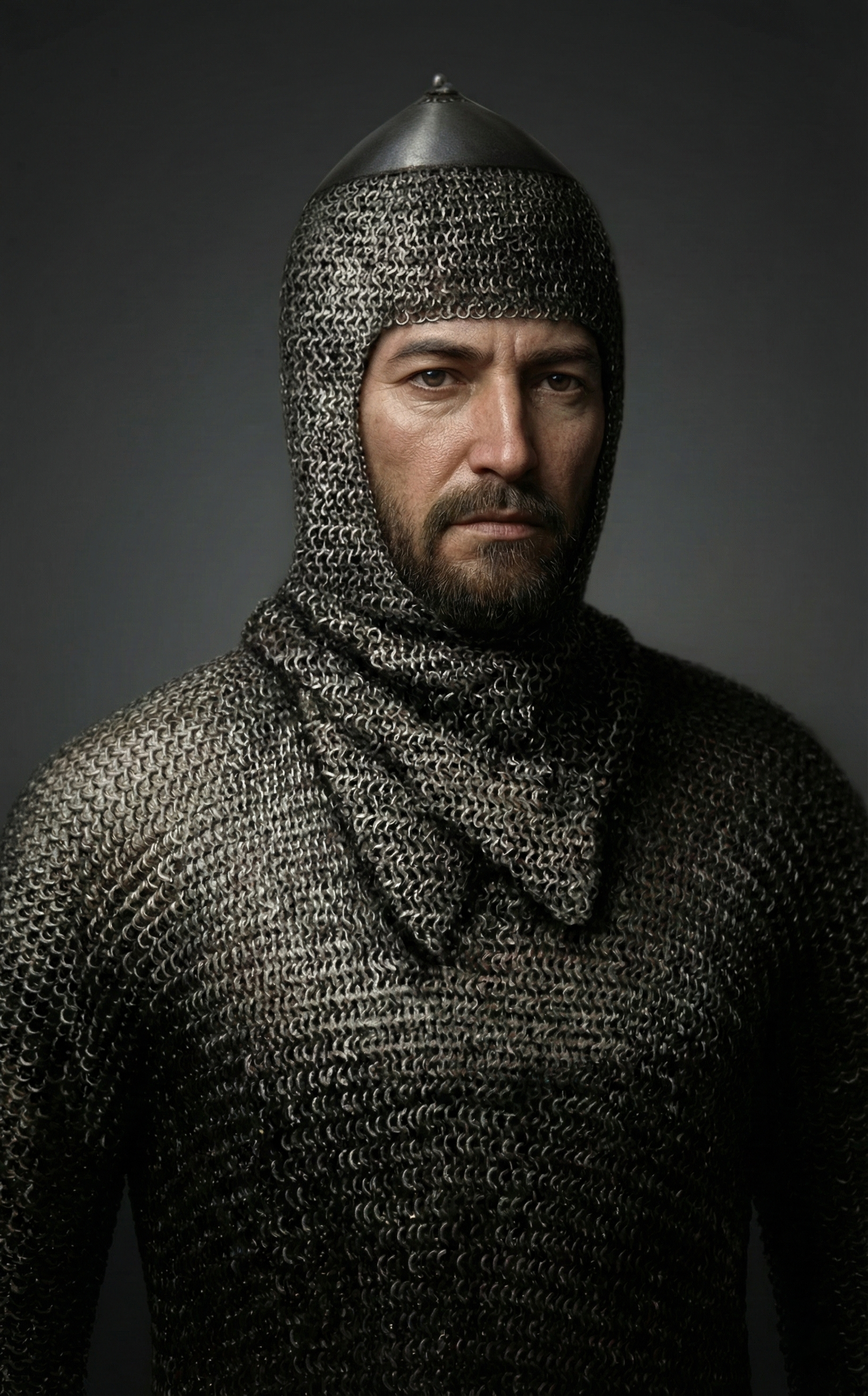
The 1580s: A Defensive StanceIn the early 1580s, Russia's Caucasus policy was still limited to intercepting a potential Ottoman-Tatar attack against Astrakhan at the Terek line with the support of local alliances and using the Caucasus as a protective shield for the defense of Astrakhan, rather than the conquest of the Caucasus itself. During this period, the Russians did not yet possess sufficient contact with the powerful feudal lords of other Caucasian peoples, such as the Avar beys, the Kumyk Shamkhal, and the ruler of Tumen.
The consequences of the alliance formed by Idar’s grandsons with the Russians began to manifest more clearly from 1580 onwards. Between 1580 and 1588, Russia, reinforcing its power with the Greben and Terek Cossacks, thereby saved its future in the region from being mortgaged to its Kabardian allies. This Cossack structure in the region was also a safety valve to prevent Astrakhan, which held strategic importance for the Russians, from falling into Ottoman hands. Since the Tsar denied his relationship with the Cossacks, Russia continued to implement its plans without entering a direct conflict environment with the Ottoman Empire.
The departure of Özdemiroğlu Osman Pasha from the region in 1583 and the deposition of Mehmed Giray from the Crimean throne with Ottoman support, replaced by Islam Giray, were other factors that played into Russian hands. Of Mehmed Giray’s children, Sefa took refuge with the Janes, Saadet with the Nogais, and Murad with the Russian Tsar. By hosting the Crimean Prince Murad Giray in Moscow in 1584, the Tsar demonstrated to the Ottomans that Russia could also intervene in the internal affairs of the Crimean Khanate. In 1585, Sultan Murad III sent a letter to the Tsar demanding that Murad Giray be sent to Istanbul and be handed over to them. The style of the letter resembled a message sent to a vassal bound to the Ottoman Sultan.
Murad Giray’s presence alongside the Russians became one of the factors opening the door for Russians to communicate with the peoples of Dagestan. While soliciting the support of the Shamkhal, the ruler of Tyumen, and other Dagestani feudal lords for the power struggle in Crimea, Murad Giray was inadvertently increasing the popularity of his protector, the Tsar, in the region. However, the ascension of Gazi Giray II to the Crimean throne in 1588, replacing Islam Giray, and his opening of the return path to Crimea for Mehmed Giray’s children, disrupted Russian plans. Murad Giray, whom it was understood would pledge allegiance to the Ottoman Sultan again, was not returned and was killed, most likely by Russian poisoning, in 1590.
Succession and ConsolidationTsar Feodor I continued to act as he saw fit. Thanks to the alliances established with the aforementioned Kabardian nobles, Russia had gained an advantageous position in the control of the Daryal Pass. The Daryal Pass was a location of extreme strategic importance for establishing relations with the Georgian Kings—who were in the position of Ottoman vassals—and drawing them closer to Russia. Likewise, the gates of Dagestan were, to some extent, opened to the Russians through this route.
In 1588, Tsar Feodor Ivanovich wished to make Mamstriuk’s cousin, Kudenet Kanbulatovich, the ruler of Kabarda, but the Kabardians elected Kaytuko Jansoh as the Grand Prince the following year. In the same period, Temryuk’s brother Kanbulat’s son, Horoshay, also went to Moscow to serve the Tsar. He, too, was baptized, his name changed to Boris Kanbulatovich Cherkassky. In 1592, he received the title of boyar and became a member of the Duma. When Tsar Boris Godunov exiled members of the Romanov dynasty in November 1600, he shared the same fate as the Romanovs. Vasili-Kazi Kardanukovich Cherkassky, an Abaza who came to Moscow during the reign of Ivan IV, was the only Caucasian elite to support Boris Godunov, who took power from the Rurikid dynasty. Mamstriuk’s son, Kanshav, was also among the Adyge nobles who went to Moscow. Baptized as Dimitri, Kanshav first received the title of Moskovsky Dvoryan in 1590, and then the title of boyar in 1619. As Dimitri Mamstriukovich Cherkassky, the administration of Russian fortresses on the Siberian, Volga, and Terek lines and all relations with the Adyges fell within his jurisdiction as the governor of the Kazan Palace between 1624 and 1634.

The Shifting Allegiances of 1588-1589As of 1588, the outlines of Russia’s Caucasus policy began to shift. The Tsar, uniting in an anti-Ottoman front with the Papacy, the Habsburgs, and the Safavids, began to take more audacious steps regarding the Caucasus. The Tsar instructed the Terek Voivode Khvorostinin to force Prince Tepsharuko Sholokh of the Tausultan family, Prince Tapshiuk, and other Adyge princes allied with the Ottomans to submit to the Tsar. Sholokh was one of the Kabardian nobles to whom Sultan Murad III had gifted a caftan and from whom he had requested protection and support for his army while the Ottoman-Safavid War continued in 1583. Furthermore, Sholokh, one of whose daughters was married to the Crimean Khan and the other to the Shamkhal of Dagestan, had kinship ties with the Ottoman-Crimean-Dagestan alliance.
In 1589, Prince Sholokh, appearing to leave the Ottoman alliance, declared his allegiance to the Tsar to protect himself from his rivals, allied with the Russians, and the attacks of the Terek Voivode. Indeed, not only pro-Tsar rival families but also other nobles under Sholokh’s own rule considered his insistence on the Ottoman alliance a threat to themselves. When the Kabardian Grand Pshi (Prince) Kanbulat died at the age of 97 in the same year, the Idariko, Kaytuko, and Tepsharuko families were in competition to determine the Pshi to be elected in his stead.
Genealogy of the Kabardian PrincesIn reality, all three of these families descended from the same lineage, that of the Grand Pshi Inal. Kabardian Grand Pshi Inal, who ruled between 1427 and 1453, left his place to his son Tebuldu. Tebuldu, who was the sole ruler of Kabarda like his father between 1453 and 1465, had two sons named Janhot and Inermes. Janhot, having ruled alone like his father between 1465 and 1483, left his place to his brother Inermes, who would rule from 1483 to 1498. Berslen took the banner from Inermes and ruled until 1525. It is from this point that fragmentation and problems began.
While the office of Pshi should have passed to his younger brother Talyustan after Berslen, Inermes’s son Idar took the Pshi title. Idar’s reign continued until 1540. Berslen’s son Kaytuk took power from Idar. When power passed from Kaytuk to Idar’s son Temryuk in 1554, Talyustan’s son Tepsharuk was again bypassed. From Idar, power passed to Kaytuk’s son Psheapşoko in 1571, and from him back to Idar’s lineage, to his younger son Kanbulat, in 1578. After Kanbulat’s death, the Ottoman ally Kaytuko Aslanbedj emerged victorious from the competition but passed away within a few months of receiving the title of Grand Pshi. Despite Aslanbedj’s death, the Pshi title remained with the Kaytukos, and the title was given to his brother Jansoh. With a surprising maneuver, Jansoh established an alliance with the Russians and declared his allegiance to the Tsar. Although there is no document today to prove the justifications for this, it is believed that behind this maneuver of Jansoh lay the necessity to protect himself from a coup that the pro-Russian faction could execute with the support of the Terek Voivode, rather than an ideological preference or a pursuit of material gain.
The Sunzha Meeting and the Issue of HostagesRepresentatives sent by the Tsar to negotiate with the parties met with Kabardian nobles at the Sunzha Fortress in September 1589. Among the Kabardian nobles who came to meet the representatives and declare their allegiance to the Tsar were the children of Aslanbedj, the loyal ally of the Ottomans. One of these nephews also conveyed Jansoh’s message of allegiance to the Tsar’s representatives. The Tsar sent various gifts not only to pro-Russian feudal lords but also to princes allied with the Ottomans, attempting to draw them to his side. Prince Sholokh and Alhas were among them. Although Sholokh and Alhas were initially reluctant to meet with the Tsar’s representatives, towards the end of the autumn of 1589, they too declared their allegiance to the Tsar. They, like Jansoh, had likely been forced to declare allegiance to the Tsar to avoid remaining defenseless amidst shifting balances.
The Tsar, understanding well that balances and alliances in the Caucasus were constantly changing, began to demand that Kabardian nobles leave hostages with him as a guarantee that they would remain faithful to their alliances, whereas he had not requested any guarantees in previous alliance agreements. For example, while Idar’s children and grandchildren had not been obliged to leave such hostages in previous declarations of allegiance, this time Mamstriuk left Eltiuk, a noble subject to him who was also his foster father (atalik), and Kudenek left his own son Adaruk to the Russians. Although Sholokh and Alhas, who formed new alliances with the Russians, resisted giving hostages greatly, they too succumbed to pressure and were forced to send people from their own subjects as hostages to the Tsar.
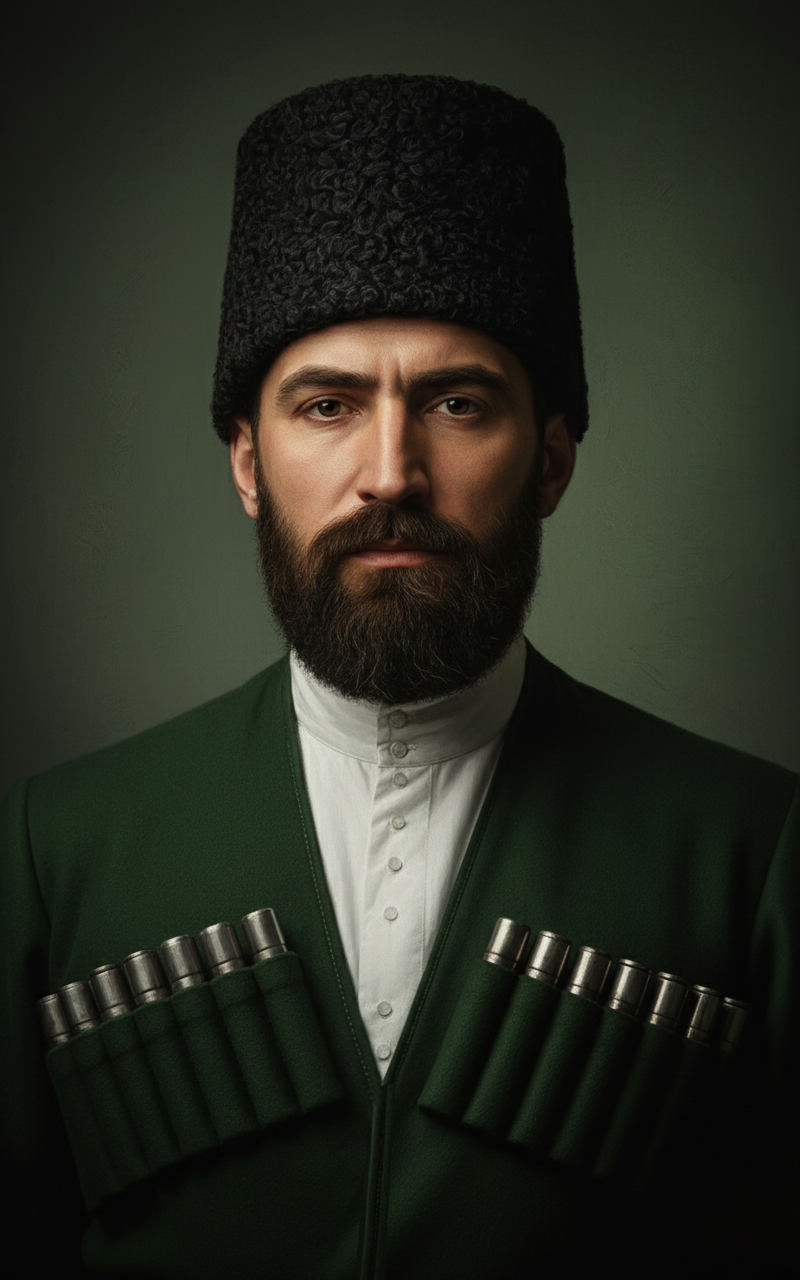
Military Expansion and the Dagestan CampaignsIn the same period, Russia created a strong chain by constructing five more fortresses in short succession between the Don and Volga rivers (Tsaritsyn and Livny) and on the Sunzha, Koisu, and Yaik rivers, in addition to the fortress previously built on the Terek line. Beyond serving as a shelter for Russian soldiers in the region, these fortresses came to control the regional economy.
While peace treaties made with the Polish-Lithuanian Commonwealth in 1590 and Sweden in 1593 paved the way for Russia to concentrate more on the Caucasus, the Ottoman Empire—having exhausted its resources in the Safavid war and preparing for a difficult and protracted war against the Austrian-Habsburg Dynasty and its allies—tried to conduct its Caucasus policies indirectly through the Crimean Khanate. In a letter sent to the Sultan in 1589, the Shamkhal of Dagestan mentioned Russia’s increasing pressure in the region and requested support for defense. Indeed, in a message sent to the Kabardian nobles in 1591, the Tsar, along with the Astrakhan and Terek voivodes, asked for preparations for a raid on the Shamkhalate lands; the Kabardians participated in this attack with a force of 10,000 men. Following this warning attack, the main assault came in July 1593, and the Russians captured Tarku, the capital of the Shamkhalate, in this attack.
This event was sufficient to cause the Ottoman Empire, even though engaged in a major war with the Austrian dynasty in the west, to go on alert on its northern border and direct its forces in Van, Diyarbakir, and Gence to Dagestan to support the Shamkhal. Combined Ottoman-Dagestani forces retook the capital in the summer of 1594 and ended the Russian presence in Dagestan for a considerable time. This experience gave the Russians a very good idea about the Shamkhal’s power in Dagestan for future plans. The unity of power of the Dagestani elites clearly showed the Russians that future actions could not succeed without the support of the Shamkhal.
The 1604 Campaign and the Time of TroublesIn 1604, Russian representatives visiting Georgia were informed that not only the Shamkhal of Dagestan but also Tausultan Sholokh Tepsharuko and Kaytuko Kazi Psheapshoko were in alliance with the Ottoman State, and that if support came from the Ottomans, this alliance would pose a serious danger to the Russian presence in the Caucasus. Although Sholokh and Kazi had previously declared allegiance to the Tsar and left hostages, they had always continued to be in covert contact with the Ottoman State. Aware of this danger, Tsar Godunov ordered the Terek Voivode to invade the Shamkhal’s lands in 1604. Voivode Ivan Buturlin invaded many places controlled by the Shamkhal, especially Tarku, in April with an army of 10,000 men. With the support of Ottoman cannons arriving from Derbent, the united Dagestani forces besieged Tarku and retook the city from the Russians once again in June 1605.
Following this defeat, all Russian fortresses in Dagestan and Kabarda were captured with the support of local allies. Simultaneously, the Rurikid dynasty ended, and power passed to the Godunov dynasty, but a great period of anarchy (the Time of Troubles) began in Russia, which would continue until the Romanov dynasty seized power in 1613. The Ottoman Empire failed to utilize this opportunity that had fallen into its lap. Due to the heavy bureaucratic gears of the Sublime Porte, the fortresses captured from the Russians could not be used as required.
The 17th Century: A Period of StasisThe Caucasus experienced one of the rare quiet periods in its history until the ascension of Peter I in 1682. From the 1550s, when Russians began to appear on the Caucasian stage, Caucasian elites constantly used the Ottoman, Russian, and Safavid cards against one another. If not looked at in depth, one might think that feudal lords behaved this way solely due to individual interests in this double game. Some elites may indeed have considered only personal or feudal priorities. However, when we look generally, we see that many of these feudal lords changed sides according to the balance of power. The sole reason for this was that they all saw that if one of the external powers completely disqualified the other, the winning side would take the Caucasus under its hegemony. Therefore, the subtle policy they conducted with external powers should also be viewed from this perspective.
However, the same balance applied to internal dynamics. These feudal lords had to pay attention to internal balances as much as they watched external ones. For example, a significant reason for Jansoh's leaving the Ottoman alliance and moving to the pro-Russian faction was the need to take a place in the same rank as Idar’s grandsons against his powerful rival Sholokh. Whereas the recapture of Tarku had been a fine example even in those days of what Caucasians could achieve when they set aside the feuds among themselves and united. The same situation could have been possible against the Crimean Khans on the Black Sea line and against Russia in the Kabardian lands. Because history is written by the victors, it will perhaps never be possible for us to understand how the events of the 16th century were viewed through the eyes of the Caucasians.
The Adyge in the Russian AristocracyWhen Kaytuko Kazi Psheapshoko moved to the Kuban region, the dominion of Little Kabarda passed to Sholokh Tepsharuko. The Kabarda region remained under Sholokh’s administration until 1615; after Kaytuko Psheapshoko’s death in 1616, Aleguko Shogenuko became the ruler of Kabarda. Shogenuko also pursued a subtle policy by keeping relations warm with both the Crimean Khans and Tsar Michael I.
Emerging defeated from the competition in Kabarda, Sunchaley, the son of Jalehot from Prince Idar’s children, left the Kabarda region with his family and took refuge in the Russian fortress Terski Gorodok on the Terek line. Despite the defeat in Kabarda, he took under his sovereignty the Adyges living near Terski Gorodok, the Chechens, and all non-Russian peoples living outside the dominion of the Dagestan khans.
Ivan Borisovich, son of Boris Kanbulatovich Cherkassky—whom Tsar Boris Godunov had sent into exile along with members of the Romanov dynasty—joined the Adyges, entering the Russian noble class by receiving the title of boyar in 1613. Ivan Borisovich went down in history as the only boyar to support the decision for war against Poland in 1630 made by his father, Patriarch Filaret (Fedor Nikitich Romanov), who was the de facto Tsar during the reign of Tsar Michael I when the Romanov dynasty seized the Tsardom. Urushan, son of Kudenet Kanbulatovich, also went to Moscow in 1624, was baptized by taking the name Yakov Kudenetovich, and gained the title of boyar in 1645. Both Ivan Borisovich and Dimitri Mamstriukovich left their inheritance to Yakov Kudenetovich Cherkassky upon their deaths.
Cem Kumuk
Istanbul, 16 January 2026
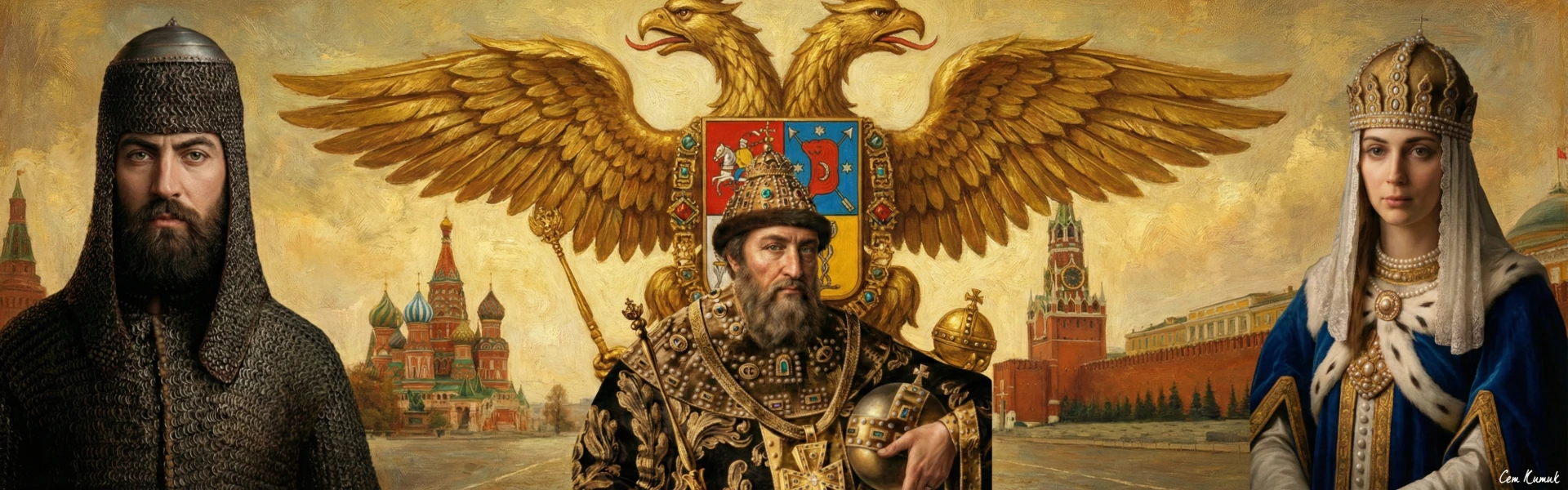
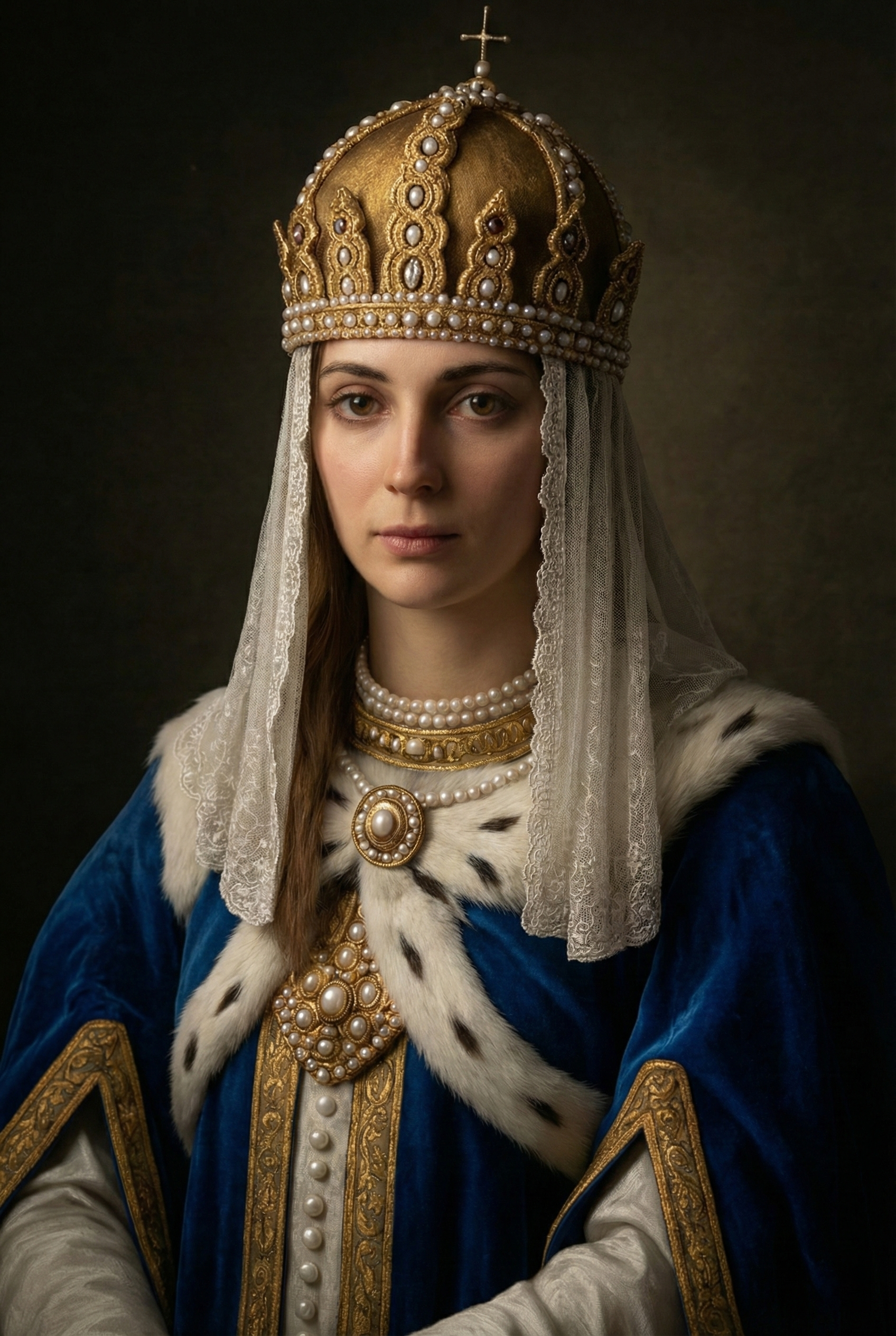
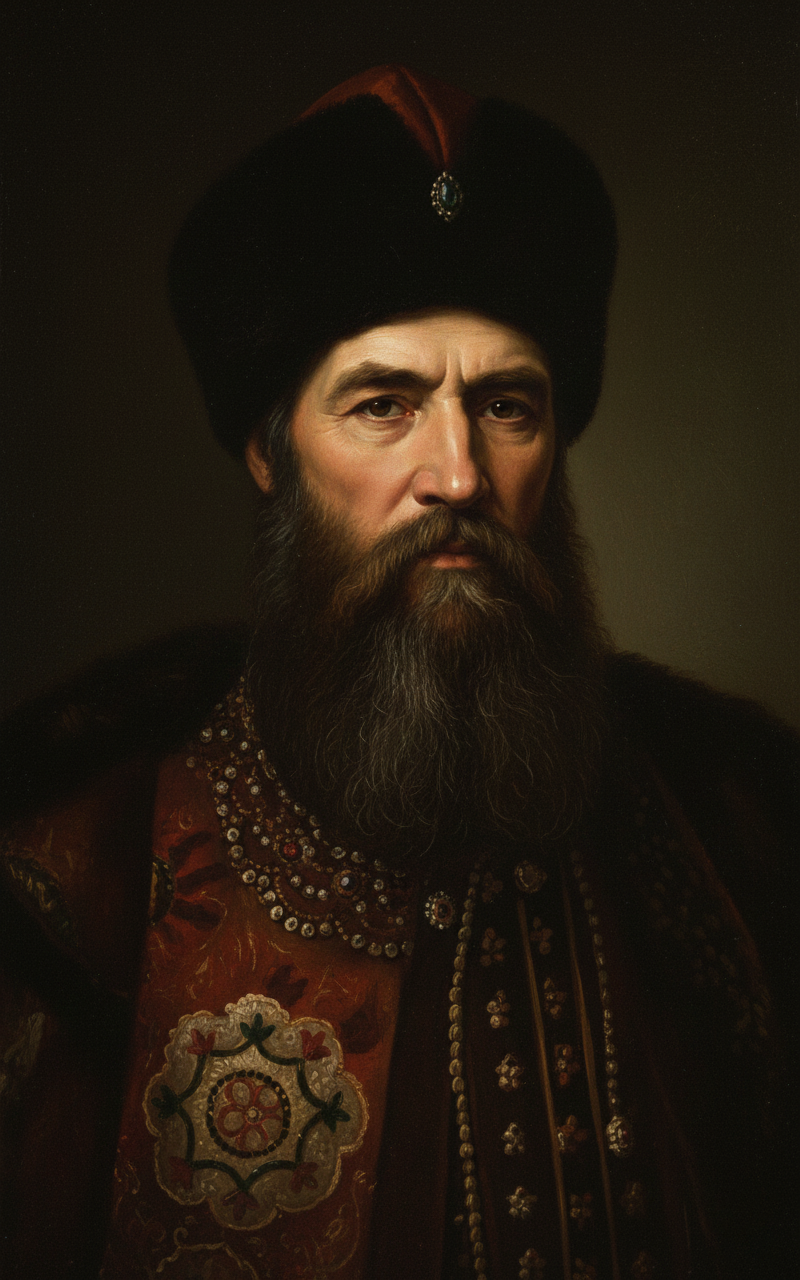
P.S. Portraits are developed by AI.
References:
— Richard Pipes, Russia under the old regime, London, 1995.
— Sergey Nechayev, Ivan Groznyy. Zheny i nalozhnitsy «Siney Borody», Moscow, 2011.
— Aytek Namitok, “The Voluntary Adherence of Kabarda to Russia”, Caucasian Review, No.2, Munich, 1956.
— Yaroslav Pylypchuk, “Politika Krymskogo khanstva na Severnom Kavkaze (1475-1769 gg.)”, Zhurnal «Istoriya voyennogo dela: issledovaniya i istochniki», Vol.3, 2016.
— Ekaterina Nikolaevna Kusheva (Red. G.D.Daniyalov, M.M. Ikhilov, O.A.Blumenfeld), Russko-dagestanskiye otnosheniya v XVII - pervoy chetverti XVIII v. Dokumenty i materialy, Makhachkale, 1958.
— İsmail Bülbül, “Başlangıcından Rus Hakimiyetine Kadar Kumuk Türkleri ve Tarku Şamhallığı”, PhD Dissertation, Sakarya University- Social Sciences Institute, Sakarya, 2011.
— Ekaterina Nikolaevna Kusheva, Narody Severnogo Kavkaza i ih svyazi s Rossiej v XVI - XVII vv., Moscow, 1963.
— Murat Yaşar, “The North Caucasus in the Second Half of the 16th Century: Imperial Entanglements and Shifting Loyalties”, Toronto University. Near and Middle East Civilisations dept. PhD Dissertation, 2011.
— Chantal Lemercier Quelquejay, (ed.Marie Benningsen Broxup), “Cooptation of the Elites of Kabarda & Dagestan in the XVIth C.”, The North Caucasus Barrier, New York, 1996.
— Paul Buşkoviç, “Princes Cherkasskii or Circassian Murzas, The Kabardians in the Russian boyar elite 1560-1700”, Cahiers du monde russe, No:45/1-2, Paris, 2004.
— Sergey Belakurov, Snosheniya Rossii s Kavkazom. Materialy, izvlechennyye iz Moskovskogo glavnogo arkhiva Ministerstva inostrannykh del. Vypusk 1. 1578-1613 gg, Moskova, 1889.