
 Türkçe
The Circassian Hasan Case is an event appended to the history of the North Caucasian diaspora simply because the "Circassian" epithet precedes his name. Yet, does Adjutant Major (Kolaghası) Hasan Bey’s Circassian heritage have any genuine bearing on the event? This is rarely scrutinized. Much like the case of Ethem the Circassian, he is viewed as a "local son" of our community, prompting us to instinctively appropriate the narrative.
Biographical BackgroundWho was Circassian Hasan? Adjutant Major Hasan Bey was the son of Ismail Barakay, a nobleman of Ubykh descent. His sister Nesteren (Nesherek / Nesrin Kadinefendi) was married to Sultan Abdulaziz in 1868 as a token of alliance, subsequently becoming the third imperial consort (kadinefendi) of the Ottoman palace.
Following his sister's entry into the royal household, Hasan Bey was educated at the military high school and the Imperial Military Academy (Harbiye). He joined the Ottoman army as a lieutenant. In 1873, he was promoted to the rank of captain—a rank offered as an incentive for officers volunteering for the Sixth Army in Baghdad. However, he was never dispatched to Baghdad; instead, he was appointed as an aide-de-camp to the Council of State (Dar-i Shura) and the Imperial Guard Command, as well as serving as the right adjutant major and aide-de-camp to Sehzade (Prince) Yusuf Izzettin Efendi.
The Prelude to the AssassinationAlthough Commander-in-Chief (Serasker) Huseyin Avni Pasha had vehemently attempted to exile Circassian Hasan to Baghdad, Sultan Abdulaziz had refused to permit it. Huseyin Avni Pasha harbored this grievance. Following the May 30 Coup d'état, which resulted in the deposition of Sultan Abdulaziz, the Pasha promptly ordered Hasan's assignment to Baghdad.
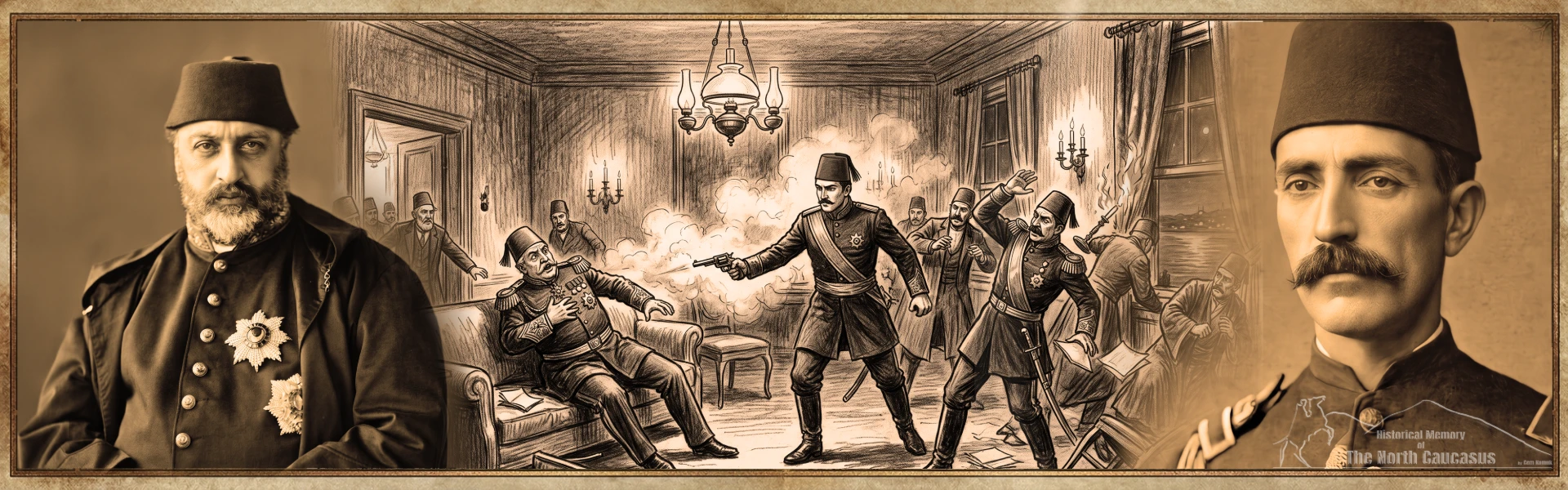
Upon discovering that his close associate, Lieutenant Colonel Osman Bey, was plotting an assassination against the coup plotters to avenge Sultan Abdulaziz, Hasan Bey declared that he would undertake the task himself. Armed with six revolvers and a Circassian dagger, he proceeded to Huseyin Avni Pasha's mansion in Kuzguncuk on the evening of June 15.
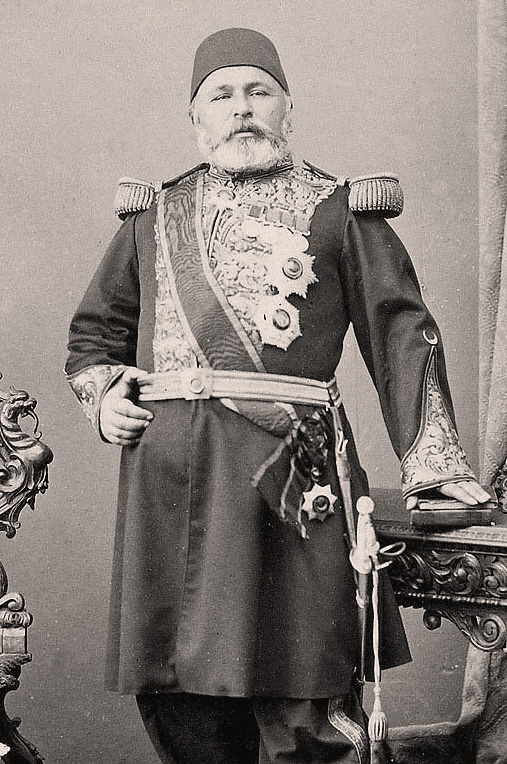
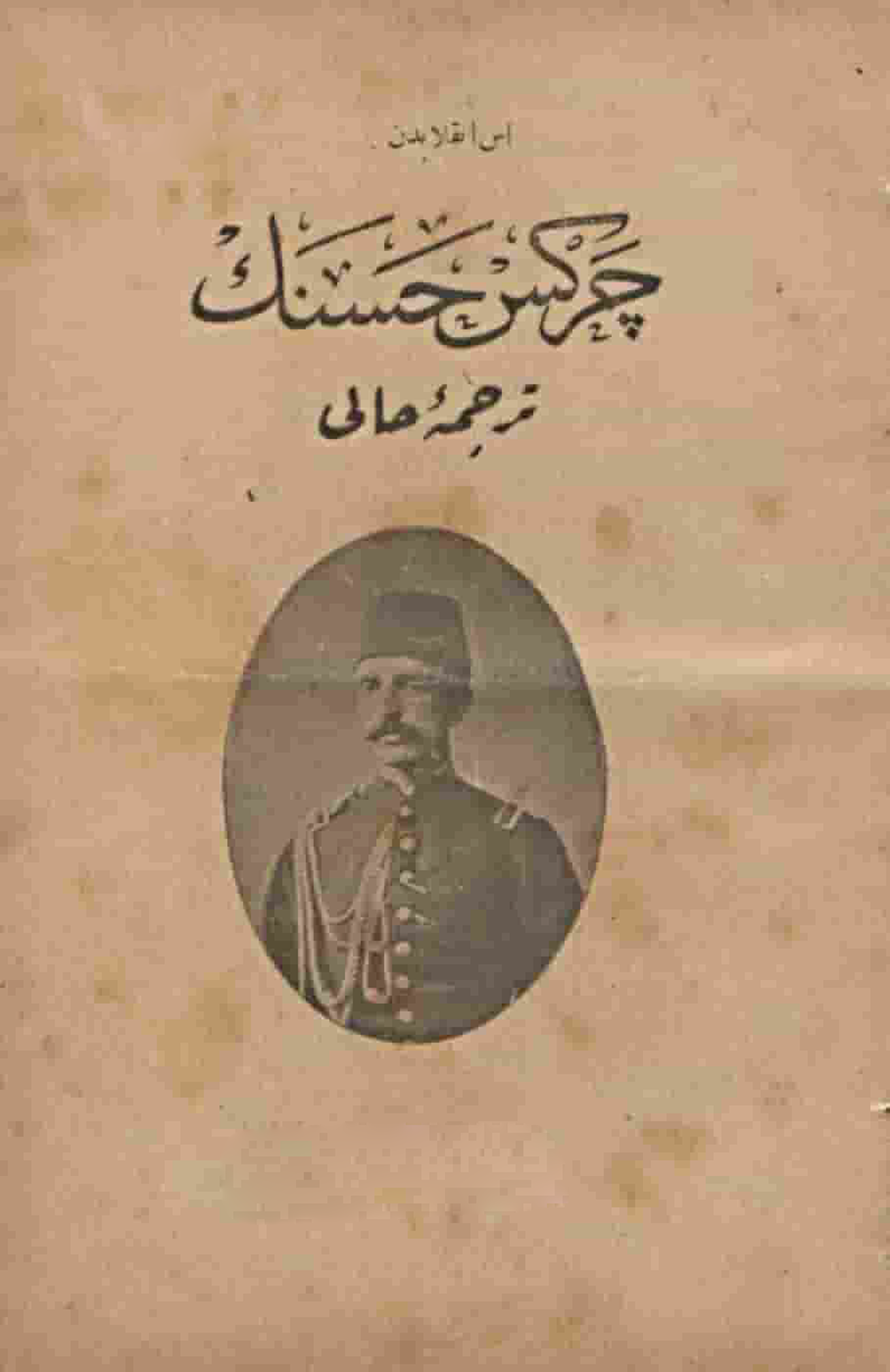
Historical DocumentationThis event, which in reality had little to do with Hasan Bey’s Circassian identity, was documented in 1878 by the masterful Ottoman literary figure Haghur Ahmed Mithat—himself of Circassian descent—in a book titled Tarihche-i İnkilab yahud Cherkes Hasan'in Tercume-i Hali (A Brief History of the Revolution, or the Biography of Circassian Hasan). Through the pen of Haghur Ahmed Mithat Efendi, this chain of events was chronicled as follows:
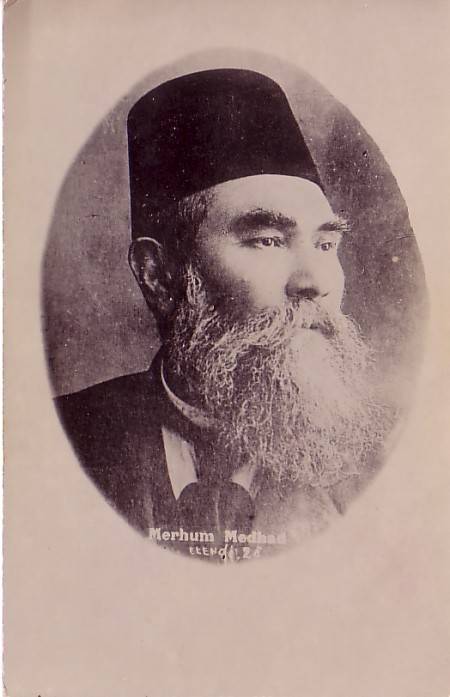
Copy of the Missive Penned by Sultan Abdulaziz to Sultan [Murad V] (Published in Vakit Newspaper)Seeking refuge first in God, and subsequently in your exalted sultanate, I congratulate your ascension to the throne. Concurrently, I express my sorrow that despite my diligent efforts in the service of the nation, I could not attain success, and I wish your imperial personage triumph. I hope you will not forget that I have prepared for you the means that may serve to elevate the glory of the nation and secure the future of the state. While reminding you that the very soldiers I armed with my own hands have reduced me to this state, I beseech you—relying on the virtue of mercy and humanity toward those seeking sanctuary—to deliver me from this agonizing predicament and appoint me to a private residence. Furthermore, I declare that I relinquish the Ottoman sultanate to the lineage of His Highness Abdulmecid Han.
Translation of the French Medical Report Regarding the Death of the Deposed Sultan AbdulazizIn accordance with the supreme imperial will and upon the decree issued by the exalted ministers:
On Sunday, May 23 of the year 92 (Jumada al-Awwal 1293), one hour before noon, we proceeded to the guardhouse adjacent to the Chiraghan Palace to investigate the cause of death of the former sovereign, Abdulaziz Han. Upon being escorted to a ground-floor room, we observed a corpse laid out on a mattress on the floor, covered with a new cloth. Upon lifting the shroud, we identified the remains as those of the former sovereign, Abdulaziz Han. Upon examination, the extremities were cold, exsanguinated, and pallid; certain areas were covered in coagulated blood, and rigor mortis had not yet fully set in.
The eyelids were open, the corneas slightly clouded, and the mouth was partially agape. The arms and legs were covered by a quilt. Upon lifting the cloth over his arm, we observed a wound of considerable depth, measuring half a cubit (zirâ) in length, located slightly below the flexure of the left arm. The margins of this wound were jagged and irregular, running vertically from top to bottom and traversing from the interior outward. The center of this region was severed, and the brachial artery was incised across approximately three-quarters of its diameter at its point of origin.
At the flexure of the right arm, we observed another jagged and slightly oblique wound, measuring one-quarter cubit in depth and length. The laceration in this area affected the minor veins, whereas the arteries remained intact. We were subsequently presented with a highly sharpened pair of scissors, ten cubits [Note: likely a transcriptional exaggeration for size/length] long, bearing a minor fracture near the tip of one of its blades. These scissors were stained with blood, and it was stated to us that the former sovereign had inflicted the aforementioned wounds upon himself utilizing this instrument.
Subsequently, we were escorted to the deceased sovereign's residence, specifically the large hall facing the sea. Within this chamber, the surface of a corner cushion situated near a window was inundated with blood. Significant quantities of blood clots were present on the woven matting, alongside scattered bloodstains throughout the area.
Based on the aforementioned observations, we have unanimously reached the following conclusions:
— The demise of the former sovereign, Abdulaziz Han, was caused by fatal hemorrhage resulting from the severing of the brachial vessels.
— The instrument presented to us is capable of producing the wounds in question.
— Judging by the morphology and direction of the wounds, as well as the nature of the cutting instrument, it is concluded that an act of suicide—namely, the individual taking his own life—has transpired.
Therefore, this report, prepared at the Chiraghan Palace guardhouse, is humbly signed and submitted.
Signatories: Dr. Marko, Dr. Nuri, Dr. Sutu, Dr. İspanyol, Marf Markel Puroblo, Abdunnur, İzvot, De Kastro Maroshin, Zul Milncan Kostantin Fero Todori, Dikson Vitalis, Advar Asbada Ru Nurichan, Dr. Milyan Bek, Dr. Mustafa, Dr. Mehmed.
Imperial Edict of Murad V Addressed to the Sublime Porte Upon His AscensionTo my patriotic Vizier, Mehmed Rushdi Pasha:
As our ascension to the throne of our illustrious ancestors has been realized through the eternal predestination of God, the Master of Realms, and the unanimous will and desire of our entire populace; in recognition of your proven foresight and patriotism, the duty of the Grand Vizierate is hereby reaffirmed and entrusted to you. The duties and appointments of other ministers and officials are similarly retained and ratified.
As is universally acknowledged, the severe difficulties plaguing the internal affairs of the state for some time have engendered a degree of public insecurity, accompanied by various detriments to life and property, as well as manifold distresses. It is imperative, therefore, to prioritize the rectification of this situation by pursuing a course that ensures the public order, security, and the material and spiritual prosperity of the nation and all its subjects. This objective relies intrinsically upon establishing the state's administrative apparatus on a sound and legitimate foundation, which remains the perpetual focus of our thoughts and intentions.
Consequently, alongside the enforcement of Sharia law, the general administration of the state must be circumscribed by robust legislation tailored to contemporary realities and the aptitudes of the populace. It is necessary to establish a permanent and unshakeable framework that guarantees unrestricted liberty for all our imperial subjects without exception, fostering a unified consensus among all individuals to protect the fatherland, the state, and the nation. The foundational principles of such a framework must be deliberated by the council of ministers and subsequently submitted for imperial ratification.
In alignment with this fundamental intent, urgent attention must be directed toward systematically reorganizing the Council of State, the Ministries of Justice, Public Education, and Finance, as well as other bureaucratic offices. Given that financial matters constitute one of the most critical issues complicating state affairs, securing fiscal operations—specifically, instituting an inviolable rule prohibiting off-budget expenditures and enforcing rigorous auditing—is paramount. To facilitate this measure, an allocation of sixty thousand purses has been deducted from the Privy Purse (Hazine-i Hassa). Likewise, the administration and revenues of the Ereghli Coal Mine, other affiliated mines, and certain state factories previously under the said purse have been transferred to the Ministry of Finance.
Our sincere intentions are encapsulated in the pursuit of fiscal equilibrium through administrative modifications and austerity measures, the rigorous upholding of all existing treaties with allied nations, and the concerted effort to fortify and expand our exalted state's amity, sincerity, and friendship with all nations. May God Almighty grant us all success in these auspicious endeavors, amen.
9 Jumada al-Awwal 1293.
(Note: This is followed by the preamble of the edict dispatched to all provincial governors, announcing Sultan Murad's ascension and commanding the dispensation of justice. In this edict, the Sultan proclaims that his uncle, Sultan Abdulaziz, was deposed with the consent of statesmen, scholars, and the public, and orders that his ascension be publicly proclaimed via sermons (khutbah) recited in his name in every mosque.)
Official Announcement Regarding the Assassination by Circassian HasanGraduating from the Military Academy with the rank of lieutenant three or four years prior, Hasan was granted the rank of captain in preparation for a deployment to Baghdad. For unknown reasons, he failed to report to his post and was subsequently employed in various local capacities. Later, despite being promoted to the rank of adjutant major (kolaghasi) for the same deployment, he once again evaded duty and was consequently incarcerated at the Ministry of War (Seraskerlik).
Having declared his intention to finally proceed to his post this Friday, Circassian Hasan was released from confinement on Thursday. That evening, he visited the waterside residence (yali) of the late Commander-in-Chief [Huseyin Avni Pasha], inquiring after him. Upon being informed that the Pasha was attending a special cabinet meeting at the mansion of the prominent statesman Midhat Pasha, Hasan departed immediately and proceeded directly to Midhat Pasha's residence.
Given his prior service as an aide-de-camp, he was not intercepted by the guards and walked directly into the meeting chamber. Wielding a dagger in one hand and a revolver in the other, he shot the Commander-in-Chief. During the ensuing scuffle and the attempts by those present to apprehend him, he inflicted fatal or severe injuries upon multiple individuals before being subdued.
|
Name |
Position/Role |
Status |
|
Huseyin Avni Pasha |
Commander-in-Chief (Serasker) |
Deceased |
|
Mehmed Rashid Pasha |
Minister of Foreign Affairs |
Deceased |
|
Ahmed Agha |
Servant of Midhat Pasha |
Deceased |
|
Shukru Bey |
Aide-de-Camp, Naval Officer |
Deceased |
|
Unnamed Soldier |
Infantryman |
Deceased |
|
Unnamed Soldier |
Infantryman |
Wounded |
|
Ahmed Pasha |
Minister of the Navy |
Wounded (Survived) |
Unofficial Newspaper ReportsWhile the official reports encompass the above, subsequent investigations reveal the following: At Midhat Pasha's mansion, Hasan—capitalizing on the fact that the aides-de-camp and ministerial servants were stationed downstairs—ascended the stairs unhindered. Confronting a servant at the doors of the meeting hall, he stated, "I need to enter; I have an urgent report. Summon one of the aides to announce me." As the servant turned to enter, Hasan found the door unguarded, forcefully breached the room, and bolted the door from the inside.
Declaring his intent to assassinate the late Huseyin Avni Pasha, he overtly drew his revolver and shot the Pasha. He subsequently fired upon the Minister of the Navy, Ahmed Pasha, and the Minister of Foreign Affairs, the late Rashid Pasha. He then proceeded to brutally mutilate Huseyin Avni Pasha with his dagger and sword. Rashid Pasha succumbed to a single gunshot wound.
This pandemonium lasted nearly half an hour. Following a notification sent to the Ministry of War, an adequate contingent of soldiers and a detachment of gendarmerie arrived. When they breached the door, Hasan attempted to evade capture by extinguishing the candles and setting the room ablaze; however, the soldiers managed to encircle him with fixed bayonets. Even in that extremity, he managed to shoot one soldier and wound another. Ultimately, under strict orders for his apprehension, he was subdued only after sustaining several severe wounds to his back and was subsequently transferred to the Ministry of War.
A surgeon was dispatched to tend to his injuries. When the physician attempted to examine him, Hasan refused, stating, "They are either going to hang me or face me before a firing squad. It is utterly absurd to have my wounds examined now."
Following the conclusion of the event, the remains of the late Huseyin Avni Pasha were conveyed to the bailiffs' quarters near the Ministry of War for ritual washing and shrouding. Accompanied by the notables of Mecca and Medina, the ilmiye (religious scholars), sheikhs, and chanters reciting the declaration of faith (kelime-i tevhid), the funeral procession advanced. Imperial soldiers stood along both sides of the route with their rifle barrels inverted, led by a military marching band. The procession wound through the Mercan gate, traversed Sultan Bayezid Square, exited via the Suleymaniye gate, and interred the Pasha in his private tomb in Suleymaniye.
The remains of the late Rashid Pasha were taken to his residence in Sehzadebashi for ritual preparation. He was subsequently transported to Fatih with a majestic and somber military escort comparable to that of Huseyin Pasha, where he was interred. (May God have mercy on them both).
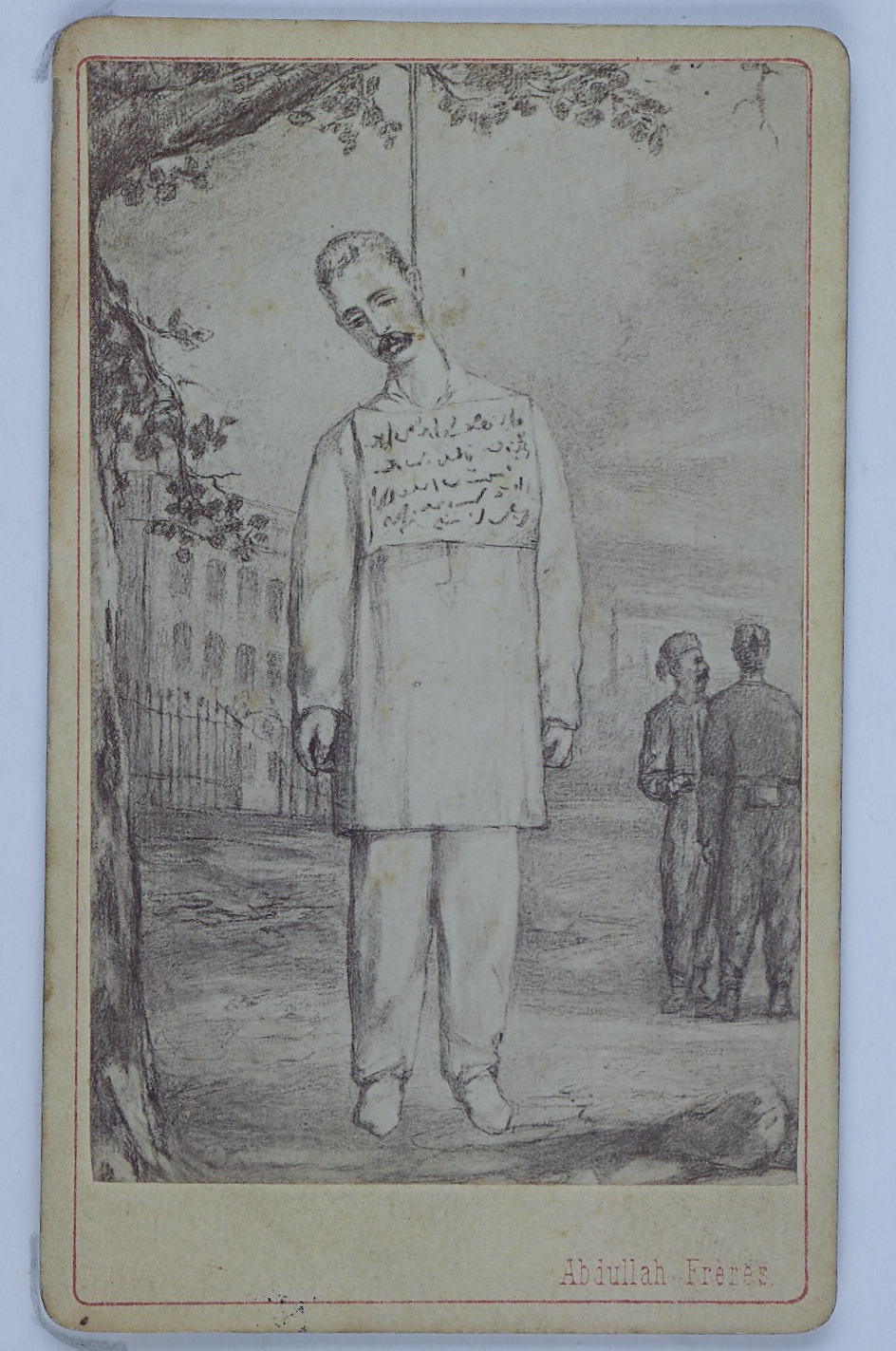
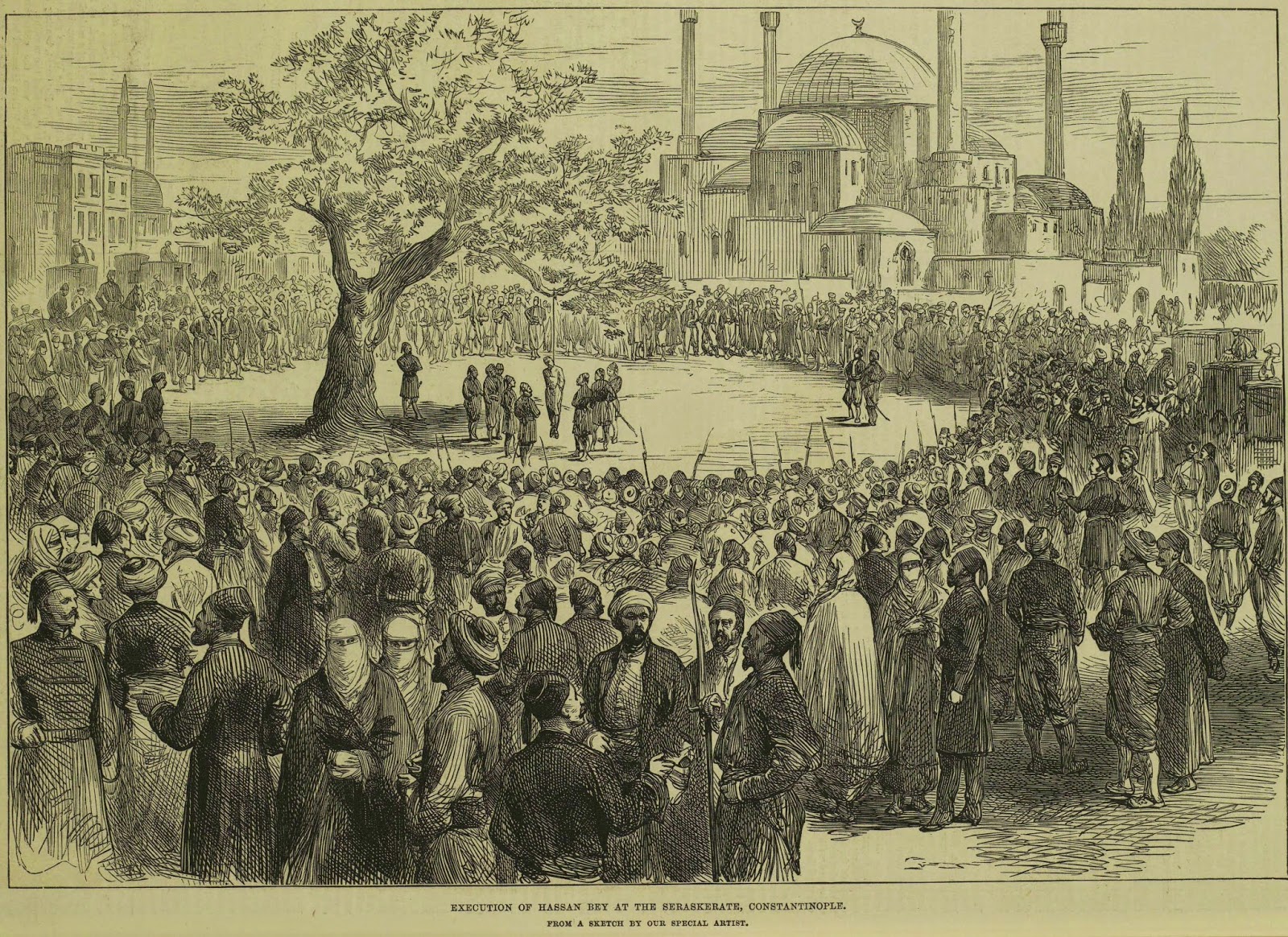
A few days later, Hasan was executed by hanging in Bayezid Square. His body was subsequently removed and buried in the cemetery outside Edirnekapi.
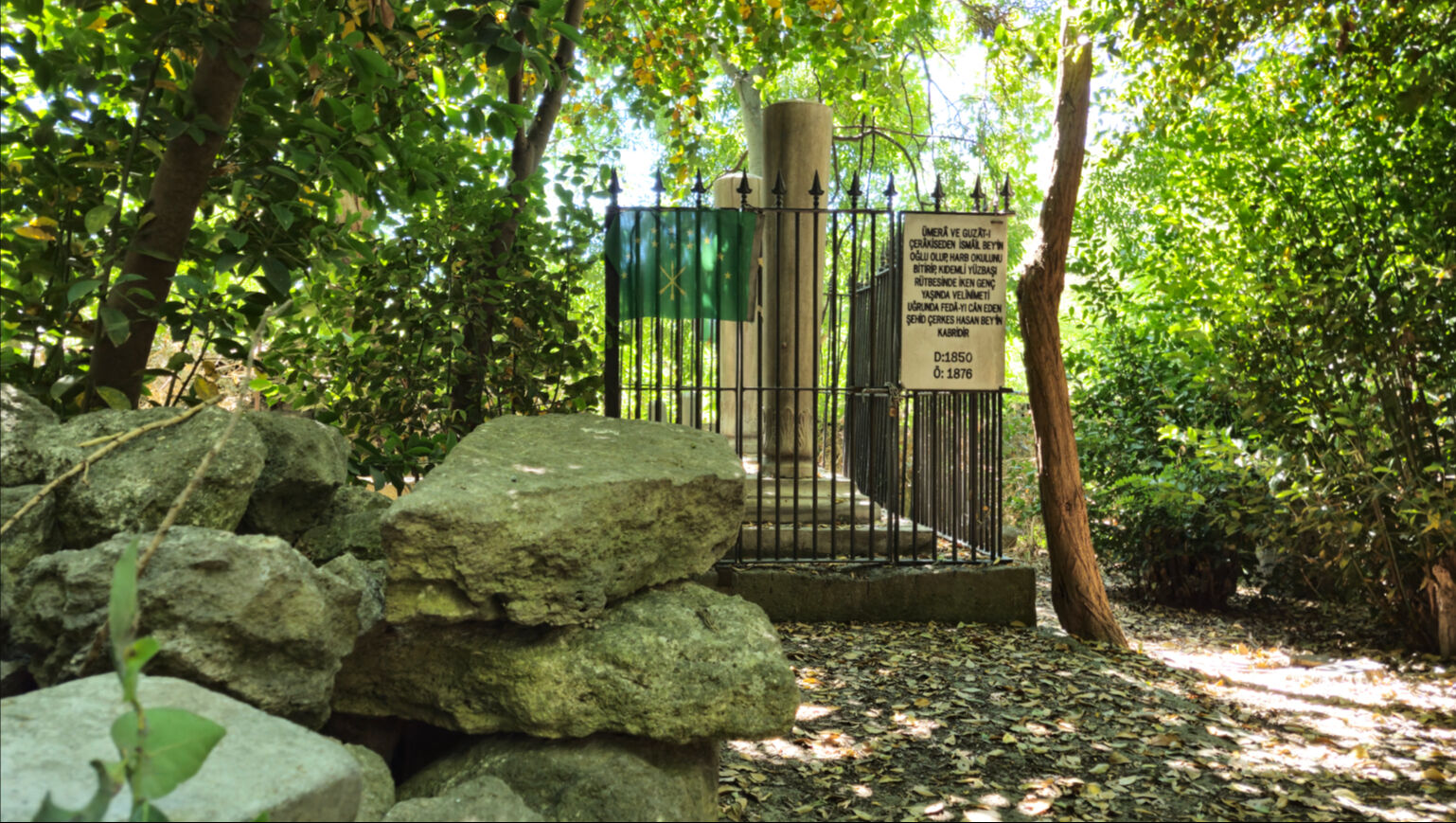
Epilogue and ConclusionUpon ascending to the throne, Sultan Abdulhamid II ordered the felling of the mulberry tree upon which Circassian Hasan was hanged. He commissioned a tomb for Hasan, bearing the following inscription: "Here lies Circassian Hasan Bey, son of Ismail Bey of the Circassian commanders and warriors, who at the tender age of 26 sacrificed his life for his benefactor."
Hasan Bey, the "local son" of the Circassian community, had become the casualty of a vendetta between his brother-in-law, Sultan Abdulaziz, and the pawns of a Zionist network intent on dismantling the Ottoman monarchy. In this sequence of events—which yielded absolutely no benefit to the Circassian cause—the true historical lesson to be extracted is the remarkable talent with which Circassians historically martyr themselves for conflicts entirely detached from their own national interests.

Istanbul, 3 August 2026