
 Türkçe
It would be no exaggeration to state that May is the most critical month in the historical memory of the North Caucasus, as it has always been during this month that the fate of the region was sealed. We commemorate May 21, 1864, as the culmination of the Russo-Caucasian Wars and the emblematic date of the Circassian Exile and Genocide. May 11, 1918, stands as a paramount historical milestone marking the foundation of the North Caucasian Republic; it represents the juncture at which the peoples of the North Caucasus proclaimed to the international community their collective aspiration to coexist under the auspices of a unified sovereign state. Furthermore, May 28, 1945, constitutes yet another profoundly tragic chapter in the historical narrative—the date at the conclusion of the Second World War when British forces in the Austrian municipality of Irschen forcibly surrendered thousands of North Caucasians to Stalin's executioners."
Next week marks the 81st anniversary of May 28, 1945. In commemorating this date—which stands as a profound symbol of the North Caucasians' involvement in the Second World War and the devastation the conflict wrought upon these populations—this article endeavors to present a comprehensive overview of the legacy bequeathed to the North Caucasians in the aftermath of the war.
The Versailles Peace Conference failed to establish a new global order, leaving the independent republics formed in the Caucasus (the North Caucasus, Azerbaijan, Armenia, and Georgia) vulnerable to Bolshevik occupation. To fracture resistance in the region, the Soviet regime implemented a "divide and rule" strategy, partitioning the area into small autonomous zones directly tethered to Moscow. Conversely, the rise of Adolf Hitler in an interwar Germany crushed by war reparations and the Great Depression ignited hopes not only among Germans but also among the oppressed nations suffering under Soviet tyranny.
The Post-WWI Landscape and the Rise of Germany
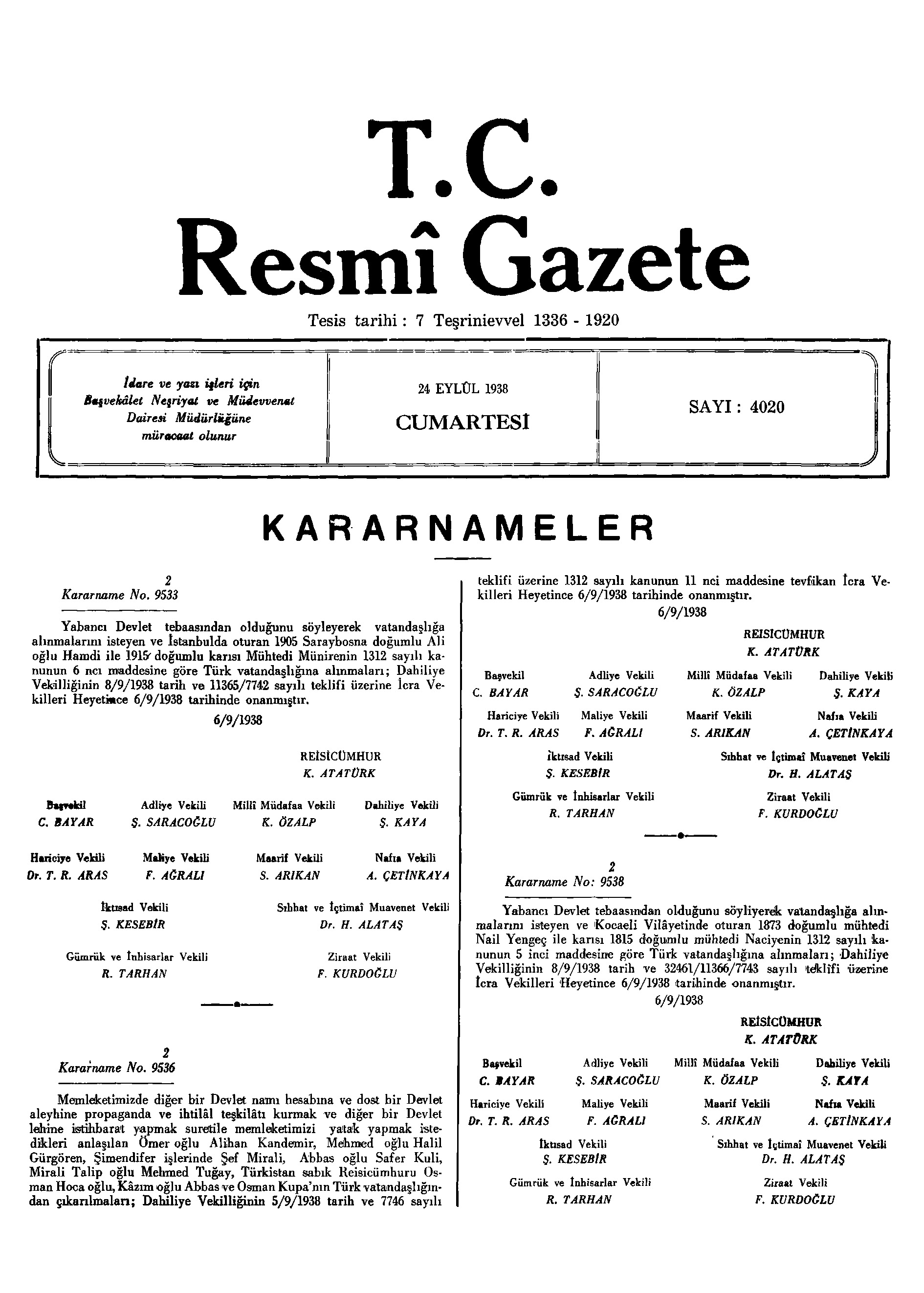
Turkey's Ambivalent and Cautious PolicyThroughout the interwar period, Turkey maintained an exceedingly cautious posture in its relations with the Soviet Union. Driven by Stalin's territorial demands and overt threats, Turkey adopted an uncompromising stance against any anti-Soviet activities within its borders. The circulation of publications from the Caucasian political diaspora in Europe was banned, and the activities of these emigrants were severely restricted. In September 1938, under Soviet pressure, eight prominent dissidents, including Alikhan Kantemir and Gube Osman Said-Nur, were stripped of their Turkish citizenship and deported.
Factionalism Within the Caucasian Political EmigrationDespite fighting a common enemy, the Caucasian diaspora experienced profound ideological and strategic internal conflicts:
|
Groups and Figures |
Political Stance and Activities |
|
Haydar Bammat (Kavkaz Group) |
Aimed for the liberation of the Caucasus from Soviet occupation and the establishment of a fully independent Caucasian Confederation. Maintained a staunchly anti-imperialist line, categorically rejecting subjugation to any foreign power.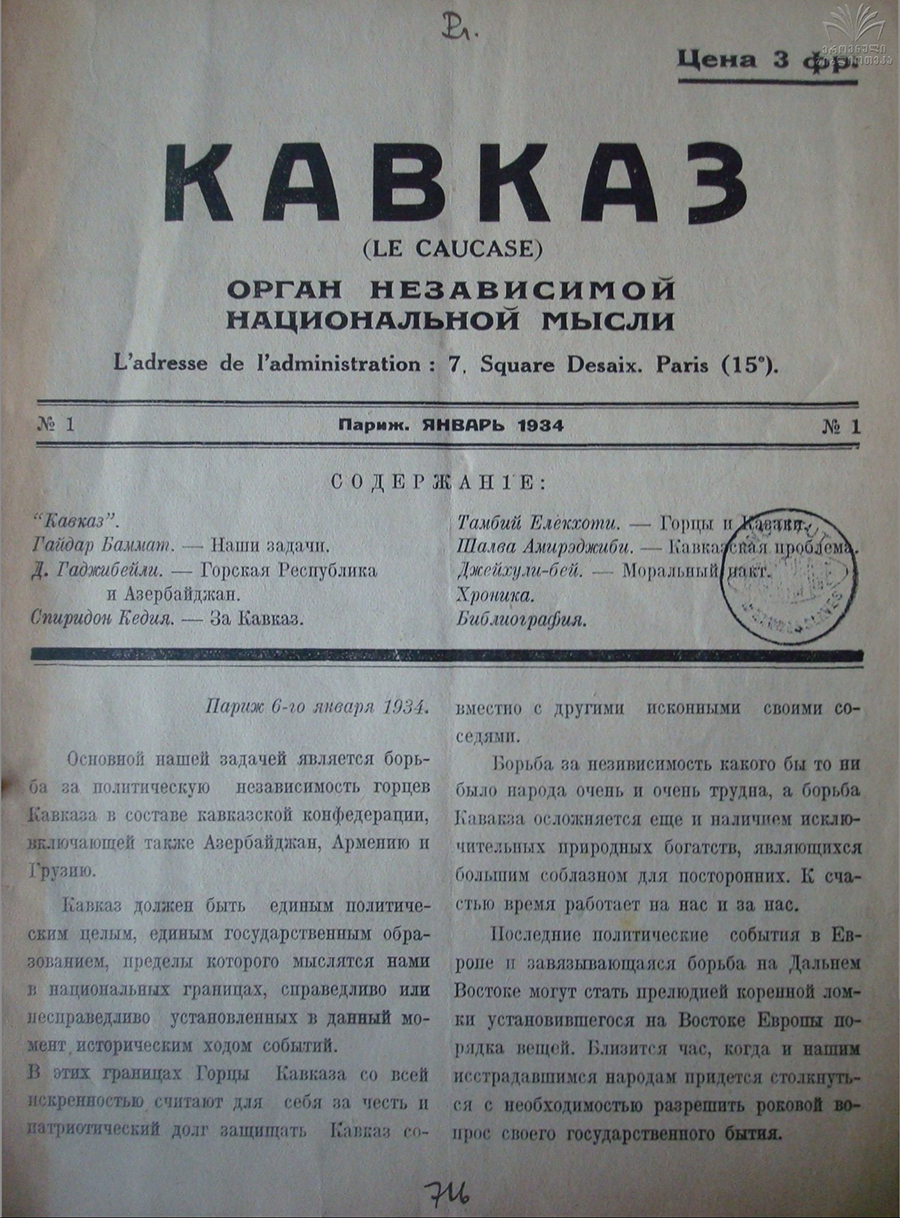 |
|
The Promethean Movement |
Comprising Marxist-leaning Georgian Mensheviks and Azerbaijani Musavatists backed by Polish intelligence, this faction courted Western powers and Great Britain. Guided by these powers, they pursued an adversarial policy against Turkey. Said Shamil, who rallied North Caucasians within this group, attempted to forge ties with Polish and later German/Japanese intelligence to discredit his political rivals after the West showed indifference to the Caucasian cause. He harbored deep hostility toward the Kavkaz group. Georgian Menshevik leader Noe Zhordania and his faction went so far as to plot assassinations to undermine Bammat's efforts and published anti-Turkey memorandums to sever Caucasian ties with Ankara.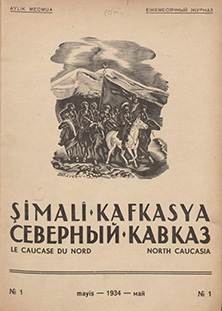 |
Haydar Bammat's Diplomatic Traffic and Search for AlliancesAs the drums of the Second World War began to beat, Haydar Bammat, much like his political rivals, sought to establish strategic alliances with Germany, Italy, and Japan to secure Caucasian independence.
— The Italian Initiative: In 1937, Bammat authored a memorandum to Mussolini arguing that Italian military and economic intervention in the Caucasus would serve mutual interests.
— The Japanese Alliance: Developing robust relations with General Oshima, the Japanese Ambassador to Paris, and Major Usui, Bammat secured Japanese funding for his publishing endeavors. In 1938, the parties signed an alliance protocol supporting Caucasian independence.
— German Contacts: Bammat met with Admiral Canaris, head of German military intelligence (Abwehr), and Field Marshal Keitel. He emphasized that Germany must not repeat its WWI mistake of favoring Georgians over Turkic peoples, advocating for an egalitarian and unifying approach toward all Caucasian factions.
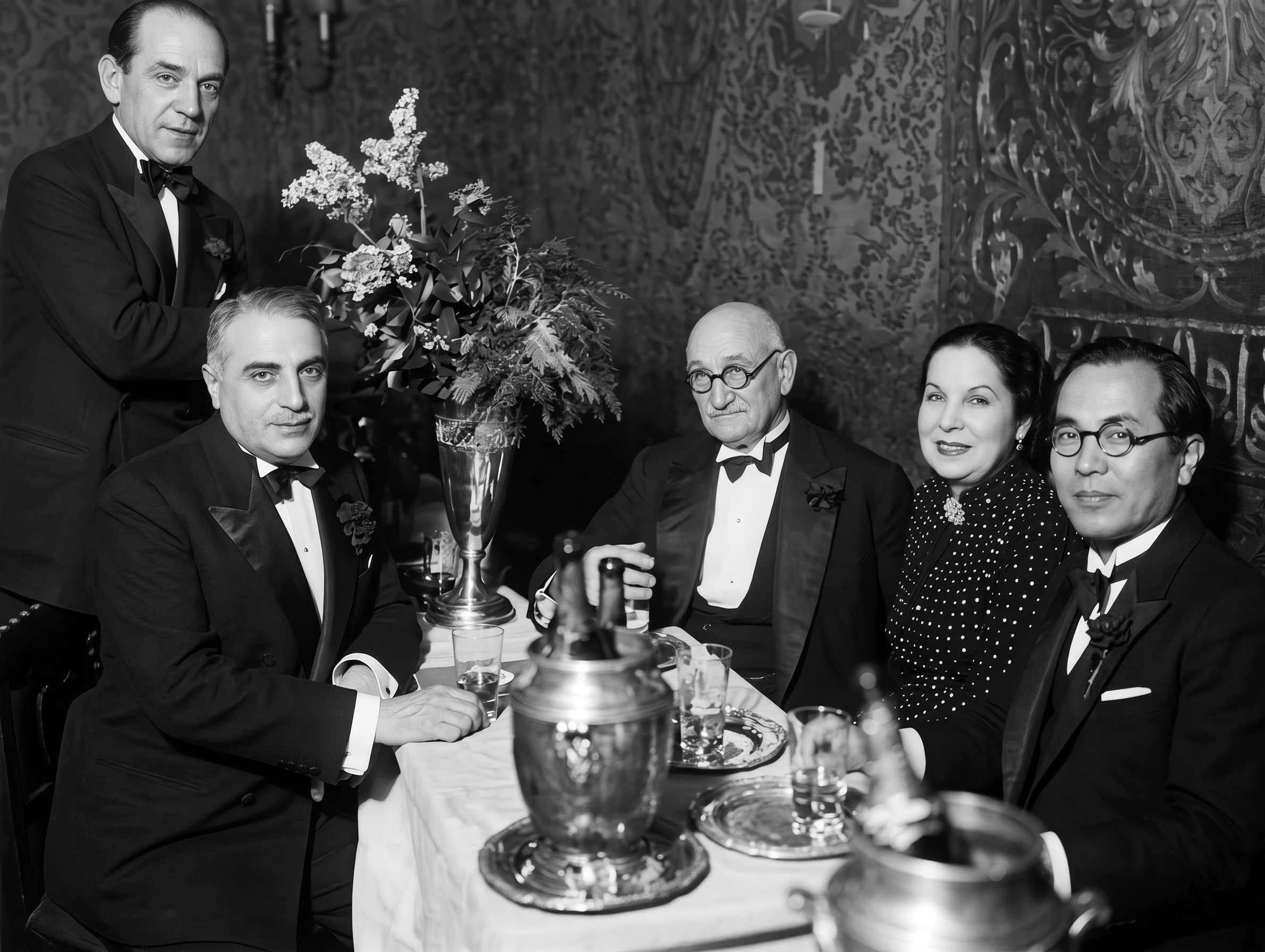
Shifting International Balances and the Homeland UprisingThe diplomatic chessboard in Europe severely constricted the diaspora's operational capacity as the war approached.
— Non-Aggression Pacts: The 1939 Molotov-Ribbentrop Pact brought Bammat's activities in Germany to a halt. Similarly, the 1941 Soviet-Japanese Neutrality Pact drastically curtailed Japanese support.
— The Chechen Uprising: Parallel to these political developments, a massive armed rebellion against Soviet rule erupted in the Caucasus in the winter of 1940, led by Khasan Israilov and Mairbek Sheripov, resulting in the declaration of the Provisional Popular Revolutionary Government of Checheno-Ingushetia.
When the Germans shelved the Molotov-Ribbentrop Pact and crossed the Soviet border on June 22, 1941, launching Operation Barbarossa, a new, yet profoundly tragic, era began for the Caucasian Highlanders who had spent years seeking allies and opportunities.
Operation Barbarossa and Resurgent HopesDespite the warnings of Military Attaché General Ernst-August Köstring, Hitler initiated Operation Barbarossa. Though the German army covered vast distances swiftly, it suffered heavy casualties and stalled at the gates of Moscow. Consequently, Hitler pivoted his focus southward toward Stalingrad.
The Treaty of Friendship and Non-Aggression signed between Turkey and Germany on June 18, 1941, offered another glimmer of hope for Caucasian political refugees. Prompted by these events, Haydar Bammat and the Council of the Caucasian Confederation (Aytek Namitok, Abbas Bey Atam Alibekov, Akaki Chkhenkeli, Alexander Khatisian) submitted a declaration to German Foreign Minister Joachim von Ribbentrop, expressing their support for Germany's struggle against Bolshevism.
Recognizing the region's rich natural resources and strategic geopolitical value, the German Foreign Office began evaluating opportunities to bring the Caucasus under German protection.
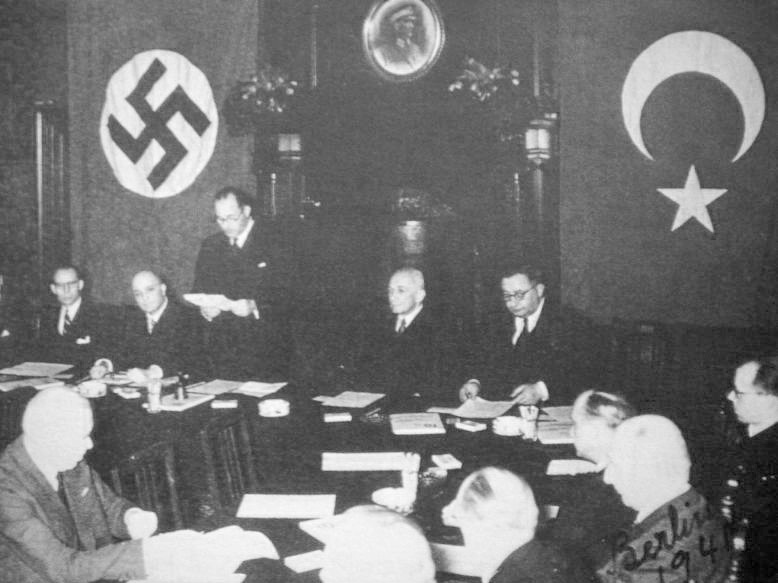
The Formation of the Caucasian Volunteer LegionsSpearheaded by German bureaucrats and military officials, Dr. Theodor Oberländer and Professor Gerhard von Mende, efforts commenced to form volunteer units from Caucasian prisoners of war.
— A specialized unit named "Sonderverband Bergmann" (Special Mountaineer Unit) was created to conduct special operations in the mountainous terrain of the Caucasus.
— On December 22, 1941, the German Army High Command issued an official order for the establishment of the Turkestan, Caucasian-Muslim (Azerbaijanis, Dagestanis, Chechens, etc.), Georgian, and Armenian legions.
— In a memorandum presented to German Ambassador Franz von Papen, Vassan-Girey Dzhabagi underscored the historic hatred the Caucasian peoples harbored against the Russians, asserting that the Caucasians viewed the German army as liberators.
The "Adloniade" Conferences and Political Discord (April 1942)Under the initiative of Count von Schulenburg, German authorities and prominent leaders of the North Caucasian political emigration (Haydar Bammat, Alikhan Kantemir, Said Shamil, etc.) convened at the Hotel Adlon in Berlin in April 1942.
In his memorandum to Schulenburg, Bammat highlighted the historical and religious ties between the Russians, Georgians, and Armenians, arguing that the North Caucasians and Azerbaijanis constituted the genuine anti-Russian force. Bammat adamantly insisted that Germany must immediately and explicitly recognize Caucasian independence; otherwise, it would fail to secure the full backing of the Caucasian populace. This uncompromising stance was poorly received by Alfred Rosenberg, who envisioned establishing a "Reichskommissariat" in the Caucasus, leading to accusations that Bammat was a "Turkish spy."
Realizing that the Germans had not abandoned their colonial ambitions and experiencing profound disillusionment, Bammat departed Berlin for Switzerland without waiting for the conclusion of the talks.
Internal Emigre Rivalries and Kantemir's LeadershipFollowing Bammat's departure, Alikhan Kantemir and Ahmed Nabi Magoma assumed the leadership mantle for the North Caucasus. In a memorandum titled "The Caucasian Question" presented to the Germans, Kantemir criticized the flawed and pro-Russian policies of the Promethean Movement and the Georgian Mensheviks (Noe Zhordania). He maintained that the Caucasus should retain its existing southern borders with Turkey and Iran while extending its northern frontier to the Kuma and Kuban rivers.
Concurrently, Franz von Papen, the German Ambassador to Turkey, reported that Caucasian-descended officers and officials in the Turkish army (such as General Mürsel Bakü and Marshal Çakmak) viewed the German advance into the Caucasus favorably.
Despite these developments, internal divisions among Caucasian political refugees persisted. While Said Shamil sought to leverage his connections in the Arab world to gain influence, various Caucasian factions actively attempted to discredit one another before German authorities.
The Establishment and Restructuring of the Caucasian LegionsEven before the national committees of Caucasian political emigres could formalize, the "Caucasian Muslim Legion," comprising various Caucasian and Turkic peoples, was officially established in January 1942. To recruit legionnaires, the Germans contacted Gube Osman Said-Nur, a former Tsarist officer, who subsequently enlisted 300 Caucasian POWs into these units by March 1942.
In July 1942, the Army High Command restructured the legions along ethnic lines, categorizing them into five distinct groups: Turkestan, Azerbaijani, Armenian, Georgian, and North Caucasian Legions. The German Ministry for the Occupied Eastern Territories (Ostministerium) believed that due to ethnic differences and mutual animosities, these groups should not be housed in the same camps and required disparate treatment.
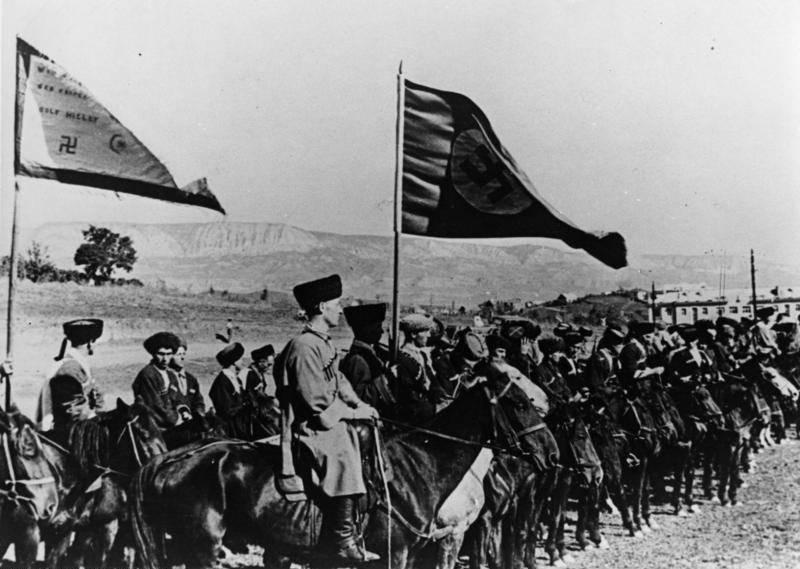
Political Infighting within the German Command HierarchyA fierce rivalry and jurisdictional chaos reigned among the German Foreign Office, the Ostministerium (Alfred Rosenberg), and the Wehrmacht regarding the administration of the Caucasus. Rather than granting full independence, Rosenberg planned to establish a federal state centered in Tbilisi, heavily featuring Georgians, under the "protection" of the German Empire.
To mitigate these civil-military conflicts, Otto Bräutigam, who possessed extensive knowledge of the region, was appointed as the Ostministerium's plenipotentiary representative for the Caucasus.
The German Advance and "Bergmann" Special ForcesThrough Operation "Edelweiss" in August 1942, German forces pushed into the Caucasus, capturing Armavir, Stavropol, and Maykop, and ultimately planting the swastika atop Mount Elbrus.
To infiltrate behind Red Army lines, sabotage infrastructure, and instigate uprisings, "Bergmann" battalions and "Sonderkommando" units were deployed via parachute. One such group, commanded by Gube Osman, was captured by Soviet intelligence (NKVD) in January 1943 and sentenced to death for high treason.
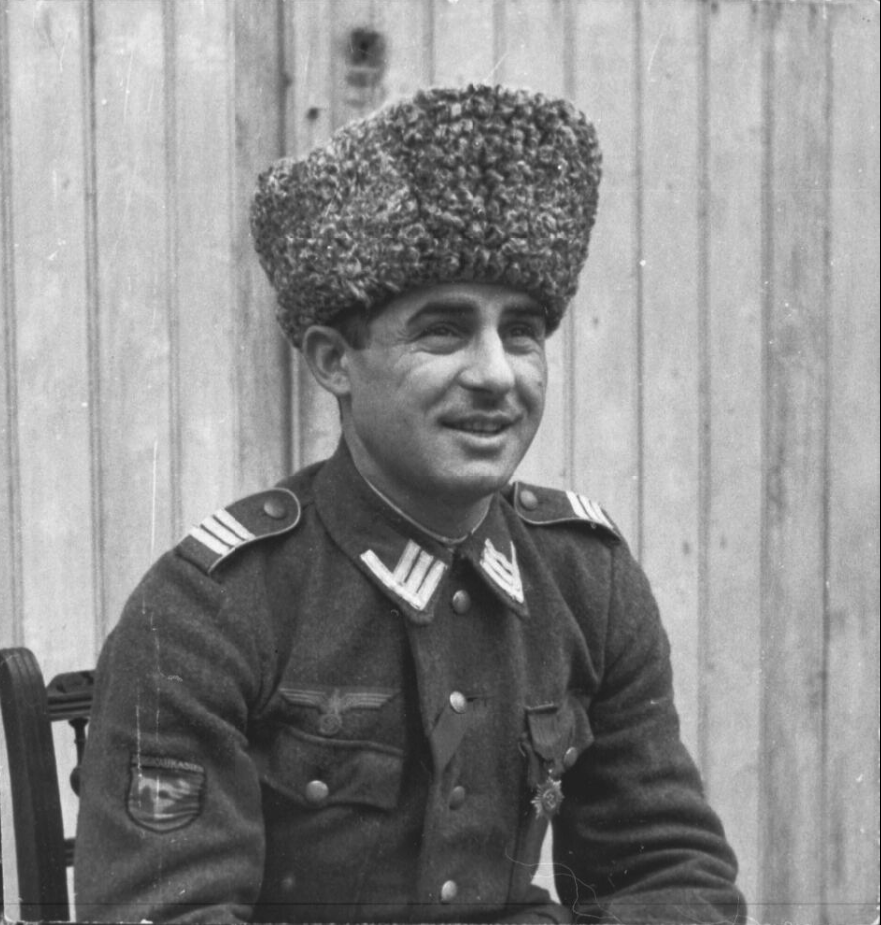
Local Attitudes and General Sultan Klych GireyGerman troops were enthusiastically welcomed as liberators by the local populace, who were thoroughly exhausted by the kolkhoz system and Stalin's terror. Although the Germans promised to abolish the kolkhozes and restore religious freedom, these pledges saw highly limited implementation on the ground.
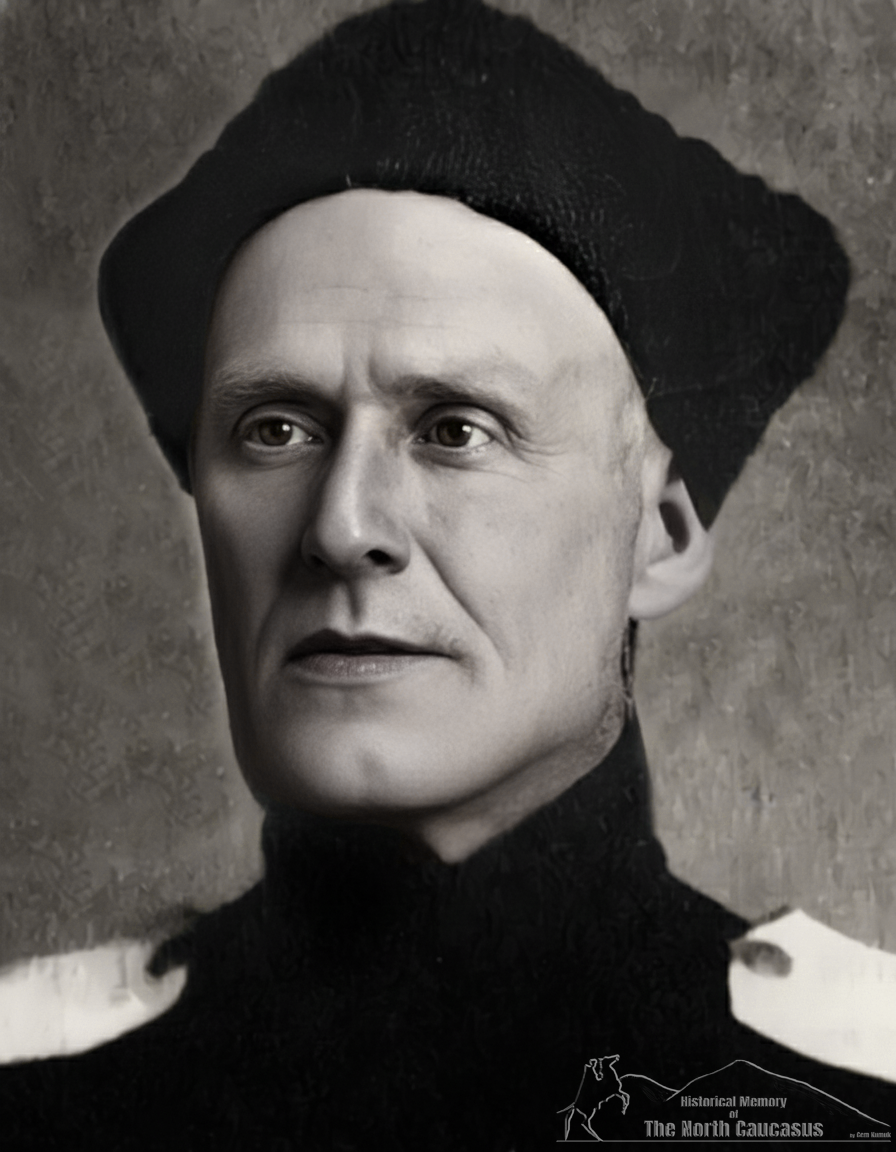
General Sultan Klych Girey, Chairman of the Military Council of the North Caucasian National Committee, returned to his homeland alongside the Germans and secured the release of prisoners. However, Klych Girey fundamentally distrusted the Germans; NKVD reports and eyewitness testimonies confirmed that he warned his people to remain wary and predicted that Germany would lose the war. Consequently, North Caucasian enrollment in the legions remained significantly lower than that of the Georgians or Armenians.
Frontline Legions and Operational DifficultiesThe 800th, 801st, and 802nd North Caucasian Infantry Battalions fought directly alongside German forces on the front lines. The 802nd Battalion, in particular, demonstrated exceptional valor in its defense and counter-offensives against Soviet tanks. Despite these tactical successes, Caucasian legionnaires were subjected to the racist, condescending, and ignorant attitudes of German commanders. Many volunteers were thrust to the front with inadequate political or military training, breeding indiscipline and localized desertions.
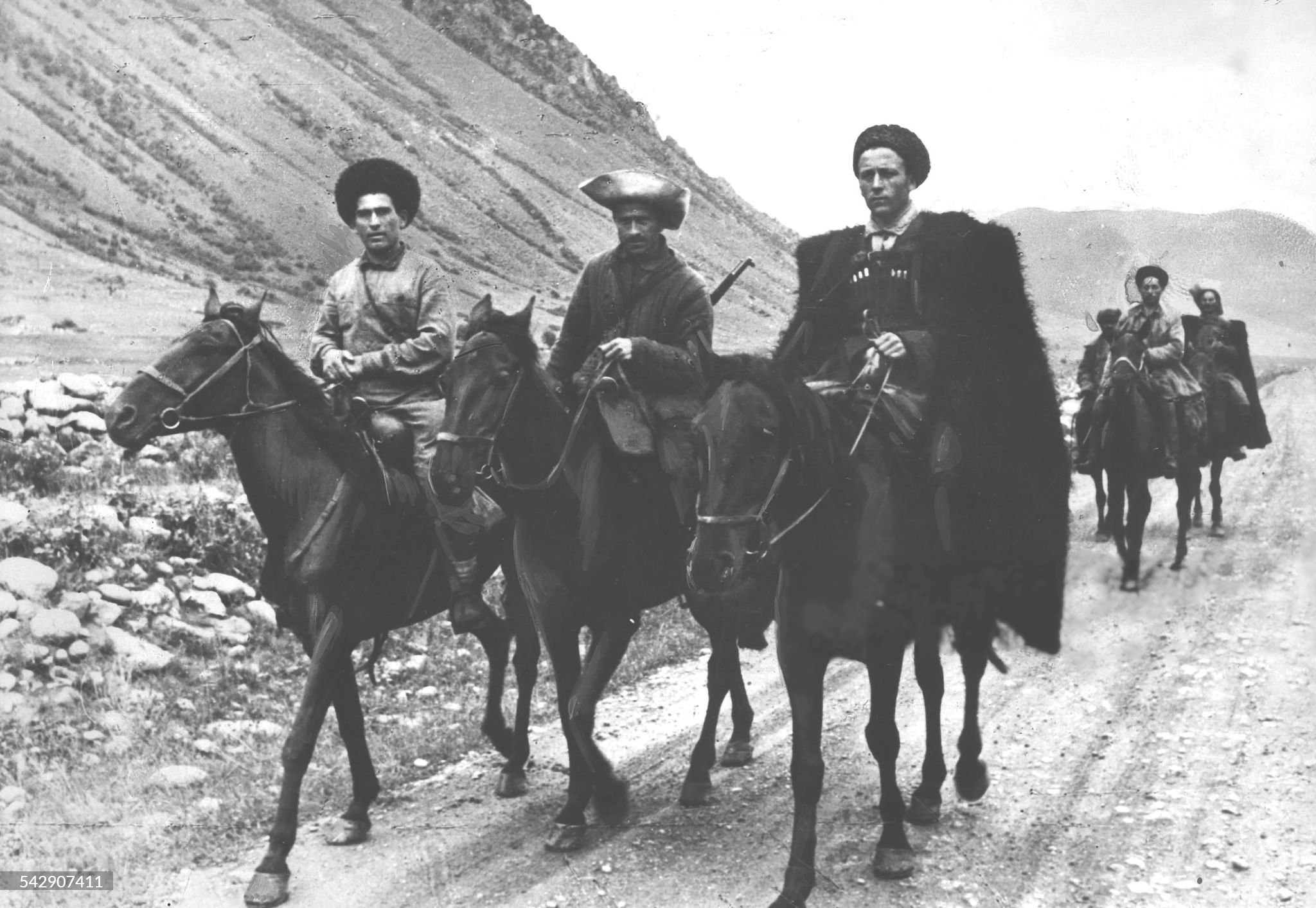
The German Retreat and the Fate of the Caucasian LegionsWhen the German advance halted in late 1942, Caucasian legionnaires transitioned from specialized commando units to conventional infantry. They were tasked with covering the retreating German armies and destroying critical infrastructure, such as fuel depots and bridges, in their wake. Recognizing their impending defeat, the Nazis resorted to forced conscription to replenish their ranks and placed advertisements in French newspapers demanding that Caucasian refugees enlist in the German occupation forces. Hitler openly expressed a strong preference for Muslim Caucasians over Georgians and Armenians, citing them as reliable and perpetually ready for combat.
As the retreat progressed, a profound moral collapse emerged among North Caucasian volunteers who realized that the promises of liberation were hollow. In some instances, panic triggered outright mutiny. For example, the 835th Circassian detachment planned to take German officers hostage and surrender to the Red Army; however, the plot was uncovered, and the mutineers were executed.
Despite plummeting morale and mistreatment by certain German commanders, several North Caucasian Infantry Battalions (such as the 800th, 801st, and 802nd) fought tenaciously to shield the German withdrawal toward the Kuban bridgehead and the Crimean Peninsula, suffering devastating losses against the advancing Red Army.
The Propaganda WarAs the Red Army advanced, both Soviet and German forces engaged in a fierce psychological and propaganda war. The Soviets air-dropped German-language leaflets detailing Axis defeats in North Africa and Russia, offering amnesty, specialized identification cards, improved rations, and safe passage home to any surrendering German soldier or Caucasian volunteer.
The Germans countered with leaflets in Russian, Georgian, and Armenian, arguing that recent Soviet concessions regarding religion and national rights were merely symptoms of Bolshevik weakness, urging Caucasians to continue fighting for their homeland's imminent liberation.
Soviet Retaliation: Ethnic Cleansing CampaignsAs the Germans retreated, Joseph Stalin and Lavrentiy Beria unleashed a merciless campaign of ethnic cleansing, ostensibly to punish populations for alleged collaboration with the Nazis. This was, in reality, a deliberate policy aimed at depopulating the North Caucasus of its indigenous peoples to facilitate Russification.
— The Deportation of the Karachay (November 1943):
In August 1943, the Soviets ceased conscription in the Karachay Autonomous Oblast, causing many Karachay soldiers to desert and return home. The NKVD deliberately ignored these desertions to simplify the eventual mass roundup. By a secret decree on October 12, 1943, the Karachay Autonomous Oblast was dissolved, and the deportation of its populace was ordered. Its territories were partitioned among neighboring regions and Georgian control. On November 2, 1943, heavily armed NKVD troops surrounded the villages, giving families only 30 minutes to pack. Approximately 69,000 Karachays—overwhelmingly women, children, the elderly, and wounded veterans—were crammed into cattle cars and exiled to Central Asia and Siberia.
— The Deportation of the Chechens and Ingush (February 1944):
"Operation Lentil" (Chechevitsa) commenced in the early hours of February 23, 1944, under the direct supervision of Lavrentiy Beria. Beria later reported to Stalin that the operation had proceeded smoothly, with nearly 480,000 Chechens and Ingush forced onto trains within a week. On March 7, 1944, the Chechen-Ingush Autonomous Soviet Socialist Republic (ASSR) was officially abolished, its lands aggressively divided among the Stavropol Krai, Dagestan ASSR, North Ossetian ASSR, and Georgian SSR.
— The Deportation of the Balkars (March 1944):
Immediately following the Chechen-Ingush ethnic cleansing, Beria targeted the Balkars. Between March 9 and March 15, 1944, over 37,000 Balkars were rounded up and exiled to Kazakhstan and Kyrgyzstan. On April 8, 1944, the Kabardino-Balkar ASSR was formally renamed the Kabardian ASSR; the Balkars were erased from the map, and their territory was redistributed. The Soviet leadership executed these deportations with chilling organization; the Kremlin's primary concern during the Chechen-Ingush deportation was merely whether the loss of manpower would adversely affect production at the Grozny oil refineries.
Representation and the Struggle for SurvivalAs the German army retreated from the Eastern Front, the plight of North Caucasian refugees and legionnaires became exceedingly dire.
German Captain Paul Theurer actively attempted to marginalize the existing North Caucasian Committee and its leadership, seeking to replace them with individuals strictly loyal to him. These machinations targeted prominent figures like Madjir Kochkarov and General Sultan Kelech Ghirey, sparking widespread discontent among the refugees. In response to the deteriorating situation, General Sultan Kelech Ghirey spent four months traveling among the refugees and submitted a comprehensive report to the National Committee in Berlin outlining their urgent needs. To bolster morale, the Committee issued a manifesto on May 11, 1944, commemorating the anniversary of the 1918 North Caucasian independence and vowing to defeat Bolshevism.
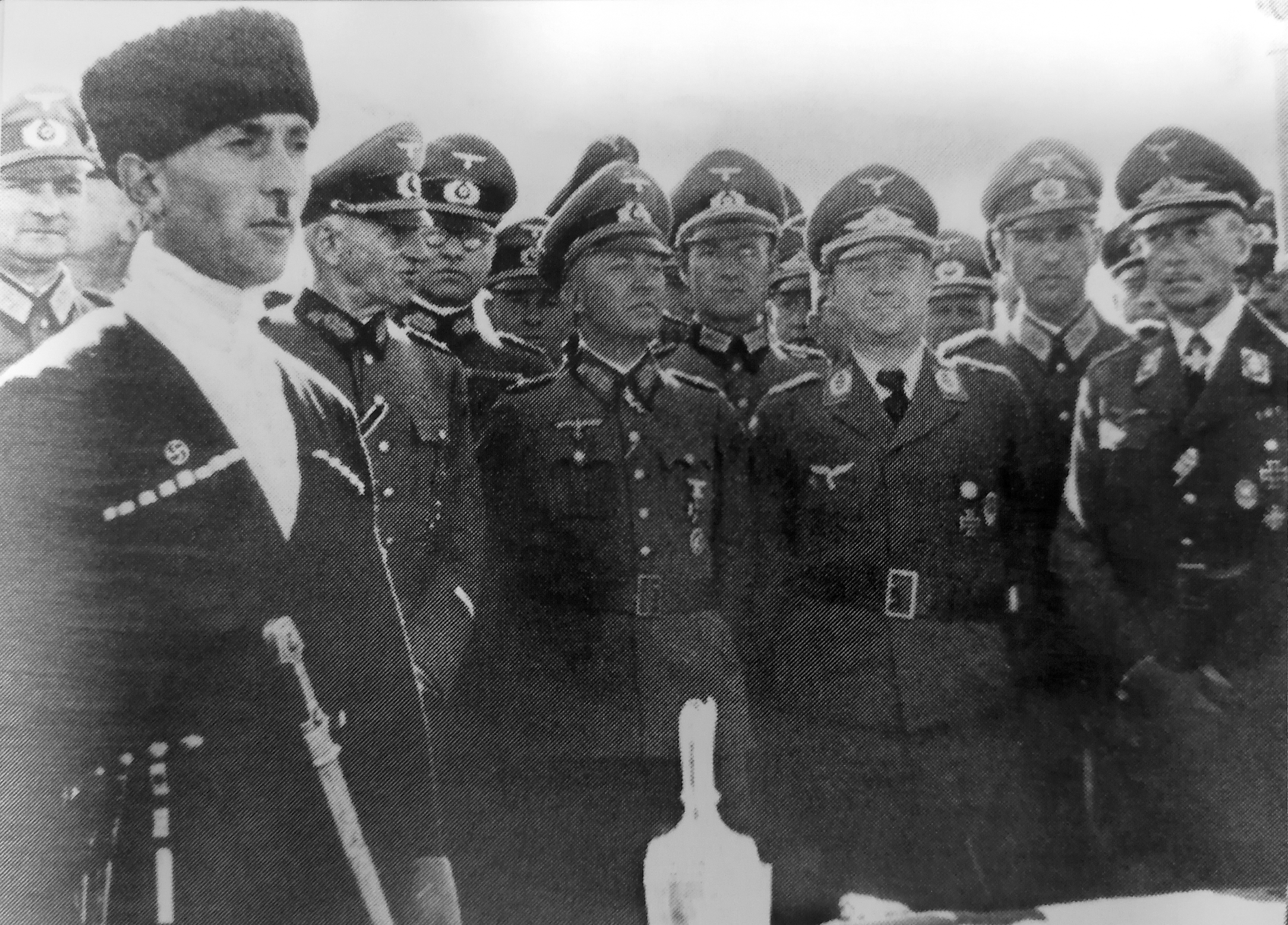
Pressure to Form a "Caucasian Liberation Army"As the Axis war effort faltered, Caucasian leaders escalated their demands on the German high command to ensure their people were not utilized as mere cannon fodder. A joint declaration signed by representatives of the North Caucasus, Azerbaijan, Georgia, and Armenia was presented to Alfred Rosenberg. The document contained an ultimatum demanding official German recognition of their independence and the consolidation of Caucasian troops under a formally recognized "Caucasian Liberation Army."
Following this pressure, SS authorities initiated negotiations to form a Caucasian Cavalry Corps, with Colonel Kushchuk Ulagay proposed as the commander of the North Caucasian SS unit. The National Committee also intensified efforts to rescue approximately 10,000 North Caucasian POWs and forced laborers from German camps to fill the ranks of this new military formation. The Committee vehemently protested the deployment of Caucasian volunteers to Western European fronts (such as France and the Netherlands), demanding they be utilized exclusively against the Soviets on the Eastern Front.
Resistance to Russian Imperialism (The Vlasov Affair)The German command hierarchy attempted to amalgamate all anti-Soviet factions under the umbrella of the Russian Liberation Army (ROA), commanded by defected Soviet General Andrey Vlasov. Caucasian representatives fiercely opposed this unification, viewing it as a mere continuation of Russian imperialism.
In a tense meeting with SS leader Ernst Kaltenbrunner, Georgian leader Mikheil Kedia explicitly refused to submit to Vlasov, declaring he would prefer Stalin over a new Russian imperialist. Consequently, representatives of the oppressed nations under Russian subjugation (including Idel-Ural, the Caucasus, Crimea, Turkestan, Ukraine, and Belarus) signed a manifesto forming a united front to resist Russian hegemony and fight for their independent national states.
Relocation to Northern Italy and Deteriorating ConditionsTo carve out a sphere of influence, German authorities relocated Cossacks and Caucasian refugees and military units to Northern Italy. Under "Operation Ataman," thousands of North Caucasians and Cossacks were moved to the Friuli and Carnia regions.
The town of Paluzza became a central hub for the North Caucasians, who established a hospital, school, theater, and a printing press for their newspaper. However, life in Italy was perilous, as refugees frequently clashed with local Italian partisans. Internal discipline fractured due to the trauma of continuous retreats and the increasingly racist and harsh treatment by German officers—most notably Captain Theurer, who actively undermined local Caucasian courts and customs. Realizing the impending defeat of Nazi Germany, the morale of Caucasian volunteers was completely shattered, and their primary focus shifted entirely to evading Soviet captivity.
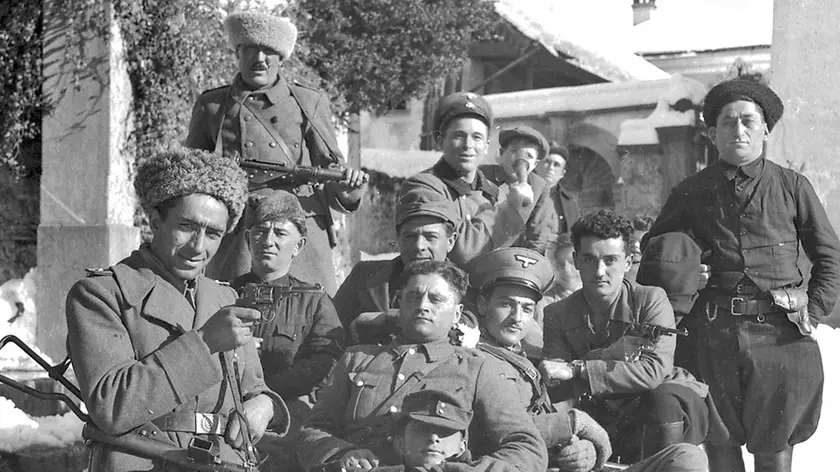
Caucasian Prisoners of War in Mid-1944Despite the formation of Caucasian SS divisions, the bureaucratic chaos of the collapsing German state meant that thousands of Caucasians remained imprisoned in POW and labor camps. An internal German report dated June 1, 1944, documented the number of Caucasian POWs as follows:
|
Nationality |
Number of POWs |
|
Georgians |
6,419 |
|
Armenians |
6,907 |
|
Azerbaijanis |
7,576 |
|
North Caucasians |
6,421 |
Germany's Belated Recognition and the Collapse ProcessBy early 1945, severe tensions had erupted between the North Caucasian refugees and soldiers situated in Northern Italy and the German command (particularly Captain Theurer). Colonel Kushchuk Ulagay was dispatched to Italy to assess the situation and restore discipline. With the rapid advance of the Red Army, the Caucasian Council appealed to the German high command (Lieutenant General Berger), urgently requesting the evacuation of Caucasians remaining in eastern POW camps to Italy. However, due to German bureaucracy and logistical constraints, this request was denied. After years of stalling tactics, Minister for the East Alfred Rosenberg finally—and far too late—announced official recognition of the North Caucasian National Committee on March 17, 1945.
Following this recognition, Alikhan Kantemir and Ahmed Nabi Magoma presented a detailed report to the Germans on March 26, 1945. According to the report, the number of Caucasians in German service was massive, and they had sustained severe casualties (approximately 48-50%).
Distribution of Caucasians in German Service (March 1945 Report):
|
Assignment / Role |
Estimated Personnel |
|
Legions and Field Battalions |
48,700 |
|
Construction and Supply Units |
21,595 |
|
Integrated into German Units |
25,000 |
|
Waffen-SS, SD, and Luftwaffe |
7,000 |
|
Grand Total |
102,295 |
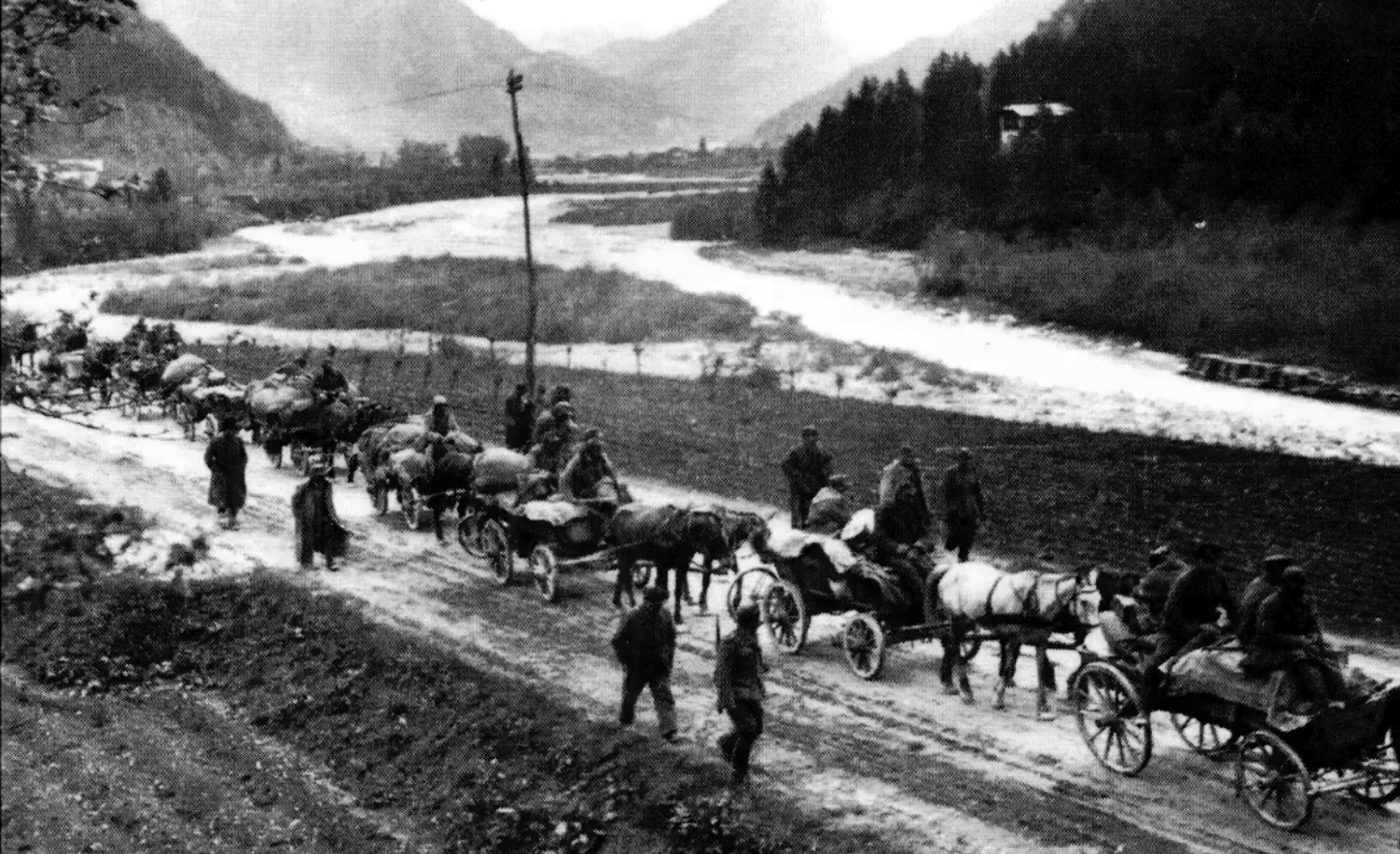
The Retreat to Austria (Drau Valley)By late April 1945, under pressure from communist Italian partisans and with the definitive German loss of the war, Italy was no longer safe for the refugees. Led by General Sultan Kelech Ghirey and Cossack generals, convoys of civilians and soldiers braved freezing blizzards to cross the Plöcken Pass, eventually reaching the Drau Valley (the Kötschach-Mauthen and Lienz areas) in Austria.
The refugees hoped to secure their safety by surrendering to the British army. Initially, Brigadier Musson, Commander of the British 36th Infantry Brigade, received the refugees cordially, offering assurances and designating settlement areas.
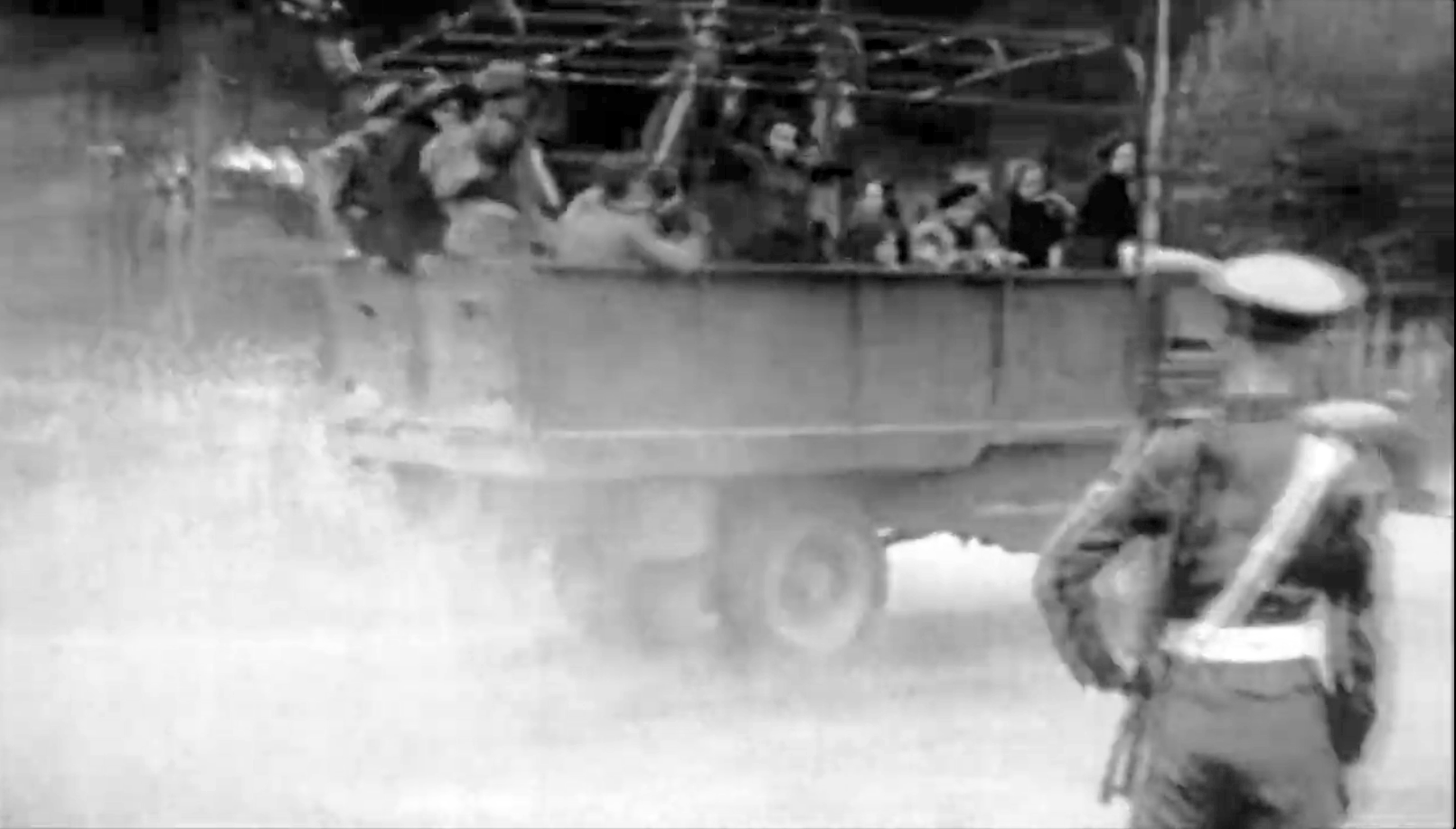
The Great Betrayal and Forced Repatriation (Operation Keelhaul)In accordance with the resolutions of the Yalta Agreement, the Allies had struck a secret accord to repatriate anyone who was (or was deemed to be) a Soviet citizen back to Stalin. On May 28, 1945, the British initiated a clandestine operation under the codeword "GYMKHANA." Under the pretense of attending a "conference," 116 North Caucasian officers were rounded up from the camps and taken to the British headquarters in Spittal. Colonel Kushchuk Ulagay was the only high-ranking officer to evade this mass repatriation and certain death by presenting documents proving his pre-war Albanian citizenship. Following the handover of the officers, it was the civilians' turn. When the Caucasians realized they were to be handed over to the Soviets, they violently resisted, raising black flags and staging sit-ins. Many begged to be executed by British bullets instead. British soldiers, however, utilized brute force to pack women and children into railway cars. Upon learning of their impending repatriation, over 5,600 North Caucasians fled into the mountains and forests, narrowly escaping the hands of Soviet executioners.
Sultan Klych Girey's Sacrifice and ExecutionsDuring the repatriation process, British officers—aware that General Sultan Kelech Ghirey was not a Soviet citizen—offered to spare him from being handed over to the Soviets on the condition that he work for British intelligence. Kelech Ghirey categorically rejected this indecent proposal, refusing to abandon his soldiers and kin to their deaths, and willingly walked toward his own demise.
After being handed over to Soviet authorities, Sultan Kelech Ghirey and the Cossack generals (Krasnov, Shkuro, Domanov) were interrogated by SMERSH ("Death to Spies") units before being flown on special aircraft to the notorious Lubyanka prison in Moscow.
On January 16, 1947, following a show trial conducted behind closed doors by the Military Collegium of the Supreme Court of the USSR, they were sentenced to death by hanging on charges of "high treason, espionage, and terrorism." The executions were carried out that same day in the courtyard of the Lubyanka. To this day, the Russian Federation has never disclosed the location of their graves.
The Heavy Toll of War and Soviet ConfessionsFor the Caucasian Highlanders, the Second World War exacted a toll as devastating as the exiles and genocides of the 19th century. Hundreds of thousands were expelled from their homelands, and tens of thousands perished in combat, captivity, or Stalin's executions.
Emerging from the war emboldened, Stalin officially and brazenly admitted to the mass deportations and massacres—which he had previously denied—through a decree of the Presidium of the Supreme Soviet on June 25, 1946.
While the Western world remained silent, the cultural heritage of the deported peoples, including their cemeteries, was systematically eradicated. Their names were expunged from maps and public memory; in the 1947 USSR encyclopedia, they were not even mentioned by name but merely relegated to an "other" category.
The Khrushchev Era and RehabilitationAlthough the period between 1944 and 1956 appeared quiet, rebellions erupted in exile camps in regions like Kazakhstan and Krasnoyarsk. In February 1956, at the 20th Party Congress, Nikita Khrushchev announced the rehabilitation of the Chechens, Ingush, Balkars, Karachays, and Kalmyks; on October 16, 1956, it was declared that their national autonomies would be restored. However, due to the new Russian populations settled in the North Caucasus, the return process was exceedingly arduous, leading to violent clashes between the returning indigenous populations (especially the Ingush returning to Prigorodny, now within Ossetian borders) and the new settlers.
The Cold War, Refugees, and Intelligence WarsBy mid-1946, mounting public pressure compelled the British and Americans to halt the repatriation of POWs to the Soviets and begin releasing them. Most refugees opted to migrate to countries like Turkey and Jordan, where they had relatives. The North Caucasian National Committee, headed by Ahmed Nabi Magoma, relocated its operations to Munich and sought to assist the refugees.
During the Cold War era, initiated by US President Truman, the Caucasus once again emerged as a strategic frontline. American-backed anti-communist institutions based in Munich (such as Radio Liberty) commenced their operations.
Although American and British intelligence agencies (CIA and MI6) collaborated with figures like Said Shamil and Ibrahim Gacaoglu, or representatives of the "Promethean" movement, many espionage and infiltration operations ended in catastrophe due to Soviet deception tactics.
Political Conflicts and Divisions within the DiasporaAt the North Caucasian Kurultai convened in Munich on September 16, 1951, General Bicherakhov—who actively sabotaged the Caucasus's will to secede from Russia—was declared a "traitor to the homeland." Abdurakhman Avtorkhanov, who possessed a communist background, published the magazine Svobodny Kavkaz ("Free Caucasus"), and advocated for the concept of an indivisible and unified Russia, was likewise expelled from the committee.
Conversely, the journal Der Kaukasus ("Caucasus"), published by Alikhan Kantemir, continued its mission to unite various ethnic identities around a shared cause of independence.
Activities in Turkey and Targeted RefugeesWith the Democratic Party coming to power in Turkey in the 1950s, the North Caucasian diaspora accelerated its association and publication activities (with magazines such as Kafkas, Mücahit, and Yeni Kafkas). Certain refugees who relocated to the United States and worked for the CIA, such as Tscherim Soobzokov, were unjustly labeled as "Nazi war criminals" and targeted by marginal groups. Soobzokov was assassinated via a car bomb outside his home in New Jersey in 1985.
The End of an EraThe 1960s witnessed the close of an era for the North Caucasian struggle for freedom and independence. The most vital opinion leaders of the movement passed away in rapid succession. Ahmed Nabi Magoma (March 26, 1961), Vassan-Girey Dzhabagi (October 18, 1961), Pshimakho Kotse/Kosok (January 8, 1962), Alikhan Kantemir (April 16, 1963), Aytek Namitok (July 26, 1963), and finally Haydar Bammat (March 31, 1965), often referred to as the "Talleyrand of the North Caucasus," all passed away, decisively marking the end of a historic epoch.

Istanbul, 24 May 2026