
 Türkçe
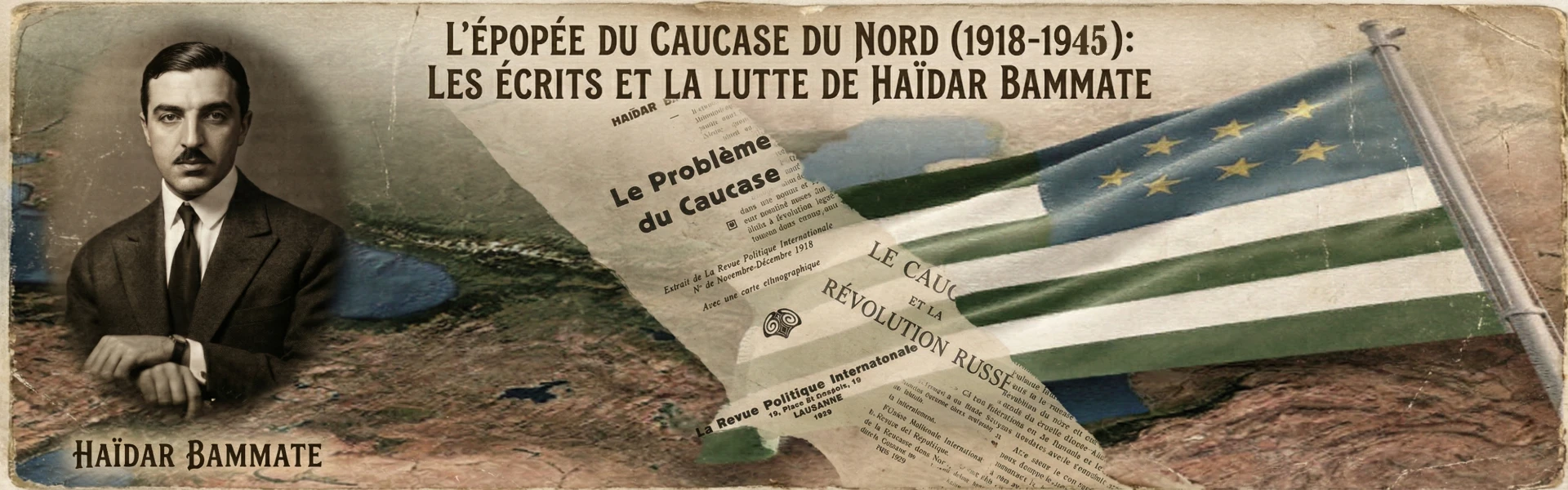
On March 31st of this year, we will once again commemorate Haydar Bammat with profound gratitude on the anniversary of his passing. On this 61st anniversary of his departure to the hereafter, we shall remember him through his endeavors during his life of political exile.
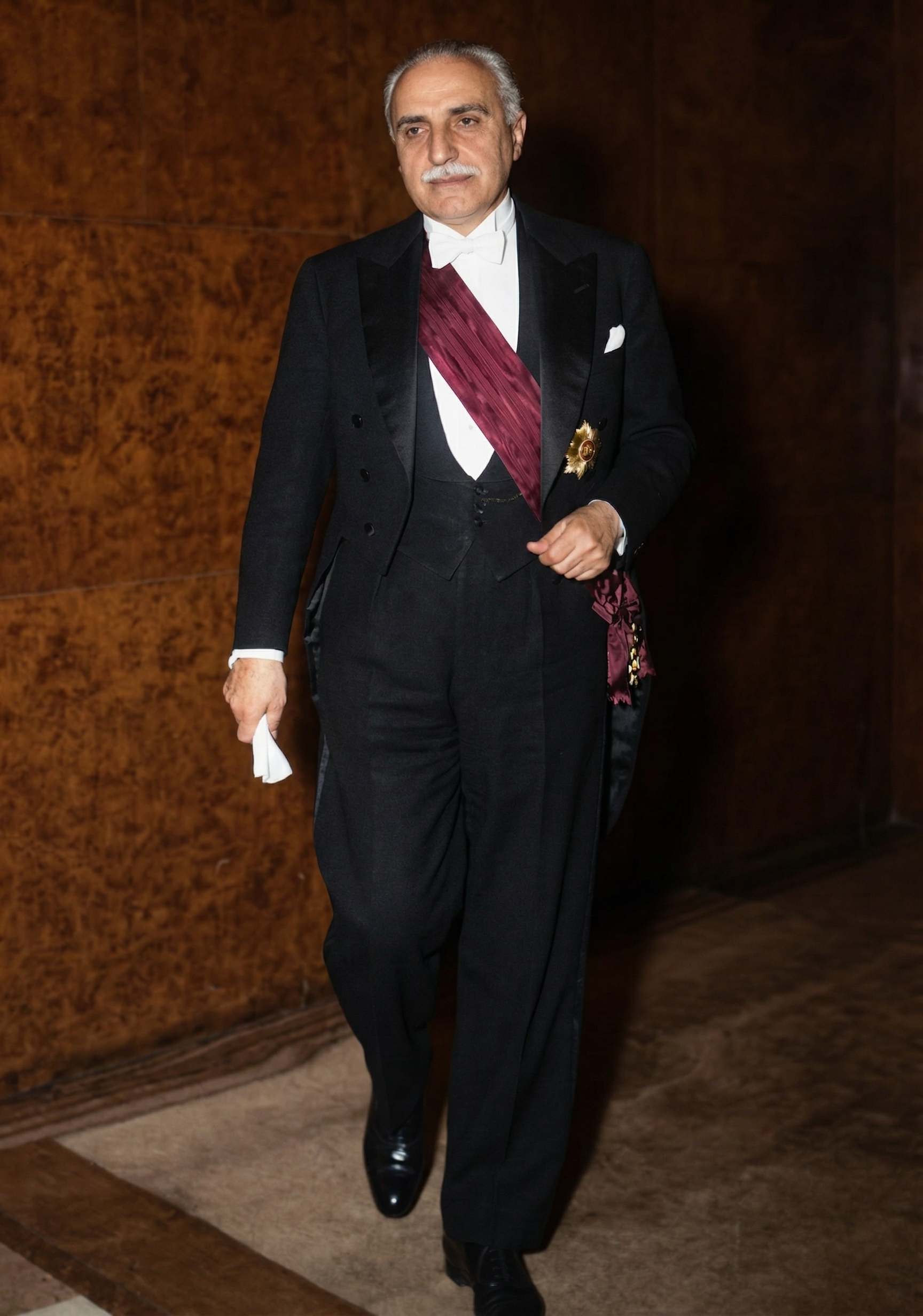
In early April 1921, at the onset of his political exile—a journey from which he would never again see his homeland—Haydar Bammat assumed not only the weight of his political responsibilities but also the burden of the prominent Chermoy clan in the lands of emigration, having become a son-in-law to the family. By giving his niece, Zeynep Hanım, in marriage to Haydar Bammat, Tapa (Abdulmedjid) Chermoy secured the safety of the other Chermoy family members who had sought asylum in Turkey at the time.
Following a distressing five-month period in Turkey, Haydar Bammat arrived in Paris at the end of September 1921, where a similarly unwelcoming environment awaited him. The vicious cycle into which the Council of the Union of Caucasian Republics had fallen, coupled with the fact that Tapa Chermoy held the sole authority to speak on behalf of the North Caucasus within the council, reminded Bammat once more of the arduous days of 1918. While Bammat was conducting lobbying activities in Istanbul as the Minister of Foreign Affairs for the Mountainous Republic of the Northern Caucasus, Tapa Chermoy, acting in his capacity as the President of the Parliament, frequently made and executed foreign policy decisions without consulting him. This led to numerous difficulties and became the subject of disputes reflected in their correspondence. To complicate matters, Bammat was now connected to the family by marriage. This indirect kinship made it even more difficult for him to oppose Tapa Chermoy in resolving these issues. Tapa Chermoy, who at the Andi Congress had championed the principle that "the subterranean and surface wealth of the Caucasus belongs to the people," had sold the Grozny oil fields—owned by his family corporation—to Royal Dutch Shell for millions of pounds sterling, and was now parading through the boulevards of Paris in a custom-designed 1921 Rolls-Royce 20 H.P. valued at 300,000 francs.
Patriots awaiting funds for the national struggle in Istanbul, such as Alikhan Kantemir, Akhmed Tsalikov, Abubakar Pliev, Pshemakho Kotsev, and Vassan-Girey Dzhabagi, were forced to write repeatedly to obtain meager allowances from that fortune, which they believed to be state funds, yet they found their expectations unmet. Caught between these patriots and Tapa Chermoy, Haydar Bammat found himself in another precarious position. As if this were not enough, he personally became one of the victims of the Chermoy family's scandals, and his marriage ultimately ended in divorce.
Convinced that matters could no longer proceed in this manner, and seeking to abolish Tapa Chermoy's unilateral decision-making power in his capacity as the diplomatic representative of the North Caucasian Republic within the Council of the Union of Caucasian Republics, Bammat first co-founded the Union Party of the North Caucasian Republic (Şimali Kafkasya Cumhuriyet İttihadı Fırkası) with Alikhan Kantemir. Subsequently, alongside Azerbaijani and Georgian politicians, he became a pioneer of the idea of a Union of Caucasian Confederations, which eventually evolved into the Committee for the Independence of the Caucasus.
With the emergence of the Second Polish Republic under Marshal Piłsudski as a "friendly" anti-Soviet power, Bammat spearheaded the formation of the Caucasus Branch of the Promethean Movement. However, when the Polish Government attempted to assume a patronizing role rather than that of an allied friend, Bammat, along with North Caucasian, Azerbaijani, and Georgian democratic nationalist figures, was compelled to establish the "Kavkaz" group. As the Polish Government co-opted mostly pro-monarchy North Caucasian figures, alongside Azerbaijani Musavatists and Georgian Mensheviks, Bammat was forced to struggle for nearly a decade not only against Soviet Russia but also against the Polish-directed Caucasus Branch of the Promethean Movement.
The prospect of liberation that the looming Second World War might promise for the Caucasus drove Haydar Bammat to search for suitable allies against the Stalinist regime in the approaching conflict, paving the way for a robust alliance with the Japanese. However, as global geopolitical developments led the Japanese to ally with the Germans, the Caucasian political diaspora was left with no option but to align with Nazi Germany. Bammat, who struggled until the 1942 negotiations in Berlin to secure a commitment from the Germans for the full independence of the Caucasus, withdrew to the background upon realizing that the German objective was the colonization of the region, yielding the stage in this coerced alliance to his comrade-in-arms, Alikhan Kantemir.
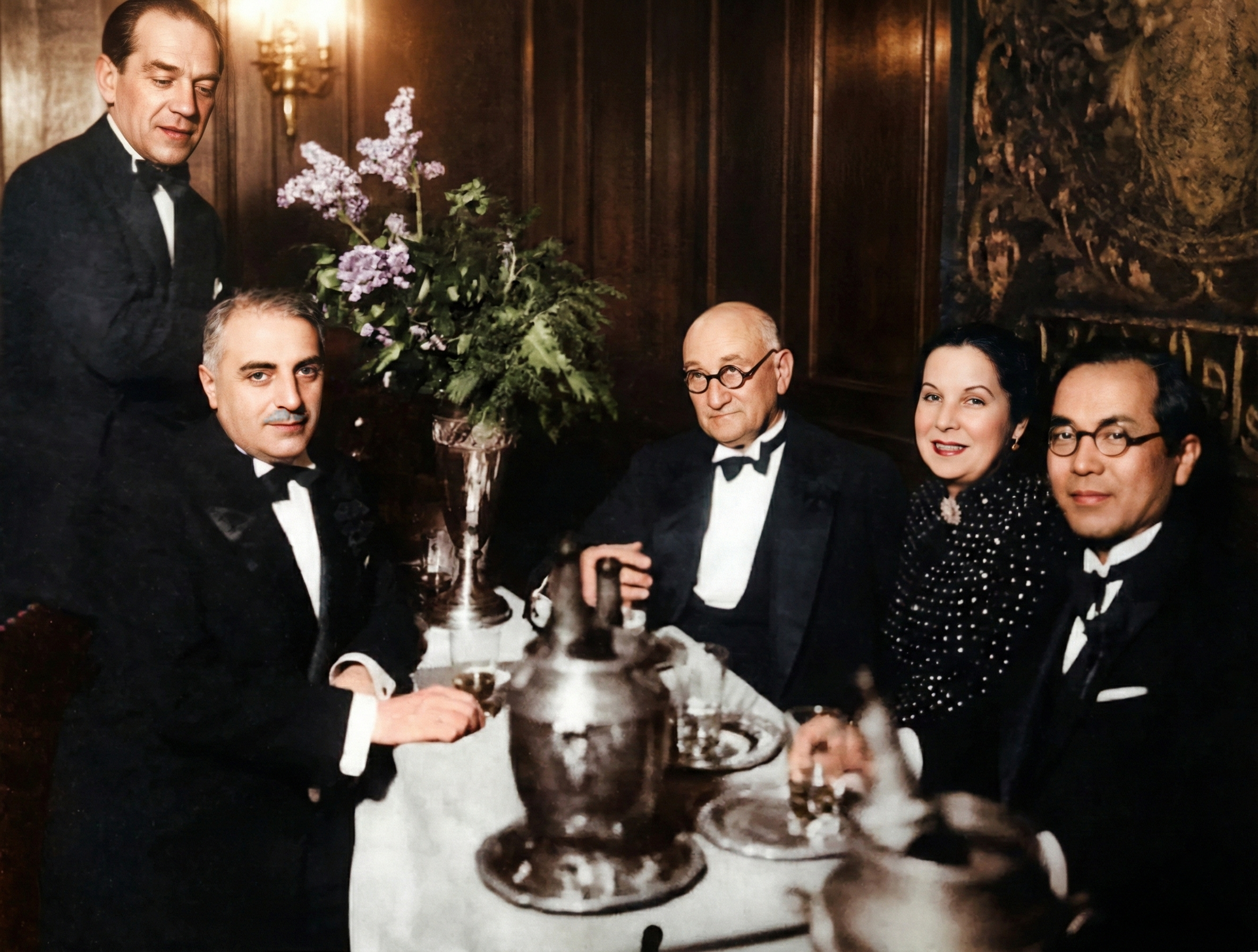
In the bipolar world of the post-war era, to prevent North Caucasians from becoming pawns in the hands of major global powers, he distanced himself from active politics, tacitly continuing to support the US-backed, Munich-based anti-Soviet movement led by Alikhan Kantemir.
Dedicating the majority of his time to research on Sufi Islamic philosophy from 1947 onwards, Bammat authored articles and books on the values Islam contributed to humanity. His health, which had begun to decline in the 1930s, deteriorated significantly by the early 1960s. Haydar Bammat passed away in Paris on March 31, 1965, and was interred in the Bobigny Muslim Cemetery.
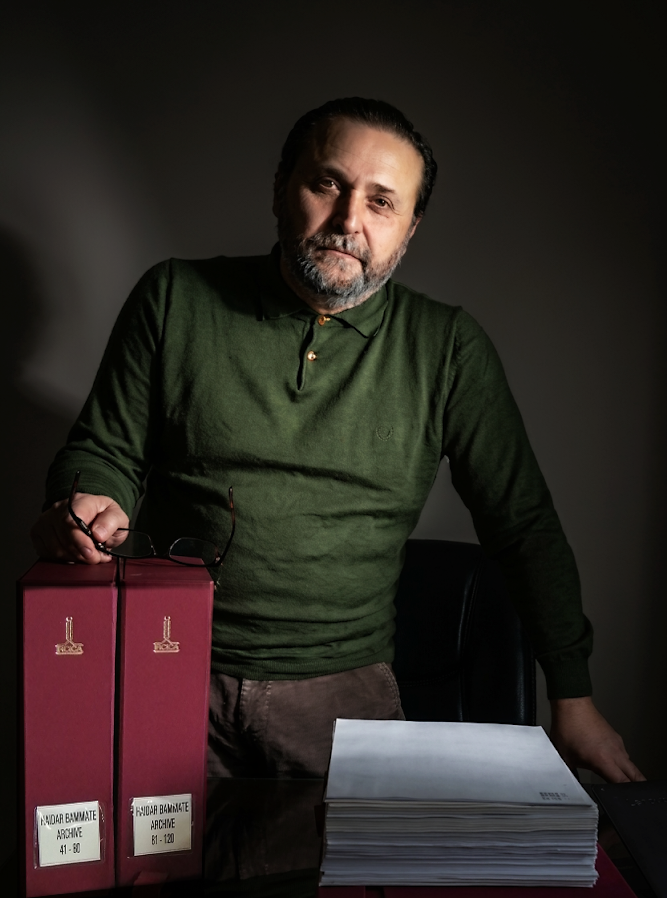
On this special occasion, I also want to share some great news. Digitization of the Haydar Bammat archive at IRCICA has been completed. This archive was closed for 35 years, till I was granted special permission to access it in 2023 to classify and catalog its contents. God willing, the institution plans to make the archive accessible online very soon, and I will also participate in the conference announcing this great news. I will share more detailed information as soon as it is provided by the officials of IRCICA. I look forward to seeing all my friends, colleagues, and compatriots at the conference to celebrate this great event together on the day the archive becomes accessible.

LE PROBLÈME DU CAUCASE
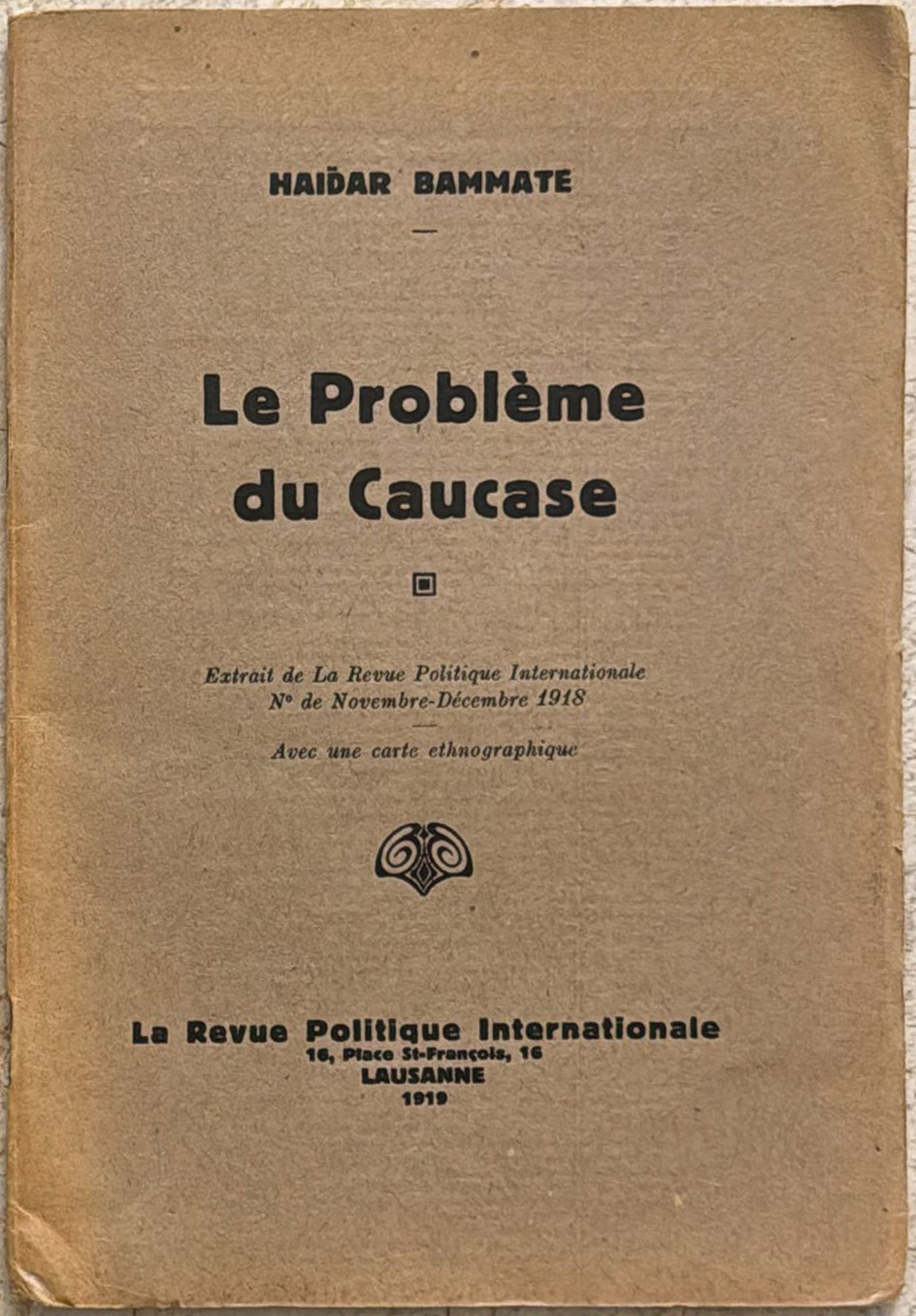
At the beginning of this study, Bammat provides brief information regarding the struggles for liberation experienced in the Caucasus during the early and modern periods:
According to historical accounts from scholars such as Herodotus, Strabo, and Pliny, the Circassian peoples of the Caucasus have inhabited the region since antiquity. Their traditional territory spanned from the mouths of the Don and Volga rivers in the north to the eastern shores of the Sea of Azov and the Black Sea; westward to the mouth of the Ingur River; southward along the Caucasus Mountains to the Absheron Peninsula; and along the western shores of the Caspian Sea back to the Volga. Historically, this territory was the uncontested patrimony of the Circassians, whose influence often extended beyond these boundaries.
During the early Middle Ages, successive waves of migration from Asia to Europe first encountered the Circassians. Situated at the northern edge of the Eurasian corridor, they acted as a geopolitical vanguard, absorbing the initial shock of these continuous incursions. Throughout the medieval period, the Circassians' resistance frequently shielded Europe from the full force of these invasions by either breaking their assaults or fracturing their unity.
Having gradually recovered from these centuries of upheaval, the Circassian peoples were in the process of political reconstruction during the sixteenth and seventeenth centuries when the expanding Muscovite state, driven by southern territorial ambitions, began its encroachment. Once again, they were forced to take up arms to defend their national patrimony against northern invaders.
This Circassian resistance against the Russian Empire is unparalleled in the history of nations, notable for both its ferocity and its extensive duration (1760–1864), as well as the sheer disproportion of the opposing forces. On one side stood one of the largest empires in human history; on the other, Circassian populations organized into small, federated republics defending their liberty, institutions, and homelands. This prolonged and unequal struggle captivated European intellectuals and sympathizers for decades. Figures such as David Urquhart, James Bell, J. A. Longworth, Edmund Spencer, Dubois de Montpéreux, and Taitbout de Marigny helped lift the veil on the tragic conflict unfolding in this remote corner of Europe.
Historical Account
During the eighteenth century, as commercial relations expanded between Russia and Asia, the Caucasus—situated along vital trade routes—drew the attention of Russian statesmen. To justify the conquest of the Caucasus, Russia asserted a strategic imperative to secure the province against the Ottoman Empire and Persia, both of which sought to anchor their influence in the Caucasian isthmus.
By the end of the eighteenth century, Russia began realizing these ambitions. Events in Transcaucasia, particularly in Georgia, provided the necessary pretext. Weakened by internecine warfare and Persian incursions led by Agha Mohammad Khan Qajar, Georgia appealed to Russia for protection. Russia capitalized on this opportunity by annexing Georgia outright. The subjugation of the Caucasus peoples began with the consolidation of Russian power in Georgia, effectively enclosing the native populations between both sides of the Caucasus Mountains. The subsequent century-long Caucasian War is a tragic martyrology of small nations fighting an unequal, heroic battle for their freedom, property, and customs.
Two primary movements characterized the resistance of the North Caucasian peoples:
— The Eastern Defense: Centered in Daghestan and Chechnya, this movement was led by the legendary Imam Shamil.
— The Western Defense: Spanning the Kuban, the Black Sea littoral, Abkhazia, and the Stavropol province, this resistance was led by several commanders, most notably Sheikh Mansur and Sefer-Bey Zanoko (often associated with localized leaders like Muhammad Amin).
Though separated by the Russian army, these two zones shared common origins, ideas, and aspirations. The pressures of war fostered intense personal initiative and accelerated the development of a unified national identity. Imam Shamil successfully utilized vigorous discipline to unite Caucasians from the Caspian Sea to the source of the Terek River, attempting to extend this unification to the Black Sea. His ultimate goal was to forge a single political entity capable of checking Russian expansion. A charismatic leader and devoted scholar of Islam, Shamil leveraged the religion's principles of equality, justice, and fraternity to unify the masses. He established a highly organized state structure, dividing Daghestan and Chechnya into districts governed by appointed Naibs, and developed a sophisticated military, political, and financial apparatus.
Despite Shamil’s capture by the Russians—a devastating blow to the Caucasian cause—the Western Caucasians maintained their fierce resistance. Their social structures, which had evolved a high degree of economic and agricultural sophistication due to a milder climate, were deeply democratic. Circassian tribes (Kabardians, Ubykhs, Abkhazians, Shapsugs) and their neighbors (Karachays, Balkars, Ossetians) were structured around hierarchical classes: pchy (princes), work or ouzdény (nobles), and commoners. However, vital decisions regarding war and national emergencies were entrusted to popular assemblies, whose authority was absolute.
On June 13, 1861, a historic popular assembly unanimously established an "Extraordinary Union" to centralize state power. A Mejlis (Great Free Assembly) of 15 Ulema was formed, dividing the country into 12 districts, each administered by Muftis, Qadis, and Mukhtars. Recognizing that military resistance alone was insufficient, the Circassians sought international recognition. They dispatched delegations to Constantinople, Paris, and London, led by diplomats such as Ismail Barakay, appealing to Western powers—particularly Great Britain—to intervene against Russian aggression.
Despite these diplomatic efforts and a brief, unsuccessful proposal by England post-Crimean War to guarantee Caucasian independence, European intervention never materialized. In 1864, General Yevdokimov’s forces successfully encircled the remaining independent Circassians, marking the end of the Caucasian War and the destruction of the region's indigenous political structures.
The Circassian Exile (Muhajirun)
Following the official end of the war, the Tsarist government initiated the systematic expulsion of the Circassians, repopulating their ancestral valleys with Cossack colonists. In June 1864, Grand Duke Michael Nikolaevich issued a decree ordering the Circassians to vacate their lands within a month or face death. Stripped of legal protections, an estimated 750,000 Caucasians were driven toward the Black Sea ports (Anapa, Novorossiysk, Batumi) for deportation to the Ottoman Empire.
European consular reports from the era detail the catastrophic mortality rates caused by starvation, disease, and the lack of organized transport. In Trabzon alone, over 30,000 refugees perished within a short period. This brutal demographic engineering drastically altered the ethnographical map of the Northern Caucasus. Cossack settlers were granted prime agricultural land, while the indigenous populations who remained were restricted to barren mountainous strips, often forced into extreme poverty. According to official land commissions, while Cossack settlers received 23 dessiatines of land per capita, native Chechens, Ingush, and Daghestanis were left with a mere 1.2 dessiatines.
Economically strangled and subjected to severe Tsarist repression, the remaining Caucasians frequently revolted. A major insurrection during the Russo-Turkish War (1877) resulted in brutal suppression and the subsequent exile of an additional 100,000 Abkhazians to the Ottoman Empire. Subsequent rebellions in Chechnya (1898), Ossetia (1902, 1905), and Ingushetia (1906) were met with equal ferocity.
The Caucasus During the War and Revolution
World War I presented the Caucasians with an unprecedented opportunity to realize their national aspirations. Following the collapse of the Russian Empire in 1917, the peoples of the Northern Caucasus capitalized on the resulting power vacuum. In May 1917, the first assembly of the Northern Caucasus and Daghestan was held in Vladikavkaz, establishing a unified political front and an executive Central Committee.
Initially, the Caucasians aligned with the broader revolutionary movement's goals, demanding a Federative Russian Republic in which the Caucasus would participate as an equal entity. They successfully defended the Provisional Government against right-wing counter-revolutionary coups, most notably by halting the advance of the Caucasian Native Cavalry Division ("Savage Division") on Petrograd through diplomatic persuasion.
However, relations with the privileged Cossack class deteriorated rapidly over the agrarian question. As the Provisional Government collapsed and the Bolsheviks seized power during the October Revolution, the Caucasians decisively severed ties with Petrograd.
On May 11, 1918, drawing upon the right to self-determination, the plenipotentiary delegates of the Northern Caucasus peoples officially declared their independence, establishing the Mountainous Republic of the Northern Caucasus. The declaration outlined the new state's borders—encompassing Daghestan, Terek, Stavropol, Kuban, and the Black Sea regions—and was formally communicated to the Allied and Central Powers.
Subsequently, sharing geographical, economic, and demographic data about the Caucasus, Bammat sought to prove, in light of these concepts, that the Caucasian Mountaineers possessed all the necessary competence and capacity to establish a sovereign state:
Geographical and Economic Overview
The territory of the Union of Circassian and Daghestani Peoples forms the core of the Caucasian isthmus. It is a region defined by profound geographic diversity, agricultural wealth, and strategic importance.
Climate and Topography
The terrain is dominated by the Greater Caucasus mountain range, featuring peaks such as Mount Elbrus (5,630 m) and Mount Kazbek (5,045 m). The region experiences a sharp climatic divide: continental temperatures dominate the interior, while the Black Sea littoral enjoys a Mediterranean maritime climate, historically serving as a premier resort area (the "Riviera" of the Caucasus).
Table 1: Altitudes, Average Temperatures, and Annual Precipitation
|
Location |
Altitude (m) |
Average Temp. |
Annual Precipitation |
|
Vladikavkaz |
678 m |
9.03°C |
0.920 m |
|
Pyatigorsk |
516 m |
9.87°C |
0.548 m |
|
Novorossiysk |
4 m |
13.44°C |
0.584 m |
|
Sochi |
3 m |
14.00°C |
1.443 m |
|
Sukhum |
4 m |
15.20°C |
1.264 m |
The territory possesses immense natural wealth, including vast forests, rich mineral deposits (copper, silver, lead, coal), and globally significant petroleum reserves, particularly the high-grade naphtha extracted in Grozny and Maykop.
Table 2: State Forest Extent by District/Province
|
District / Province |
Extent (Dessiatines) |
|
Zakatal |
88,350 |
|
Kuba |
133,025 |
|
Daghestan |
147,371 |
|
Terek |
345,624 |
|
Kuban |
526,356 |
|
Sukhum |
418,837 |
|
Black Sea |
289,387 |
|
Total |
1,948,950 |
|
Region |
Cereals (Tons) |
Horses |
Horned Cattle |
Buffaloes |
Sheep |
Goats / Pigs |
|
Zakatal |
18,803 |
3,822 |
44,078 |
33,812 |
87,483 |
16,470 |
|
Kuba / Daghestan / Terek |
1,704,980 |
326,894 |
1,301,355 |
87,842 |
3,653,914 |
515,600 |
|
Kuban / Sukhum / Black Sea |
2,180,719 |
299,274 |
686,299 |
30,303 |
982,772 |
326,215 |
|
Total |
3,904,502 |
629,990 |
2,031,732 |
151,957 |
4,724,169 |
858,285 |
The demographic figures provided by Bammat for the year 1919 are of significant importance. Over time, the Soviet regime altered demographic balances by settling populations they "trusted" in the territories inhabited by "objectionable" peoples.
Demographic Realities and Statistical Critique
Historically, Tsarist statistics systemically underreported indigenous Caucasian populations to justify colonial land policies and obscure the extent of the demographic displacement. Following the 1917 revolution, electoral censuses for the Constituent Assembly revealed the true demographic weight of the native populations.
For example, pre-revolutionary official statistics listed only 100,000 Circassians in the Nalchik district; the 1917 census revealed over 200,000. In the Sukhum district, 90,000 indigenous Abkhazians were deliberately misclassified under the vague heading of "Various Asiatic Peoples."
Table 4: Demographics of the Republic of the Union of Circassian and Daghestan Peoples (1917–1919)
|
District / Region |
Extent (Sq. Versts) |
Indigenous Population |
Cossacks |
Russians / Ukrainians |
Total Population |
% Indigenous |
Density (per sq. verst) |
|
Zakatal, Daghestan, Kuba |
35,916 |
1,535,699 |
14,305 |
23,533 |
1,573,537 |
97.39% |
43.81 |
|
Terek & Parts of Kuban |
100,767 |
1,503,714 |
812,420 |
41,713 |
2,417,847 |
62.19% |
23.99 |
|
Black Sea & Sukhum |
11,657 |
129,116 |
65,637 |
35,703 |
230,456 |
56.02% |
19.76 |
Conclusion
The value of a nation and its right to self-determination cannot be measured solely by population size, but rather by the resilience of its institutions and the sacrifices made to preserve its independence. For centuries, the peoples of the Northern Caucasus served as a geopolitical buffer, shedding their blood to defend their homeland against successive imperial expansions.
The Caucasian isthmus dominates two vital seas and bridges Europe with the Middle East and Central Asia. Recognizing this, nineteenth-century British diplomats astutely noted that control of the Caucasus directly altered the global balance of power. Today, standing upon their historical territory, possessing immense economic vitality, and guided by the principles of international justice, the peoples of the Northern Caucasus appeal to the global community to recognize their sovereign, independent state.
LE CAUCASE ET LA RÉVOLUTION RUSSE
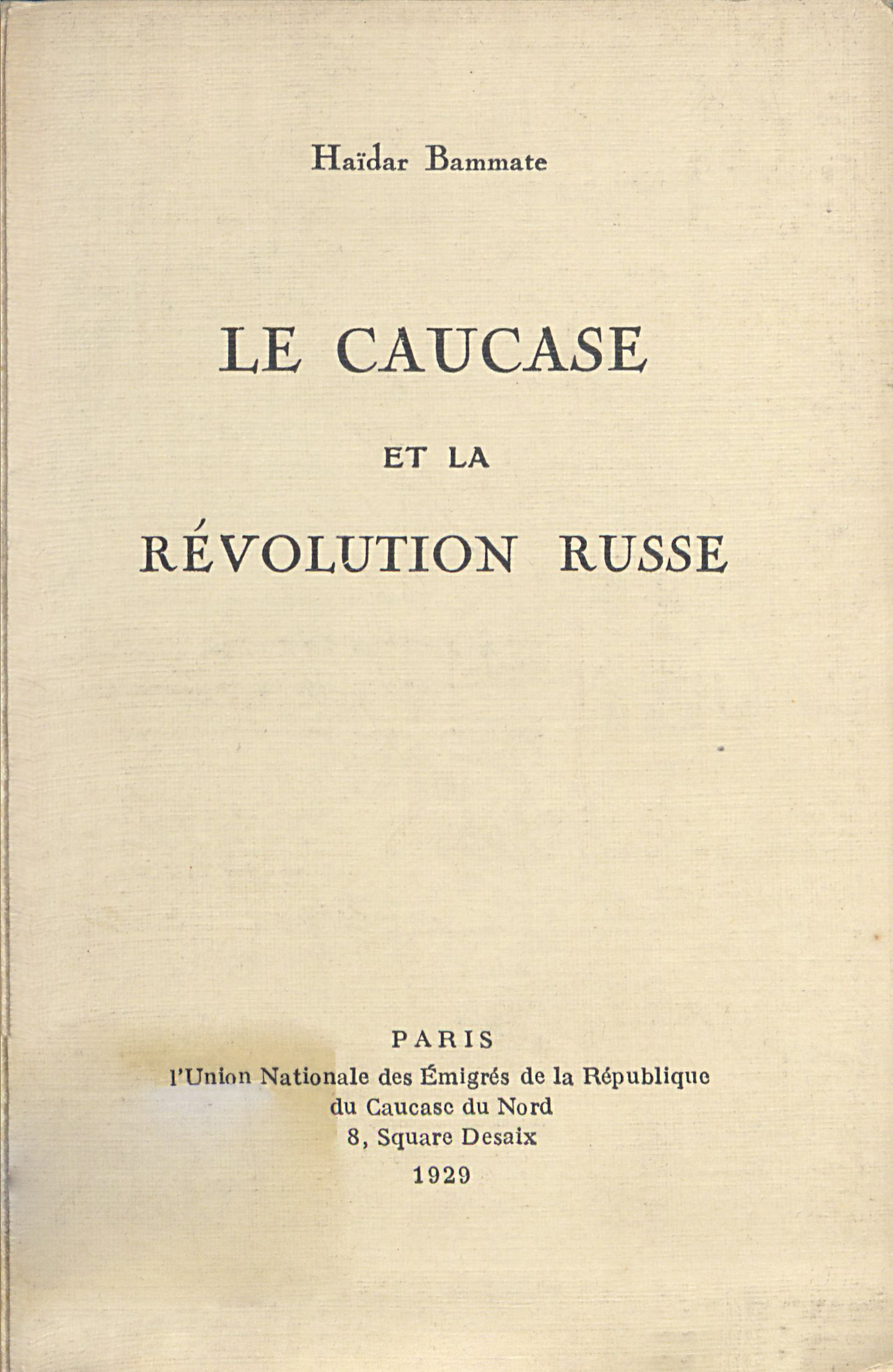
1. Historical Background
With the resolution of recent diplomatic disputes that historically hindered the European peace process, it is critical to examine another geopolitical issue with profound implications for the future of Eurasia: the Caucasus question.
Functioning as a vital land bridge between East and West, the Caucasian isthmus—situated between the Black and Caspian Seas—connects the river systems of Eastern Europe to the Mediterranean on one flank, and to Persia, India, and broader Asia on the other. Historically serving as a primary migration route, the region remains the most viable overland corridor to Upper Anatolia, Iran, and Turkestan. Consequently, any hegemonic power that controls the Caucasus effectively holds the strategic key to the East, projecting influence over Central Asia and threatening both the Mediterranean and Islamic spheres.
Russian imperial strategists explicitly recognized this geopolitical reality. Peter the Great articulated Russia’s expansionist aims toward Constantinople and the Indies, initiating a two-century-long policy of southern encroachment. While the Balkan States and a united Europe largely checked Russian expansion across the Black Sea, Russian penetration into the Caucasus proceeded systematically throughout the 19th century. Despite fierce resistance from the indigenous populations of the Northern Caucasus, Russia capitalized on Georgia’s 1783 appeal for a protectorate against Ottoman and Persian aggression. Russia’s subsequent outright annexation of Georgia in 1801—largely ignored by a Europe preoccupied with the Napoleonic Wars—provided a crucial foothold in Transcaucasia.
From 1820 to 1864, the Caucasian resistance—culminating under the leadership of Imams Ghazi-Mohammed, Hamza, and Shamil—captured the sympathy of the British public and strategic thinkers. Figures like David Urquhart and James Bell advocated for British intervention, recognizing the Caucasus as a necessary buffer against Russian expansion toward British interests in Asia. However, lacking formal Western military support, the region ultimately succumbed to the overwhelming demographic and industrial resources of the Russian Empire, culminating in Shamil’s capture in 1859 and the fall of Circassia in 1864.
This conquest decisively altered the global balance of power. No longer pinned down by the Caucasian conflict, Russian forces rapidly advanced into Turkestan, reaching the borders of Afghanistan. Furthermore, control of the Caucasus facilitated Russia’s economic and political dominance over northern Persia, formalizing its sphere of influence through the 1901 Anglo-Russian partition of Iran.
This expansionist trajectory was only interrupted by the disastrous Russo-Japanese War and the subsequent Russian Revolution of 1917, which precipitated the collapse of the Caucasian front. Demoralized Russian troops abandoned their positions, allowing Ottoman forces to reclaim previously lost territories, and inadvertently catalyzing the political emancipation of the Caucasian peoples.
2.Ethnographic Composition of the Region
The populations of the Caucasus primarily comprise two major ethnolinguistic lineages—Indo-European and Turanian (Turkic)—which can be categorized into distinct ethno-national groups:
Indo-European Lineages:
1. The Iranians: Ossetians, Tatars, Talyshs.
2. The Caucasian peoples are divided into three fundamental groups:
The Kartvelian Group: Inhabiting the southern Caucasus (modern Georgia), including Georgians, Imeretians, Mingrelians, Gurians, Ajarians, Laz, Svanetians, and others.
The Circassian (Western) Group: Inhabiting the Black Sea coast and parts of the northern Caucasus, subdivided into the Abkhaz, Adygeans, and Kabardians.
The Eastern Group: Comprising the Chechen-Ingush populations and the diverse ethnolinguistic communities of Daghestan (e.g., Avars, Kumyks, Darghins, Laks, Tabasarans).
Armenians: A cohesive demographic group primarily located in Transcaucasia with significant diaspora communities throughout the broader region.
Turkic (Turanian) Lineages: Azerbaijanis, Kumyks, Karachai, Balkars, and Nogai.
Despite this ethnolinguistic diversity, the indigenous peoples of the Caucasus share a distinct geopolitical and economic cohesion, contrasting sharply with the demographic and cultural makeup of their Russian colonizers. The region operates as an integrated economic unit, linked by complex agricultural exchange and vital industrial infrastructure, most notably the Baku-Batum oil pipeline and the Transcaucasian railway networks.
3.Transcaucasus and the Revolution
The collapse of the Tsarist regime led to the establishment of the "Special Transcaucasian Committee" in Tiflis, eventually replaced by the Transcaucasian Commissariat following the Bolshevik coup. On April 22, 1918, the Federative Republic of Transcaucasia—comprising Azerbaijan, Armenia, and Georgia—formally declared its independence.
The ideological trajectory of Transcaucasia’s leading political factions during this period is highly instructive:
The Azerbaijani Mussavat Party: Representing the national bourgeoisie, it consistently advocated for complete separation from Russia from the revolution's outset.
The Georgian Social-Democratic (Menshevik) Party: Initially favoring a reconstituted democratic Russia, the party was ultimately pushed toward separatism by the Bolshevik seizure of power and the pressure of the fiercely pro-independence Georgian National Democratic Party.
The Armenian Dashnaksutiun Party: Having previously aligned Armenian nationalist aspirations with Russian military victories against the Ottoman Empire, the party was severely undermined by the Treaty of Brest-Litovsk (which ceded vital territories back to Turkey). Consequently, it strongly resisted breaking ties with Russia until forced by military realities.
The Transcaucasian Federation proved ephemeral. Under intense military pressure from the advancing Ottoman army and differing strategic alignments (Georgia seeking German protection, Azerbaijan aligning with Turkey), the Federation dissolved. Georgia declared independent sovereignty on May 26, 1918, followed by Azerbaijan and Armenia on May 28.
4.The North Caucasus and the Revolution
Simultaneously, the fiercely independent peoples of the North Caucasus convened in Vladikavkaz in 1917, establishing the Union of the Peoples of the North Caucasus. Refusing to recognize the Bolshevik government, they formally established the Republic of the North Caucasus, complete with a constitution, parliament, and executive government.
Recognizing that ethnic fragmentation would render the region vulnerable, North Caucasian leadership aggressively lobbied for a pan-Caucasian Confederation bridging both the Northern and Transcaucasian states. In a declarative statement at the Trabzon Peace Conference in April 1918, the North Caucasian delegation argued that geographical, economic, and strategic imperatives demanded a unified Caucasian state. The Republic of the North Caucasus was officially recognized by the Ottoman Empire and its allies in May 1918.
However, the realization of a pan-Caucasian confederation was thwarted by internal political friction, territorial disputes, and the geopolitical machinations of foreign powers. Consequently, the fragmented republics faced their external adversaries alone.
The North Caucasus bore the initial brunt of this strategic failure. Despite early military successes against Bolshevik forces, the Republic was treacherously attacked by General Anton Denikin’s British-backed White Army. Driven by reactionary imperialism and the ideology of a "single, united Russia," Denikin’s forces waged a brutal war of subjugation against the anti-Bolshevik Caucasian republics.
In a profound strategic paradox, the British High Command provided decisive material support and diplomatic cover to Denikin’s reactionary forces while actively suppressing the democratically aligned, anti-Bolshevik Caucasian republics. This policy alienated the Caucasian populace, critically damaged British prestige in the Islamic East, and ultimately facilitated the Bolshevik reconquest of the region. By the time Denikin’s collapsing army formally recognized the Republic of the North Caucasus in a desperate, belated gesture in early 1920, the advancing Red Army was already poised to occupy the territory.
Despite prior Soviet broadcasts explicitly guaranteeing the sovereignty and self-determination of the Caucasian peoples, the Red Army systematically annexed the North Caucasus, subsequently capturing Baku (Azerbaijan) in April 1920, sovietizing Armenia by November 1920, and finally invading a globally recognized, sovereign Georgia in early 1921.
5.The Caucasus as a Base for Soviet Activity in the East
The Bolsheviks' ideological shift toward fomenting revolution in the East was intrinsically linked to their subjugation of the Caucasus. Inheriting the geopolitical imperatives of the Tsarist empire, the Soviet leadership recognized that projecting power into Asia required total control over the Caucasian isthmus and its vital petroleum resources.
The timeline of Soviet diplomatic expansion underscores this strategic reality. Mere weeks after occupying Azerbaijan, the Soviets convened the "Congress of the Oppressed Peoples of the East" in Baku, establishing training centers for communist agitators targeting the Islamic world, India, and China. Subsequent treaties of "brotherhood and friendship" with Persia, Afghanistan, and Kemalist Turkey were all finalized only after the Red Army had secured the Caucasus and reached the Turkish frontier.
By utilizing the Caucasus as an operational staging ground, Soviet Russia effectively reestablished the hegemony previously held by the Tsars over Persia and Afghanistan, directly challenging British colonial interests in India and fundamentally destabilizing the East.
Conclusion
Bammat underscored the imperative for the international community to engage closely with the Caucasian issue to ensure global stability. The region could not be perpetually governed through external military coercion. He emphasized that the establishment of an independent, confederated state in the Caucasus remained the only viable geopolitical solution. He argued that such a confederation would fulfill the region's historical destiny as an effective and stable buffer zone between rival empires, thereby facilitating peaceful cultural and economic exchange between Europe and Asia.

Istanbul, 31 March 2026