
 Türkçe
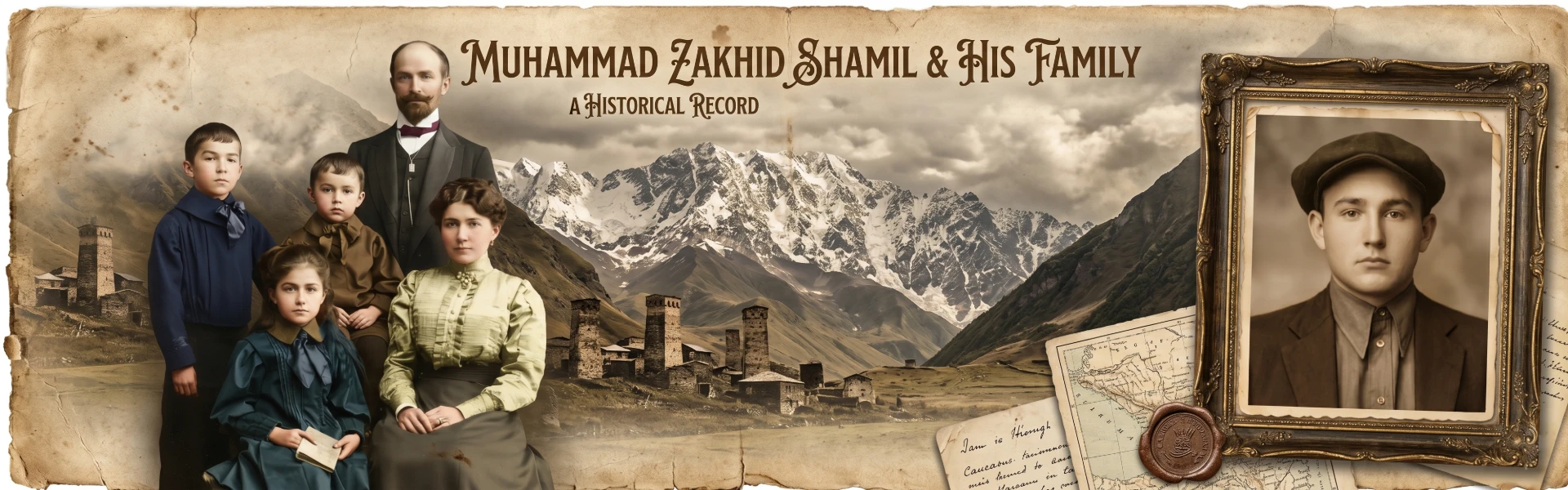
The life and work of Muhammad-Zakhid Shamil, the grandson of Imam Shamil, are known in literature in sufficient detail, but archival documents and other sources I recently discovered reveal unknown details from his life and the lives of his children.
Zakhid was an official in the Russian Empire until 1917, while simultaneously actively participating in the opposition social and political movement of Muslims, which encompassed all regions of the country where they lived. First, he lived in Kazan, then in St. Petersburg. After the collapse of the empire in 1917, he became one of their leaders seeking self-determination for Muslim peoples. After the Bolsheviks seized power in Russia in late 1917, Zakhid moved to Moscow and continued to participate in the Muslims' struggle for their interests. As a result, in the summer of 1918, he was arrested by the Bolsheviks in Moscow but was subsequently released. He worked in the Moscow Department of Public Education as an instructor for the two Tatar (Muslim) schools of the city. One of them was located at 8 Maly Tatarsky Lane (see Photo 1).
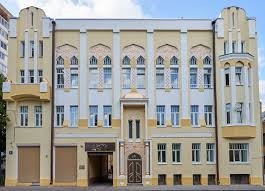
Zakhid monitored the state of this center of education and culture for Moscow Muslims, which also housed a rich Muslim library, a boarding school for poor Muslims and orphans, etc. His daughter Sapiyat worked as a teacher in the first Muslim Soviet school (primary; for children aged 8-12) in 1920. In addition, four children with the surname Shamil studied at this school in the autumn of 1920.
Zakhid's eldest son, Muhammad-Mansur (born in 1900 in Kazan), worked from March to October 1919 first as a clerk and then as an accountant in the 1st Civil Industrial-Technical Department of the People's Commissariat of State Control of Soviet Russia. He then resigned due to his enrollment in VSEOBUCH (Universal Military Training) courses. This organization was created as a mobilization reserve for the Red Army in Soviet Russia during the Civil War to train citizens subject to conscription.
Zakhid's youngest son, Gazi-Muhammad, was born on February 2, 1906, in the Avar Okrug of the Dagestan Oblast of the Russian Empire. This happened despite the fact that in 1906, Zakhid and his family had moved from Kazan to St. Petersburg, leading to the conclusion that the choice of his birthplace was made intentionally by his father. It must be assumed that Gazi remained in Dagestan for some time before he ended up in St. Petersburg.
Characterizing his father in a questionnaire, Gazi wrote in 1926 that he was an education worker, working, in his words, "in education among Muslims" in St. Petersburg/Petrograd until 1917 and during the Civil War, then worked in Moscow, where he died in 1920. Thus, the son confirmed that his father died exactly in that year, which I wrote about after discovering the source almost 20 years ago.[1] According to a common point of view in historiography, he died a few years later, leading to erroneous speculations about what happened to him in the last years of his life.[2]
The following lines, written by Gazi in 1926, testify to how difficult it was for this family to survive in those years: "I have been working since I was 12," i.e., since 1919, in the 2nd Kulchukovsky Agricultural Artel". Every year he went to the village of Kulchukovo (near the city of Kasimov) in the Tatar Volost of the Ryazan Governorate, where he participated in fieldwork, sowing, and harvesting grain, thus earning a living for himself and helping his family. This volost was the core of the Kasimov Khanate (15th–17th centuries), and after its annexation to the Muscovite state, it remained the territory of the most compact residence of the Kasimov Tatars. Obviously, his mother, a Kasimov Tatar, had close ties with her homeland, which helped Gazi live there during such work.
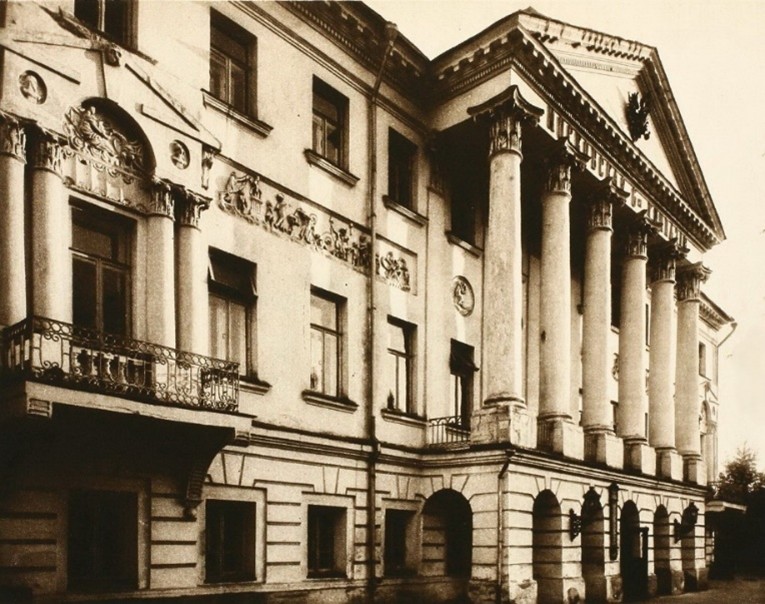
In the autumn of 1920, he studied at the 1st Muslim school, but then entered the 6th grade of the 1st 2nd-stage school (for children and adolescents aged 13-17) of the Zamoskvoretsky district of Moscow, which was located in Bolshoy Tolmachevsky Lane (bldg. 3). This school originated on the site of the elite 6th male gymnasium, which was opened back in the late 19th century and was located in a large and beautiful building (see Photo 2). Today, this building houses the K.D. Ushinsky Scientific Pedagogical Library.
And as early as June 1924, he began working at a weaving mill in the city of Zaraysk (150 km southeast of Moscow). The reason for his choice of such a work was that in those years, there was a shortage of shoes and clothing, and workers were the first to be supplied with them. After working there for 5 months, Gazi, one must assume, was able to get fabric to sew clothes for himself and returned to Moscow.
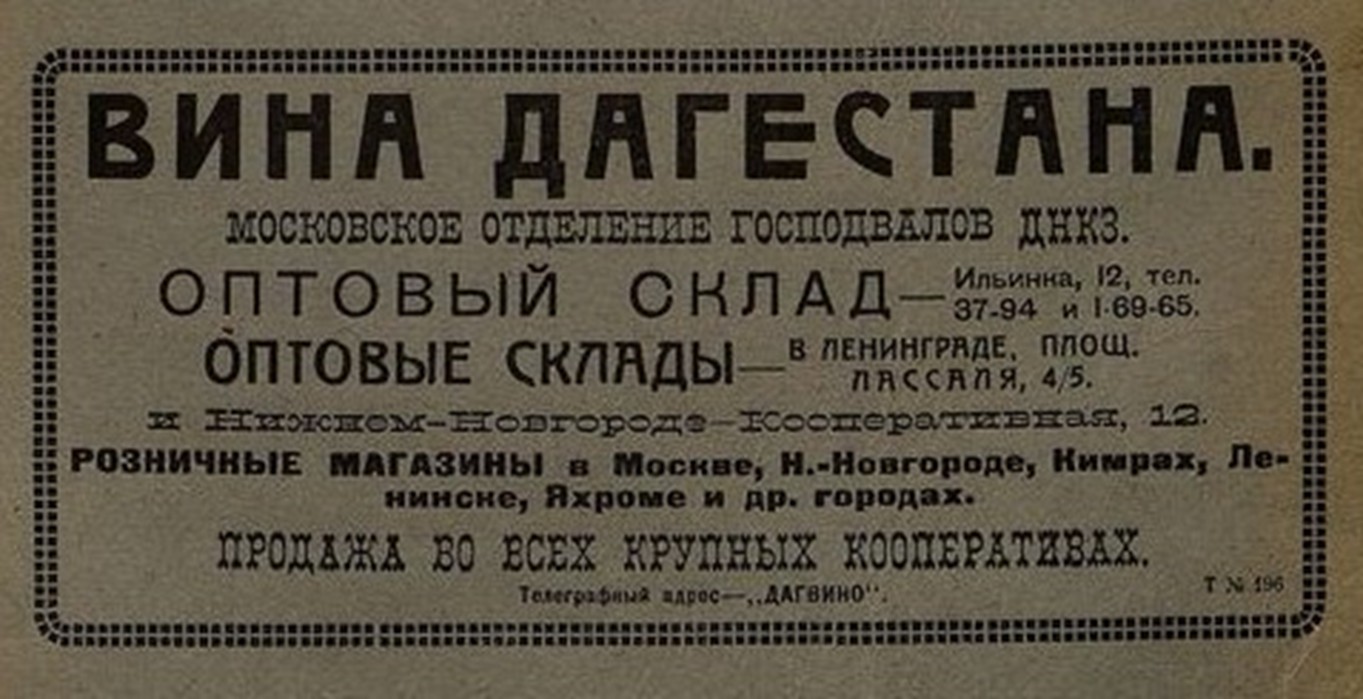
From November 1, 1924, he began working at the Moscow branch of the industrial-production combine of Wines of the state cellars of the Dagestan People's Commissariat of Agriculture (DNKZ), referring to himself in documents as a "worker," "bottler," and "blender." He was paid a small salary – 58 rubles 50 kopecks. (In the food industry in 1924, a worker's salary was twice as much.) In the publication "All Moscow. Address and Reference Book for 1925" (Moscow, 1925), there is an advertisement for this combine (see Photo 3), which indicates the address of the warehouse where Gazi worked: 12 Ilyinka Street, which is near Red Square.
Striving for higher education, on May 7, 1925, Gazi wrote an application to the admissions committee of the Institute of National Economy, stating that he was "assigned" to it by the People's Commissariat of Education of the Dagestan ASSR, where he had support. And in the autumn of 1925, he became a 1st-year student at the economic faculty of this institute (see Photo 4). The Dagestan authorities provided him with a scholarship (35 rubles a month), which he received only in the 1925–1926 academic year. This assistance, despite its short duration, meant that in Dagestan they continued, as far as possible, to support this grandson of Imam Shamil.
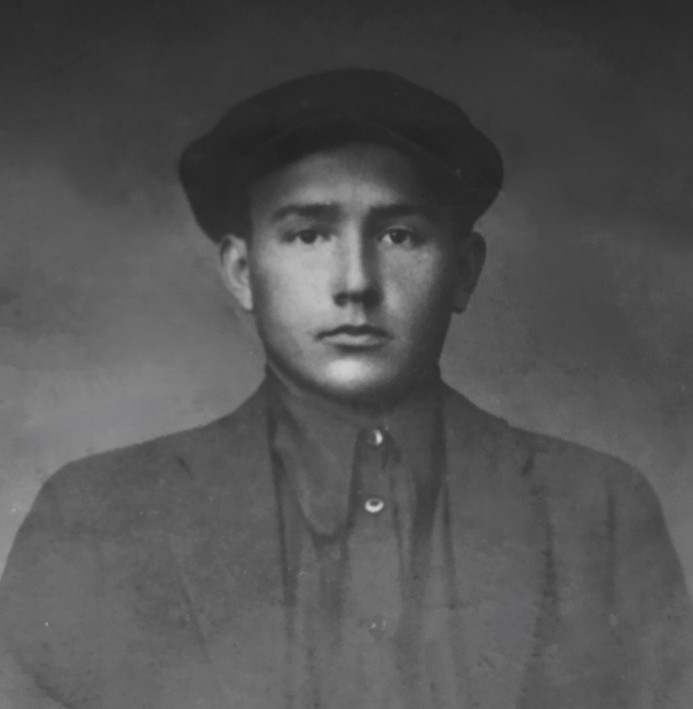
In the questionnaire he filled out on August 28, 1925, upon entering the aforementioned institute, he indicated that he lived with his mother in Moscow at the following address: Pyatnitskaya Street, 55, apt. 4. She was 48 years old in 1928, and after the death of her husband, she was a dependent of her son. His mother was Khadicha Khusainovna Baybekova, the daughter of a famous Tatar Moscow merchant, owner of the "Maly Hermitage" hotel, public figure, and politician. What happened to him after 1918 is unknown. In his answers, Gazi writes that his mother's name was Fatima. This, in my opinion, means that after marriage, she got a second name, apparently in memory of Imam Shamil's first wife – Fatimat.
In 1924, I. Karamyshev lived in this communal apartment. He was a Kasimov Tatar (a merchant until 1917), Ibragim Karamyshev, who actively participated in the socio-political life of Moscow Muslims and was acquainted with Zakhid Shamil. Such a neighbor, it must be assumed, provided all possible help to his son and the unemployed widow.
Left in his 2nd year of the institute without the modest scholarship that the Dagestan authorities had stopped paying him, Gazi tried to get one in Moscow. Addressing such a request to the relevant body, he wrote on October 11, 1926: "Currently working as a day laborer, and this being my sole source of livelihood, earning on average 4–5 rubles a week, I, of course, cannot meet my life needs. And having my mother as a dependent, I find myself in a completely desperate situation." But his request was rejected. Nevertheless, he managed to continue his studies.
Gazi Shamil, as follows from the presented facts, grew up a deeply religious, hardworking person persistently striving for knowledge, despite the extremely difficult conditions in which he and his family were left after his father's death.
In 1930, he graduated from the institute, qualifying as a "commodity economist for the raw materials trade," and began working in the Joint Representative Office of Trade-Procurement, Marketing, and Industrial Organizations of the Kazak (Kazakh) ASSR in Moscow ("Kaztorgpredstvo"). This organization was located at building 6/2 on Nikolskaya Street, near Red Square.
In October 1937, the address where he lived in Moscow was: Maly Tatarsky Lane, 9a, apt. 58. This was the building next to where the Tatar school was located, where his father and older sister had worked almost 20 years ago, and where he himself had studied for some time.
Both sons were under the close scrutiny of the authorities. In 1938, his older brother Mansur, who lived in Kazan, was sentenced to 4 years of imprisonment under Article 58-10, Part 1 of the Criminal Code of the RSFSR (anti-Soviet propaganda and agitation). He became one of those who fell under mass repressions in the USSR. As soon as Germany attacked the USSR, he was mobilized into the Red Army in 1941 by the Nikitovsky District Military Commissariat in the Voronezh Region and sent to serve in the 1st Reserve Cavalry Regiment of the Southwestern Front. The regiment was engaged in training personnel and sending marching squadrons to the front. On July 14, 1942, Mansur was captured and held as a prisoner of war until 1945 inclusively, then released. In November 1949, he was arrested in Magnitogorsk, where he worked as a foreman in the "Magnitostroy" trust. In January 1950, he was convicted under the same article and sentenced to 5 years in a corrective labor camp. It is believed that more often than not, repeated charges under this article in those years were not related to the actual commission of a new crime, but were part of the punitive policy of the Soviet state against those who dared to express any criticism of it.
In the 1940s, Gazi lived in Moscow at the previous address (Pyatnitskaya St., 55, apt. 4), but where he worked and what he did is unknown. He died in 1994 in Moscow. A few years later, his wife was buried next to him, and a small tombstone appeared over their common grave (see Photos 5, 6). Who she was is unknown.
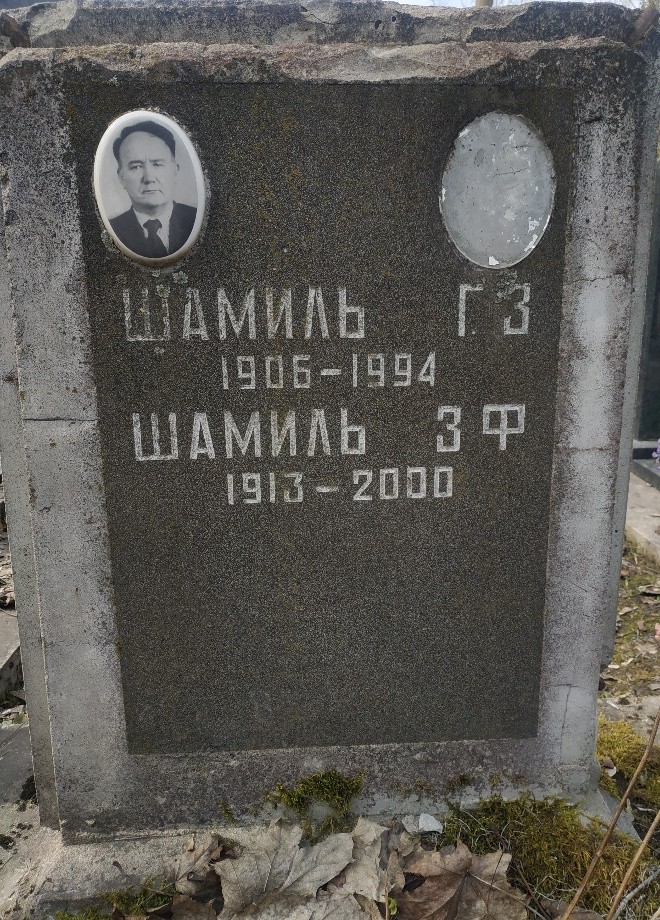
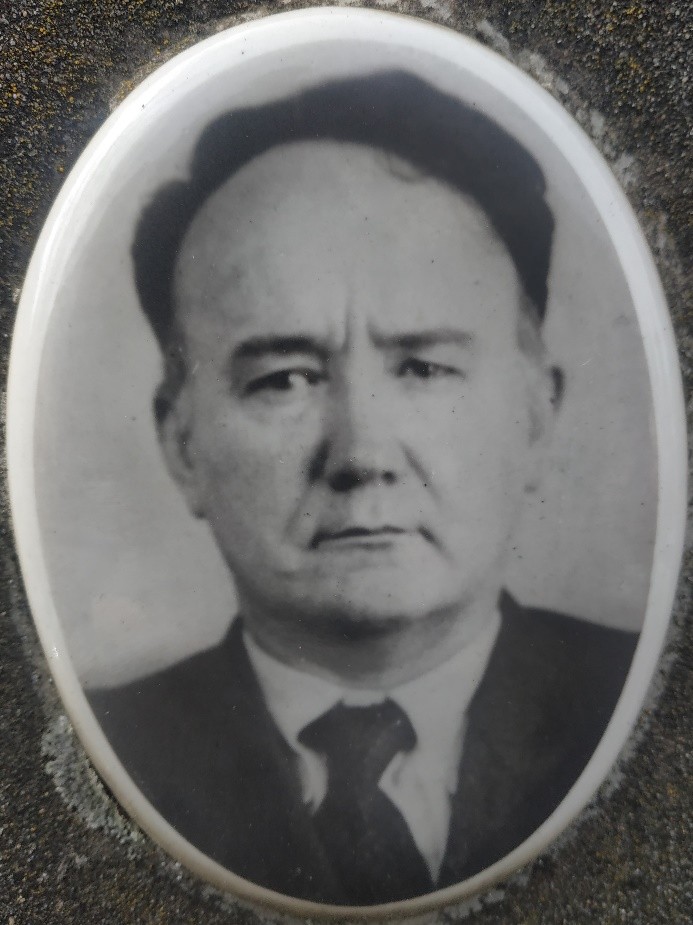
What happened to Sapiyat and Mansur after 1955 has not yet been discovered.
Salavat M. Iskhakov
Moscow, 17 April 2026
Translated from Russian by Cem Kumuk
References; (Click on the links to access the original works)
[1] Salavat M. Iskhakov, Pervaya russkaya revolyutsiya i musul'mane Rossiyskoy imperii, Moscow, 2007, p.115.
[2] M. Aydın Turan, “Tarihin Kayıp Çocukları”na Dair Bir Derkenar: Muhammed Zahid Şamil”, Kafkasya Calışmaları - Sosyal Bilimler Dergisi / Journal of Caucasian Studies (JOCAS), Mart / March 2017, Yıl / Vol.2, № 4, p.47.