

 Türkçe
— The Russian and Ottoman Imperial Context: Lodges as Revolutionary Sanctuaries
Between the 17th and 19th centuries, Masonic lodges functioned as critical sanctuaries for revolutionary, libertarian, and separatist factions opposed to imperial regimes. The discrete atmosphere and strict secrecy inherent to Freemasonry created an environment uniquely suited to evading the surveillance of state intelligence services. Consequently, North Caucasian figures engaged in resistance against the Russian and Ottoman Empires became frequenters of these lodges, many of which operated clandestinely.
While the North Caucasus—a predominantly agrarian and rural region—remained largely peripheral to the proletarian uprisings of the Russian Empire, its intelligentsia was deeply integrated into the revolutionary zeitgeist. North Caucasian figures residing or studying in metropolitan hubs such as St. Petersburg, Moscow, and Kazan were closely monitored by revolutionary circles and frequently initiated into Masonic orders.
This integration was even more pronounced among the North Caucasian diaspora within the Ottoman Empire. Through this conduit, revolutionary ideologies gained significant momentum in the homeland. While concrete documentary evidence detailing the specific interference of North Caucasian émigrés in Ottoman Freemasonry is limited, the link is historically inferable. It is well-established that the Young Turks and the Committee of Union and Progress (İttihat ve Terakki Cemiyeti) required Masonic initiation as a prerequisite for membership. Therefore, it is historically plausible that prominent North Caucasian political figures—such as Kaplanzade Akhmed Said Bey, Mizancy Mehmet Murat Bey, İsmail Janbulat, Dr. Reshid Bey, and Shkhaply Hussein Tosun—were intimately involved with Freemasonry during the formative stages of the Ottoman opposition.
— Freemasonry as a Code of Elite Sociability
For the North Caucasian mountaineers, Freemasonry was less an ideological dogma than a mediating culture—a complex of practices, symbols, and social norms that facilitated interaction between local elites and European power centers. It functioned not as a substitute religion or a mass movement, but as a code of elite sociability.
The lodge offered a "ritualized neutrality," allowing individuals across religious lines (Muslim, Christian, Jewish, secular) and political spectrums to cooperate without demanding explicit ideological submission. Accordingly, Freemasonry appealed almost exclusively to Western-educated, multilingual aristocrats and the bourgeoisie, rather than to popular or religious leadership. It symbolized Enlightenment values: rationalism, constitutionalism, and meritocracy.
However, this modernist identity clashed sharply with traditional sources of authority in the Caucasus, specifically Islamic scholarship (ʿulama), customary law (adat), and clan-based legitimacy. Consequently, North Caucasian Freemasons often found themselves politically influential yet socially isolated; their authority was derived from external recognition rather than internal consensus.
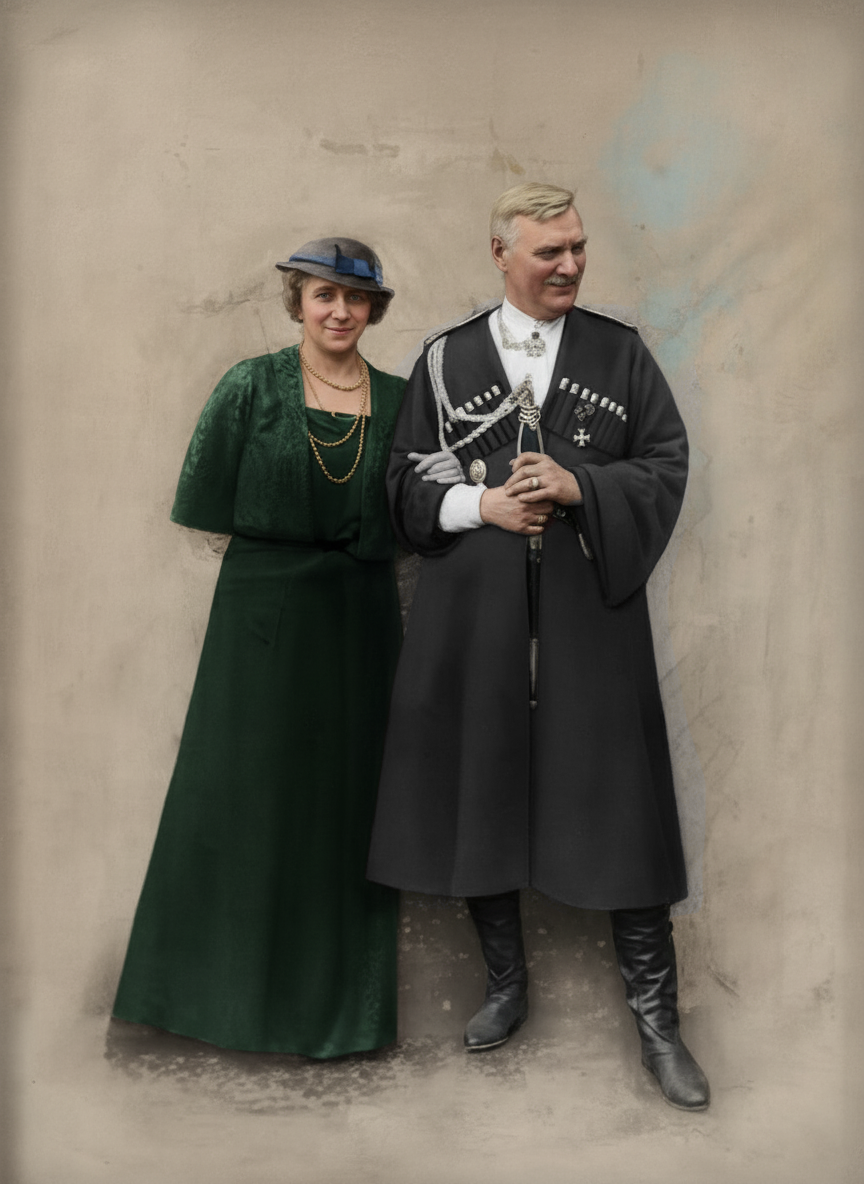
Before the collapse of the empire, North Caucasians utilized Masonic identity to access liberal constitutional circles and frame regional grievances in the language of imperial reform. Freemasonry served as a "school of political translation," teaching provincial elites the grammar of imperial power.
The revolutionary period (1917–1921) precipitated a semantic shift. Freemasonry ceased to be a tool for reform and became a mechanism for survival and coordination. During this volatile phase, Masonic universalism was reinterpreted as anti-Bolshevik internationalism, shifting the focus from imperial integration to self-determination.
— The Émigré Experience: Diplomacy in Exile
Following the Bolshevik consolidation of power in 1921, a significant portion of the North Caucasian political elite was forced into exile, establishing centers in Paris, Warsaw, Prague, Berlin, and Istanbul. They faced three immediate structural challenges:
— Political marginalization within Europe.
— Internal fragmentation along ethnic and religious lines.
— A lack of access to diplomatic and financial networks.
Freemasonry, deeply embedded in European elite culture, provided a transnational infrastructure to mitigate these challenges. Membership allowed stateless actors to establish informal channels with French parliamentarians, journalists, and diplomats. In this context, Freemasonry was a functional diplomatic infrastructure. It allowed Caucasian claims to be reframed in the idiom of European liberalism, granting stateless actors credibility through association. Institutions like the Grand Orient de France were particularly vital due to their political engagement and tolerance of religious diversity.
— Notable Lodges and Membership
While no monolithic "Caucasian Masonic bloc" existed, individual participation was significant. The first wave of North Caucasian Freemasons emerged in the Astrea Lodge (founded 1921 in Paris), working under the Ancient and Accepted Scottish Rite within the Grand Lodge of France.
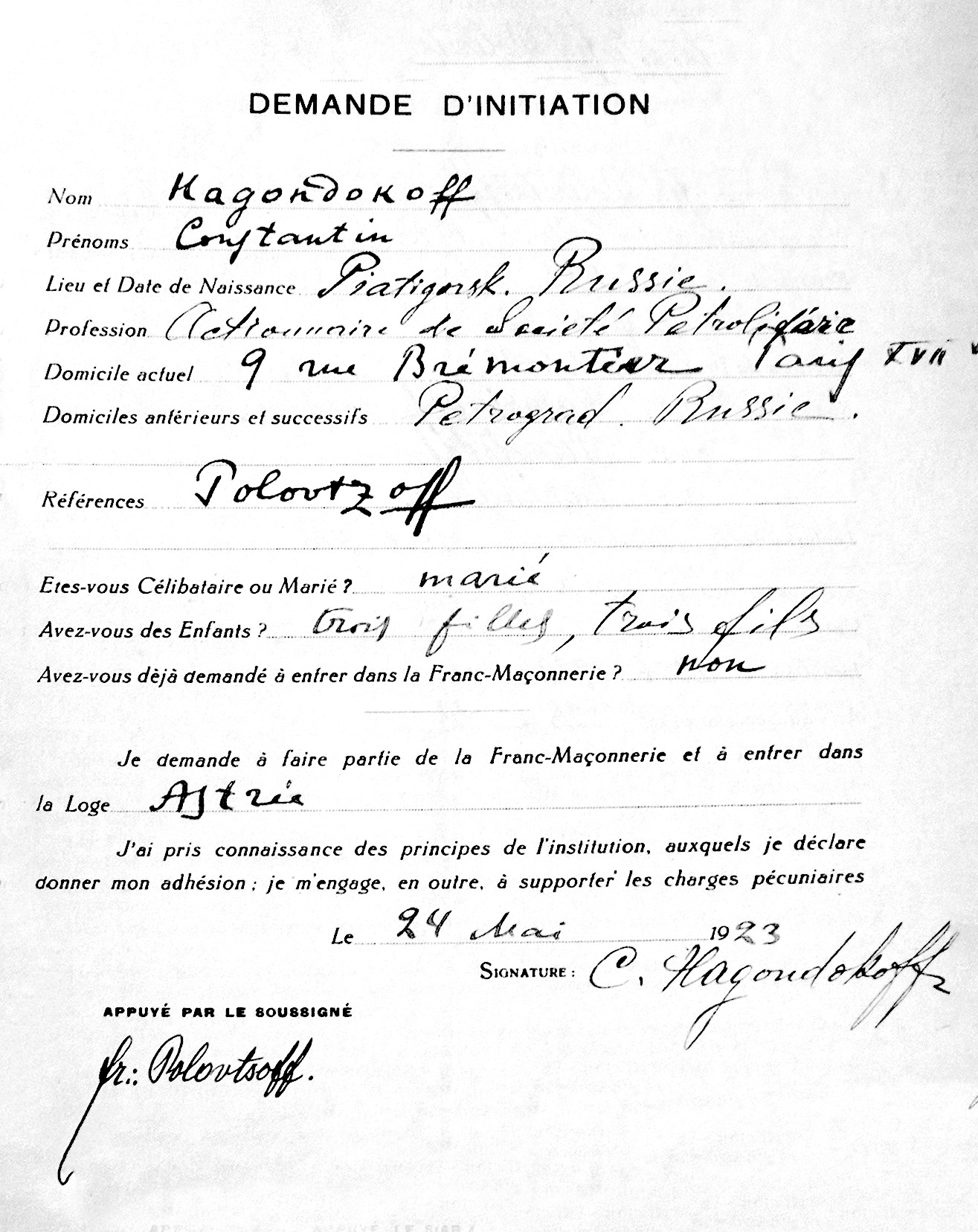

Another distinguished North Caucasian figure, Konstantin Hagundokov, was initiated on 23 June 1923 under the recommendation of Petr Polovtsev. Hagundokov ascended through the hierarchy, reaching the Eighth Degree by 18 October 1924, before being expelled on 28 November 1929.
Another Mason Mountaineer was Alexander (Aamkha) Emuhvari from Abkhazia. He joined Freemasonry on September 29, 1923, rose to the third degree on November 15, 1924, and remained a regular of the lodge until his expulsion in 1926. Following the path of his compatriots, Tau-Sultan Shakman joined the lodge on 12 July 1924 upon Hagundokov’s recommendation. Like Hagundokov, Shakman’s tenure concluded with his expulsion on 28 November 1929 due to the non-payment of dues. Izmail Shakov, another North Caucasian émigré invited by Hagundokov on the same date (12 July 1924), remained a member until his removal from the rolls on 8 November 1930. Finally, Djabagi Shipshev rounded out the lodge's North Caucasian contingent, joining on 27 January 1927 and maintaining his affiliation with the Grand Lodge of France until 1929.
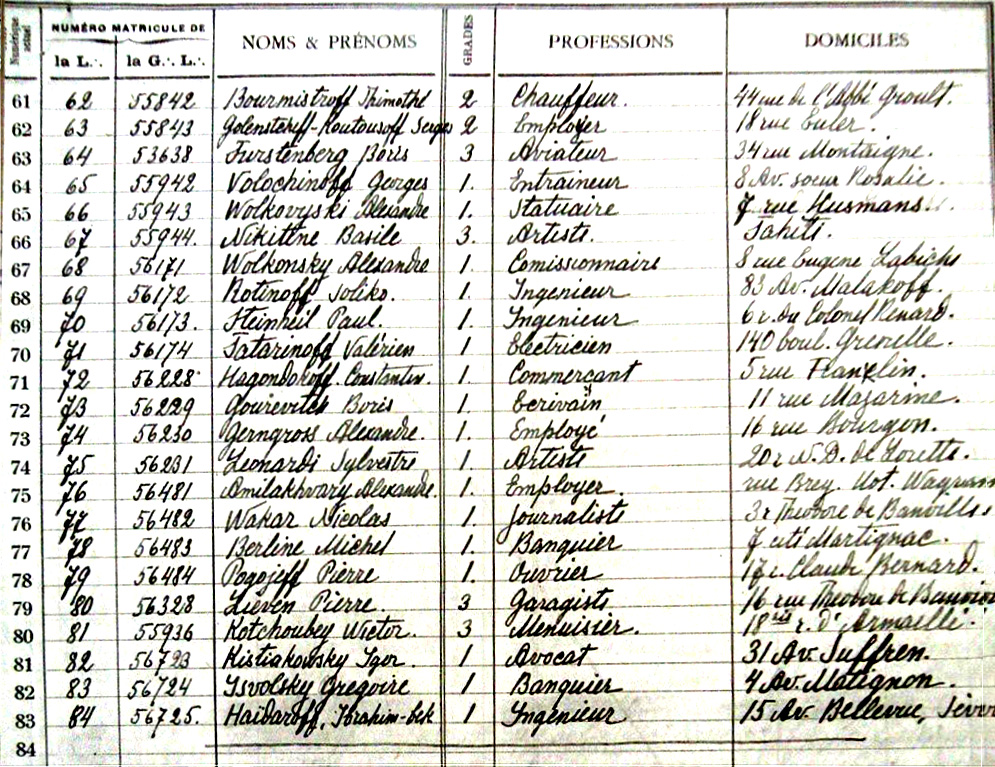
Murzala Kuriev distinguished himself as a charter member of the lodge; he was raised to the Third Degree on May 23, 1925, and subsequently assumed the office of Gatekeeper. The year 1925 saw the admission of several notable initiates. Ruslan Janbek and Aytek Namitok commenced their journey on April 29, with Namitok attaining the Third Degree by August of the following year. Abdul-Mejid (Badi) Baduev was initiated on February 28 and advanced to the Third Degree on January 28, 1926. The lodge concluded the year with the initiations of Osman Chermoy in November, followed by Phemat Ajigoyev and Aziz-Girey Dalgat in December. Haidar Bammat was initiated into the degree of apprentice on April 29, 1925, on the recommendation of Hagundokov, elevated to the degree of journeyman on October 10, 1925, and elevated to the degree of master mason on August 4, 1926.

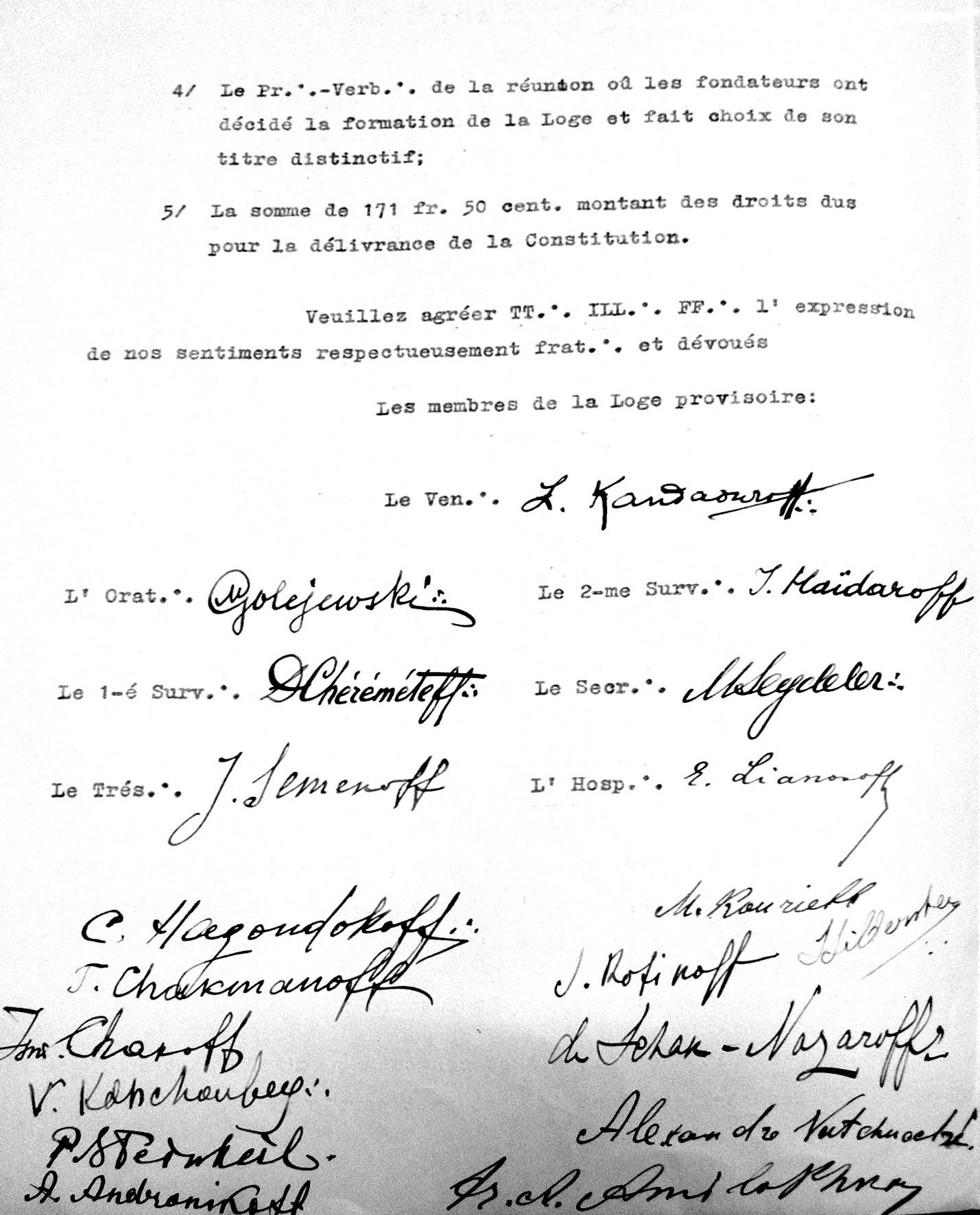
Haidar Bammate had addressed the audience during the inauguration on 19 January 1927, with the following speech at the lodge:
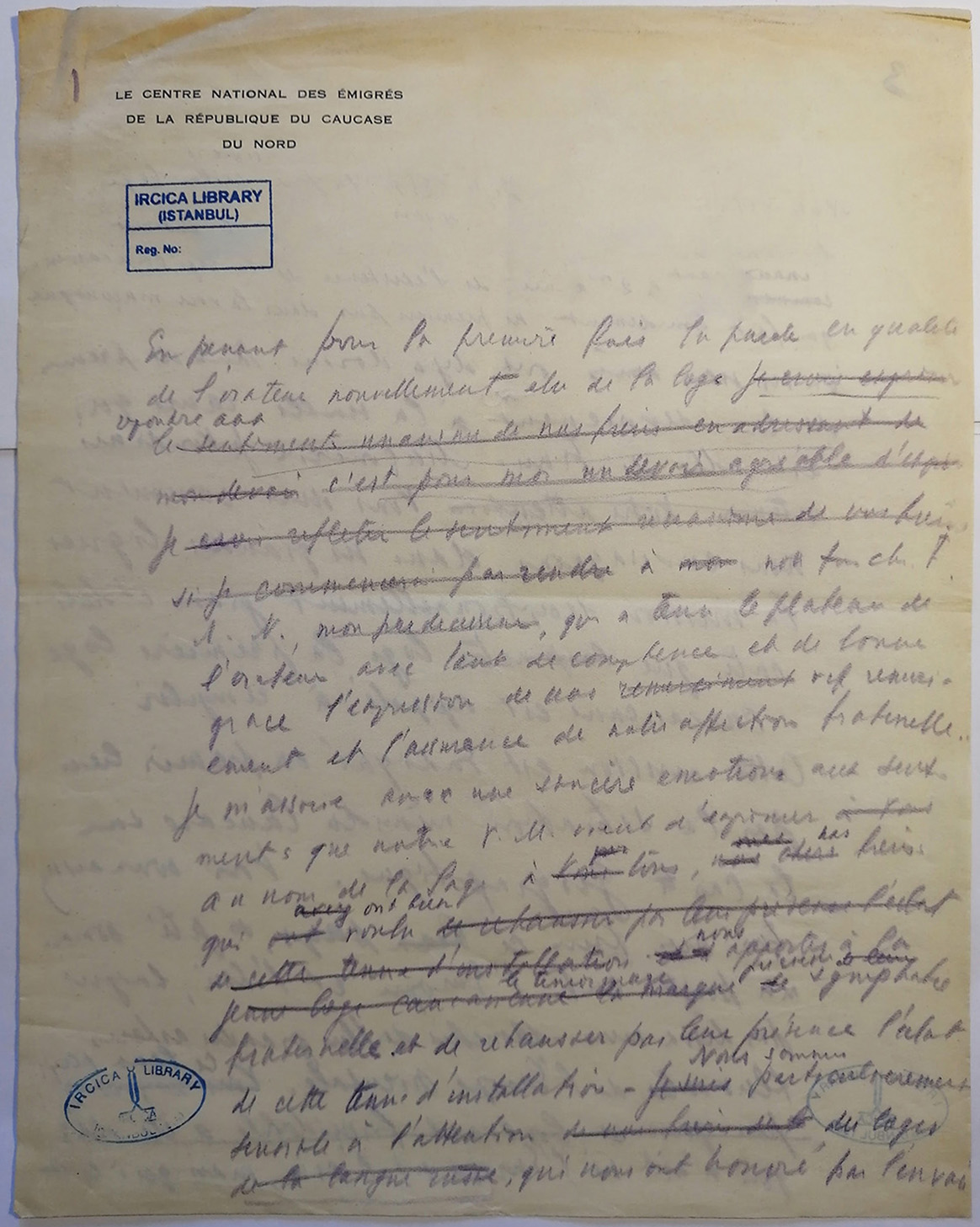
Taking the floor for the first time in my capacity as the newly elected Orator, it is my pleasant duty to express the unanimous sentiment of the brethren. I begin by offering our warm thanks and assurance of fraternal affection to my predecessor, Brother Aytek Namitok, who held the Orator's station with such competence and grace.Following the closure of Prometheus in 1930, key figures, including Hagundokov and Bammate, continued their activities in the Russian lodge The Friends of Philosophy until the onset of World War II.
I join with sincere emotion in the sentiments that our Worshipful Master has just expressed on behalf of the Lodge to our dear guests, who wished to enhance the brilliance of this installation meeting with their presence. We are particularly touched by the attention of our Russian-speaking brothers—including those who honored us by sending special delegations—and we hope to see you increasingly numerous among us. For personal relations marked by trust and mutual benevolence are indispensable for creating that atmosphere of appeasement and understanding necessary for any work of human construction.
We, who have chosen as our mission to work towards the construction of the universal temple, must realize how heavily psychological factors weigh upon all human decisions. We must acknowledge that 'irrational part' which acts as a moving force in all great popular movements; for it is often not reason, but imagination, that determines the actions of man and of human communities.
As we inaugurate our second year of existence, still timidly taking our first steps on the Masonic path, our elder brothers have already provided many proofs of their devotion to the noble cause of Freemasonry. I wish to draw your attention to the exceptionally grave and delicate mission that our Lodge—the first Caucasian Lodge—is called upon to fulfill.
This mission is dictated by the very geography of the Caucasus. Situated at the outlet of the two seas that form the communication route between Europe and Asia, it is a bridge between the continents. This beautiful country, which is neither purely Europe nor Asia, has always participated in the life of both. As a historic migration route that has preserved the remnants of the many nations that passed through its soil, it is called upon to become the link between the two great civilizations of the ancient world: the European and the Oriental.
My dear brothers, after the great cataclysm of the war that led the world to the spectacle of moral bankruptcy, it is high time to remember that Europe is but a small peninsula of immense Asia. As the East awakens from a thousand years of lethargic sleep and becomes conscious of its latent forces, we must understand that Europe can no longer live in isolation. Its salvation—and perhaps its very existence—relies on solidarity, on being a part of the great whole, and depends on the regular beating of the universal heart.
We are living in a confused and agonizing era, uncertain of what tomorrow holds. Yet one thing is certain: the secret of the peace of Europe lies not within Europe alone. The new world order will not emerge merely from a game of European balances. The interests of Europe, Africa, Asia, and America are inexorably entwined in an interdependence that has become the law of the universe. Goodwill and the understanding of peoples outside of Europe are the sine qua non conditions for the interpenetration of civilizations upon which the destiny of the world depends.
To undertake this great work—requiring the complete abstraction of all prejudices of race, color, and religion, and inspired by a generous and elevated idea of human solidarity—is, I believe, the true work of Freemasonry.
By virtue of its geographic situation and ethnic composition, the Caucasian Lodge is called upon to play an important role as an advanced outpost of the Grand Lodge of France. In order not to fail in this glorious role, she will need all the protection of the Grand Lodge of France—of which she remains forever a respectful and obedient daughter.
I raise my glass to the glory and prosperity of the Grand Lodge of France, and to all of you.
— Theological Dissonance: The Islamic Conflict
A profound obstacle for North Caucasian Freemasons was the inherent tension between Islamic orthodoxy and Masonic ritual. This created a difficult dichotomy between their public Islamic identity and their private Masonic pragmatism.
From a strict Islamic perspective, specific Masonic rituals—such as the requirement to swear an oath upon the Bible or Torah—presented significant theological conflicts. For conservative commentators, these acts constituted grounds for apostasy. While many émigrés attempted to frame Masonic ethics as compatible with Islamic morality, this proved to be a form of compartmentalization that failed to convince the religious masses. Thus, Freemasonry acted as a filter, separating secular-national elites from the traditional religious leadership and limiting the movement's popular reach.

Ultimately, Freemasonry served as a "translational technology" for the North Caucasian elite—vital for networking, framing discourse, and gaining audiences in the West. However, it failed to substitute for statehood or generate mass mobilization. It could not overcome the deep ethnic and personal rivalries of the diaspora, nor could it bridge the gap between modernist elites and traditional society.
From a longue durée perspective, Freemasonry in the North Caucasian context was an experiment in elite modernity: an attempt to synchronize local political projects with global norms. It was a bridge that never solidified into a foundation. As European geopolitics shifted and funding dried up, the utility of these networks waned. Freemasonry did not deliver independence, but it remains a testament to the pragmatic adaptability of the North Caucasian political elite in the face of statelessness.
The concept of "Theological Dissonance" presented a profound paradox, particularly for prominent statesmen defined by their Islamic intellectual identities, such as Haidar Bammate. That a respected authority on Islamic matters would attain the rank of Master Mason suggests a strategic intent: to leverage the fraternity in service of his national and religious objectives. The leadership of the Grand Lodge of France later underscored this instrumentalist approach. In a brief yet trenchant assessment of the North Caucasian cohort, the Grand Lodge observed:
The North Caucasian members proved unable to transcend their nationalist sentiments to cultivate a unified political and philosophical ethos within the lodges. Perpetually occupied with drafting reports on the situation in the Caucasus, they viewed Freemasonry merely as an instrument for North Caucasian independence. Ultimately, they harbored no affection for Freemasonry, and the Order held none for them.The lodge was kept afloat by the financial support of Abdulmejid Chermoy. Almost all of its members were absent. Members of the lodge did not pay their dues, despite the dues being significantly lower than normal. As a result, most lodge members were either expelled by the Grand Lodge or completely excluded by other lodges. Finally, in 1929, the Grand Lodge of France decided to put the Prometheus lodge into sleep, and the decision was implemented in 1930.
Cem Kumuk
Istanbul, 18 December 2025
References:
— Les Archives de la Grande Loge de France.
— IRCICA – Haidar Bammate Private Archive.
— Andrey Ivanovich Serkov, Istoria Russkogo Masonstva (1845-1945), St. Petersburg, 1996. (Click the link to access the book)
— Andrey Ivanovich Serkov, Istoria Russkogo Masonstva Posle Vtoroy Mirovoy Voyny, St. Petersburg,1998 (Click the link to access the book)
— Oleg Platonov, Ternovyy Venets Rossii, Moscow, 2000. (Click the link to access the book)
— Boris Bashilov, Istoria Russkogo Masonstva, Moscow, 2003. (Click the link to access the book)
— Pavel Afanasyevich Buryshkin, Istoria russkikh masonskikh lozh.
— Pavel Afanasyevich Buryshkin, Istoria Russkogo Masonstva v emigratsii.
— Semih S. Tezcan, İsmail İşmen, İlk Türk Masonları ve Sultan Murad V, İstanbul, 1998.
— Şükrü Hanioğlu, Osmanlı İttihat ve Terakki Cemiyeti ve Jön Türklük 1889-1902, İstanbul,1985. (Click the link to access the book)
— İlhami Soysal, Dünyada ve Türkiye’de Masonluk ve Masonlar, İstanbul, 1980.
— Tamer Ayan, Atatürk ve Masonluk, Ankara, 2008.