
 Türkçe
For the Caucasian political immigration, the years 1922 and 1923 were etched into collective memory by their devastating repercussions. While anticipating diplomatic recognition from the West and support for their anti-Soviet struggle, the shocking resolutions passed at the Genoa and Hague Conferences left the Caucasians entirely at the mercy of the Bolshevik Russian regime. Members of the Caucasian political diaspora from Azerbaijan, Georgia, and Armenia became preoccupied with their own survival, leaving their shared political struggle forsaken.
The situation in Turkey was even more dire than in the West. The Ankara-Moscow alliance, which began to take shape in 1920, had become fully overt by 1923. Emboldened by the outcomes of the Genoa and Hague conferences, Soviet Russia brazenly signaled to the West that it stood behind Ankara, wielding this posture as a threat. Consequently, the West—unwilling to risk another war, a sentiment echoed by the magnates of capital—officially terminated hostilities via the Armistice of Mudanya and permanently shelved the Treaty of Sèvres at the Lausanne Conference. The provisions regarding minorities at Lausanne handed the hawks in Ankara all the trump cards they needed to exact revenge on their North Caucasian political rivals. Consequently, Ankara's hand was strengthened to decisively conclude the issues surrounding Ethem Bey and the Near East (Şark-ı Karib) Circassians. The mass exile of the South Marmara Circassians between May and June 1923 would serve as the most striking manifestation of how this power was wielded.
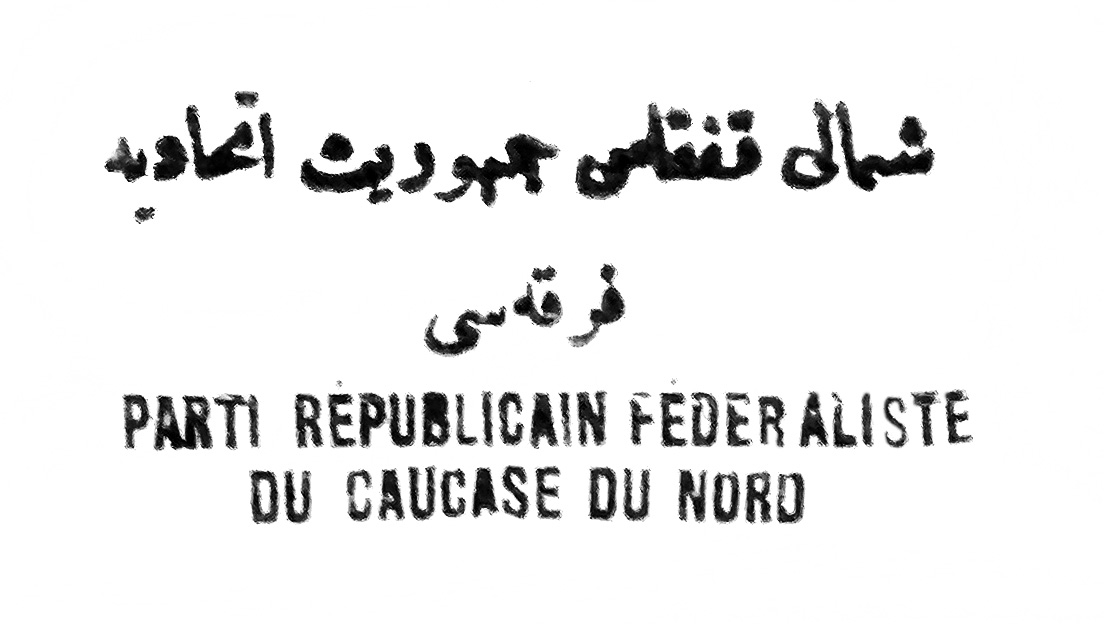
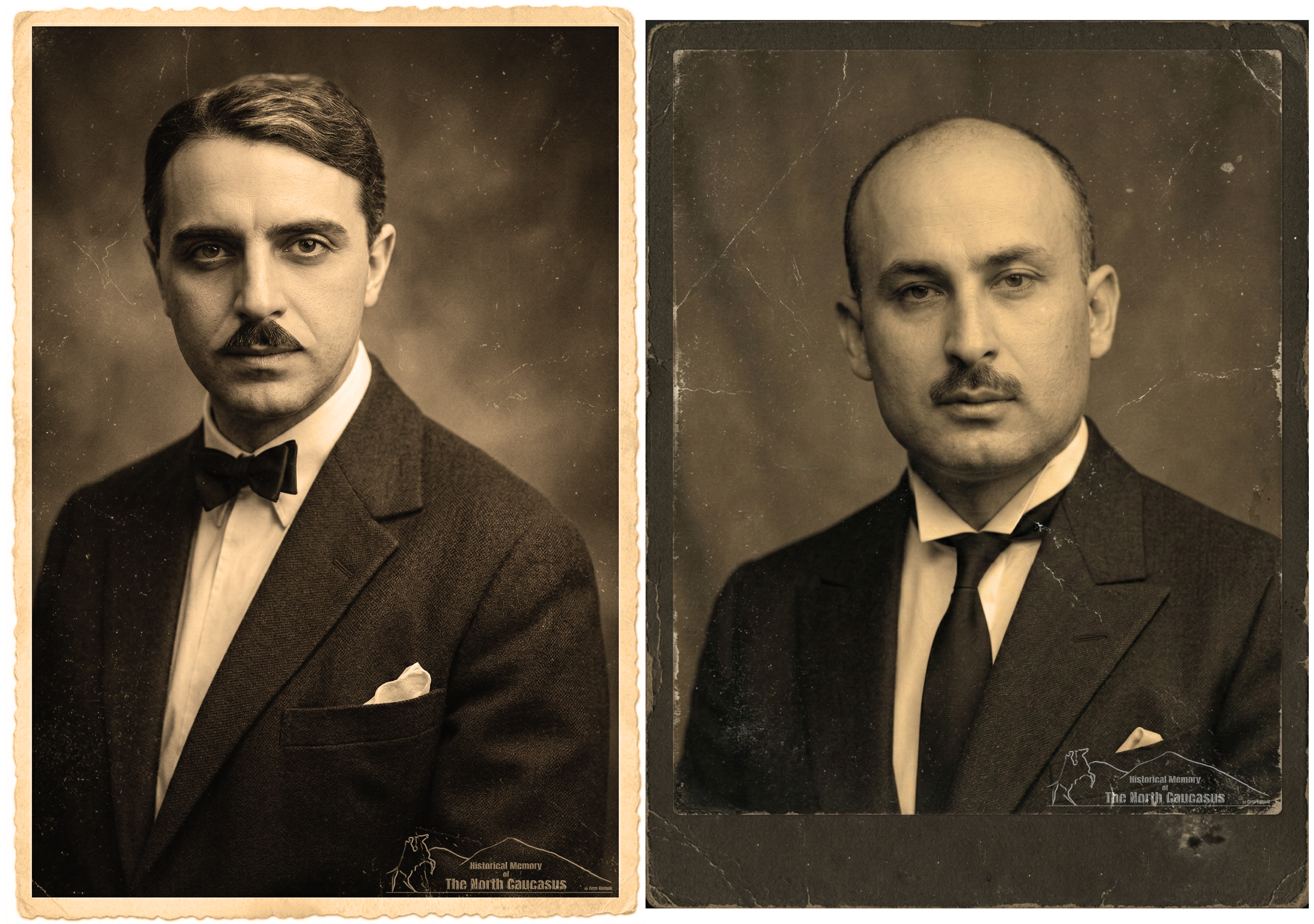
Ideologically, the Caucasian diaspora in Turkey was severely fragmented. The disarray exhibited by the supporters of the Istanbul Government, the loyalists of the Ankara Government, the Near-Easterners, the members of the Monarchist Mountaineer Front fraternizing with the White Russians, and the Nationalist Democrats gathered around the Republican Federalist Party, left ordinary North Caucasians—trapped in a vicious cycle of exile, oppression, and destitution—drowning in a vortex of despair. To halt this unbridled annihilation, a commission founded in October 1921 under the leadership of Haydar Bammat, Alikhan Kantemir, and Ahmed Tsalykkaty (Tsalikov) evolved into a formal political movement in response to the escalating crisis of 1923, adopting the name of the North Caucasian Republican Federalist Party.
(Click on the image for a larger view)
(Click on the image for a larger view)
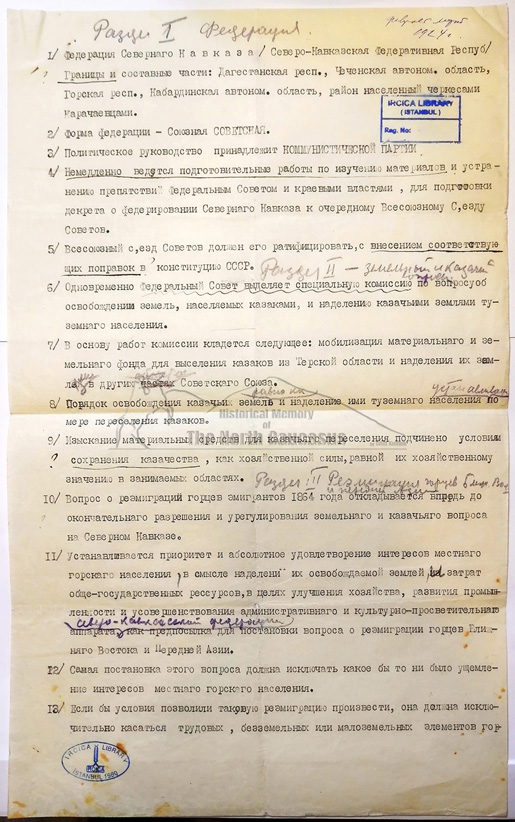
Section I: FederationBammat and Kantemir had hoped that by dissolving the political opposition movement within the framework of these conditions and integrating themselves into the Soviet system and the Comintern, they could rescue the entire diaspora community from this downward spiral.
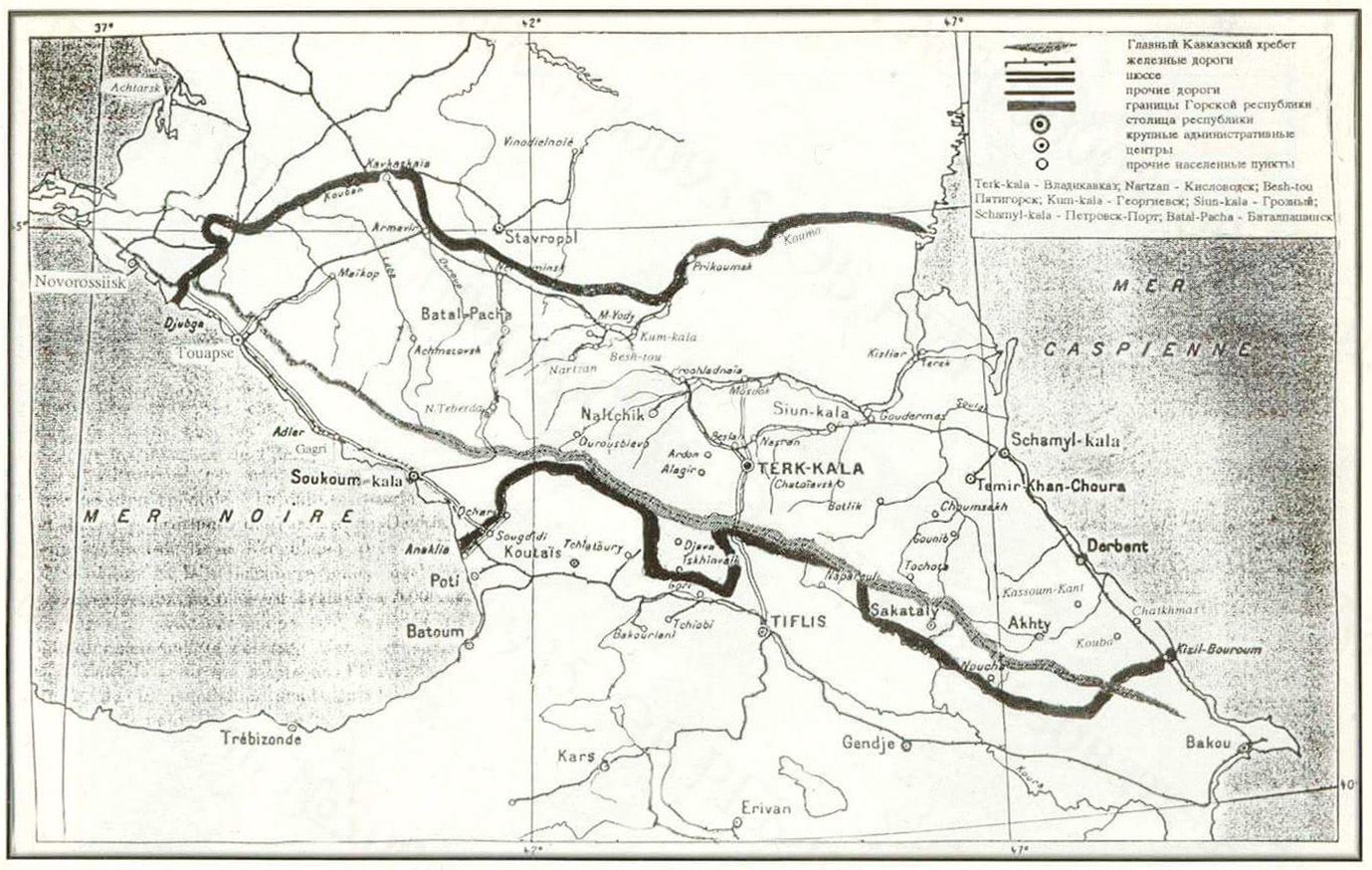
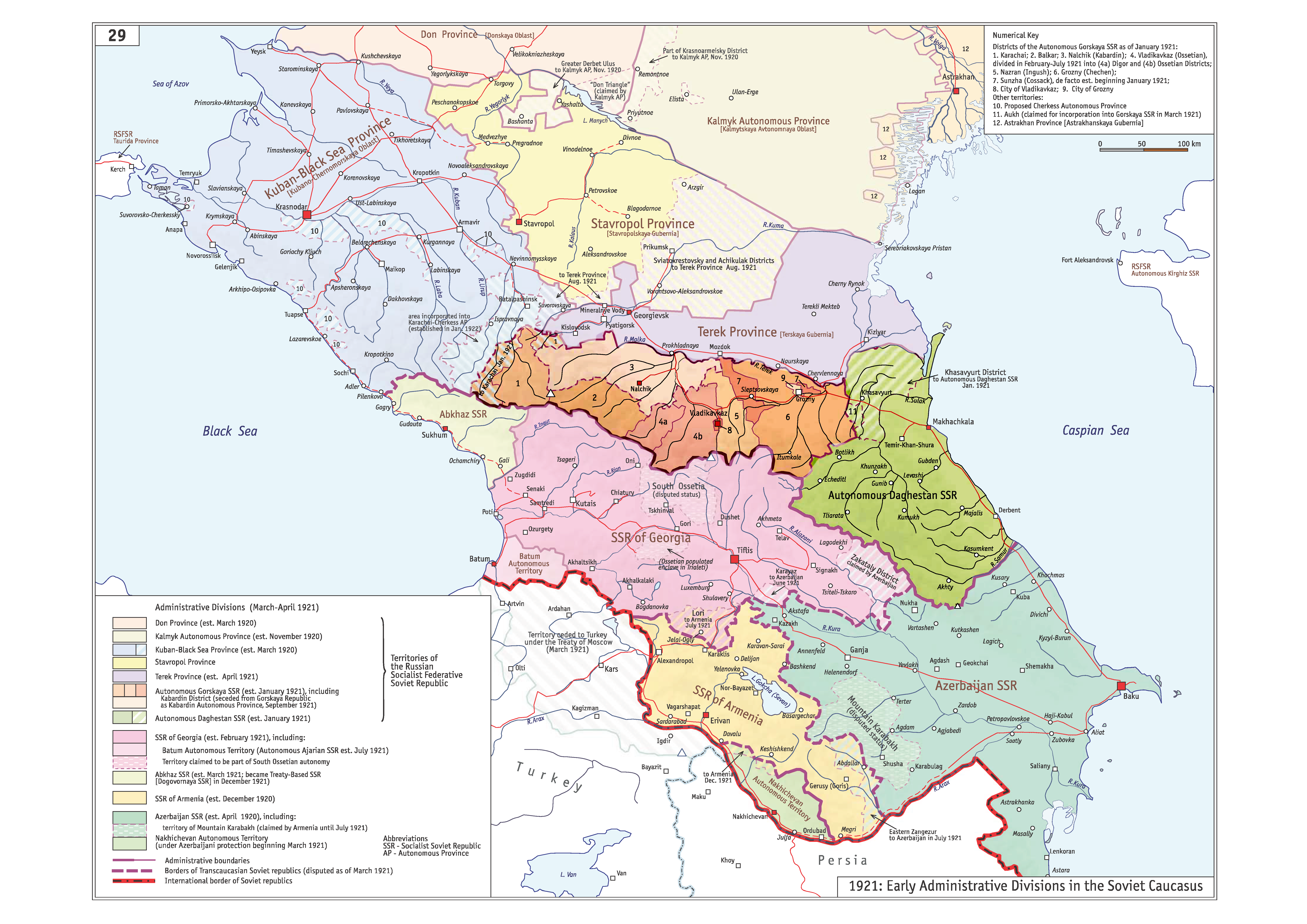
— Borders and Constituent Elements: North Caucasus Federation / North Caucasian Federative Republic. Republic of Dagestan, Chechen Autonomous Oblast, Mountain Republic, Kabardian Autonomous Oblast, and the region inhabited by Circassians and Karachays.
— Form of Federation: The Soviet Union.
— Political Leadership: Rests with the Communist Party.
— Preparatory Action: To prepare a decree regarding the North Caucasian federation for the upcoming All-Union Congress of Soviets, preparatory work shall be immediately undertaken by the Federal Council and regional authorities to review materials and eliminate obstacles.
— Ratification: The All-Union Congress of Soviets must ratify this by making the appropriate amendments to the Constitution of the USSR.
Section II: The Land and Cossack Question
— Special Commission: Simultaneously, the Federal Council shall appoint a special commission to address the evacuation of lands inhabited by Cossacks and the redistribution of these lands to the indigenous population.Economic Parity: Securing the financial resources for the resettlement of the Cossacks is contingent upon preserving them as an economic force equivalent to their economic significance in the occupied territories.
- Commission Mandate: The foundation of the commission's work shall be mobilizing financial resources and land funds for the evacuation of Cossacks from the Terek region and granting them land in other regions of the Soviet Union.
- Transfer Procedure: Establishing the procedure for evacuating Cossack lands and transferring them to the indigenous population by resettling the Cossacks in their new locations.
Section III: Repatriation of the Mountaineers of the Near East and Central Asia
— Postponement of 1864 Emigrés: The issue regarding the return of the Mountaineer émigrés (muhajirs) of 1864 is postponed until the definitive resolution and settlement of the land and Cossack questions in the North Caucasus.
— Prerequisites for Return: As a prerequisite for raising the issue of the return of the Mountaineers of the Near East and Central Asia, the primary and absolute satisfaction of the interests of the local Mountaineer population is essential. This applies to the allocation of evacuated lands to them and the expenditure of state resources to improve the economy, develop industry, and enhance the administrative and cultural-educational apparatus of the North Caucasian federation.
— Protection of Local Interests: Even the formulation of this issue must strictly prevent any infringement upon the interests of the local Mountaineer population.
— Conditions of Re-migration: If circumstances permit the execution of such a re-migration, it must exclusively involve the laboring, landless, or land-poor elements of the Mountaineers, and it must be carried out with the absolute minimum expenditure for both the Mountaineers of the Near East and Central Asia and the Soviet Union.
Section IV: On the Liquidation of the Party
— Self-Liquidation: Should these demands, directed by the Central Committee of the Federalist Party to the Central Committee of the ruling Communist Party, be accepted, the North Caucasian Federalist Party acknowledges that its political existence with the rights of an independent political party has become obsolete, and declares its self-liquidation. Simultaneously, it shall issue a relevant declaration to all its members and all democratic parties of the Caucasus, inviting them to accept the Comintern platform, follow its example, and embark on a path of active service to the All-Union Soviet Power.
— Mixed Commission for Dissolution: In accordance with the spirit of Article 14, following the party congress resolution, a mixed commission shall be appointed on the basis of equal representation (parity)—comprising members designated by the Federalist bureau and representatives of the Central Committee of the RCP (Russian Communist Party)—to liquidate party affairs. The entirety of the party's archives, files, inventory, and monetary funds shall be handed over to this commission.
— Integration into Soviet Work: Former members of the Central Committee, members of the equal representation commission established for the party's liquidation, as well as the most active and competent members of the party recommended by them, shall be permitted to participate directly in the work of the commission concerning the Mountaineer question and, in general, to engage in active Soviet work across the entire territory of the Union.
Section V: On Amnesty
— Individual Evaluation: The question of amnesty for repatriation shall be evaluated individually within the same equal representation commission, based on the guarantee of former Central Committee members and a written commitment to cease hostile activities against the Soviet Power.
— Final Decision Basis: The proceedings of the amnesty commission shall be adopted as the basis for the final decision of the All-Union VTsIK [All-Russian Central Executive Committee].
Summary of Demands:
— Recognition: [Ethnic, social, cultural, and political].
— Unification: [For entities with the status of autonomous republics/regions].
— Realignment of Borders: [Which were altered during the Tsarist era].
— The Cossack Question.
— Resettlement of Immigrants: [Exiled during the 1864 deportation].
— Federation with Transcaucasia: [Georgia, Armenia, Azerbaijan].
However, the Jewish diplomat Yakov Suritz, dispatched to Ankara by Stalin and Chicherin, was tasked not with finding a solution through humanitarian and conciliatory means, but with extinguishing the fire of the North Caucasian struggle for freedom, never to be lit again. Indeed, Comrade Suritz, in early February 1924, responded to the proposal presented by Alikhan Kantemir with an arrogantly formulated counter-proposal that amounted to absolute surrender. He even refused to grant an audience to Haydar Bammat, who had traveled to Istanbul in the spring of 1924 to seek remedies for the problems of the North Caucasian diaspora.
(Click on the image for a larger view)
May the moral of this story shed light on contemporary issues...
Cem Kumuk
Istanbul, 27 February 2026