
 Türkçe
This week, in The Historical Memory of the North Caucasus, we will flash back to the year 1922, which is etched in our memories as an ominous year. Following the Bolshevik occupation of the Caucasus, France and Turkey became places of refuge for North Caucasian intellectuals, whose lives of political exile began in mid-1921.
In 1922, the political refugees found their hands tied by the ongoing Anatolian Civil War in Turkey, the subsequently intensifying Greco-Turkish War, the inconsistent policies of the occupying Allies, the rapprochement between the Russian Bolsheviks and the Ankara Government, and destitution. The Caucasian politicians, who had managed to find asylum in France and hoped for assistance from French politicians, experienced a major disappointment at the beginning of 1922 when the Briand Government gave way to the government led by Poincaré. Following this negative development, Caucasian politicians lived through a complete disaster at the Genoa Conference—on which they had pinned great hopes for diplomatic recognition—when the Allies decided to address only the Moscow Government regarding the territories of the old Russian Empire.
After Tapa Chermoev—who had incorporated the revenue obtained from the sale of the North Caucasus's national wealth, the Grozny oil, to Shell into his personal fortune—tightened the purse strings for the political and military struggle, the troubles created by the monarchist "Mountaineer" faction, which tried to steer North Caucasus politics with financial support received from the White Russians, dragged the nationalist, democratic, and liberal North Caucasian intellectuals into great chaos.
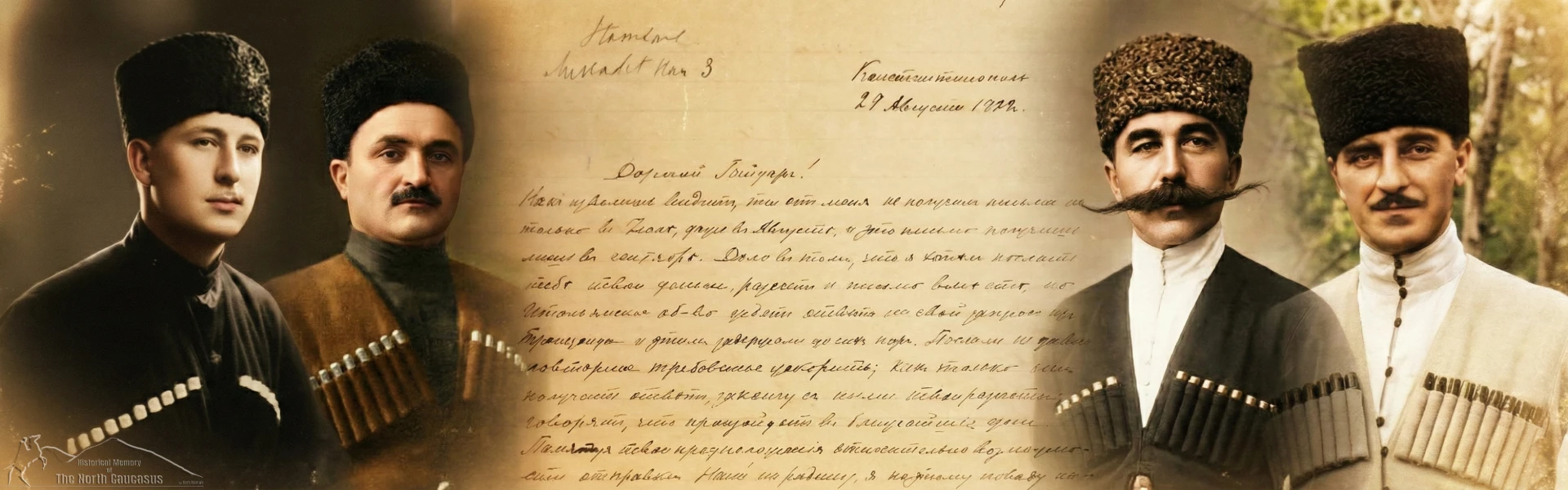
Thus, in that chaotic environment, the letters written by Alikhan Kantemir, Pshemakho Kotse (Kosok), and Ahmed Tsalykkaty from Istanbul to Haydar Bammat in Paris reveal this tragedy in all its nakedness and convey the mood of those days with striking clarity. The first letter was the one written by Alikhan Kantemir, dated August 20.
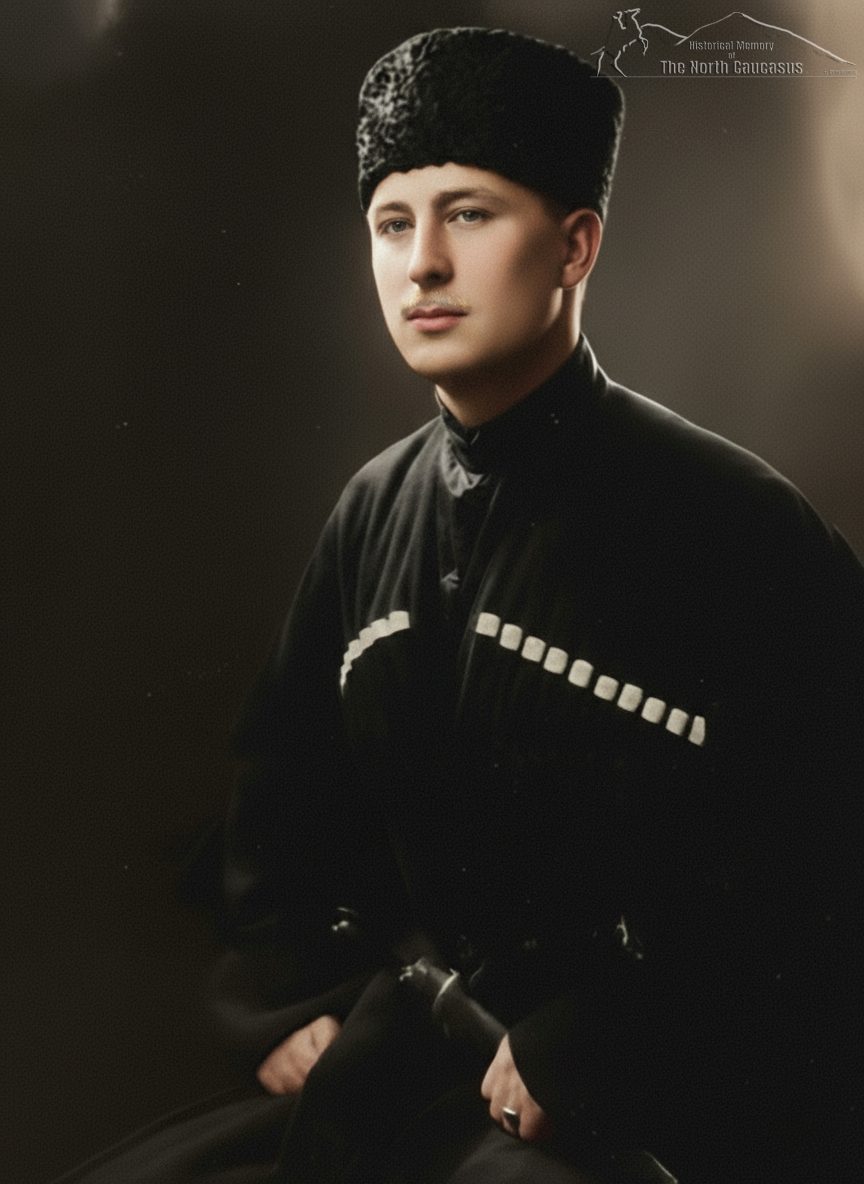
(Click on the image for a larger view)
I received your letter from July 22. As a result of our scribbling, let us put a cross on Chermoev and the delegation, entrust ourselves to our Lord Allah, and wait… Just as the refugees generally wait for something.
Of course, the political senility, collapse, and anarchy—which for convenience is best called "Chermoevism"—do not, however, deprive us of the opportunity to continue our reflections and discussions about how to ultimately help our grief and what we should do personally, or rather, what I should do, since you at least have a domicilium pinning you to a certain place. We face a series of questions, all of them so complex and heavy that one does not know where to begin. It is hard, heavy… was it any harder for the Creator of the World when, in the boundless chaos, He had to create the Earth and the Cosmos, subject to specific laws of motion?
Our foreign policy, which follows in the wake of French policy, must be reviewed and corrected or radically changed. Time and experience, from the conclusion of the Treaty of Sèvres to the present day, have convinced us that France, having declared herself the protectress of Turkey and consequently of other Islamic peoples, is unable to bring peace and tranquility to the peoples of the Near East; she cannot defend the Muslim world against the intrigues of a stronger and more interested power. This happens not because of difficulties presented by the moment, but because, while formally representing a great force on the European continent, once she steps beyond its limits, she loses her primary significance; in short, she is unable to compete in matters of colonial policy with England.
The peoples of the Near East thirst for peace, but France is powerless to bring them peace. Claude Farrère and Pierre Loti are not enough, where millions in gold are needed for economic and industrial fertilization, and cannons and tanks for the defense of the nation.
Poincaré cannot protect anyone because he is defending himself; he cannot help anyone because Northern France must be restored, and this at a time when the Germans are not paying, yet debts must be paid to England. We are tying our future to Turkey, which keeps doing stupid things. I look very sadly upon the future of this unhappy country; the people are exhausted by war, poverty, and lack of rights. The most terrible thing is that the Turks are incapable of understanding the structures of a perfect society and state, or the morality and rights of a cultured person. This is the root of the Europeans' eternal distrust of Turkish statehood. I think foreigners' skepticism regarding Turkey has grounds. One must judge not by words, but by deeds: the Turk reasons and talks like a European, but acts and does like a Turk. Therefore, one can never trust a Turk. The blood being spilled for Turkey's sovereignty is a mad endeavor regarding its final results. First of all, the realization of this sovereignty is problematic, and secondly, what the hell do I need this sovereignty for, under the dome of which Asian despotism or Asian manners of governance maim, torture, cripple, and ruin people?
One way or another, whether we want it or not (that is another conversation), Turkey will not manage without a European governor; whatever perturbations befall Europe, Turkey cannot escape her fate. We must assume that the role of governor will fall to the strongest—England. Until that time, intrigues will continue to the eternal ruin of the peoples of the East.
If you agree with this framing of the question, with this forecast, then the conclusions for the North Caucasus are not difficult to draw, and we must, before it is too late, retune the balalaika to a new mode.
However, you can see better from the Eiffel Tower.
You are likely interested in what the stay of Bekir Sami Bey, Dzhambulat Bey, Hussein Tosun Bey, and others here gave us. We had a fairly lengthy joint discussion; as usually happens in such cases, apart from well-known clichés, nothing new was said. They advised us, in view of their friendship with Moscow, not to show ourselves in Ankara and to sit quietly for the time being. The question of our property was raised, but it was entrusted to Madame Yusuf Izzet Pasha [Hayriye Melek Hunch], who was traveling to Ankara. She will have a conversation with Rauf [Orbay] Bey. We shall see. Hussein Tosun is the most positive person and is devoted to our cause. He is here for now, returning to Rome soon. He supported our committee, which, by the way, despite all its flaws, has won unquestioning authority among the refugees and Circassians. Recently, the committee was replenished with new figures; entering it were: Namitokov, Kotsev, Enekoev, Manoev, and three Circassians. As you know, the committee is approved by the Turkish government and operates on the basis of a specific charter.
The entry into it of Pliev and Said Shakhman (a rider of Wrangel's army), people who have a hard time understanding questions of politics, significantly hinders the matter, but "sheikhism," both in the homeland and here, has to be tolerated as a necessary evil. Almost all riders from the monarchist camp crossed over to our camp, giving pledges of loyalty to the Republic of the North Caucasus. This committee ought to have become the former hearth of our old and new emigration, if only we had the funds. In any case, the committee is gradually winning this role. In the absence of another organization abroad, we need to apply all efforts to strengthen this organization.
The Azerbaijan-Mountaineers [Committee] idea is fundamentally correct, but until now, they haven't got a single body with whom one could talk. Their delegation in Paris is incapable of creating unity in the emigration and hangs in the air itself, without the sympathy of its citizens. Here in Istanbul, a struggle was taking place in the Azerbaijani environment: in one camp were Mustafa Vekilov, Khasmamedov, Rafiev, Shafibek, and others. In the other was the representative Yusuf Vezirov, General Shikhlinsky, Bagir Rzaev, and others. The latter group finally gained the upper hand the other day, and I am glad of this because it is more democratic and stands on the ground of solidary cooperation with us. I think that now we will be able to begin work with them and press upon their delegation in Paris.
Our unification in Istanbul (I think it will happen) will also place before both delegations the question of their unification and joint efforts to find funds for work. When this work is completed here, I intend to leave for Paris with one or two Azerbaijanis and put all questions squarely before both delegations. I think this will be at the end of September. I am exhausted and have suffered enough. No one will understand my drama: working without money, among our savages. I am thinking of somehow fixing my affairs abroad by realizing some commercial project—there are several, and I will write about this next time.
I learned nothing additional about Osman's [Said-Nur] family; that Turk left for Adapazari. Osman himself, as you know, left for Trabzon in the hope of getting settled with the help of Aziz Meker. The latter apparently could not help him, and poor Osman himself, after being sick with malaria there for two months, moved to Samsun, where he is living somehow and is ill at Bazorkin's place. Shopaev remains in Trabzon, living in poverty and asking for help; they say he is unrecognizable, he has changed so much from hunger. Many refugees (about 20 people sent back, of whom about 10 to Dagestan)—generally, if not for this committee, our refugees would be in a most terrible position. Some of the refugees are heading home through Anatolia, and some remain in the Sivas region. The general phenomenon is the departure of refugees from Istanbul to wherever possible, especially home.
There is no new information from the homeland. I often see arriving Azerbaijanis: a rather lively exchange of goods has been established with Transcaucasia and, consequently, the movement of merchants, but I have not seen a single soul of ours yet. From conversations with arriving Transcaucasians, I come to the conclusion that it is not so bad there, and they do not oppress that much. Tiflis and Baku have the same, or even a more lively appearance than before. This is understandable. Under the slogan of the Red authorities: do whatever you want, just not politics, and you will live freely and well.
Did Rashidat-khanum ever send any parcel with linen and things from Paris to Osman? He seems not to have received anything. Kiss Rashidat Khanum. Hearty greetings to Epsi Khanum and Zeynab Khanum.
Write, Your Alikhan.
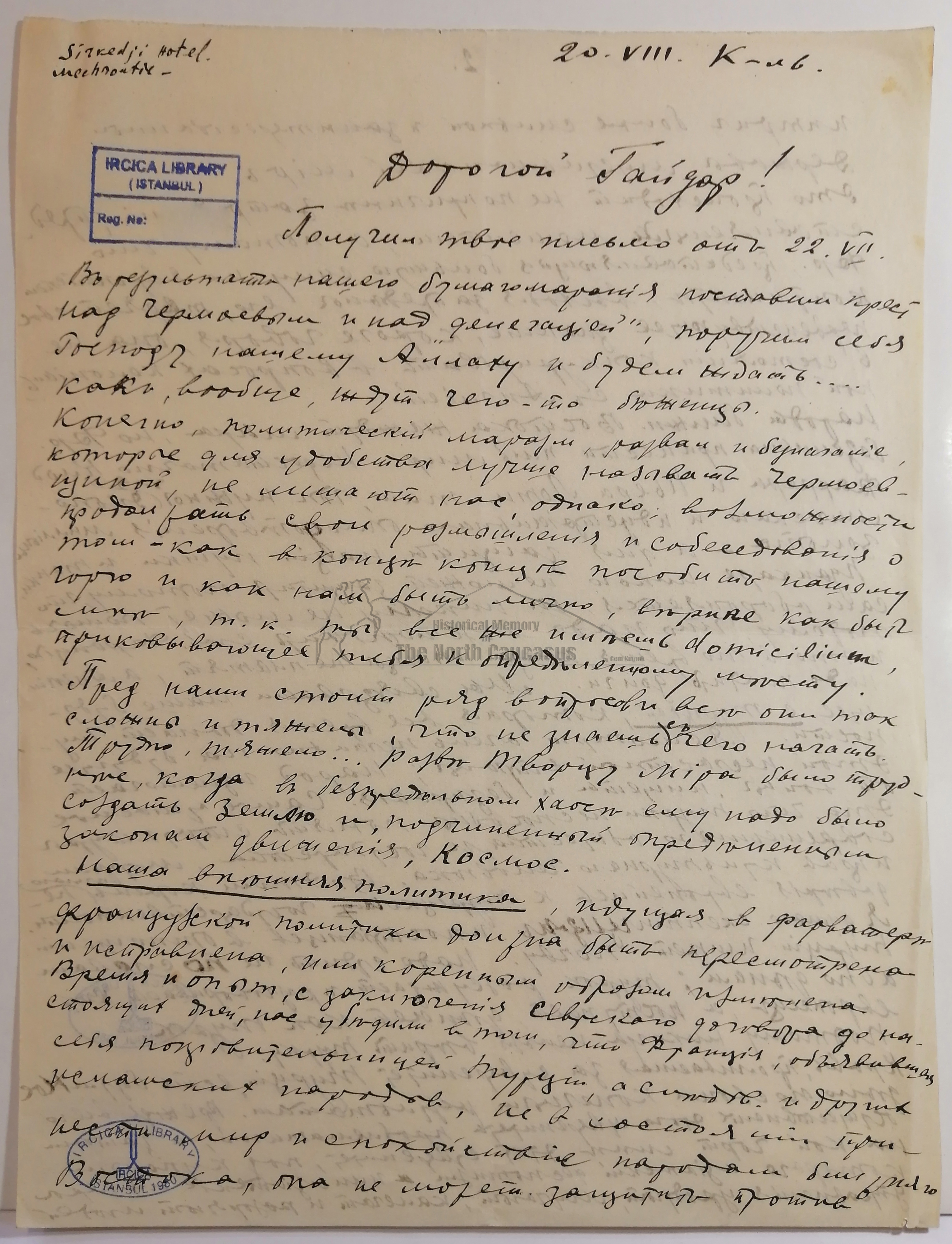
Given the dynamics of the period, it is impossible to find fault with Alikhan Kantemir’s assessments. Kantemir emerges as a devoted man of duty who, despite his political acuity in identifying the weaknesses of others, could not quite accept the reality of human fallibility. Furthermore, he lacked the ability to view himself objectively. This trait compelled him to view his already dire circumstances with an even more pessimistic eye. Kantemir, who could not reconcile himself to Tapa Chermoev's approach regarding the allocation of national resources, suffered great hardship and misery in Turkey. His letter is striking not only for its accurate evaluation of the Caucasus policies of France, England, and Turkey but also for its observations regarding the Caucasians who arrived during the Great Exile of 19th C. and the refugees who suffered alongside them.
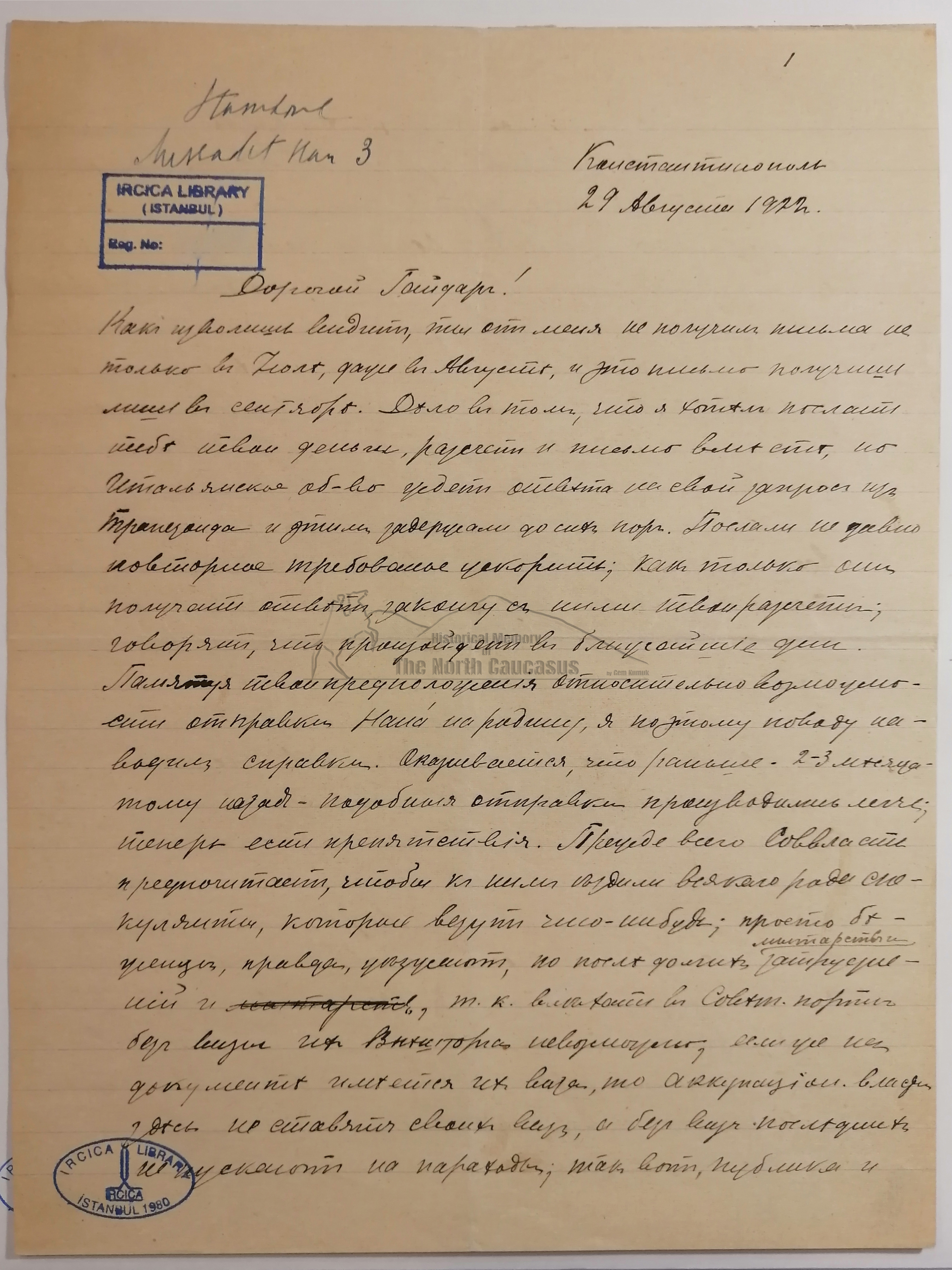
Kantemir’s correspondence was followed on August 29 by a letter from Pshemakho Kotse. Kotse, too, had recently returned to Istanbul, unable to endure life under Tapa Chermoev's hegemony in Paris. In exile, as in his homeland, Kotse was a target of criticism due to his lenient and slow-moving nature. In trying to please everyone, he pleased no one. This constantly forced him to justify his actions, yet he rarely succeeded. Moreover, his indecisiveness led to accusations of laziness and a fondness for comfort. This letter to Haydar Bammat serves as a prime example of the instances in which he was forced to defend himself.
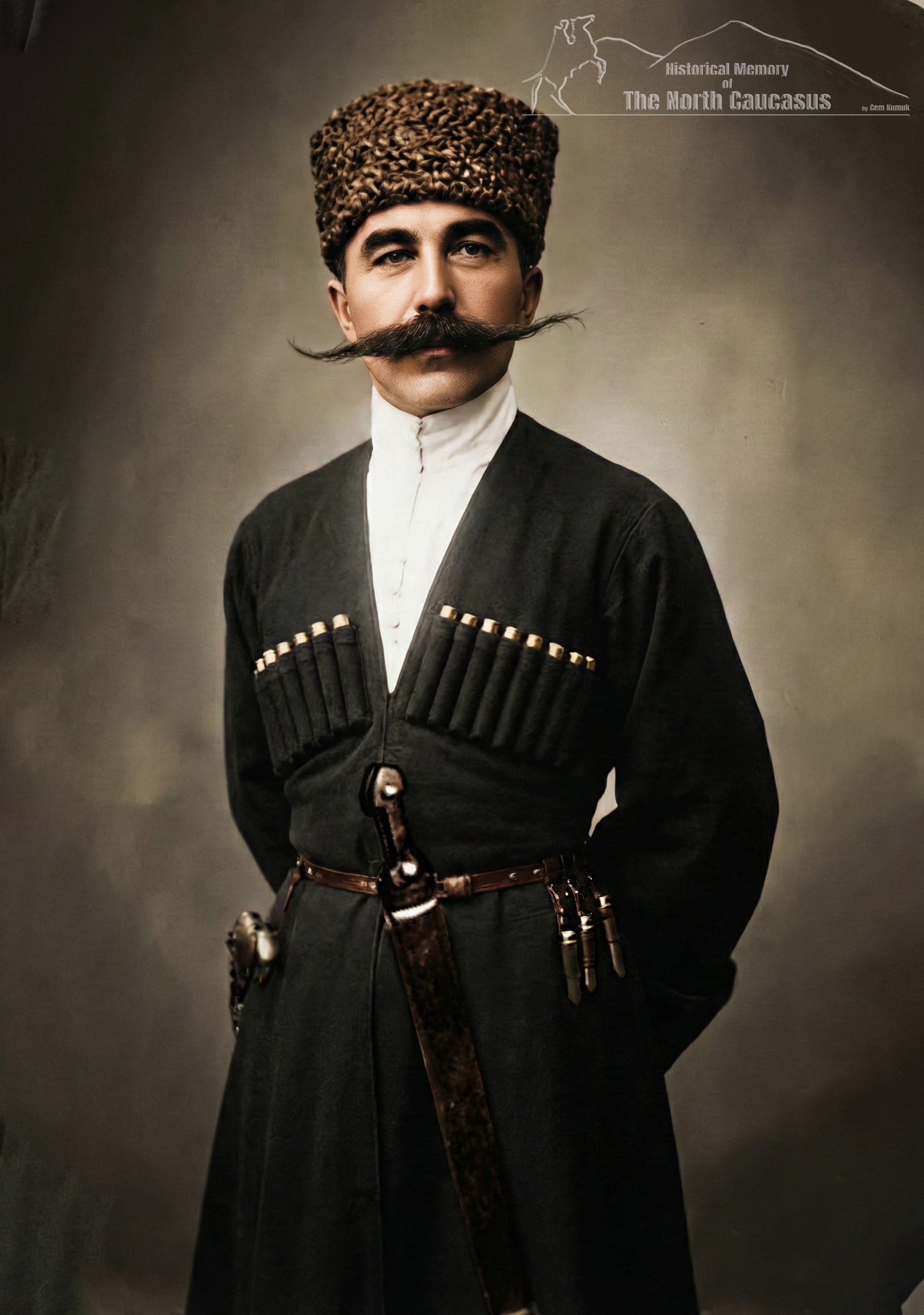
(Click on the image for a larger view)
As you can see, you did not receive a letter from me not only in July but also in August, and you will receive this letter only in September. The fact is, I wanted to send your money, the settlement statement, and the letters all together, but the Italian company is waiting for a reply to their inquiry from Trabzon, and this has caused the delay until now. They recently sent a repeated demand to expedite matters; as soon as they receive an answer, I will finalize your accounts with them—they say this will happen in the coming days.
Bearing in mind your suggestions regarding the possibility of sending Nana back to the homeland, I made inquiries about this. It turns out that earlier, 2–3 months ago, such departures were easier to arrange, but now there are obstacles. First of all, the Soviet authorities prefer that all sorts of speculators travel to them, bringing goods; regular refugees do leave, it is true, but only after long ordeals and prohibitions. This is because it is impossible to enter Soviet ports without a visa from their Vneshtorg (Ministry of Foreign Trade), but if a document bears their visa, the [Allied] occupation authorities here will not stamp their own visas on it, and without the latter’s visa, they are not allowed onto the steamers. So, the public leaves on all sorts of small Turkish steamers, schooners, and motorboats. Such is the order in Constantinople; the procedure for departure from Turkish ports—Trabzon, Samsun—is different. There, as you know, there are Soviet consuls who issue entry visas to their territories. They say that they ask many questions for a long time—who, what, why, etc.—require travelers to fill out some questionnaires, and after all that, they do let them through. Ultimately, of course, Nana can get through under any pretext, and her passage, if decided upon, can be organized.
I also meet Aselder-Bek Kazanalipov; I see him quite often as he runs a small restaurant not far from our bureau in Istanbul, which feeds him. I conveyed to him that you asked where he is and how he is doing. He replied that he is alive and well, has become a restaurateur in his old age, and regrets that he took up this trade so late, as all his past activity has gone to waste. He expressed gratitude that you inquired about him and said that he had been told many bad things about you—that a mass of evil deeds is attributed to you—but that he, having heard only one side (i.e., your ill-wishers) and not having heard you, cannot draw a definite conclusion, as before that he knew you only from the good side. Therefore, he would very much like to receive a letter directly from you.
Now for information. I would like to shed light, as much detail as possible, on everything I have seen, heard, and observed.
Aytek Namitok once told me that you complained about me for not fully informing the Constantinople comrades about your role, and that the latter hold a grievance against you—that you allegedly clarified all this during a meeting in Paris with Mr. Khomeriki. I must say that to the best of my ability and understanding, I reported to the local comrades very thoroughly and completely objectively, without personal attacks and impartially, everything that I was entrusted with and everything I knew. But what is to be done when they are dissatisfied not only with you, Tapa [Chermoev], me, and others, but are dissatisfied with Allah himself? It seems to them—and it is difficult to dissuade them of this—that the people sitting in Paris only need to wish it, and money will rain down in millions, and the reason it does not rain money is that the gentlemen in Paris are not energetic enough, not patriotic enough, not dedicated enough to the cause, etc., etc. In view of this, I pressed on this point so that they would not open their mouths for a loaf that would not fall into them. I think that even now, I have not fully succeeded in convincing them of this.
Thus, at the moment of my arrival here, I found the following picture. On one hand, the committee, organized with such difficulties and scandal, was almost on the verge of collapse: of the 11 members elected at the general meeting, 4 were present: A. [Ahmed]Tsalikov, A.[Abubekir] Pliev, Said Shakhman (an Avar), and Ahmed-Nabi. The rest: M. [Murat] Hatagogu, Doctors Shakov, Tulparov, A. Malik-Nakhibash, and others, had long ago quarreled with those remaining and left the committee. Around the committee itself, there was a terrible atmosphere, or rather no atmosphere at all; not to mention the monarchist group, which was, and will be, against it, the committee was subjected to sharp attacks from its former members and the people who elected it; and even among the 4 remaining, apparently, there was no harmony. At our first meeting, they declared to me that they had all "already submitted their resignations." I asked them to listen to the message I was entrusted to deliver to them, and I asked them to invite Hussein Tosun Bey, Aytek [Namitok], and anyone else they found necessary to the meeting. A few days later, I made my report. Most of all, of course, the meeting was interested in whether there would be funds or not. My report implied that there was no expectation of receiving funds from Paris, motivating this with the data known to you; when the question was put to me directly, I answered directly that there would be no funds from Paris. At the same time, I found this small committee, or rather Alikhan, being pushed by the committee to pursue a visa to Paris for A. .[Abubekir] Pliev, who, as an energetic man, was supposed to influence the Parisians. After my report, this idea was dropped, but instead, everyone "resigned" at this meeting. Hussein Tosun Bey, and I too, said that the work should not be abandoned, that we must try to find funds ourselves; Hussein Tosun Bey and two other Circassians (senior Muhajirs) promised to find a little something. We dispersed. Soon, Hussein Tosun Bey handed the committee 250,000 liras, and they did not scatter.
For quite a long time, I stood aside from the committee, and to be honest, I did not notice any desire on the part of this semi-committee to bring anyone closer to themselves. So I observed from the side. My efforts at observation over almost 2 months made me understand both the position of this semi-committee and the attitude of the people who created it toward it. Various people came to me, spoke nicely, complained, and scolded each other; members of the committee also spoke individually. It turned out that within 2 weeks of its existence, the committee had detached itself from the voters, and two weeks later, they quarreled among themselves. There was no one around the committee; mutual discord and a lack of organizational flair, mutual reproaches, did not allow the committee to take root. Added to this was the fact that after organizing an evening event (April 9 of this year), they did not provide a report either immediately or to this day; the aid given to refugees was random and insignificant. Of course, this was because funds were small. But you know how sensitively our public reacts to monetary questions. And so rumors began to fly that the evening yielded revenues of 1000–1500 liras and other incredible sums, that the committee members are eating it themselves, giving nothing to others, or giving crumbs. Of course, all this was the fruit of the fantasy of half-starved refugees; certainly, the most that was cleared from the evening was up to 500 liras (no one, not even the treasurer, knows exactly, as this part is so confused and chaotically managed). All this pushed away even sympathizers from the committee, and they remained alone. Some obstinate ones threatened to speak out in the press, to liquidate the committee, to bark at who should and shouldn't be barked at; among such protesters were almost all the former members of the committee. With the support of Hussein Tosun Bey and some other local Circassians, we managed to restrain the hotheads from such steps.
In my conversations with various groups, I promoted the idea that these groups, by not supporting the committee, are harming themselves and the common cause; that if unworthy people are sitting in the committee, this does not give them the right to defect to opponents, but that by way of legal struggle they should strive to replace the unworthy in the committee with worthy ones. Little by little, we managed to convert some groups into "true believers," and Chechens, Kabardians, and others began to sign up in batches as members of the "Refugee Committee of Highlanders of the North Caucasus."
Personally, I am completely convinced that in this regard, the members of the semi-committee are absolutely clean and everything is honest on that score, and no one ate anything, but they failed to set up proper accounting; in other respects, much is left to be desired. There was no agitation and propaganda; they did not even try, simply through conversation to secure the sympathies of the refugee community. And it is well known that our public likes to be talked to before its fate is decided. Opponents took advantage of our comrades' inability to organize the masses, and talk began of imposture and all sorts of other "nice" things.
Two weeks ago, I was invited to the committee premises, and through the lips of A. Pliev, I was reproached for not taking the committee's affairs close to heart, that T. Chermoev is the same, and you—H. Bammat—too. To this, I answered again and again that both Tapa and Haydar did and are doing everything they can and everything possible under the objective conditions in which they operate, that I am ready to do everything that depends on me, but that I cannot help but point out all those minuses which, in my opinion, are attributed to them. I immediately pointed out that they have no connection with their voters and do not enjoy their sympathy, that minimum care was not shown to these sympathizers, that they organized nothing and no one, that they have no connection with local Circassian circles, that there is no solidarity among themselves, etc., etc. I pointed out the necessity of convening an expanded conference of the figures present in Constantinople, the Highlander intelligentsia sympathetic to our idea, and representatives of local Circassians.
Such a meeting was convened 1½ weeks ago. There were about 20 people, including about 5 local Circassians led by Hussein Tosun Bey. The meeting was spirited and quite talkative. The committee was replenished to 11 members by the reentry of those who had previously dropped out (Murat, Shakov, etc.), as well as by attracting local Circassians into it (there are capable persons among them). They worked out forms of interaction between this organization and the organization of local Circassians; the committee divided itself into departments: 1) Financial-Economic, 2) Labor Bureau, 3) Cultural-Educational (for refugees and local Circassians). One way or another, some were reconciled, some were cobbled together, etc., and it seems necessary unity was established, if it does not fall apart again. Hussein Tosun Bey rendered great services in this whole story. The departments have started working. What will come of all this, the future will show. Everyone is oppressed by the lack of funds; perhaps Tapa will manage to find something—this must be done. I was included in the Financial-Economic committee, and Aytek in the Cultural-Educational one. But I will hardly be able to be useful, for I have no time.
Relations with our friends:
With the Azerbaijanis – as far as I have been able to observe, they have individual persons here, even likeable ones, but in my opinion, they have no organization whatsoever, and therefore our relations are of a personal nature.
Armenians – as is known, they have an organization, but they are busy with anything and everything: the assassination of Turkish and Azerbaijani figures (they keep the latter in fear; almost none of them go out in the evening), establishing good relations with the Soviet authorities on one hand and with the monarchists on the other, etc., etc.—everything except the Caucasus and its affairs. Our official representatives—Alikhan and Ahmed—have nothing in common with them, not even with individuals.
Georgians – with the Georgians, both with their organization and with individuals, the Highlanders have close relations. True, these relations manifest themselves for now in more or less frequent meetings, mutual information, complaints to each other that, well, we could do something and would have done something in the sense of preparing for the realization of our aspirations and desires, but the lack of funds prevents it. Apparently, they themselves are working, perhaps a little, but they have people on the ground, they have regular and frequent information from Georgia, and they are aware of what is happening there. They are proponents of our unity and joint work. But... for joint work, one needs... joint funds.
Anatolia:
We have no relations or interactions with Ankara. I spoke about this more than once with Hussein Tosun Bey and with Bekir Sami Bey (upon his arrival in Samsun). You know their opinion: they do not consider the current moment suitable for entering into any negotiations on Caucasus issues. They convinced me that when the time comes, the moment will not be missed and the question will be raised in the Grand National Assembly (Büyük Millet Meclisi) itself and in the government, where we have devoted supporters. That there are also our opponents there, but they do not doubt that in the near future a moment will come when the interests of Turkey itself will force the current leaders of the national movements to become, if not defenders, then champions of an independent Caucasus.
I will not write about the recent victories of the Turkish troops at the front, as you likely know as much about them as I do from telegrams. The fact is that the Turks are jubilant, and the Greeks are dejected; the complete disintegration of the Greek army and its disorderly, unstoppable flight, rather than a retreat to prepared positions, is confirmed.
News from Anatolia:
You probably know about the arrest of [Yahya] Kahya, the inquiries regarding this in the National Assembly, his release, the dispatch of Interior Minister Fethi Bey regarding this, and then the murder of Kahya himself in broad daylight in Trabzon, which is attributed to government agents. If you don’t know the details, I will cut it out of a Turkish-language newspaper and send it to our delegation.
But here is another piece of news you don't know. When a "Refugee Committee" was formed in Trabzon on the initiative of Highlanders and Azerbaijanis, headed by Dr. Khosrov Sultanov and Djmal[eddin] Musalaev, the local Soviet consul sent a report to Moscow stating that a committee had formed in Trabzon intending to overthrow Soviet power in the Caucasus, that at its head stands the bitterest enemy of the Soviets, Sultanov, that the military department is managed by Colonel Musalaev who has up to 20 officers, that former Highlander ministers (you and I) have left for Paris, and that the Trabzon committee has a connection with Paris, from where it receives large funds via the courier Amirdzhanov (Amirdzhanov traveled to Trabzon 3 months ago). Regarding this, the People's Commissariat for Foreign Affairs blew up a correspondence with Ankara, and the latter with the local authorities, who reported that all this is nonsense. So, nonsense ended as nonsense, and Soviet power prospers in the Caucasus.
In the Homeland:
All the time, many different people arrive here from all parts of the North Caucasus, not to mention Transcaucasia. Their stories are not always identical, depending on who they are and where they are from. But all their stories, when compared, lead to the same conclusions: the formation of 4 republics—Dagestan, Mountain (Chechens, Ingush, Ossetians), Kabardian, and the Free Land of Circassians—was committed to disunite and destroy the idea of the union and unification of Highlanders; that these republics exist only on paper, they have no real power and enjoy no autonomy, but that at the same time the idea of unification into a Pan-Highlander union sits firmly in the heads of the population. Terek and Dagestan lived through terrible months anticipating famine, starving in places, but now this has passed, and the harvest is good everywhere. The NEP (New Economic Policy) with its NEP-men has not yet rolled into our territories. The authorities, in the person of orthodox communists, are completely alienated from the population, and the latter hates the former. Everywhere from the Black Sea to the Caspian, there are very large gangs of robbers; the authorities can do nothing with them. Weekly, the authorities find one or two commissars missing, and the latter are found killed. Everyone awaits deliverance, but no one knows where this deliverance will come from. More prominent communist figures strive to get to the center and settle there. No one believes in liberation from within by their own forces, nor do they believe in any Wrangels; in general, total confusion and an inability for self-organization and activity, a desire to see the emigrated intelligentsia at work, whom those in power will not allow in under any conditions.
Well, it seems I have written everything. What is not here, you will read in the information addressed to the Delegation. I am tired, and I have exhausted you.
Most cordial greetings to everyone, everyone: to the good Nana, Epsi Khanum, dear Zeynab, Emiljan, Mitya. Hussein Tosun Bey is leaving soon for Rome and sends greetings.
Devoted,
Pshemakho.
Like Kantemir’s correspondence, Kotse’s letter offers a wealth of information that challenges conventional wisdom regarding the environment in Turkey and the activities of émigré circles. His description of refugees—suffering from misery and hunger, yet competing to return to the Caucasus and effectively marching to their deaths at the hands of the Bolsheviks—paint a striking picture of the tragedy that had befallen these people. The letter also contains significant observations regarding Turkey’s internal political dynamics and its stance on Caucasus politics.
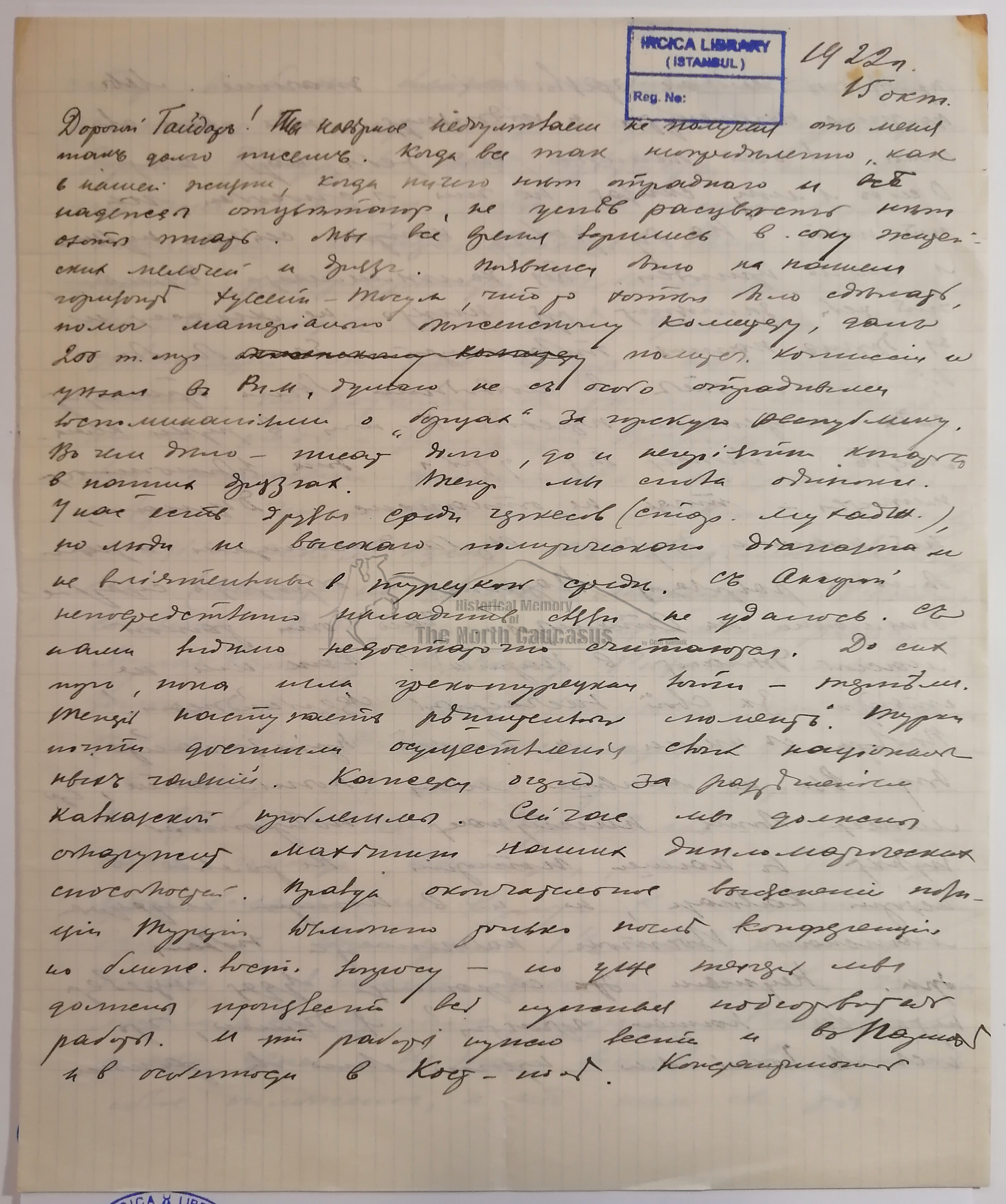
While Kotse’s letter corroborates Kantemir’s claims, it also serves as a vivid indicator of the discord, contention, and intolerance that Mountaineer politicians held toward one another. The subsequent brief letter from Ahmed Tsalykkaty confirms much of the previous content, but it also reveals something more: it depicts an intellectual who, despite destitution, sickness, and despair, remained dedicated to his work, striving to record this era and leave a mark on history.
(Click on the image for a larger view)
You are probably wondering why you haven't received letters from me for so long. When everything is as uncertain as it is in our lives, when nothing is comforting, and all hopes fade before they even have a chance to bloom, there is no desire to write. We have been stewing in the juice of daily trifles and squabbles the entire time.
Hussein Tosun briefly appeared on our horizon; he wanted to do something, gave financial aid to the refugee committee, gave 200,000 liras to the political commission, and left for Rome—I imagine without particularly pleasant memories of the "fighters" for the Mountain Republic. What's the matter is—it would take too long to write, and it is unpleasant to dig into our squabbles. Now we are alone again. We have friends among the Circassians (the old muhajirs), but they are people of limited political range and not influential in the Turkish environment. We have not managed to establish direct connections with Ankara. It seems they do not take us seriously enough.
Up until now, while the Greco-Turkish war was ongoing, they tolerated us. Now a decisive moment is approaching. The Turks have almost achieved the realization of their national aspirations. It seems the resolution of the Caucasian problem is next in line. Right now, we must display the maximum of our diplomatic abilities. True, a final clarification of Turkey's position is possible only after the conference on the Near East question—but we must carry out all the work right now. And this work must be conducted both in Paris and, especially, in Constantinople.
Constantinople is now acquiring extraordinary importance. We must pull, and keep pulling, all our forces here. I regret very much that you are not here. About myself, I can say what I am capable of and what I am not. For the work that is needed now, I am of little use. Without compliments, I think that no one else among our comrades can replace you here. If there were a possibility, it would be essential for you to arrive here by the time Constantinople passes into the hands of the Kemalists. Perhaps you have this possibility—if so, do not refuse.
I think our Azerbaijani friends should have fallen out of love with Paris and turned their strict attention to Istanbul. What are they doing in such masses in Paris? How are they not ashamed of their unhappy Azerbaijan! Talk to them and come together; after all, you understand no less than I do that a turning point in our history may be approaching. A new era is beginning not only in the history of the Caucasus but in the history of the Muslim East. Is it possible that this page will be turned without our participation? I think we should also have established closer relations with M. Chokay-Ali [Mustafa Chokay]. We cannot help but be interested in the fate of Turkestan as well.
Dear Haydar! I feel that everything I am writing, you understand and experience no less well. So I think there is no need to elaborate further. We, who are in Constantinople, will take all measures depending on us as much as we can, but we would like to close the ranks of the democracy of the East more tightly.
My financial situation has become so bad that I moved out of Constantinople and am living on the Asian shore at Memdukh-Bey's chiftlik [estate] (he is married to Marshal Fuad's daughter; Dado, Misost, Ismail Baimukov, Murad Hatagogu, and Bagir Rzaev are with me). We occupy the outbuildings (servants' quarters) at the "lord's mansion." We live for free—like summer vacationers in the forest. I still haven't recovered—I am sick all the time. I have turned into a splinter [wasted away]. Sometimes it seems to me that I will never return to normal health again. It has been 1½ years since I have been ill. I often think: health, give me health! And everything else is trivial.
There is no health and no money. I don't know what your financial situation is; otherwise, how greatly you would oblige me if you could lend me 1,000 or even 500 francs. Perhaps your financial situation is not great either; in that case, forgive me.
Write what you think, what is happening in your delegation, and what the delegation intends to do. I received the delegation materials—thank you—but I have another request: your memoirs of 1918 and the memoirs of Chermoev, the work of the frantic intelligentsia in Transcaucasia. I need them for the book The Mountaineers’ Republic—Volume 4 of my work—as well as photographs of the delegation members. Ask T. Chermoev on your own behalf to give memoirs about his meetings and work in 1918 (Plan: Political situation in Transcaucasia, negotiations with the Germans, Turks, Denikin. Movement on Dagestan. Negotiations with the English, trips abroad), etc. I want my book to be truthful and thorough.
Bye for now, all the best. Waiting for news from you.
Write to Alikhan's address: Istanbul, Sirkedji, Hotel Meshroutiet, Ahmed Tsalikov c/o Alikhan Kantemir. Warm regards to your family. I shake your hand firmly,
Ahmed.
What makes these letters particularly striking is the revelation that the North Caucasus cause has not advanced an inch in a full century. If we map the struggles emphasized in these letters onto the present day, the situation appears virtually unchanged. The stage is the same, the script is the same, and the roles are the same; only the actors have changed. In these texts, we see reflections of the institutions, figures, and events that define our émigré experience, both past and present.Cem Kumuk
The most chilling realization is the contrast in leadership. While that era was defined by individuals who dedicated their lives to the national cause despite immense adversity, today such figures are painfully rare to find. There is a fitting Anatolian proverb for those who distract themselves with trivia while ignoring critical responsibilities: 'He forgot the donkey in the barn to play with the foal.' This serves as a perfect one-sentence summary of our current émigré politics....
Istanbul, 31 January 2026