
 Türkçe
  Ottoman Transliteration
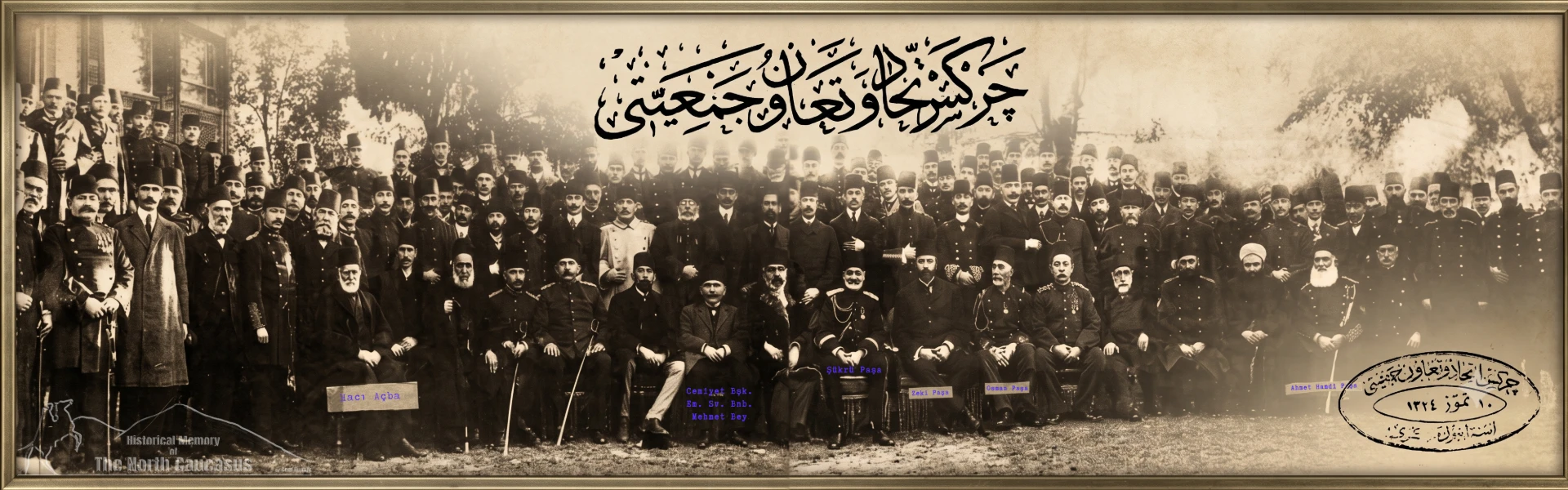
To commemorate the 118th anniversary of the Circassian Union and Solidarity Association, we will memorialize this important initiative by highlighting its exceptional place in the history of the North Caucasus.
In the summer of 1908, amidst the rapid decline of the Empire and the proliferation of distinct political organizations reflecting divergent ideological leanings among its various constituents, prominent figures of the Caucasian diaspora convened at the Koska residence of Gazi Muhammed Pasha in Istanbul to establish the Circassian Union and Solidarity Association (Cherkes Ittihat ve Teavün Cemiyeti - ChITC).
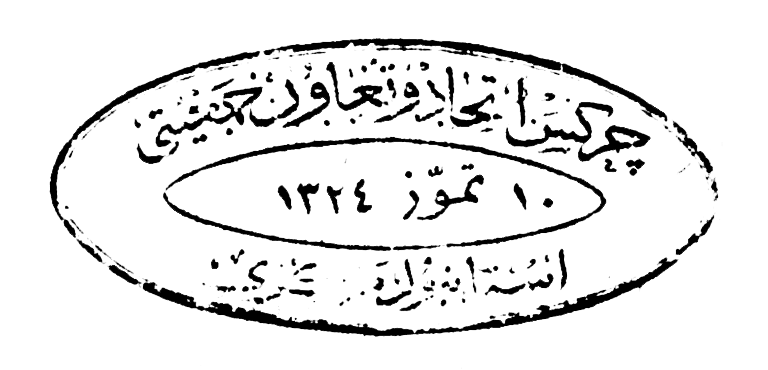
Although the declaration of its foundation was publicly announced on July 10, procedural delays postponed the ratification of its bylaws until November 4. Consequently, the commencement of its operations was delayed until December 17, deliberately synchronized with the inaugural session of the new Ottoman parliament. Indeed, Article 14 of the society's charter stipulated that celebrations would be held at the society's headquarters every July 10th. Meticulous attention must be paid to these dates to resolve the chronological contradictions regarding the foundation of the ChITC within North Caucasian historiography, as various "scientific" studies, including academic dissertations, frequently cite erroneous dates.
Organizational Structure and Political PluralismWhat distinguished the ChITC from other national formations was its status as the first organized political movement of the diaspora, successfully unifying the entire Caucasian émigré community under a single umbrella, irrespective of ideological affiliations. For the North Caucasians, who had historically relied upon elites within the Ottoman Palace and military echelons for their survival in exile, this organization promised the opportunity to emerge as a formidable actor amidst shifting political paradigms.
The founders comprised over forty individuals from diverse social strata. Excluding approximately a dozen high-ranking figures at the level of pasha (including three field marshals), the majority consisted of middle-class professionals, such as writers, journalists, teachers, lawyers, physicians, engineers, civil servants, clergy, and students.
— Early Ottoman Opposition Pioneers: Therket Ahmet Cavit Pasha and Hağur Ahmet Mithat.
— Young Turk Leadership: Mizanci Mehmed Murad.
— Loyalists to Abdulhamid II: Field Marshal Berzeg Zeki Pasha.
— Independent Military Figures: Field Marshal Thyğo Deli Fuad Pasha (who, despite his exile by the Sultan, never aligned with the Unionists), Shamilzade Gazi Muhammed Pasha, and Field Marshal Loh Ahmed Hamdi Pasha.
— Non-Interventionist (Âdem-i Müdahale) Representatives: Dr. Hanakhe Mehmed Reshid and Shkhapli Hüseyin Kadri.
— Decentralist (Âdem-i Merkeziyetçi) Figures: Shkhapli Hüseyin Tosun (from Prince Sabahaddin’s faction) and Amch’a Hasan Vasfi (Hasan Amca).
— Prominent Oppositional Founders: Hatko Ismail Canbulat (a founding member of the revolutionary Ottoman Liberty Society) and journalist Tlash Tâhir Hayreddin (son of Tunuslu Hayreddin Pasha and a founder of the Freedom and Accord Party, the primary nemesis of the Unionists).
Transnational Objectives and Educational InitiativesThe designation "Circassian" in the Association's title served as an inclusive term encompassing the entire North Caucasian diaspora. Although the declared objective of the Association was to safeguard religious and moral values, adherence to the law, and civilizational progress among Caucasians residing in Ottoman territories, its fundamental, underlying aim from the very outset was the re-establishment of ties with the homeland and the anticipation of an opportune moment for repatriation.
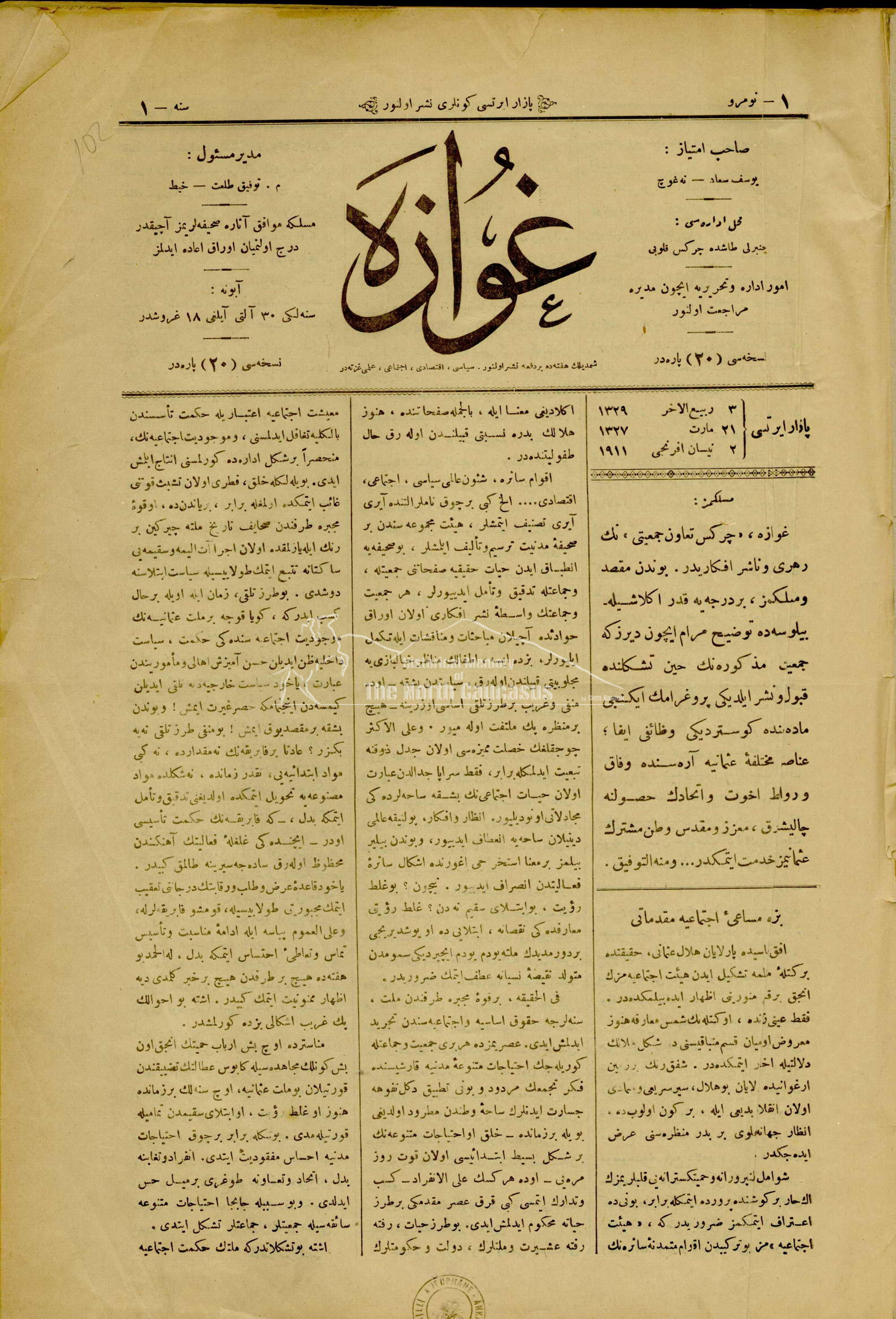
From the Second Constitutional Era until the outbreak of the First World War, the Association did not undertake highly impactful projects, a stagnation that elicited significant resentment from the activist youth within its ranks. Notably, however, the Circassian Alphabet, authored by Neğuch Yusuf Suad and Tsağo Ahmet Nuri, was published in Istanbul in 1909.
— The Circassian Philanthropic Society (Cherkesskogo Blagotvoritel'nogo Obshchestva) in Yekaterinodar.
— The Society for the Dissemination of Education among the Kabardians and Mountaineers of the Nalchik Region (Obshchestvo Rasprostraneniya Obrazovaniya Sredi Kabardintsev i Gortsev).
These individuals and organizations prioritized the education of the Caucasian Mountaineers, who had been subjected to educational deprivation for a century and a half, facilitating the inauguration of the first schools and teacher-training courses utilizing the Circassian language.
To contribute to these efforts, the ChITC dispatched several Circassian intellectuals to the Caucasus. Alongside Neğuç Yusuf Suad, various educators affiliated with the Association—including Hydzetl Ibrahim, Tletseruk Harun, Değune Akif, Tsağo Nuri, Shevket Kemal, Techekhuko Habib, and Chetavo Şevket—conducted fieldwork in Adyghe villages of the Western Caucasus, such as Panekhes, Takhtamukay, Shynciy, Ponezhukay, Gobukuay, Ademiy, Hakurinehabl, Koshkhabl, Leshepsin, and Hatramtuk. The educational materials utilized in these initiatives, including the alphabet, textbooks, and copies of the Quran, were printed in Istanbul by the ChITC and subsequently dispatched to the homeland.
Legacy and Successor OrganizationsOn the eve of the First World War, the ChITC was compelled to suspend its educational activities. Owing to the fragmentation of the Circassians across divergent factions within the Ottoman political milieu, the Association struggled to exert a substantial presence concerning its primary raison d'être during this period. Nevertheless, with the outbreak of the war, the ChITC and the various committees established within its framework executed pivotal undertakings in the political, diplomatic, and military spheres via subsidiary organizations.
Even after the formal dissolution of the Association's legal entity, organizations that emerged from its nucleus constituted the vanguard of the North Caucasian political diaspora movement. These instrumental successor formations included:
— Society for the Dissemination of Education among Caucasians in Istanbul (1914)
— Caucasian Independence Committee (1915)
— Committee of North Caucasian Political Immigrants in Turkey (1916)
— North Caucasian Society (1918)
— Philanthropic Society of North Caucasian Immigrants (1918)
— Circassian Women's Solidarity Association (1919)
— Society for the Rise of the Caucasus (1920)
Following the collapse of the Mountaineers’ Republic of the North Caucasus, the enduring legacy of this organization continued to manifest at every stage of the life in exile of the North Caucasian politicians throughout the first half of the twentieth century.
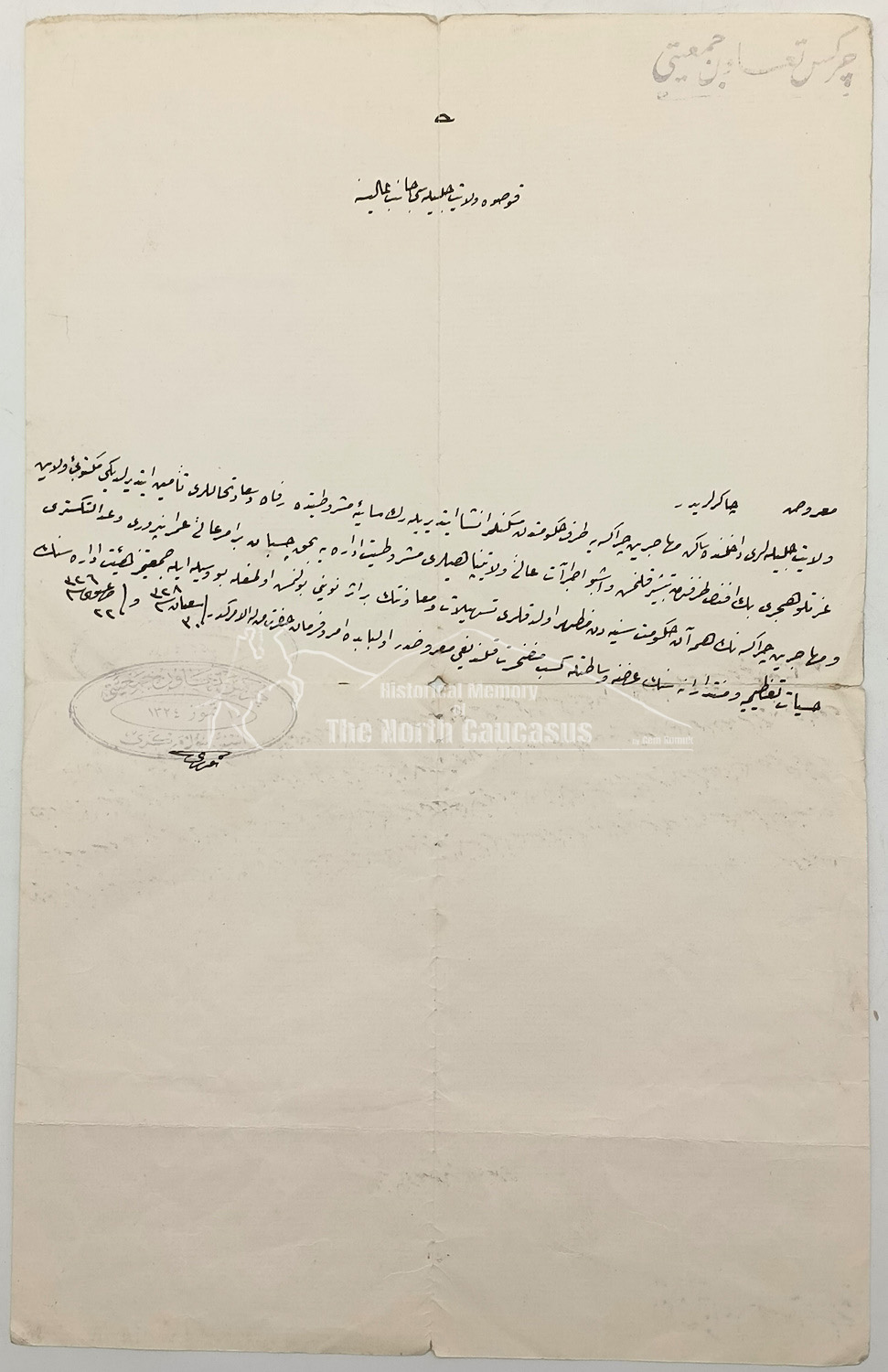
In commemoration of this date, the original Ottoman Turkish text of the Association's Founding Manifesto and Charter, along with their Romanized transcriptions and respective Turkish and English translations, are appended to this article.

Istanbul, 10 July 2026
FOUNDING MANIFESTO OF THE CIRCASSIAN UNION AND SOLIDARITY ASSOCIATION
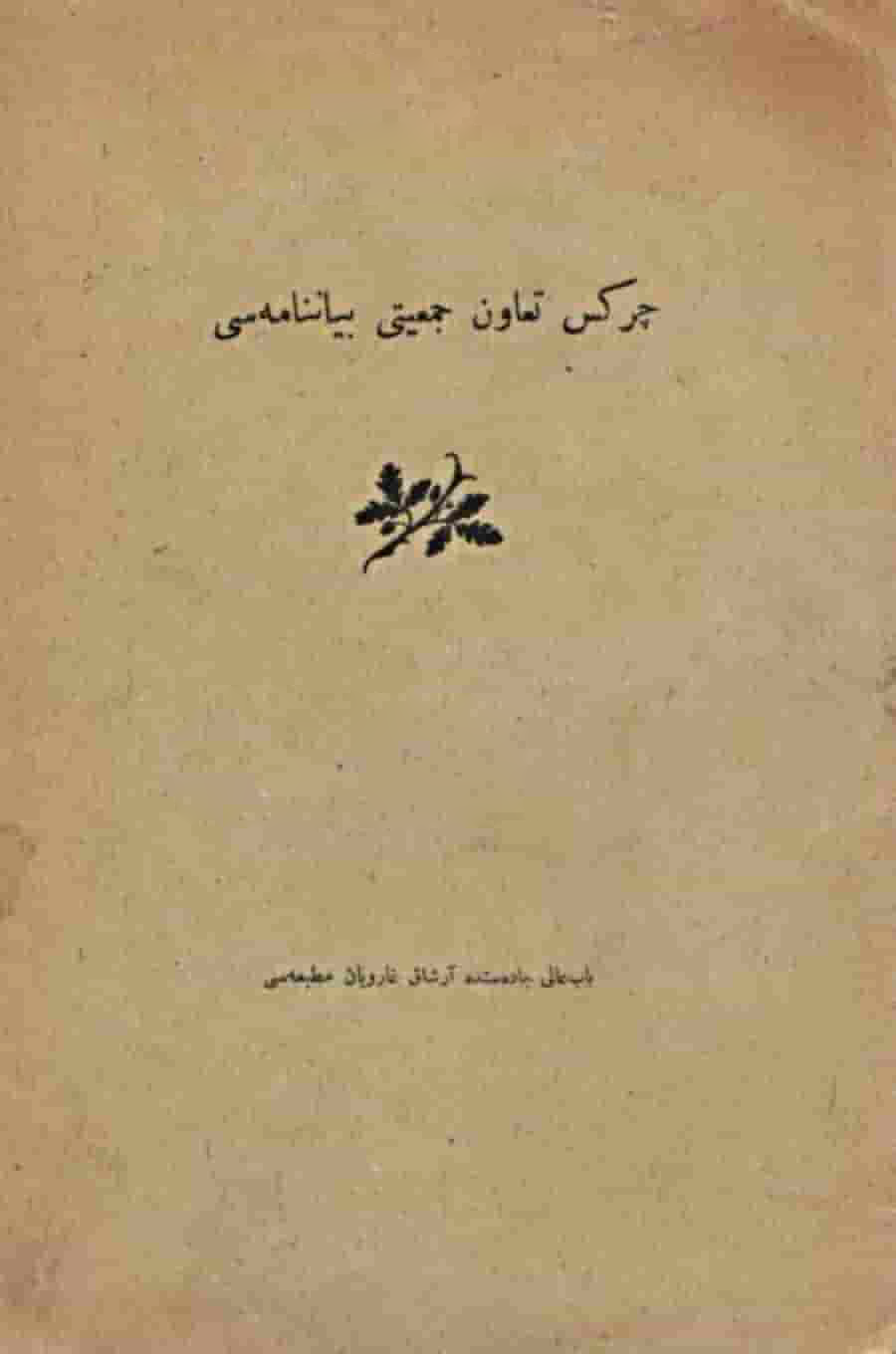
You are intimately aware of the profound poverty and hardship each of us has endured as a consequence of migration, following the fall of our ancestral homeland, the Caucasus, into foreign hands. Yet, the greatest among our myriad losses is the gradual disappearance of our cherished customs, traditions, and national attire.
The Consequences of Migration and the Imperative of LoyaltyMay Allah Almighty preserve the exalted state, which unites within itself the Islamic Caliphate and the Ottoman Sultanate. Had we not embraced the Ottomans—a compassionate, merciful, and mighty Islamic state—as a haven of security; or rather, had this sacred caliphate, this glorious state, and these blessed lands not accepted and protected us, it is an indisputable reality that we would have lost our religion, our guide to salvation in the hereafter, or at the very least, been deprived of the freedom to practice it fully.
Therefore, just as it is imperative to protect our nation, it is equally a fundamental obligation for each of us to remain steadfastly loyal to the constitutional Ottoman state—under whose wings of compassion and justice we live in complete security and prosperity—and to strive with all our might to elevate its strength and power.
The Foundations of a Nation: Morality and EducationAs you are aware, a state derives its strength and power from its nation. The strength and power of a nation, in turn, are rooted first in its morality and religion, then in its education, and ultimately in its wealth.
Above all else, a human being requires moral excellence. In truth, the order of the world is sustained by morality. Good morals are the primary decree and teaching of all religions, particularly the pure faith of Islam. Immorality has collapsed and destroyed countless peoples, nations, and great empires. Consequently, if you desire the Circassian people and Circassian identity to survive and endure, you must strive with profound devotion to preserve our internationally recognized national morality and upbringing, and avoid losing our national attire. Cling entirely to the supreme religion of Islam and live amicably, like brothers, with other nations.
Education (maarif), on the other hand, is the principal remedy that will purify morality, teach humanity its essence, encourage industriousness, and demonstrate the means to achieve it. The progress of a nation, alongside the preservation of its moral purity, is only possible through educational advancement and continuous development. Rest assured that safeguarding our nation will only be possible through education. It is our ignorance that has dragged us into this current state of destitution, poverty, and all manner of degradation!
It is solely by virtue of education that we Ottomans have attained liberty today!
Therefore, you must send all your children, both boys and girls, to the schools that have been or will be established by the exalted state in your districts, sub-districts, and principal villages, ensuring they benefit from general public education. Spare no expense in this endeavor. You must assist in the education of the children of the poor among you who lack financial means; encourage them to read, write, and pursue knowledge. Explain to those who fail to appreciate the value of education that Islam, contrary to their misconceptions, explicitly commands education and science!
Just as our Prophet, the pride of the universe, commanded in his noble hadiths that we should seek knowledge from the cradle to the grave, and pursue it even if it be in China; His Eminence Ali, one of the Rightly Guided Caliphs, similarly stated, "I would become a slave to anyone who teaches me a single letter."
It is entirely justified, no matter how much we grieve or weep, that among the many peoples and elements comprising Ottoman identity, we—namely, the Circassians—are the most backward in terms of education. Today, not only do we lack the capacity to write in Circassian, but the number of those who speak it is steadily diminishing.
Compatriots! Awake now! Show interest in education and exert your efforts. Educate your children by sending them to state schools, and in areas where the state has not established schools, by opening them at the nation's own expense. In these institutions, you must also teach your children our national language from the moment of their birth. Instill in them our national customs and traditions! If you encounter difficulties in finding teachers or books for the schools you open or will open, notify our Association immediately, as we are both prepared and obligated to provide you with all manner of assistance in this domain. However, do not expect everything from the government or our Association. The government and the Association can only guide you; you are the ones who must truly work and think for yourselves!
The Economic Imperative: Industry, Agriculture, and CraftsDear compatriots! We have one final piece of advice for you: that is to earn lawful (halal) income by working winter and summer, even day and night, and to acquire wealth.
Our Prophet declared, "The earner is the beloved of Allah." That is to say, a person who strives to earn lawful wealth honorably is a beloved servant of Allah Almighty. This implies that Allah despises the idle, lazy individual. Indeed, the Prophet himself engaged in commerce. Truly, wealth is the most potent catalyst for prosperity and happiness in this world. A person with wealth can accomplish far more beneficial deeds than a poor one.
In this mortal world, success and supremacy in all endeavors belong to the individuals and nations possessing the greatest wealth. Impoverished individuals and nations are perpetually the sharecroppers, virtually the captives, of the rich.
The primary source and remedy for wealth—that is, becoming rich—is development and labor (inkişaf ve amel). In other words, working, producing, and engaging in enterprise. The most modest capital or the smallest enterprise can generate the world's greatest fortunes through labor and industry. There are hundreds of thousands of examples of this. Know with certainty that the obligation to work is not exclusive to the so-called working class or the poor; it applies to all human beings, to all social classes, including the wealthy and the nobility. Societies in which only the poor class works while the rich and the elite remain idle and lazy, indulging in pleasure and amusement instead of pursuing a vocation, have invariably faced poverty, distress, and degradation, ultimately perishing.
Laziness is indeed the greatest affliction for a human being, a society, a nation, and a state. Laziness breeds all forms of immorality and every kind of evil. Know that a lazy, unproductive person—whoever they may be—is a detriment to their family, their society, their nation, and their government! In this century of civilization, an individual who is of no use to their society is deemed a barbarian. Such a person has forfeited all human rights.
Therefore, our compatriots! To avoid remaining poor, abject, and despised, you must personally work winter and summer, even day and night, to earn lawful income and become wealthy! Yes! Work personally! Rest assured that those among you who have hitherto delegated their affairs solely to servants have not reaped the benefits they imagined. It is a proven fact that employing captives like laborers is not economically viable. Because they perceive no fundamental personal benefit in that labor, and are driven to it not by their own desire but by coercion, they will never serve with loyalty, self-sacrifice, and absolute seriousness.
Consequently, the earnings of such individuals have, at least in part, vanished and been depleted. For this reason, it is essential that the nobility also work personally and actively participate in every endeavor. Otherwise, a day will come when they witness the ruin of all they possess, ultimately facing poverty and destitution themselves. Indeed, such individuals are not absent among you.
Working is not a disgrace; rather, falling into destitution as a result of laziness is the greatest humiliation and shame.
Fellow citizens! There are numerous vocations you can pursue to acquire wealth. The most important and primary of these is agriculture. Our country is an agricultural, or agrarian, nation. Praise be to Almighty Allah, our lands are exceptionally fertile and abundant. Therefore, direct your utmost effort and zeal toward cultivating your fields thoroughly, utilizing the finest seeds and the most advanced implements. Consult experts in this field, and make whatever sacrifices are necessary to advance your agricultural practices. Do not fear; you will not lose, for you shall reap what you sow.
Following agriculture are various other crafts. A nation engaged solely in agriculture perpetually faces the risk of poverty and destitution, or of earning nothing at all. In some years, due to a lack of rain, sufficient harvests cannot be obtained. Furthermore, agriculture is seasonal, occupying only a few months of the year. A man who neglects to engage in another trade during the off-season will idle away his agricultural earnings through consumption and waste, ultimately gaining nothing from his farming.
Even during the agricultural seasons, certain demographics, such as very young children, girls, or the elderly, cannot be utilized. These individuals can engage much more effectively in a craft than in agriculture.
For these reasons, do not expect to acquire wealth through agriculture alone. Utilize your time outside the agricultural season with labor and industry. That is, engage in the crafts. In this domain, our Association specifically recommends the following:
— Domestic Manufacturing: Consistently manufacture your own clothing, undergarments, and footwear with your own hands in your own villages, just as you have traditionally done.
— National Attire: For household goods you cannot produce yourselves, prioritize purchasing and using local manufactures. In particular, absolutely refuse to use fezzes that are not products of the Imperial Factory (Fabrika-i Hümayun), and always prefer wearing the kalpak. The kalpak is our sole national headgear; always manufacture these yourselves.
— Traditional Crafts: You should personally manufacture yamchi (traditional felt cloaks) and especially saddles in almost every village, virtually monopolizing their production, and bring them to the commercial market.
— Textiles and Metalwork: Give importance to the production of şayak (rough woolen cloth), which is increasingly gaining currency everywhere, and also show interest in other textiles, as well as in our traditional crafts of jewelry-making and blacksmithing.
— Modernization of Looms: Set up a loom in almost every home for the production of carpets, kilims, socks, and towels. The wealthy among you should import the most advanced machinery in this field to produce large quantities in a short time, and every village should bring in an instructor for these highly important crafts. Send students from the village populace to appropriate places to learn these trades, so that the highly important and profitable crafts of carpet, kilim, towel, and sock manufacturing may be mastered.
Strategic Commerce: The Horse TradeBesides agriculture and crafts, there is also commerce. It is necessary to transport your crops and manufactured goods to places of demand on time and sell them, engaging in trade. Otherwise, you will either let them rot or miss the opportunity, later selling them for next to nothing, and in both cases, you will gain nothing—or rather, you will incur a loss. Therefore, commerce requires astuteness, relentlessness, persistent hard work, perseverance, and competitiveness.
For Circassians, one of the principal branches of commerce is the horse trade. Horsemanship is one of our nation's chief passions, and horse breeding is the most important craft we are accustomed to and have inherited from our ancestors. Transportation within the Ottoman Empire is generally conducted via pack animals (mekkâre) and carts. Furthermore, the Ottoman Army requires thousands of horses of every breed annually—mounts, draft animals, cart-pullers, and artillery horses. Henceforth, these thousands of animals will be systematically and primarily sourced domestically. Especially during mobilizations and times of war, our glorious army will require hundreds of thousands of horses, which can only be purchased and procured domestically.
If you can provide our glorious army with as many animals as it requires, possessing the necessary qualities, during both peacetime and war, you will have rendered a significant service to that esteemed army and our beloved homeland. Because sufficient quantities of animals with the required specifications cannot be found, hundreds of thousands of liras are paid to Hungary and Russia annually; yet, despite these vast sums, the desired number of horses cannot always be procured when needed. If you multiply your herds and breed fine horses for our beloved army, you will not only enrich yourselves but also serve the homeland by supplying horses, one of the most critical necessities for war.
Therefore, immediately improve the breeds of your horses. Procure the finest breeding stallions and mares from Russia, and particularly from Hungary and Arabia, to breed large numbers of horses with the qualities required by the army. Since the majority of you currently possess substantial herds, herd owners must convene and form corporations. Establish organized stud farms and ranches.
Do not let this extraordinarily important commerce currently in your hands slip away due to jealousy, discord, or an inability to get along. Foreigners with capital and organized stud farms, especially the Hungarians, intend to establish large herds and horse trading enterprises within the Ottoman Empire. Before they undertake such an initiative and usurp the commerce from your hands, herd owners and capitalists must communicate and reconcile with one another to form a large corporation as soon as possible. Such massive undertakings cannot be managed individually; they can only be realized through the establishment of a corporation.
Once the company is formed, constitute a committee of individuals among you who are thoroughly knowledgeable in such matters, supplement it with one or two external experts proficient in veterinary science and foreign languages, and dispatch them to Russia and especially Hungary. Let them observe firsthand how animals are bred, how they are improved and trained, and how stud farms are managed. After conducting the necessary research and acquiring the requisite knowledge on-site, they should return and apply these methods in our country!
In short, missed opportunities will not return, and regret will pay no dividends!...
Concluding ExhortationEsteemed compatriots! If you act in accordance with this manifesto—prepared by our Association, which discusses your duties only in a general and limited manner—and if you properly fulfill and implement your humanitarian obligations, you will achieve happiness and success in this world and the hereafter. Only through these means can our noble nation become a distinguished, honored, and vital element among the Ottoman populations.
Therefore, always keep the provisions of this manifesto in mind and act accordingly. Read it to one another, have it read, explain it, warn those who do not understand, and always work in solidarity!
The effort and the heedfulness are from you; success and help are from Allah Almighty!
CHARTER OF THE CIRCASSIAN UNION AND SOLIDARITY ASSOCIATION
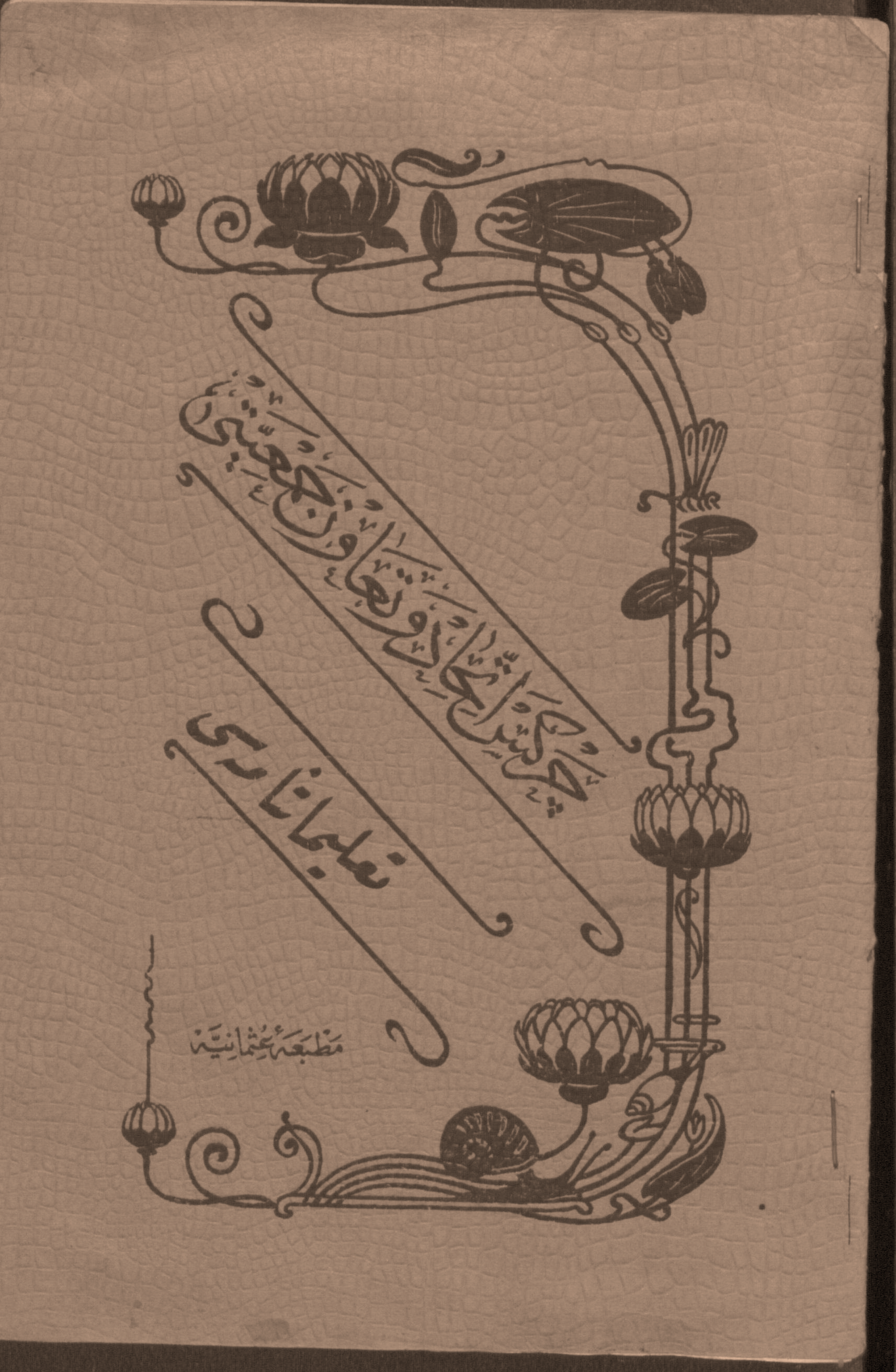
Article 2 — Any Circassian, whether residing locally or in the provinces, who contributes a minimum of fifty kurush as a one-time donation (calculated at twenty kurush per mecidiye) and a minimum of ten kurush per month as an ongoing contribution, shall be deemed a general member of the Association. Movable and immovable endowments bestowed by both men and women, as well as contributions made without exception by other philanthropists, shall be gratefully accepted; those among the benefactors deemed appropriate by the Board of Directors shall be awarded the title of "Honorary Member."
Article 3 — Individuals providing extraordinary financial assistance to the Association, or those rendering exceptionally commendable services in scientific and literary domains, shall be issued a certificate of appreciation by the Board of Directors on behalf of the Association, detailing the donation amount and the magnitude of their service.
Article 4 — The Association's Board of Directors shall consist of twelve individuals, elected annually for a one-year term via secret ballot by a simple majority of all members. Members may be re-elected at the conclusion of their term. All operations and expenditures of the Association shall be executed in accordance with resolutions adopted by this board via majority vote. Any member failing to attend three consecutive meetings without a valid excuse shall be deemed to have resigned, and the candidate who secured the next highest number of votes during the election shall be appointed in their stead by the Board of Directors.
Article 5 — The Board of Directors shall convene at least once a week. At each meeting, one member shall be elected as chair by majority vote and shall preside until the subsequent meeting. No resolution shall be adopted unless a minimum quorum of seven members is present.
Article 6 — An accounting officer—recognized for good conduct and integrity, capable of properly executing accounting and clerical duties, and possessing a guarantor—along with one clerk and the requisite number of auxiliary staff, shall be employed at a salary determined by the Board of Directors. The number of personnel may be increased in the future should the need arise. A seal shall be engraved on behalf of the Association; this seal shall be kept in a locked receptacle and safeguarded under the security of the personal seals of two Board members.
Article 7 — Draft resolutions, once signed by the attending members, shall be cleanly transcribed into a dedicated ledger in numerical sequence, strictly free of any erasures or alterations, and shall be formally signed at the subsequent meeting. The drafts, upon being numbered, shall be archived in their respective files.
Article 8 — The names of the contributors and their corresponding donation amounts shall be registered in a specialized ledger. The membership of individuals who fail to remit their designated monthly contribution for four consecutive months without an acceptable justification shall be revoked. Their readmission to the Association is contingent upon the lump-sum payment of their accumulated arrears. Circassians residing in the provinces who participate in this philanthropic endeavor out of national sentiment shall entrust their contributions to the village imam. They shall dispatch their contributions to the headquarters via postal service or bank, accompanied by a ledger detailing the names and donation amounts, certified by the imam, the headman (muhtar), and the council of elders (ihtiyar heyeti).
Article 9 — The Board of Directors shall formally respond to any requests for clarification from any party regarding matters about the Board's proceedings. Should the provided response be deemed unsatisfactory, the matter shall be declared in writing to the Board by the concerned individual for review by the General Assembly. No individual shall be authorized to publish on behalf of the Association without the knowledge and consent of the Board of Directors.
Article 10 — As contributions are remitted, they shall be recorded without delay by the accounting officer, and a receipt bearing the personal seal of the accounting officer and the official seal of the Association shall be issued to the contributors. The counterfoil of the receipt shall be sealed or signed by the donor; the stub of receipts for funds originating from the provinces shall be stamped with the Association's seal.
Article 11 — A maximum of three thousand kurush shall be retained in the safe for the mandatory operational expenses of the administration. Any surplus reaching one thousand kurush shall be deposited by the accounting officer and two Board members into a reputable bank in Istanbul, selected by the Board of Directors, as either a checking or a time deposit account. The issued bankbook shall be stored in the safe in lieu of cash. Funds requiring withdrawal from the bank pursuant to a Board resolution shall be withdrawn utilizing both the accounting officer's personal seal and the Association's seal. Expenditure vouchers, excluding salaries and miscellaneous expenses determined by the Board, must bear the Board's explicit endorsement.
Article 12 — Initially, a total of five ledgers shall be maintained: a "cash ledger" for recording all collections and disbursements; a ledger for ongoing contributions; a ledger for extraordinary contributions; a ledger for salaries and expenses; and an inventory ledger detailing the categories and quantities of fixed assets. Additionally, current transactions shall be recorded using double-entry bookkeeping, necessitating a journal and a general ledger to facilitate the preparation of a monthly balance sheet. The pages of each ledger shall be numbered and stamped with the Association's seal, written in indelible ink, and devoid of any erasures or alterations. Should an error occur, it shall be struck through legibly, and the correct entry written above it. At the end of each fiscal year, an annual financial statement shall be prepared and displayed in a prominent location at both the headquarters and any prospective provincial branches.
Article 13 — The Board of Directors shall audit whether the monthly trial balances correspond with the ledgers, and whether the ledger contents align with the substantiating documents (invoices/receipts), subsequently ratifying the said trial balance. The cash in the safe shall be counted weekly to verify its concordance with the required balance as stipulated by the cash ledger.
Article 14 — Annually, on the tenth day of July, the premises shall be decorated by the Board of Directors, a festivity shall be proclaimed, and the General Assembly shall convene with all members invited. During this assembly, the members of the Board of Directors shall be re-elected as stipulated in Article Four, and the transactions and general accounts shall be audited. Members unable to attend the convocation shall formally communicate their excuses to the Board of Directors.
Article 15 — Necessary incentives shall be provided to ensure that, in appropriate villages, the affluent segment of the local populace endeavors to construct primary schools or repair and ameliorate existing ones, aiming to provide primary education within the framework of the general primary school curriculum. When necessary, the Association shall provide financial assistance to the extent possible and dispatch textbooks. Concurrently, formal petitions shall be submitted to the local administration and the Ministry of National Education to secure the appointment of a competent teacher to each school capable of instructing in accordance with modern pedagogical methodologies.
Article 16 — Efforts shall be mobilized to publish a newspaper in Istanbul at the earliest possible juncture. Upon the Association attaining the requisite financial capacity, specialized secondary schools, alongside agricultural, applied vocational, and industrial institutes, shall be inaugurated in regions with a substantial Circassian demographic concentration. In Istanbul, a specialized educational institution comprising primary, secondary, and high school divisions for the instruction of requisite sciences, disciplines, and languages within the general education curriculum framework shall be established, accompanied by a printing press and a library. Necessary authorization shall be sought to ensure that graduates holding diplomas from these institutions are admitted to higher education institutions on par with graduates from state schools. Furthermore, initiatives shall be undertaken annually to sponsor the most intellectually gifted among these students to study in foreign countries and universities to further their academic pursuits.
Article 17 — The Association shall undertake necessary measures to act as an intermediary and provide maximum possible assistance for the importation of modern agricultural and industrial machinery; the procurement of pedigreed stallions and bulls; the expansion of winter quarters and pastures; the establishment of factories; the improvement of plows and wagons; and the preservation of the equestrian arts in which Circassians have been historically adept.
Article 18 — Branches operating under this statute and affiliated with the general headquarters shall be established by resolution of the Board of Directors in appropriate provincial locales.
Article 19 — This statute shall be printed and a copy dispatched to every Circassian village.
Article 20 — Any necessary amendments to this statute are contingent upon the convening of an extraordinary assembly via resolution of the Board of Directors.