
 Türkçe
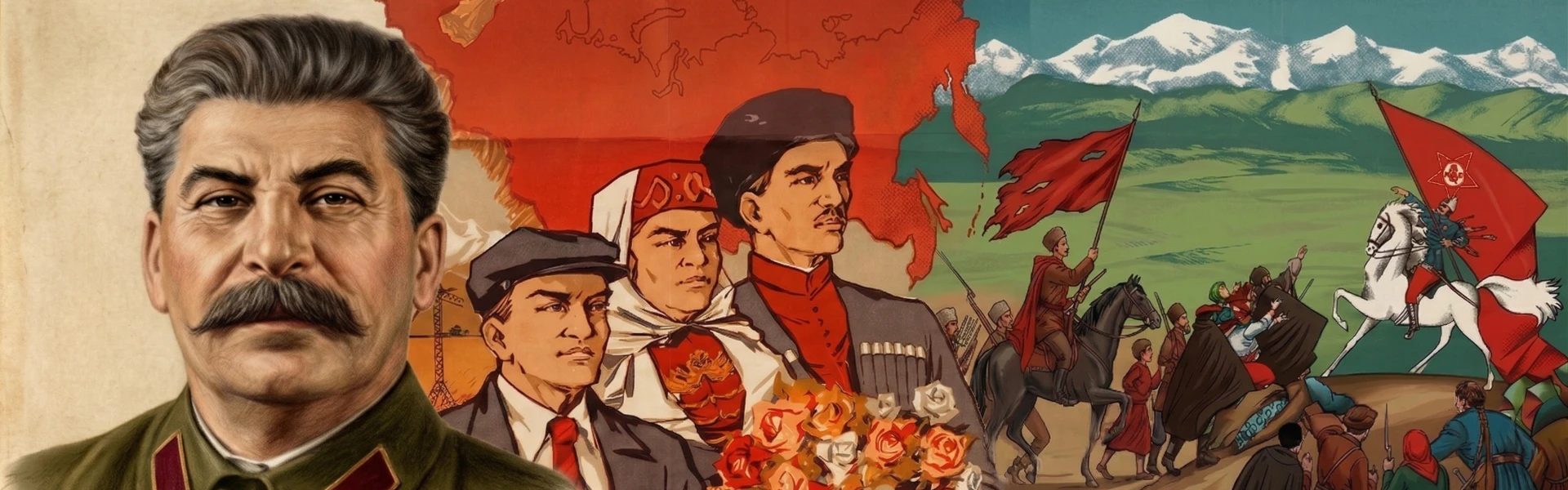
Today marks the celebration of the 81st anniversary of the victorious conclusion of the patriotic war against fascist Germany across regions where people know no life other than existing under Russian subjugation and throughout Russia. The streets are filled with children dressed in Russian partisan uniforms. Everyone dances ecstatically to partisan anthems and Russian songs. The hands that dare to glorify even Stalin merely to satisfy Zionism have continued to lull the world to sleep since 1941 with the fable of the "Great Patriotic War." In their historiography, there is no mention of the ordinary people of the North Caucasus and the innocent civilians who fought in the ranks of the Red Army Partisans but were killed at the hands of Stalin's executioners, just as much as they mention the patriotic North Caucasians who were branded as "collaborators of fascist Germany" during World War II.
The intellectual paralysis experienced by our mother Eve before the apple offered by the serpent in paradise must be very similar to the intellectual paralysis experienced by modern humanity in the face of the artificial historical theses imposed upon them. I would like to share with the followers of the Historical Memory of the North Caucasus the paper I presented recently at an international symposium organized by Istanbul Commerce University.
This paper focuses on the devastating impact of the purge initiated by Stalin in 1937 with the notorious NKVD Order No. 447, known as the "Great Purge," upon the patriotic North Caucasian intelligentsia, the innocent populace, and particularly the North Caucasian "comrade" Bolsheviks.
The Stalin era in the Soviet Union is, as a whole, a period of oppression and tyranny. This is not confined merely to the 1922–1953 period during which Stalin held direct power. The repercussions of the insidious system he established can be distinctly felt even after the dissolution of the Soviet Union.
Although Stalin was Georgian, his Veliko-Russian (Great Russian) obsessions are clearly evident in his practices. Stalin is a personality who succumbed to the Great Russian dream. The most extensive Russification operation in the history of the USSR was conducted under his rule. There are profound similarities between the practices of Stalin and those of the Tsar's generals, such as Yermolov and Zass, who drenched the Caucasus in blood.
Although Stalin's system of tyranny appeared to be founded on a class basis, it was, in reality, a policy entirely based on ethnicity and religion. In the process that began with Lenin's departure from power in the spring of 1922, the non-Russian Muslim peoples of the former empire became Stalin's primary target. Achieving this objective concerning the Muslim populations, who constituted 13% of the demographic at the time, was undoubtedly much more challenging compared to other targeted groups slated for liquidation.
Stalin planned, phased, and executed this process with profound insidiousness. The North Caucasus was selected as the primary area of application due to its highly diverse ethnic composition, its configuration of small-population demographics, and Stalin's intimate knowledge of the region. The purge in the North Caucasus was implemented primarily through two fundamental factors: cultural and political.
The agonies induced by the deviant ethnic theories posited through commissioned historical, ethnological, and anthropological studies by so-called scientists are still deeply felt today. The people divided by these studies have become the greatest impediments to establishing peace in the Caucasus today.
When we examine Stalinist terror in the North Caucasus through specific precedents, the magnitude reached by this pathological policy confronts us in a much more striking manner. Devout, Nationalist, and Social-Democratic intellectuals who did not abandon their countries following the Bolshevik occupation became the greatest victims of Stalin's terror. These figures remained in their homelands, deceived by Bolshevik falsehoods concerning issues such as ethnic, social, cultural, and political recognition, high autonomy, the Cossack presence, and land disputes. Like Stalin's Comrade Mountaineers, they too became victims of the lie of the Soviet Fatherland.
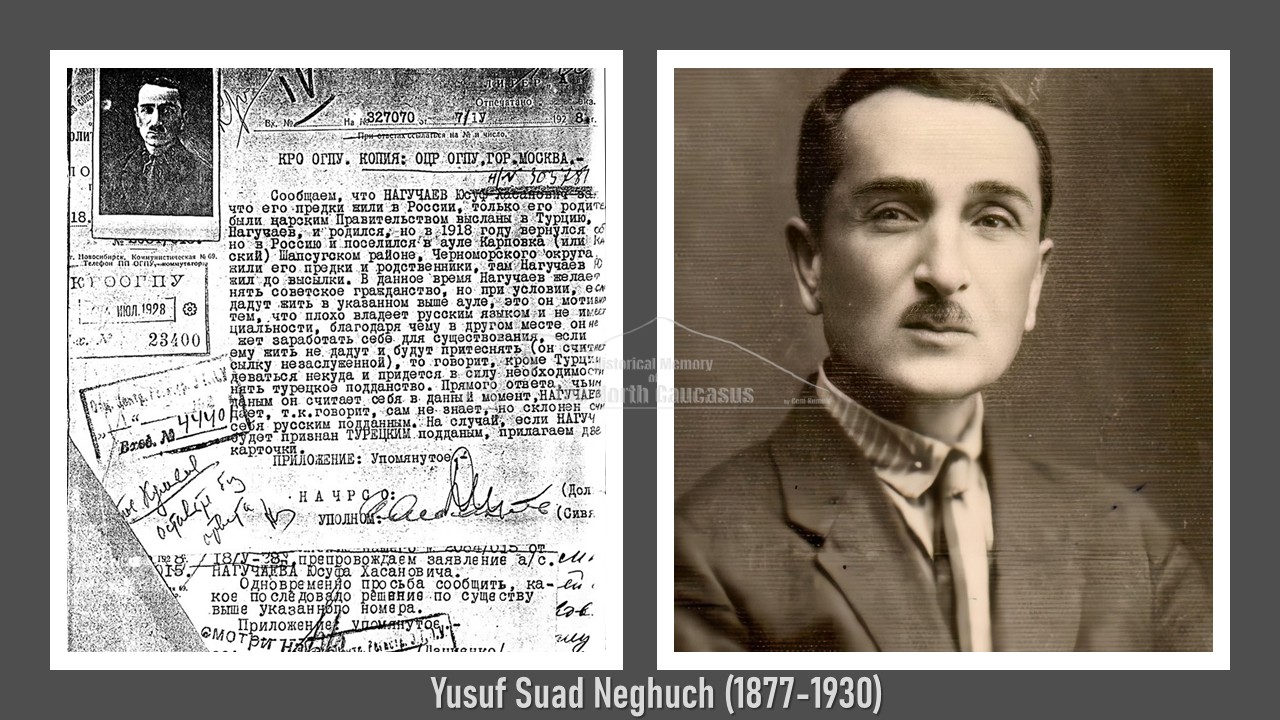
Yusuf Suad Neghuch: One of these individuals is Yusuf Suad Neghuch, a child of a family compelled to leave their homeland during the 1864 exile, and an Ottoman subject. Returning to his homeland to capitalize on the political benefits of the 1905 revolution, Neğuç fought for the national resurgence of the Shapsug region. Arrested on April 29, 1924, on charges of bourgeois nationalism, Neğuç was only able to return to his homeland, Shapsugia, in 1930, but on August 1 of the same year, he was rearrested on accusations of founding a counter-revolutionary organization, and his death sentence was executed within that very year.
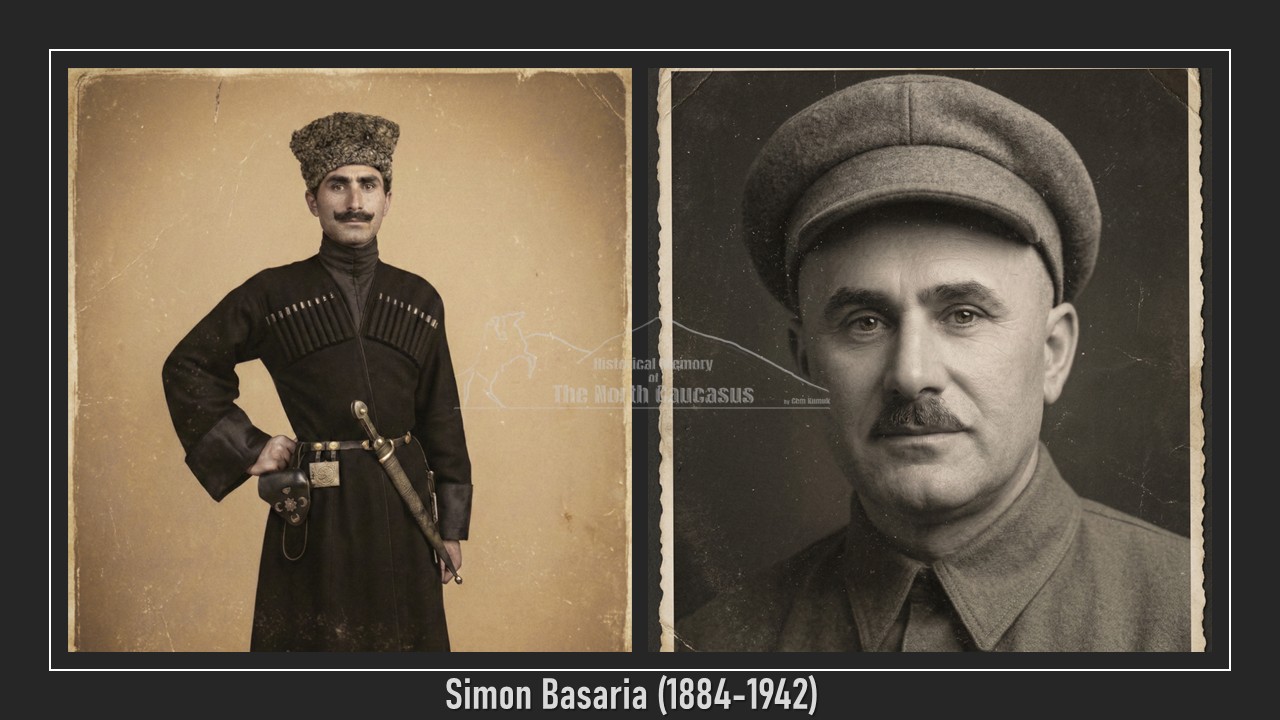
Simon Basaria: The renowned Abkhazian patriot and educator Simon Basaria was also arrested in September 1941 on fabricated pretexts. Accused of being a member of an illegal "counter-revolutionary Nationalist" organization alleged to be operating on Abkhazian territory, Basarya was sentenced to death by firing squad after a sham trial in early May 1942, following endless torture in Tbilisi, and the execution was carried out within the same month.
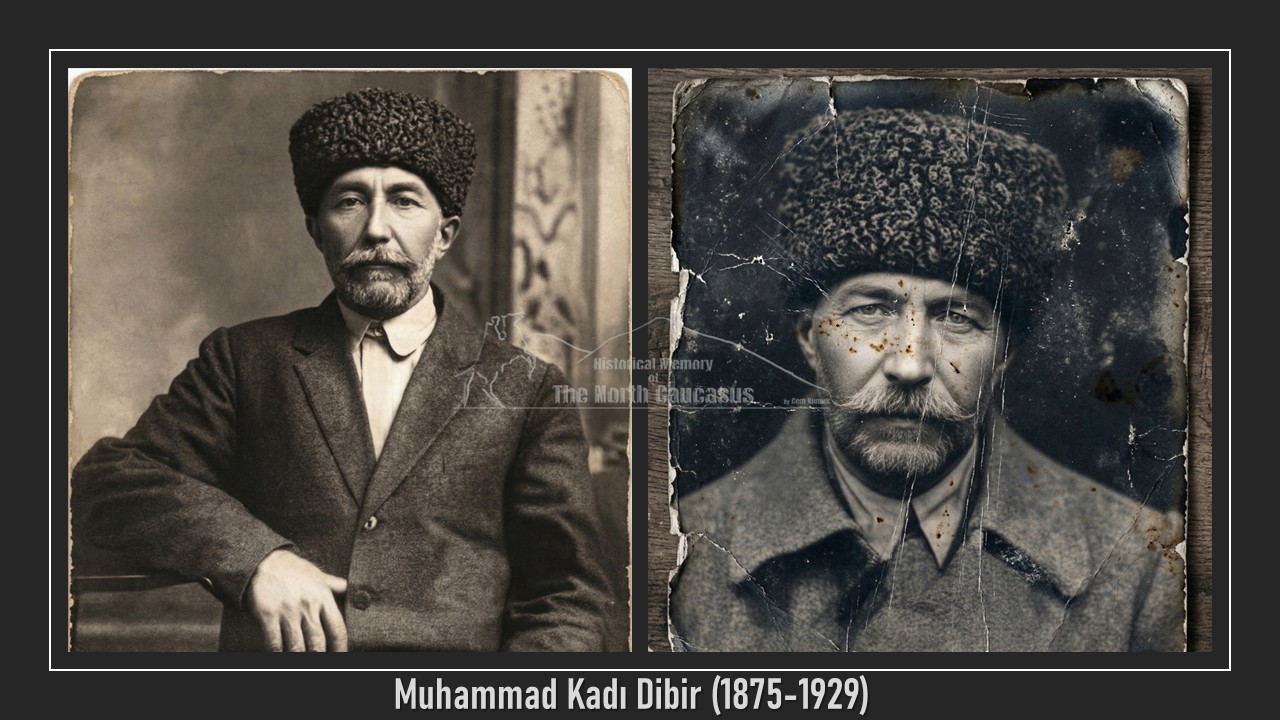
Muhammad Kadi Dibir: Without a doubt, Muhammad Kadi Dibir was also one of the most tragic victims of Stalin's terror in the North Caucasus. Serving as a stark reminder of the aphorism "The handle of the axe that strikes the tree is made of its own wood," the murderers of Dibir, a prominent religious scholar, were none other than the Mountaineer Bolsheviks themselves. Subjected to character assassination by being labeled a bourgeois nationalist, Muhammad Kadi Dibir nevertheless continued his work. His greatest desire was the publication of the records he kept regarding the founding period of the Mountainous Republic of the Northern Caucasus as a book. When Muhammad Kadi Dibir was arrested in August 1929, a tragic plagiarism was revealed. In 1924, Dibir had handed his notes over to the Mountaineer Bolshevik Alibek Takho-Godi on the condition that they be published as a book under his own name. Sometime later, these notes were published in a distorted form under the title "Revolution and Counter-Revolution in Dagestan," bearing the signature of Alibek Takho-Godi. Dibir, conversely, was executed by firing squad on December 14, 1929, accused alongside other members of the Religious Committee of being a spiritual kulak and a member of a counter-revolutionary organization.
Rashid-Khan Kaplan and Zubeyr Temirkhan: The Sorbonne-educated jurist Rashid-Khan Kaplan and the engineer Zubeyr Temirkhan were also among these intellectuals. Rashid-Khan Kaplan was arrested on similar grounds on October 8, 1937, and executed by firing squad at Kommunarka on December 10, 1937. Zubeyr Temirkhan, who reconstructed Dagestan's ruined roads, bridges, and buildings, was first awarded the Order of the Red Banner of Labour by Lenin and subsequently sent to a concentration camp in 1931. After completing his sentence, Temirkhan returned to Dagestan and lived a reclusive life until he died in 1952.
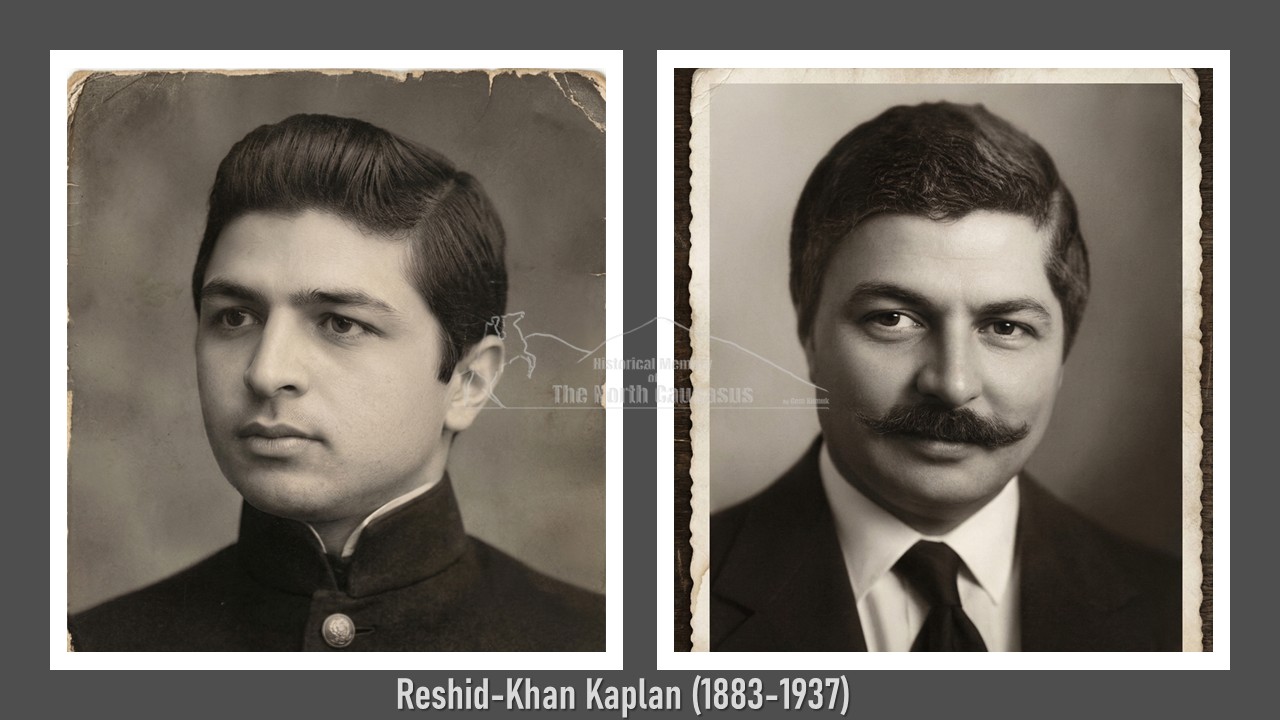
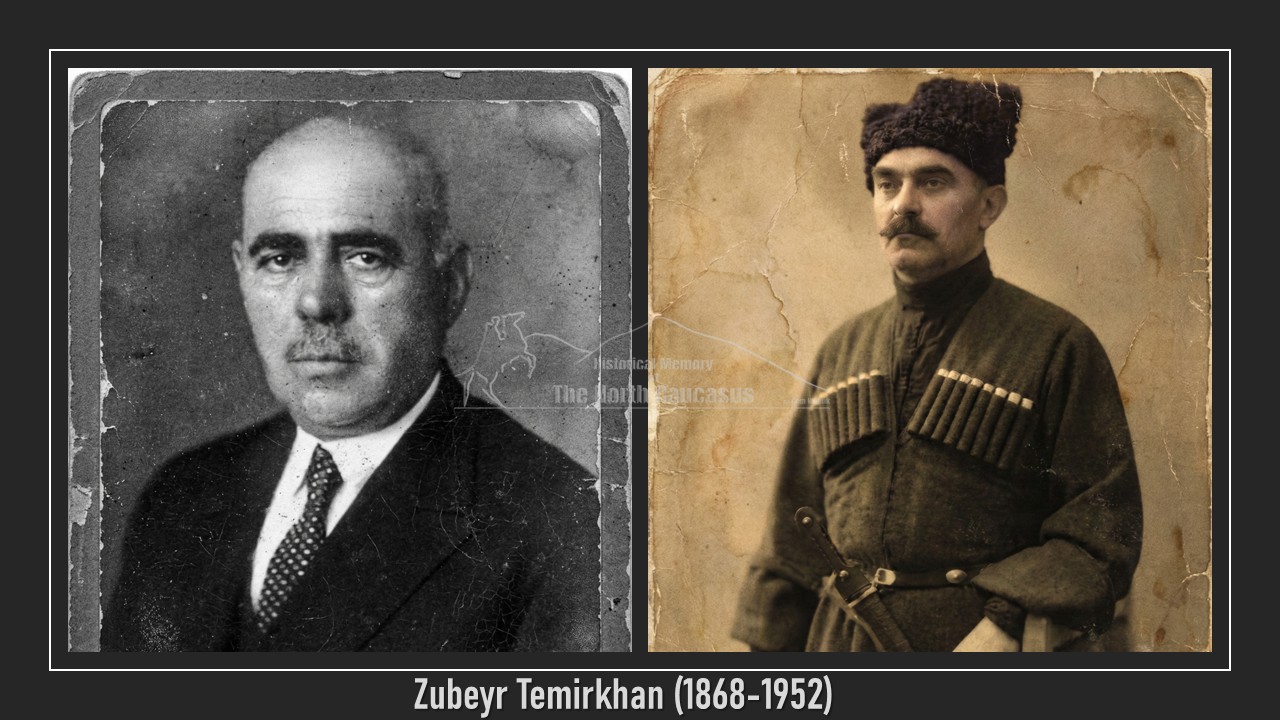
The "Great Purge," in which the heads of the Bolshevik Mountaineers rolled, commenced with a boisterous meeting in Pyatigorsk on July 28, 1937. The agenda of the meeting, attended by the entire Communist leadership cadre in the region, was to eradicate "dangerous social elements." Following the meeting, the list of individuals to be arrested was distributed to the field personnel of the NKVD. For the "Great Operation" to be conducted on the night of July 31, forces supported by tanks and aircraft were dispatched to regions where unrest was anticipated. In the event of encountering resistance, it was ordered that the region be immediately razed to the ground.
In the report dated August 10, 1937, it was communicated that the number of arrested enemies of the people was approximately 100,000 and that arrests were ongoing. In the first 5-hour period, 80,000 people were arrested. In the ensuing days, trucks continuously transported new victims to the prisons. 5,000 individuals were thrown into the Makhachkala prison, which was built to accommodate 1,500 inmates. Garages, clubs, and schools were converted into temporary detention centers.
Due to the daily arrest quotas assigned to Cheka agents, the majority of the arrests were executed without a written warrant. The bulk of the written warrants were sometimes not prepared until the victims were exiled to Siberia or executed. In some regions, the number of arrestees had surged to up to 5% of the total population. It was stated that 4% of the North Caucasus, which possessed a population of three million—equating to approximately 120,000 people—had been arrested.
When the Germans penetrated Soviet territory on June 22, 1941, the NKVD initially attempted to evacuate these prisoners. However, upon realizing that the Germans might utilize them, it was decided that they should be exterminated en masse. For instance, prisoners subjected to forced labor at the molybdenum mine near Nalchik were executed en masse. During the Soviet retreat, there were 29,000 prisoners in the region. When compelled to evacuate the camp in Olginskaya in the face of the German advance, they discharged those who had been in the camp for less than five years, but executed the rest by firing squad on October 31, 1941.
The most ironic aspect of the manifestation of Stalin's terror in the North Caucasus was the purge of local Bolsheviks. In the purges that began as internal reckonings in Kabardia, Betal Kalmykov annihilated almost all of his former comrades.
Among these, Magomed Eneev and Nazir Katkhanov were two devoted communists and religious scholars who had received highly proficient madrasa education. During the revolutionary period, they had endeavored to persuade the populace that Bolshevism decreed nothing different from Islam.
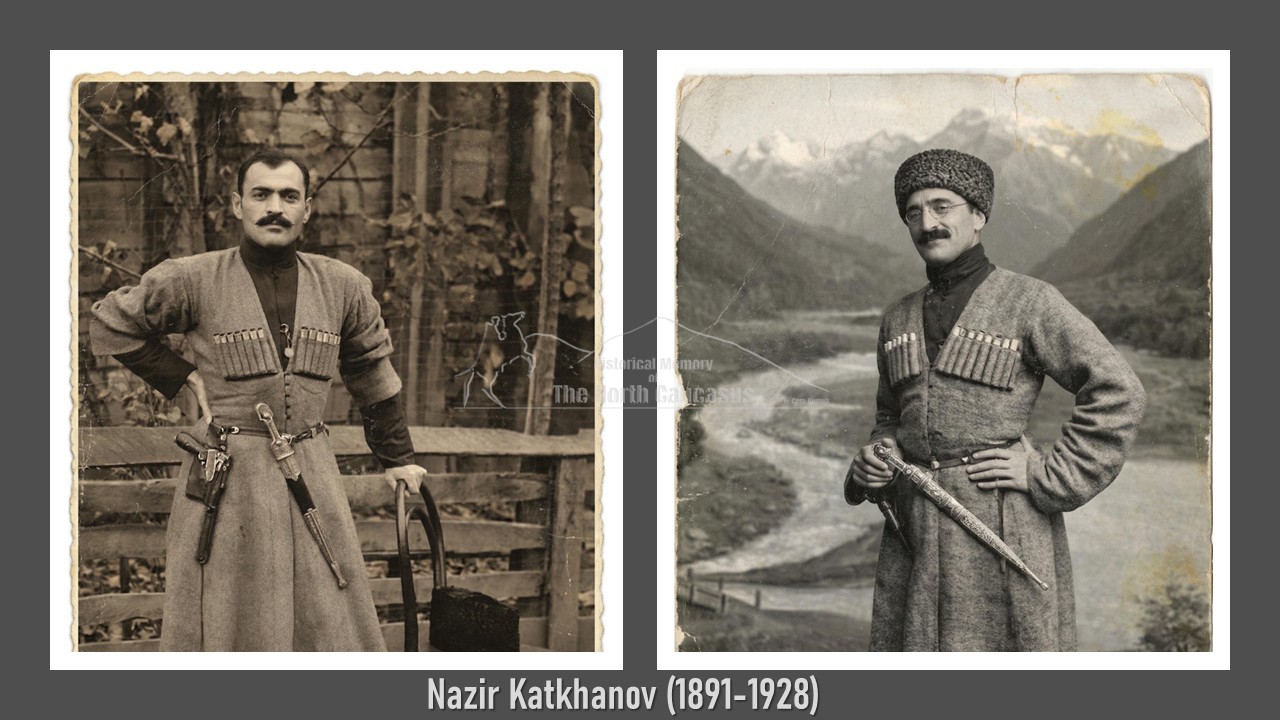
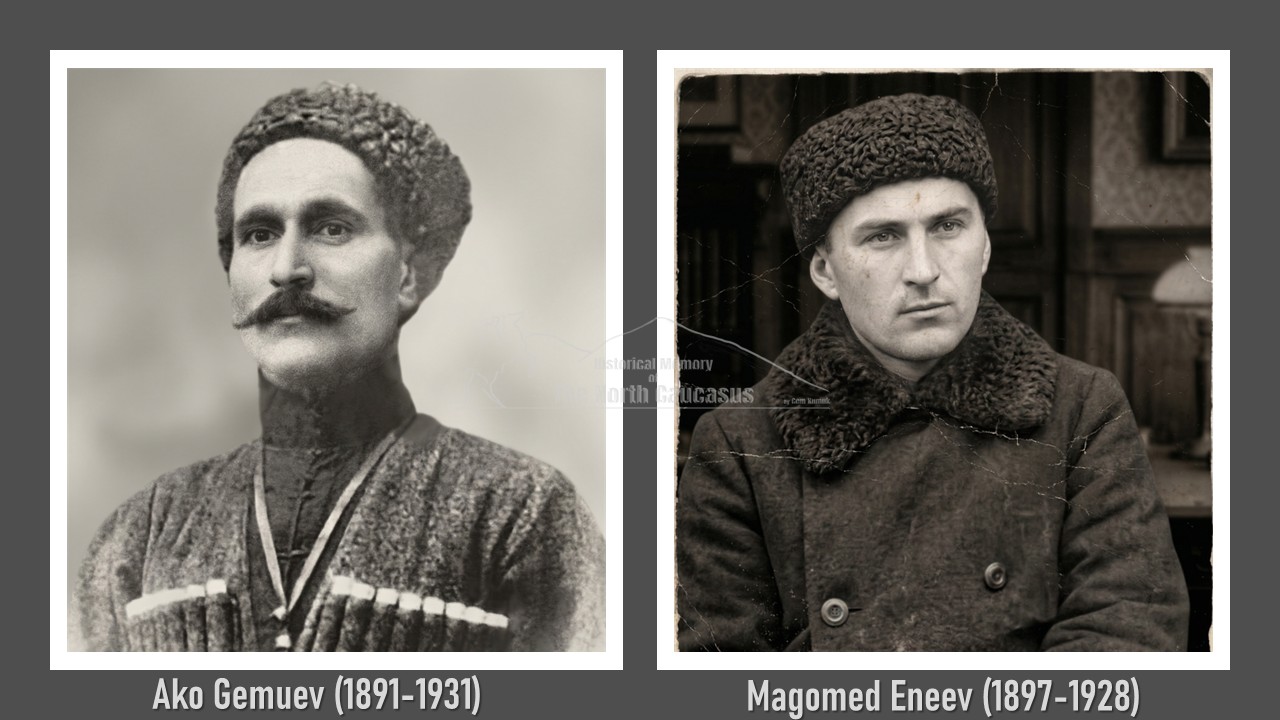
The fabricated Chegem uprising and the Ahmet Musukaev conspiracy served as a sufficient pretext for the arrest of Ako Gemuev, the Deputy Chairman of the Regional Executive Committee, in the summer of 1930. Entering Kalmykov's radar had become synonymous with death.
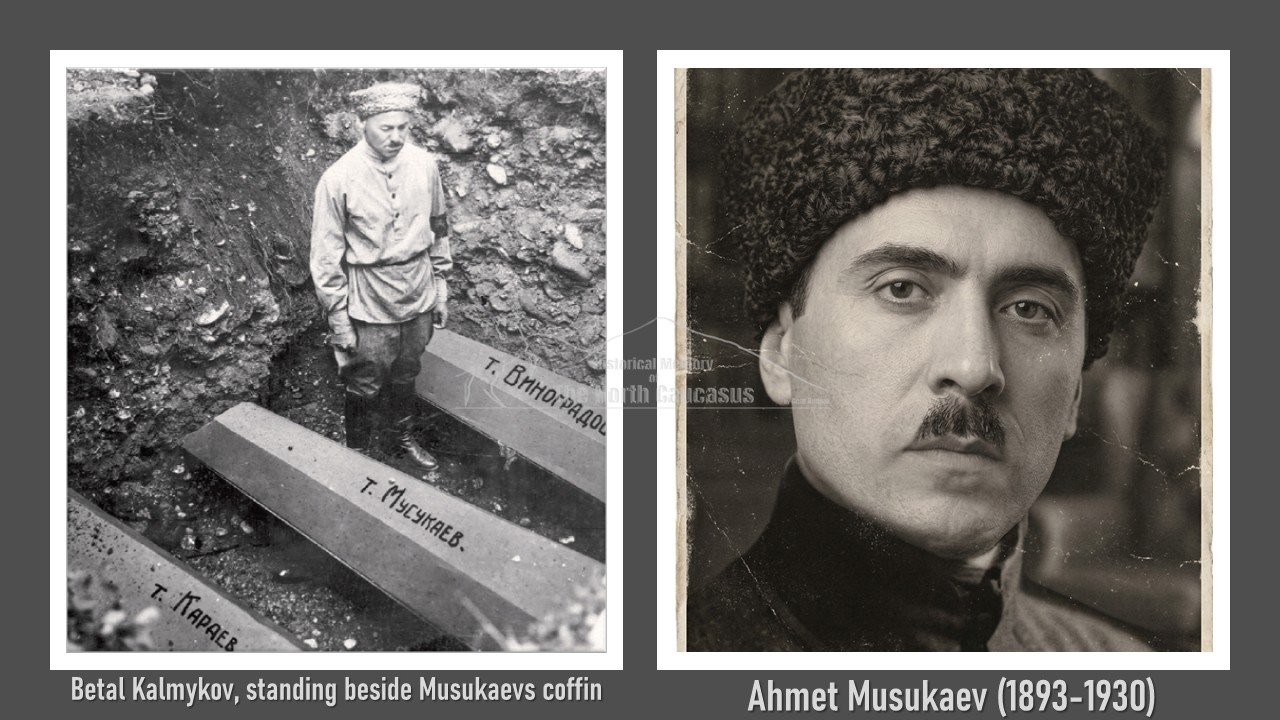
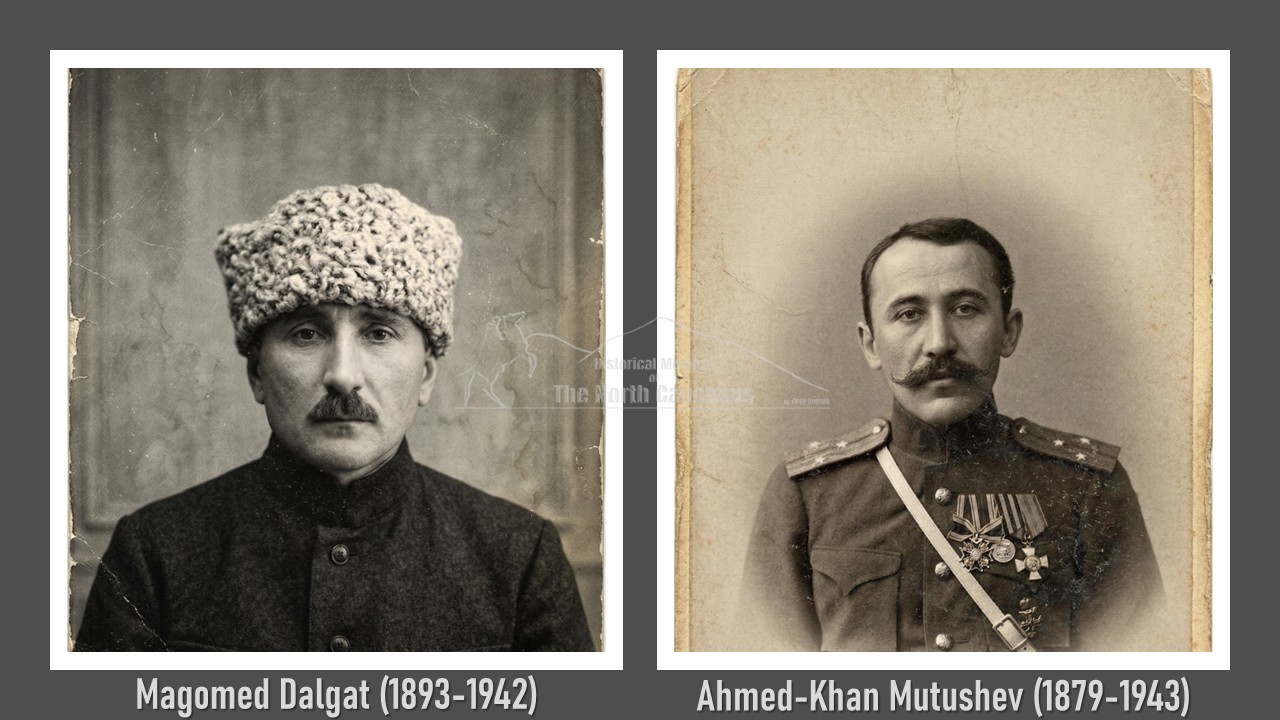
The veteran Chechen revolutionary Ahmed-Khan Mutushev was also arrested in 1930. Writing a letter to Stalin in 1936, Mutushev indicated his desire to serve the Party and requested amnesty. He, too, died of tuberculosis in a labor camp in Uzbekistan.
The dedicated services of Magomed Dalgat, who served as the President of the Dagestan Autonomous Republic and the First Secretary of the Party between 1924 and 1928, could not save him from Stalin's tyranny either. Arrested in 1937, Magomed Dalgat passed away in exile in 1942.
Alibek Takho-Godi, one of the Dagestani communists, also failed to escape the purge. He was arrested for organizing a counter-revolutionary plot in 1937, and after enduring severe torture, was executed by firing squad on October 9, 1937. The book he published by stealing the labor and ideas of Muhammad Kadi Dibir was among the pieces of evidence used against him.
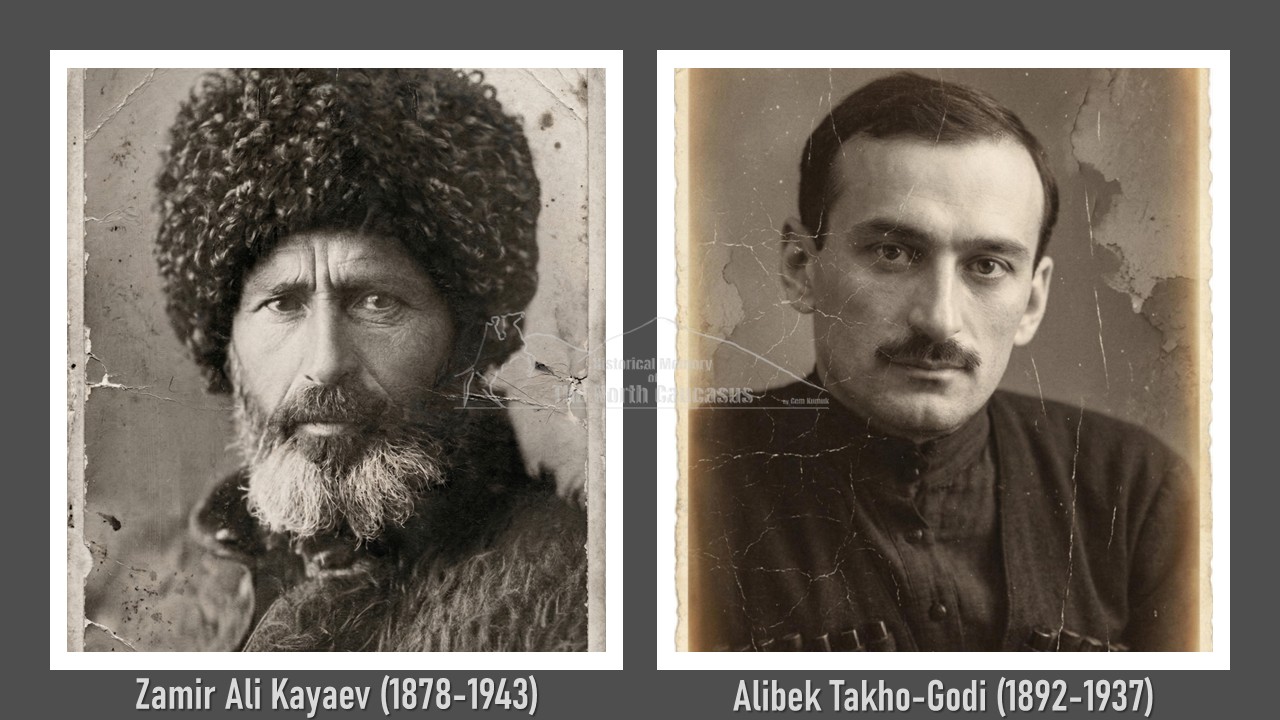
Another Mountaineer Bolshevik was the Al-Azhar graduate, Red Mullah Ali Kayaev (Zamir Ali). Ali Kayaev, who coerced the public into surrendering Najmuddin Gotsinsky during the manhunt initiated in 1925, was sent into exile after being arrested as a member of a counter-revolutionary organization in 1930 and died of typhus in Kazakhstan.
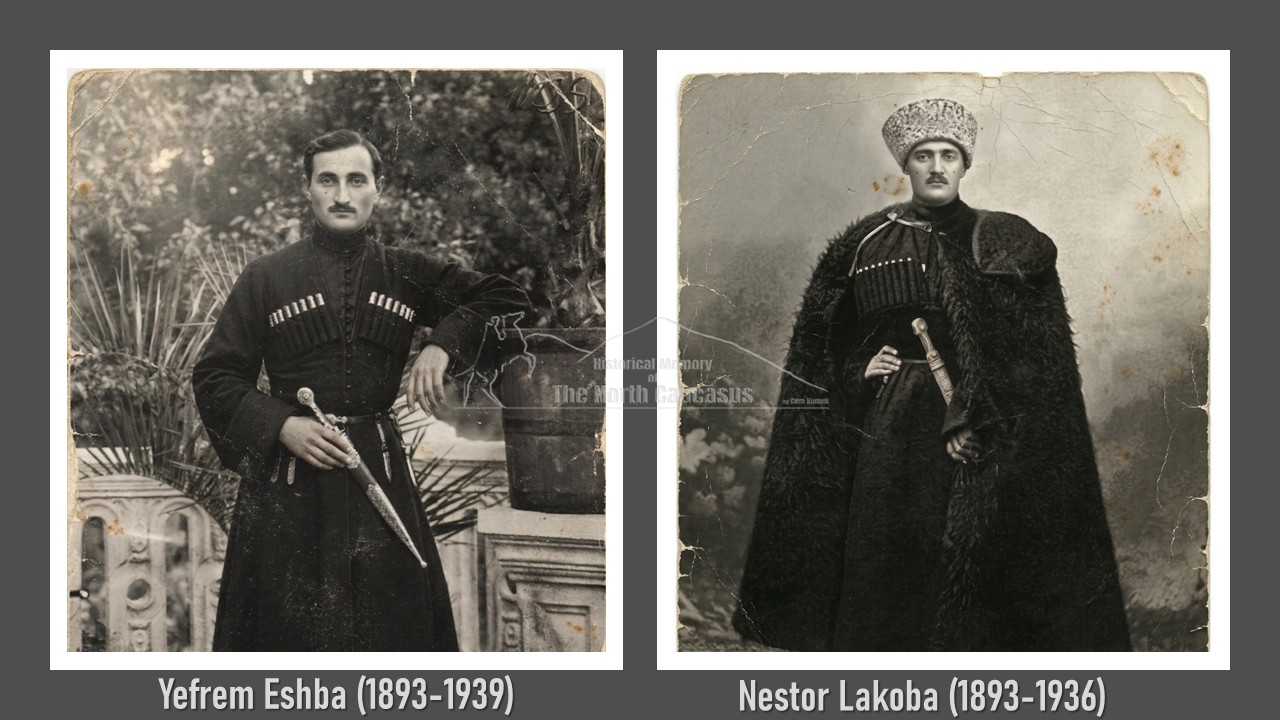
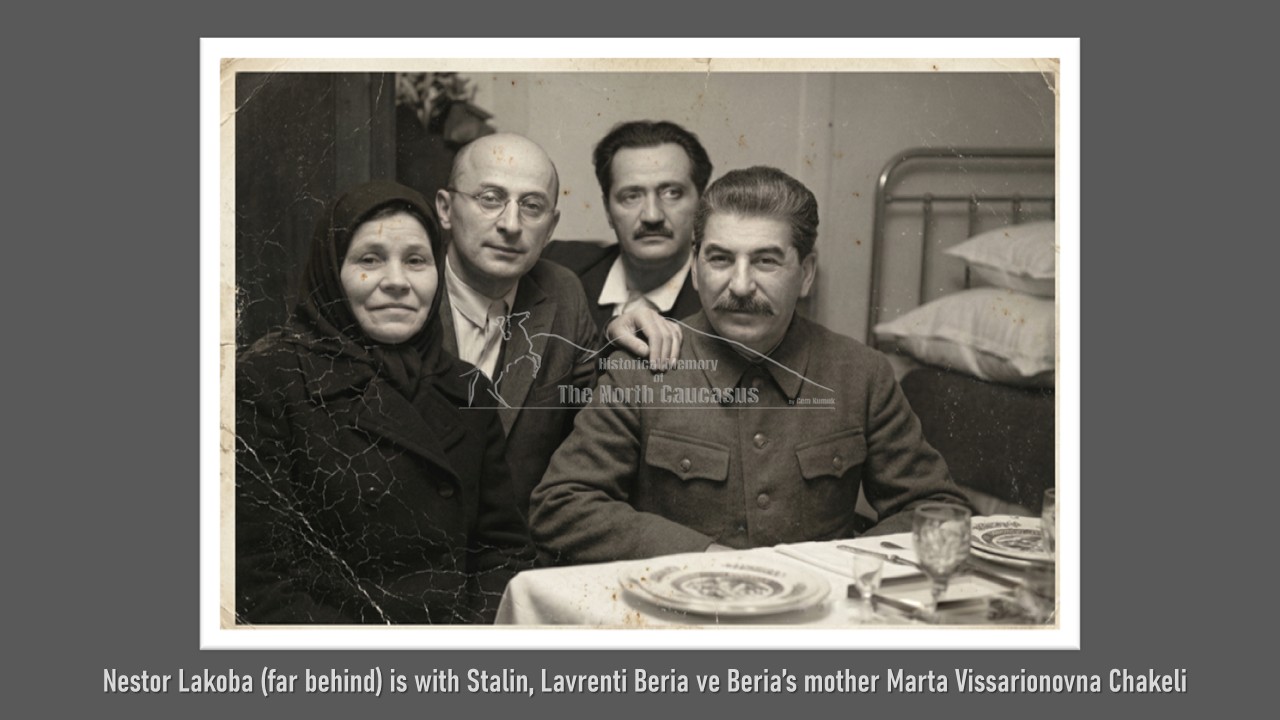
Abkhazian heroes Nestor Lakoba and Yefrem Eshba were also among the tragic victims of the purge. Nestor Lakoba, a close friend of Stalin and Lavrentiy Beria, entered the purge list when he resisted the Stalin-Beria duo's efforts to draw him to Moscow to Georgianize Abkhazia. Beria, who hastily summoned Lakoba to Tbilisi under a flimsy pretext, poisoned him with fried trout he served at his home on the evening of December 27, 1936. The corpse of Lakoba, sent to Sukhumi on December 28, was examined by his personal physician, Ivan Semerdzhiev. To eradicate the evidence of poisoning, all of Lakoba's internal organs were removed. Another Abkhazian Bolshevik leader, Yefrem Eshba, was arrested on April 11, 1936, accused of espionage and establishing a counter-revolutionary terrorist organization, and was executed by firing squad on April 16, 1939.
Shakhandzheri Hakurate, who served the communist regime in Circassia, also died under suspicious circumstances in a hospital in Moscow on October 5, 1935, and was buried in Krasnodar on October 10. Tried in absentia at the Regional Party Congress in 1938, Hakurate was convicted on charges of being an "Enemy of the People."
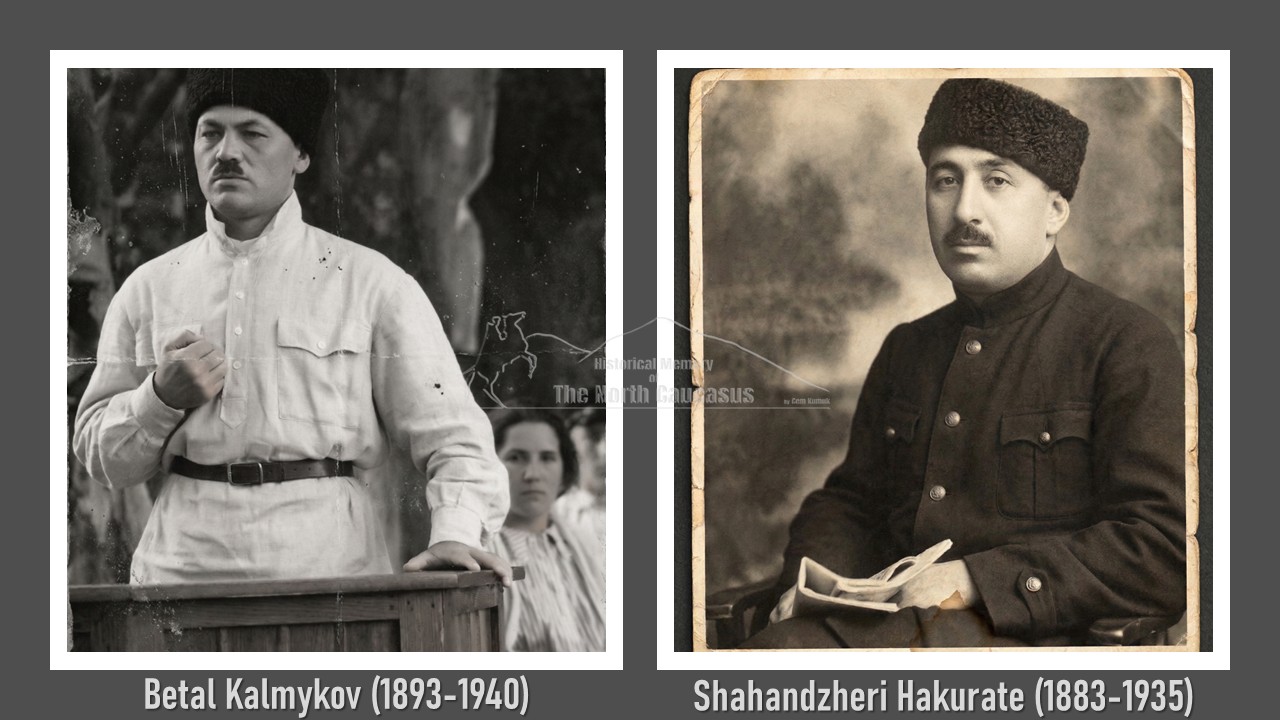
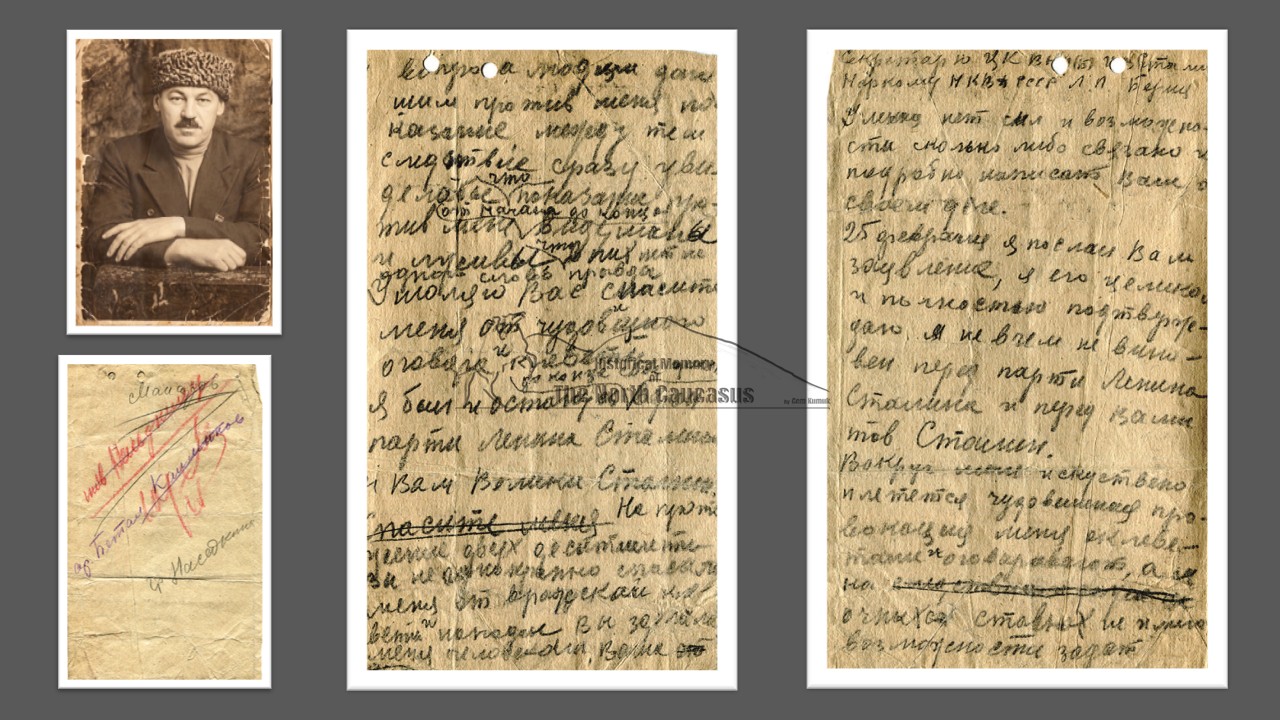
The most exemplary victim of Stalin's purge was undoubtedly Betal Kalmykov. Kalmykov was the most fiercely loyal enforcer of the Stalinist purge in the Kabardino-Balkarian lands. When his turn arrived, and he was arrested, the letter he wrote to Stalin was quite poignant. Kalmykov appealed to Stalin as follows:
"[...] I have committed no crime against the Party and against you, comrade! Stalin, a monstrous artificial provocation is being conducted around me, and I am being slandered. I have no opportunity to question those testifying against me in face-to-face confrontations. [...] I beseech you to deliver me from this terrible calumny. I have remained, and will remain loyal to the Party and to you, Great Stalin, until the end of my life. Save me... [...] I am enduring an unbearable tragedy now, and I pray to you, comrade. Stalin - Deliver me from this monstrous slander."
These pleas were to no avail, and Kalmykov was executed by firing squad on February 27, 1940, on charges of forming a counter-revolutionary organization and orchestrating terrorist attacks.
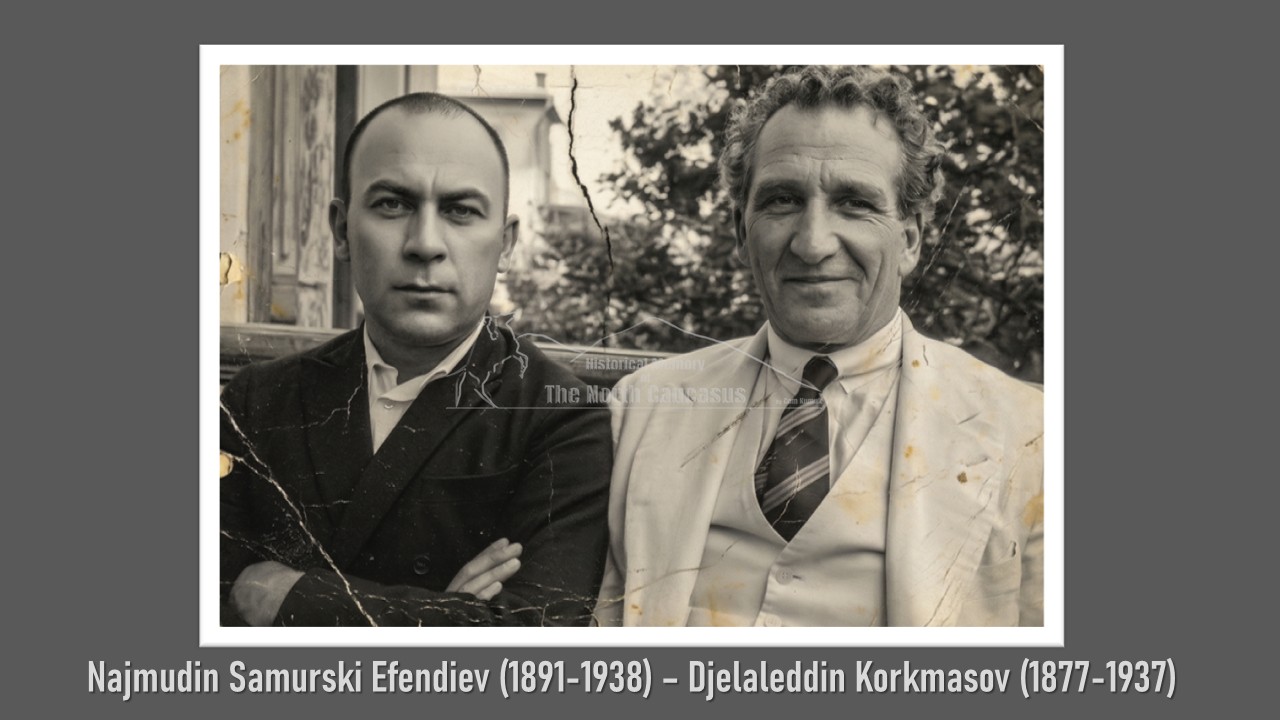
Another ironic victim of the purge was Djelaleddin Korkmasov. Korkmasov, recognized as the bastion of Bolshevism in the Caucasus, was also arrested on June 22, 1937, and executed on September 27.
Another dedicated communist, Najmuddin Samursky Efendiev, in a telegram he dispatched to Stalin on September 26, 1937, requested an increase in his assigned quota for murders; his quota in the death category was elevated from 600 to 1,200 individuals, and his quota in the imprisonment category was raised from 2,478 to 3,300 individuals. Efendiev's outstanding services were also rewarded, like other obedient servants, with an arrest in 1937 and execution on August 1, 1938.
It was no coincidence that the North Caucasus was one of the most strategic targets of Stalin's pathological policy. The North Caucasians constituted one of the greatest obstacles to the Russification movement, and they inhabited the most valuable lands of the USSR. As a matter of fact, even after the "Great Purge" operation across the USSR had concluded, operations in the Caucasus continued with heightened momentum, escalating from an individual dimension to a massive scale of ethnic cleansing. Even during the most critical days of World War II, Stalin utilized the country's resources for the deportation and genocide of the North Caucasians rather than fighting the enemy.

Istanbul, 9 May 2026
References;
— Damir Shapsugov, Antologiya pamyatnikov prava narodov Kavkaza. T.16, Rostov, 2014, OGPU Black Sea Regional Department. Investigation File and Indictment No. 2561 of the Total Freedom and Peace organization. Criminal case archive № 64616. File 122, F.7; File 38. F.7, File 40. F.7.
— Pachuliya V. “Kak osushchestvlyalsya genotsid v maloy imperii.”, Respublika Abkhaziya. 18-19 Dekabr 1999, № 145.; Yuri Anchabadze. Simon Petrovich Basaria: pedagogue, ethnographer, krayeved, Opublikovano: Repressirovannyye ethnography. VIP. 2. Moscow, 2005.
— Hadji Murad Donogo, D. Dahduyev. Muhammad-Kadi Dibir, Ne Razrushal, a Sozidal. Makhachkala, 2014.
— Robert Conquest. The Great Terror. Stalin's Purge of the Thirties. London, 2008.
— Aleksander Uralov (Abdurahman Avtorhanov). The Reign of Stalin. London, 1953.
— Victor Kravchenko, I Chose Justice, London, 1951.
— Musa Geshayev. Znamenityye chechentsy. T. 2. Moscow, 2005.
— Mahmud Musaev Jertvi Repressii. Makhachkala, 2009.
— Gadjikurban Kakagasanov, et al. (Ed.) Repressii 30-x Godov v Dagestane. Makhachkala, 1996. pp.447-448,452-453, 460; Arkhiv KGB SSSR. Ugolovnoye delo na A. A. Takho-Godi. L.170.
— Adile Abbasoğlu (Translated by Oktay Chkotua), Unutulmaz Anılar (Unforgettable Memories). Istanbul, 2008.
— Zurab Lakerbaya, et al. Bol'shoy terror v Abkhazii (Abkhazskaya ASSR): 1937-1938 gg. Tom 2.
— Viktor - Mariya Kotlyarov, Betal Kalmykov: Geroy i Palach, Nalchik, 2018.
— Danilov V., Manning R. (Eds.). Tragediya sovetskoy Derevni. Kollektivizatsiya i raskulachivaniye Dokumenty i materialy Tom 5 1937-1939 Kniga 1. 1937 Moscow, 2004.