
 Türkçe
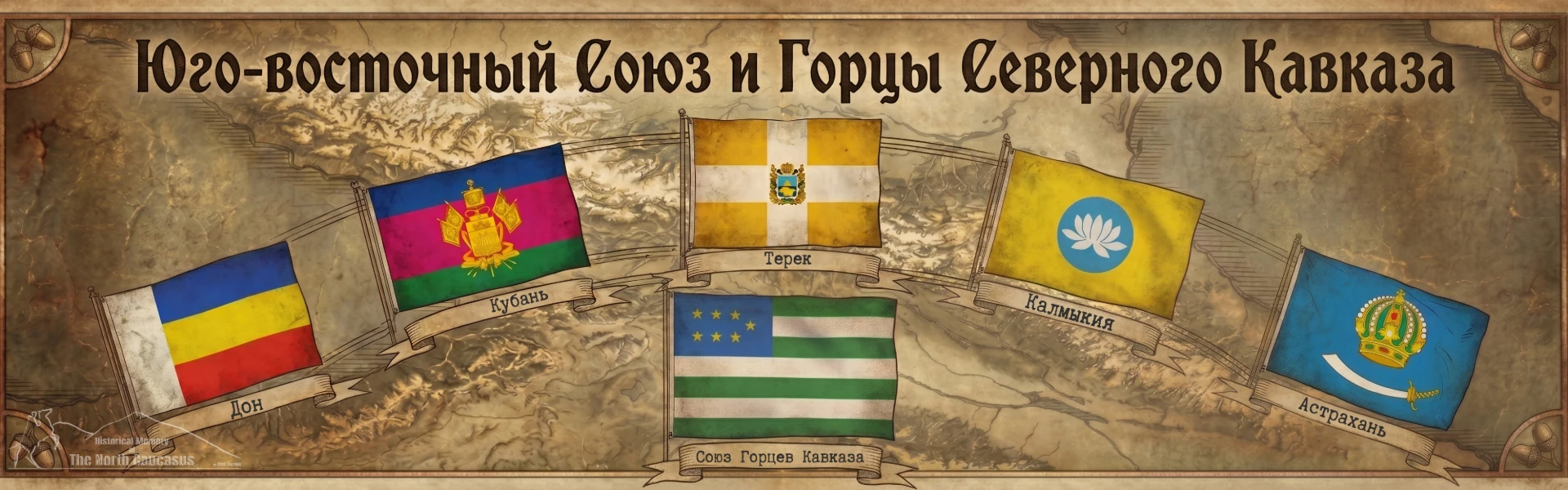
One of the most overlooked chapters in the history of the Caucasus is the establishment of a federative alliance in southern Russia, encompassing the North Caucasus, during the nascent stages of the Russian Empire’s dissolution.
Following the February Revolution, the non-Russian peoples of the empire, increasingly despairing of the Russian Constituent Assembly's capacity to provide viable solutions, sought to exercise self-determination and devise countermeasures against the mounting anarchy. The unjust distribution of land, entrenched in the region by the Russian Empire over two centuries, compelled even those peoples who had historically been pitted against one another into solidarity in their shared desire to dismantle this order.
It was within this climate that the Mountaineer representatives of the Kuban Region aligned themselves with the Kuban military (Cossack) government, participating in the Kuban Military Rada Congress held in Yekaterinodar between September 24 and October 10, 1917. Concurrently, Sultan Shakhim Giray, the chairman of the Mountaineer committee, emerged as a close ally to the Kuban leadership. The concept of an administrative and political union between the Cossacks of Southern Russia and the Mountaineers of the North Caucasus—subsequently known as the Southeastern League—ultimately began to take shape in Yekaterinodar.
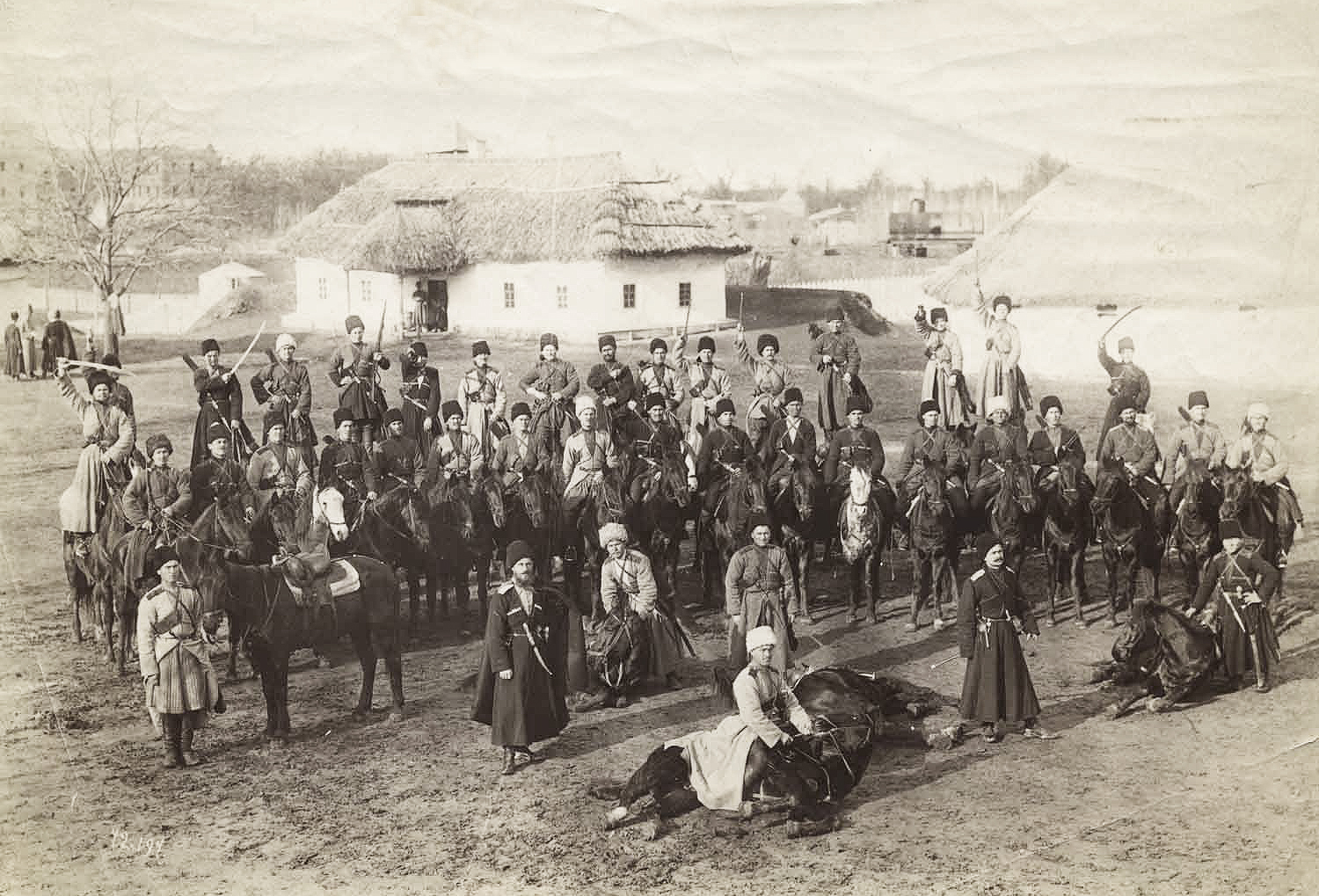
The Genesis of the Southeastern UnionThe genesis of the Southeastern League was first proposed in July 1917 at a gathering of Don, Kuban, and Terek Cossack leaders in Novocherkassk. At that juncture, however, the discourse was limited merely to the unification of the Cossack territories of Southern Russia. Colonel Filimonov, the head of the Kuban government, remarked, "...This idea was met with profound sympathy everywhere, and the governments of the three Cossack regions embraced it firmly."
Don Ataman Kaledin, the rising star of the Cossack movement, was poised to become the unequivocal leader of the alliance. The Kuban Ataman encapsulated Kaledin’s stature thus: "He was enveloped in a halo of martial glory, and everyone listened to him attentively, endeavoring not to miss a single word." The true animating spirit of the nascent alliance, however, was the young and energetic Terek Ataman Mikhail Karaulov, who "ignited" the congress attendees with his ideas, proposals, and draft resolutions.
During the Novocherkassk assembly, a resolution was passed to establish a special commission comprising delegates from all Cossack hosts to draft the charter for the union of Cossack regions. In his memoirs, Filimonov recorded, "The delegates returned to their homes convinced that the Southeastern League, under the leadership of General Kaledin, would constitute a reliable bulwark against the tempestuous and rebellious Great Russia."
Between September 20–25 (October 3–8), a conference convened in Yekaterinodar, attended by delegates from the Don, Kuban, Terek, and Astrakhan Cossack hosts, representatives of the Mountaineers, and a delegation from the Central Executive Committee governing the Kalmyk people. The participants affirmed that the Cossack and Mountaineer movements shared mutual socio-political ideals and objectives, namely "the establishment in Russia of a democratic federal republic predicated upon the principle of broad self-governance for the lands, provinces, and regions that comprise the nation." The aspirations of the Mountaineer and Cossack leaders further converged on the imperative to eradicate totalitarianism, banditry, and "revolutionary" anarchy in the North Caucasus, as well as to curb the tyranny and violent depredations perpetrated by demoralized soldiers.
At the conference, a resolution was adopted regarding the prospective unification of the Don, Kuban, Terek, and Astrakhan Cossack hosts, alongside the Union of Allied Mountaineers of the North Caucasus and Dagestan, and the Kalmyk people, into the Southeastern League—an entity intended to serve as the foundation for a future "state" within the Russian Federal Democratic Republic.
On October 7, newspapers published in the Caucasus heralded the formal establishment of the Southeastern League with the following proclamation: [1]
The Military Council has resolved to establish a southeastern union—comprising the Cossacks of the Kuban, Terek, Don, and Astrakhan hosts, the Mountaineers of the North Caucasus, and the steppe peoples of the Don region and Astrakhan province—to preserve the sound constituent parts of the state from collapse, forging a strong national authority in Russia, defending the rights of the union's members, and providing support in the struggle against the enemy and anarchy. Concurrently, as the draft of the region's federal administration was finalized, it was determined that this draft would be submitted to the government for ratification without impeding the Council's prospective legislative functions. A resolution was also adopted mandating the regional council, elected by the indigenous populace, to draft legislation that would facilitate the participation of the non-indigenous population in the administration of the region.
Given that the Mountaineer delegation at the Yekaterinodar Conference lacked the mandate to commit the Union of Allied Mountaineers to any alliance, the matter of the Mountaineers uniting with the Cossacks within the Southeastern League was to be submitted to the Mountaineer Central Committee for ratification. The draft of the union treaty was formulated in Yekaterinodar, October 20, 1917, as follows: [2]
The Union TreatyWe, as the hereinafter named Cossack Hosts, Caucasian Mountaineers, and Free Steppe Peoples, hereby conclude an Alliance amongst ourselves for the purpose of contributing to the establishment of the optimal state order, external security, and discipline within the Russian State; ensuring the inviolability of the Alliance's members; supporting internal tranquility; elevating general prosperity; and thereby consolidating the blessings of Freedom bestowed by the revolution.
1) Composition of the Union
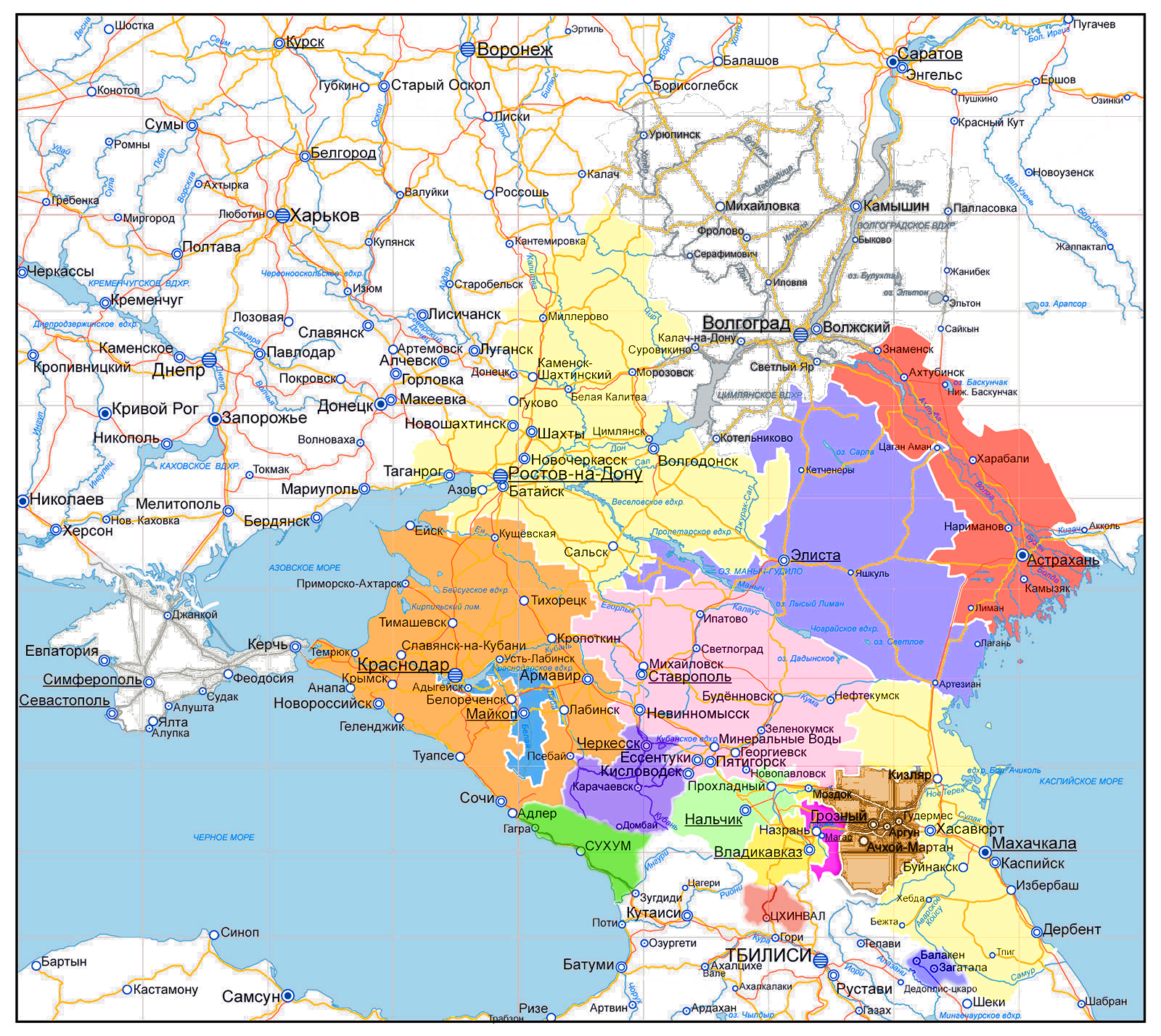
Article 1. The Union shall consist of the following Cossack hosts: the Don Host, the Kuban Host, the Terek Host, and the Astrakhan Host, along with the Kalmyk people affiliated with the Astrakhan Host, and the following Mountaineer and Steppe Peoples united under the Union of Caucasian Mountaineers:
a) All peoples of Dagestan (Avars, Dargins, Laks, Kyurins [Lezgins], Kumyks, Tabasarans, and others) and the Zakatala okrug (Lezgins);
b) All Mountaineers of the Terek region (Kabardians, Balkars, Ossetians, Ingush, Chechens, Kumyks, and Salatavians);
c) All Mountaineers of the Kuban Region (Karachays, Abazas, Circassians, Nogais, and others);
d) The Mountaineer populace of the Sukhum Region (Abkhazians);
e) The steppe peoples of the Terek Region (Nogais and Karanogais) and the Stavropol Guberniya (Nogais and Turkmens).
Article 2. The territories of the Union Members shall comprise the lands belonging to the Cossack Hosts, Caucasian Mountaineers, and Free Steppe Peoples specified in Article 1.
Article 3. The appellation of the Union shall be: "The Southeastern Alliance of Cossack Hosts, Caucasian Mountaineers, and Free Steppe Peoples."
Article 4. Every member of the Union retains complete independence in its internal affairs and reserves the right to independently conclude treaties that do not contravene the objectives of the Union.
2)Objectives of the Union
Article 5. The objectives of the Union are as follows:
a) To ensure the establishment of the Russian Democratic Federative Republic at the earliest possible juncture, through the recognition of the Union members as distinct states of this republic;
b) To extend all manner of support to, and forge ties and treaties with, other peoples and regions striving for the structural reorganization of the Russian State upon federative principles;
c) To strive for the creation of a robust and authoritative democratic state power, grounded in all the genuine forces of the nation's national groups and regions, and free from the coercion of unaccountable organizations;
d) To assist the Central State authority in combating external adversaries, concluding an honorable peace predicated on the right of peoples to self-determination, instituting the rule of law within the country, and combating anarchy and counter-revolution;
e) To guarantee the members of the Union complete autonomy and independence in their internal affairs;
f) To assist the members of the Union in preparing and reorganizing their internal structures as future states of the Russian Federation;
g) To defend the political, territorial, cultural-economic, and national rights of the Union members, as well as to regulate territorial relations among them;
h) To harmonize and unify measures directed toward the maintenance of law and order within the territories of the Union members;
i) To elevate the prosperity of the Union members and assist them in securing the fundamental necessities of the populace;
j) To collaboratively fulfill all other tasks precipitated by life and the political conjuncture, provided they do not conflict with the objectives of the Union.
3) Union Authority
Article 6. The Union authority shall operate within the bounds of the rights originating from this treaty and expressly delegated to it by the individual Union members.
Article 7. The Union authority shall remain autonomous and independent within the limits of the jurisdiction conferred upon it (Article 6).
Article 8. At the helm of the Union shall be the "United Government of the Southeastern League."
Article 9. Each member of the Union shall delegate two representatives to the United Government.
Note 1: The Union of Caucasian Mountaineers shall delegate four representatives, two of whom shall be from Dagestan, including the Zakatala okrug.
Note 2: The Astrakhan Cossack Host and the Kalmyk people affiliated with it shall each delegate one representative.
Article 10. The members of the United Government (at least one of whom must be drawn from their own ranks) shall be elected by the executive organs of the Union members.
Article 11. The members of the United Government are accountable to their electorate (the executive organs of the Union members).
Article 12. The United Government executes the functions of the Union, acts on its behalf, and manages relations both with the central and local authorities of the Russian State, as well as with the administrative organs of the peoples and regions of Russia.
Article 13. The procedure for examining and adjudicating matters shall be determined by a directive drafted and ratified by the United Government.
Article 14. The Southeastern League shall maintain a representative before the Central Russian Government, elected by the United Government of the Union from within its own ranks or from among the enfranchised citizens of the Union.
Note: During the tenure of a member of the United Government as the Union's representative in Petrograd, a substitute shall fill their position.
4) Seat of the United Government
Article 15. The United Government shall be provisionally situated in the city of Yekaterinodar.
5) Admission of New Members to the Union
Article 16. New members may be admitted to the Union by the United Government, subject to the conditions of this treaty, with the consensus of the executive organs of all Union members.
6) Amendment and Termination of the Treaty
Article 17. The amendment, supplementation, or abrogation of this treaty shall be executed by a Conference composed of representatives from all Union members.
7) Time of the Treaty's Entry into Force
Article 18. This treaty shall enter into force after its ratification by the executive organs of all Union members.
(Click on the image for a larger view)
Strong Objections from SocialistsThe day following the drafting of the treaty, Akhmed Tsalykkaty (Tsalikov) severely criticized this alliance initiative in an open letter published in the Azerbaijani newspaper Kaspiy, using vehement language: [3]
The leaders of the Mountaineers have tethered the destiny of these peoples to the Cossacks. For the Mountaineers, drawn into the orbit of Cossack politics—which operates in direct opposition to the policy of revolutionary democracy—the consequences may prove especially lamentable. Essentially, this alliance signifies the Mountaineers' severance from revolutionary democracy, their sole ally among the Eastern peoples, and their detachment from the Islamic world, which perceives the guarantee of the Eastern peoples' emancipation from imperialism in the triumph of workers' democracy. The acknowledgement of the principle of federalism, particularly with the distinct coloration imparted by the Cossacks, cannot serve as a decisive justification for entering into this bloc. Should democracy be crushed, no degree of federalism will save the Mountaineers from the triumph of counter-revolutionary principles.
The Central Committee's response to Tsalykkaty was swift: [4]
Russian democracy... from the very inception of the revolution, deviated onto an erroneous path akin to a unilateral class struggle; this trajectory obscured from its view the demands of objective reality, which find their expression in the will and aspirations of the representatives of this or that nationality. Embarking upon this misguided path, Russian democracy, in its myopia, has plunged the Great Russian Revolution into a crisis that has brought the country to its deathbed.
The wave of general devastation and anarchy engulfing the country is already transmuting into a state of civil war, and God alone knows what trials await the nation in the future. During an epoch of anarchy, not only peoples but every single individual must stand vigil to protect both their personal integrity and their ancestral properties. In moments when leaden, menacing clouds gather overhead, he who fails to consider this acts either out of sheer folly or is engaged in overt treason, for the merciless wheel of fate will inevitably expunge him from the face of the earth.
The Mountaineers have proven themselves wiser and more prescient than Mr. Tsalikov; thus, being keenly aware that Russia is a land pregnant with all manner of surprises, they have synchronized their aspirations with the will of the Cossacks, thereby taking timely measures to shield their native lands from the horrors of the impending era of chaos.
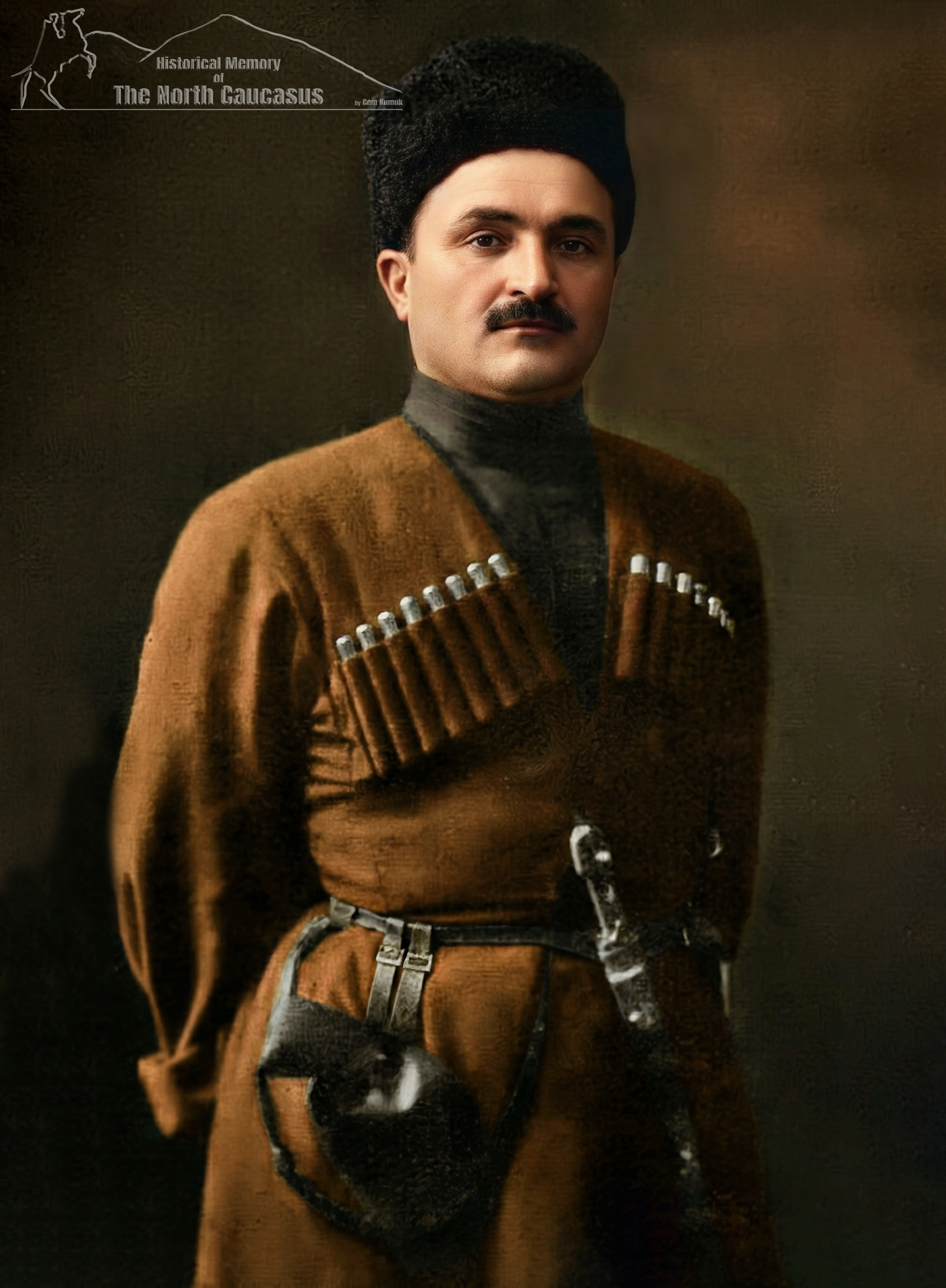
Ratification by the MountaineersTsalikov's vehement backlash exerted little influence upon the Mountaineer Union Central Committee. The sustained chaos and anarchy in the Caucasus precluded the Committee from awaiting the convocation of the All-Russian Constituent Assembly and the resolutions it was slated to adopt. During its ordinary session on November 12, the Committee passed a series of resolutions regarding the ratification of the treaty: [5]
On November 12, 1917, the ordinary session of the Central Committee of the Union of Allied Mountaineers was held. The question of ratifying the treaty with the Southeastern League was resolved in the affirmative. A direct telegraphic communication between Yekaterinodar and Vladikavkaz was read. In this context, it was decided to request Kotse and Chermoy to proceed to Yekaterinodar.
To examine the implementation of autonomy at the earliest opportunity, the following decisions were made regarding the establishment of commissions:
1) The formation of a finance commission comprising Kochenov, G. Bayev, V. Zhabagi, and A. Butayev;
2) The establishment of an administrative commission with the participation of Alkhaz, Kaplan, and I. Bayev.
Alkhaz was elected chairman of the administrative commission. Zhabagi was elected chairman of the finance commission. Engineer M. Penzulayev was appointed chairman of the railway and postal-telegraph commission.
As the circumstances precipitating the resignations of Chermoy and Kotse from the Central Committee had been satisfactorily resolved, Chermoy and Kotse formally withdrew their declarations of resignation.
During the same session, a resolution was passed to host a banquet in honor of the delegates arriving from the Kuban. It was resolved to grant the Regional Commissar the prerogative to nominate candidates for local commissariat cadres, subject to the approval of the Regional Committee.
The following individuals joined the composition of the United Government: M. P. Bogachevsky and A. P. Yepifanov from the Don Host (in the event of V. N. Kharlamov's participation, he shall substitute for one of these representatives); G. A. Vertepov and M. A. Karaulov from the Terek Host; Prince D. D. Tundutov and Skvortsov from Astrakhan; and V. G. Zhabagi and P. T. Kotse from the Mountaineers.
Representatives from the Kuban Host and the Dagestani Mountaineers have not yet been appointed. It is also noted that the Yaik (Ural) Host, which had resolved to join the Southeastern League, currently has no representative.
Founding Declaration of an Allied GovernmentFollowing the negotiations conducted in Yekaterinodar, the Declaration on the Establishment of the United Government of the Southeastern Alliance of Cossack Hosts, Caucasian Mountaineers, and Free Steppe Peoples was published on November 28, 1917: [2]
On October 20, 1917, the Southeastern Alliance of Cossack Hosts, Caucasian Mountaineers, and Free Steppe Peoples was formed. On that day, in the city of Vladikavkaz, a treaty of alliance was signed by the representatives of the aforementioned hosts and peoples, pursuant to which, on November 16 of the current year, the United Government of the Southeastern Alliance commenced its operations in the city of Yekaterinodar. The following entities acceded to the Alliance: the Don, Kuban, Terek, and Astrakhan Cossack hosts; the Mountaineers of the North Caucasus, Dagestan, Sukhum, and Zakatala okrugs; and the free steppe peoples of the Astrakhan and Stavropol guberniyas. On October 31, the Ural Cossack host similarly joined the Alliance.
Acknowledging the Democratic Federative Republic as the optimal form of state architecture, the Southeastern Alliance shall pursue a course that advocates for a federative system of governance in practice. Guaranteeing its members absolute independence in their internal affairs, the Alliance pledges to assist them with all available union resources in structuring their own frameworks as independent states of the future Russian Democratic Federative Republic.
Furthermore, the Southeastern Alliance intends to render every possible support to all other peoples and regions striving to rebuild the Russian Republic upon federative foundations. To this end, the United Government of the Alliance has initiated contact with the peoples of Transcaucasia, Ukraine, Bessarabia, Crimea, and Siberia, inviting them to reach an agreement on the most efficacious means and methods for fulfilling shared tasks through mutual assistance and support.
Deeming it imperative to preserve a Federative Russia as one, indivisible, and great, the Southeastern Alliance shall participate in general state construction on equal footing with all other peoples of Russia, without arrogating to itself any privileged rights in this regard. Concurrently, the United Government of the Alliance, standing firmly and uncompromisingly upon the principle of the right to self-determination, shall permit no interference by any party in the construction of the Alliance's internal life. In general, any encroachment upon the federative rights of the Southeastern Alliance, or of its individual members, shall be met with the most resolute resistance.
The collapse of the central state authority and the rapidly proliferating anarchy have brought the life of our great nation, as a single unified entity, to a standstill. Left to their own devices in the face of impending economic and political convulsions, distinct regions and peoples have been compelled to organize their own authority upon the foundation of self-governance. The erupting struggles among political parties threatened to obliterate those unique characteristics of the free societies in Southeastern Russia—societies upon which the Cossacks, Mountaineers, and steppe peoples had historically built their spiritual and economic existence. Consequently, the Cossacks, Mountaineers, and steppe peoples of the Southeastern regions assumed full power into their own hands, transferring it to their respective governments elected by popular vote, and, to safeguard their mutual interests, established an Alliance presided over by the United Government.
Within the territories of the Southeastern Alliance, the United Government identifies its primary imperative as combating anarchy and violence, restoring and preserving the liberties won by the revolution, and consolidating the normal conditions of social and political life that permit all citizens to express their will freely and without coercion. Thus, a full opportunity will emerge to forge an authority at both the regional and alliance levels, grounded in all the sound strata of the stanitsa, village, and urban populations, and predicated on national-local representation.
Engaging initially with the organization of its members who have already joined the Alliance, the United Government already blesses that luminous day when all who live and labor on the lands of the Alliance shall constitute a single, amicable family striving for the common good.
Endeavoring to realize this objective with the utmost dispatch, the United Government has primarily commenced the restoration of absolute order in the settlements and along the railways. In this manner, it will be possible to secure the uninterrupted provisioning of food and fodder for the long-suffering Russian army, the populace of Transcaucasia and Turkestan, and the workers in Russia's industrial centers, as well as the unceasing supply of essential commodities for the economic and domestic life of their own stanitsas, villages, and cities.
Alongside this, the United Government is intimately concerned with the organization of local finance, the deterioration of which places workers in official, public, and private institutions, and the laboring masses at large, in a precarious position. The United Government shall regard the interests of this demographic as a subject of its specialized attention and care.
The Southeast, endowed with grain, oil, coal, livestock, salt, and all the bounties of nature, possesses every prerequisite for the complete flourishing of spiritual and material culture. Yet, the autocratic regime that asphyxiated the entire Russian populace killed this potential before it could even be born. The United Government will implement all necessary measures to ensure that the emancipated peoples of the Southeast, having survived the destructive tremors of anarchy, are afforded the full opportunity to cultivate education, industry, and commerce on their native soil. Concurrently, the United Government is identifying avenues for the painless resolution of the agrarian question, in absolute harmony with distinct local characteristics and the interests of the laboring agricultural populace.
By a cruel twist of fate, Russia has been driven into a deadlock at the front. On the one hand, prosecuting the arduous war is practically impossible; on the other, it cannot sign a separate peace without the consent of its allies. The United Government places immense value on the sanctity of treaties and therefore, on behalf of the Southeastern Alliance, disclaims all responsibility for the consequences that would precipitate from a decision to conclude a separate peace by those who have usurped Central state power.
Ultimately, recognizing that the prerogative to determine the destiny of the entire nation belongs exclusively to an authority that accurately articulates the genuine will of all members of the great family of Russia's peoples, the United Government harbors the conviction that the path of constructing internal and general state life—chosen by the Cossacks, Mountaineers, and steppe peoples—will meet with the full sympathy of the sound democratic masses, find their fraternal support, and facilitate the creation of a united, great, and powerful Russian Democratic Federative Republic through reciprocal efforts.
By mid-November 1917, the Government of the Southeastern League was established. Elected to the government were the leaders of the Don, Kuban, Terek, and Astrakhan Cossacks, the Kalmyk Prince Danzan Tundutov, and the Mountaineer politicians Pshemakho Kotse, Aytek Namitok, and Tapa Chermoy, alongside Haidar Bammate, who was stationed in Tiflis at the time, serving as the Transcaucasian Representative of the Central Committee. Subsequently, representatives of the Ural Cossacks also joined the government. Vasily Kharlamov, the representative of the Don Cossacks, was elected Head of Government, and the administration provisionally commenced its operations in Yekaterinodar.[6]
The Cossack presence in the Caucasus, having crystallized as an undeniable reality of Caucasian history, will undoubtedly emerge as an essential paradigm requiring reconsideration should the prospect of establishing a sovereign state—driven by the independence demands of the indigenous peoples of the North Caucasus—arise in the future. Maintaining open channels of communication with the Cossacks, who presently suffer under the highly non-federal practices of the Russian Federation at least as acutely as the indigenous peoples of the Caucasus, will prove vital for endeavors aimed at situating future relations on a sound foundation.

Istanbul, 4 November 2026
References: (Click on the links to Access the source materials)
[1] Gazeta Kavkaz (Tbilisi), 11 Oct.1917, p.2.
[2] Alibek Takho-Godi, Revolyutsiya i Kontrrevolyutsiya v Dagestane, Makhachkala, 1927, pp.164-169.
[3] Ahmed Tsalykkaty, “Open Letter to Mounatineers”, Gazeta Kaspiy, No.236, 21 Oct. 1917, p.6.
[4] Timur Muzaev, Soyuz Gortsev, Russkaya Revolutsiya I Narody Severnogo Kavkaza 1917 – Mart 1918 g., Nalchik, 2012, p.263.
[5] Gacikurban Kakagasanov, Leyla Kaymarazova, Soyuz Obedineniy Gortsev Severnovo Kavkaza i Dagestana (1917-1918), Makhachkala, 1994, pp.83-84.
[6] Vasili Harlamov, “Yugo-Vostochnyy Soyuz v 1917 g.”, Donskaya Letopis, No.2, Belgrade, 1923, pp.284-292